
Many Canadian shops face tight budgets and a clutter of channels. They use social media marketing, email, and ads, but feel lost in the mix. They watch click-through rates flop and customer loyalty fade.
Marketing Trends Canadian Small Businesses Should Know will show a better path.
In 2021, digital marketing budgets slid from 11% of revenue to just 6.4%. That drop forced businesses to change fast. We unpack digital marketing trends, like search engine optimization tricks, mobile marketing steps, analytics tool tips, and crm systems moves.
You will find clear steps to cut costs, boost sales, and earn loyalty. Time to dig in.
Key Takeaways
- In 2021, small shops cut marketing budgets from 11% to 6.4% of revenue. They doubled AI use in one year, per McKinsey, to target ads by age, interests, and shopping history. AI also runs A/B tests and adjusts bids in real time.
- Short videos now drive campaigns. TikTok weekly use in Canada rose from 10% in 2023 to 18% in 2024. Over 12 million Canadians use it, and 70% are under 40. Global ad spend on brief clips will hit $145.8 billion by 2028.
- Voice search makes up 20% of all queries. About 46% of voice users seek local businesses daily. Smart speakers handle 76% of local searches. Brands must craft FAQ pages, use schema tags, and test responses for voice.
- Personal touches win hearts. Micro-influencers earn 60% brand trust. AI crafts custom emails and SMS, but brands keep a human voice. CRM data turns generic ads into friendly nudges.
- Privacy and ethics build loyalty. GA4 brings IP anonymization and cookie-less tracking. 68% of millennials will leave brands over green issues. Transparent data use and eco tactics boost customer trust.
Harnessing AI for Targeted Marketing

Marketers have doubled their use of artificial intelligence (ai) and generative AI in one year, as McKinsey found. AI tools target ads by age, interest, and shopping history. They run A/B tests on social media marketing and landing pages.
A tool like Google Analytics tracks clicks and conversions. Platforms adjust bids in real time to hit users in the purchase funnel.
Small businesses build stronger brands when they mix AI and a human voice. They craft emails, sms marketing blasts, and chat replies that feel personal. This mix boosts customer loyalty and shapes the customer journey.
It fits into marketing strategies that ride digital marketing trends.
The Rise of Short-Form Video in Digital Campaigns
Short clips grab eyes on social feeds. Canadian brands invest in short video ads, boosting reach. Short video platform TikTok weekly use in Canada rose from 10 percent in 2023 to 18 percent in 2024.
Over 12 million Canadians use the platform in 2024; 70 percent are under 40. Global ad spend for brief clips will hit 145.8 billion dollars by 2028.
Active spots fit marketing campaigns, mobile-first strategies and content marketing plans. Brands use social media marketing tools such as a meta video feature and a clip service for digital advertising.
Video marketing shapes consumer behavior, driving quick clicks and shares. Quick clips link to online store pages and spark ecommerce platform visits. These low-cost spots yield the best ROI for small business marketing.
Optimizing for Voice Search in SEO
Small shops craft queries for voice search differently than typed phrases. People speak in questions like, “Where can I find a nearby cafe?” About 20% of users rely on spoken queries worldwide.
Roughly 46% of those users look for local businesses daily. Smart speakers and voice helper apps handle 76% of local result searches. North Americans use voice commands for purchases in one out of four interactions.
These shifts demand fresh SEO tactics that boost local visibility.
Start with site insights to track voice traffic trends. Employ a keyword tool to spot natural question phrases. Craft FAQ pages that answer queries in simple terms. Apply schema tags for local SEO signals and rich snippets.
Let the voice helper simulator test response speed and clarity. Prioritize chatty long-tail keywords, drop stiff wording, watch click rates climb.
Crafting Hyper-Personalized Marketing Approaches
Marketers craft custom notes that speak to each shopper’s likes, much like a barista who knows your latte order. A 2025 report marks hyper-personalized messaging and human storytelling among key trends.
Micro-influencers earn 60% brand trust, and they drive chatter on social media marketing. Generative AI fuels each message, but a strong brand voice keeps communication human. Customer relationship management info and behavior cues turn generic ads into friendly nudges.
Hyper-personal touches boost customer experience on every channel.
Smart speakers ping voice commands into marketing strategy and guide search engine marketing moves. Market research and behavioral marketing blend data to light up user touchpoints.
Local stores use accelerated mobile pages and SEM tweaks to serve fast, relevant results. Chatbots, agentforce, and a neural net from Meta-AI help small business marketing hit the right note.
A dash of video marketing or a direct mail card can seal the deal and spark loyalty.
Utilizing Social Media for Direct Sales
Social media marketing can push direct sales. Each Instagram post can link to your eCommerce site or store. Omnichannel commerce ties social ads, online shopping, and stores into one path.
Tools like Hootsuite and Mailchimp handle posts, ads, and email blasts. It taps into digital marketing trends for D2C growth. That frees small business owners to craft fun content marketing and improve customer experience.
Brands keep their voice the same on feeds, posts, and chats. That approach builds trust and wins customer loyalty. Facebook Shops and shoppable tags let gen z consumers tap and pay on the spot.
A CRM records orders and logs consumer behavior. That data drives smarter digital advertising and boosts sales.
Fostering Community Engagement in Marketing
Small business marketing gains buzz when you invite fans to share reviews and stories. 80% of Canadians trust online reviews as much as personal recommendations. You can spark more engagement through user generated content (UGC) and ethical practices.
Geofence alerts nudge locals to act, and over 50% of recipients take action. Use community groups on social apps and feed feedback into your customer relationship management (CRM) system.
Track mentions in social media marketing posts to spot shifts in consumer behavior. Use generative ai tools and social listening features to sift feedback fast. Apply findings to content marketing and boost customer experience.
Small teams can pull this off with customer relationship management (CRM) systems and a community forum.
Prioritizing Data Privacy and Ethical Practices in Marketing
GA4 gives digital marketing a facelift. It shifts from Universal Analytics to privacy-first. Its IP anonymization and cookie-less tracking protect user privacy. Teams collect first-party data and use compliant tools to win customer trust.
Honest tactics spark loyalty in content marketing and SEO strategy.
Transparency acts like a clear window, letting people see how you use their data. Brands that chat with customers about cookies and privacy feel like good neighbors. This friendly tone can boost social media marketing and email marketing.
Ethical marketing fuels lasting customer loyalty.
Adopting Mobile-First Strategies for Effective Outreach
Small shops turn to mobile-first tactics to grab attention. More than half of consumers shop online via mobile devices. That trend calls for mobile-friendly content and responsive web design.
Marketers use Accelerated Mobile Pages, AMP, to cut load times on the web. Quick pages lift conversion rates and aid search engine optimization.
Speed metric apps flag slow elements, and send clear alerts. A quality test tool pings like a digital coach, showing slow bits. Fast pages wow Gen Z buyers, and hold millennial consumers longer.
This plan, like a well-oiled machine, boosts social media marketing and content marketing results.
Building Authenticity through Influencer Partnerships
Brands tap micro-influencers to boost social media marketing, drive trust. A study shows 69 percent of consumers call these figures more credible than ads. They post real moments on the photo-sharing app and the short video platform.
Teams track reach with Google Analytics and Meta Ads Manager.
Nano-influencers hold under 1,000 followers. They spark lively chats, lift customer experience. UGC feels honest, it wins hearts. Clear ethics guide each agreement. This tactic stands out in digital marketing trends and content marketing.
Streamlining Consumer Experience with In-Feed Shopping
Social media platforms now carry in-feed shops that boost customer experience. Shopify and Meta Ads Manager plug into feeds, so shoppers see a product image and they can pay without leaving the app.
TikTok users watch nearly three hours of video daily, so brands embed links into short clips to shorten paths from viewing to checkout.
Omnichannel commerce blends social media marketing with eCommerce, which gives seamless customer engagement. It gives consistent brand messaging across ads, posts, and shops, which builds trust and loyalty.
Entrepreneurs use digital marketing trends to add in-feed calls to action to posts, videos, or stories.
Revitalizing Strategies in Email Marketing
Email marketing needs a fresh spark. Small shops must boost click rates while spending less. Gartner data shows budgets slid from 11% of revenue in 2020 to 6.4% in 2021. AI tools can craft subject lines that match each buyer taste.
An email service provider can insert names, past buys, and local dates. This hyper-personalized content lifts customer experience and drives loyalty.
Marketers should track open rates, click-through rate, and traffic sources in a dashboard. Segmentation in a CRM helps send the right message to each group. A team can run A/B testing on buttons and images.
These digital marketing trends give data on what works. Small business marketing thrives when leaders review these metrics each week.
Enhancing Engagement with Interactive Content
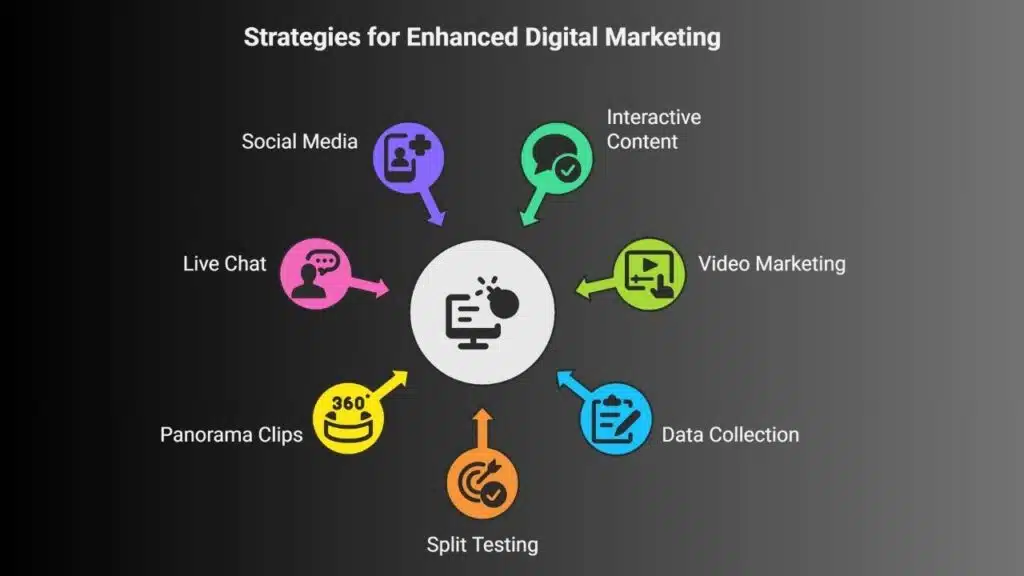
Small shops use question sets, quizzes, and interactive graphics in digital marketing to keep eyes glued on pages. These features boost time on site, lift SEO, shape consumer behavior, and strengthen content marketing.
Pair a quiz with a quick clip to tap video marketing, since 70% of people share brand videos.
Online assistant tools or feedback forms help brands gather data on consumer preferences. Use a split test to tweak a feature and watch engagement climb. Add panorama clips for a fun spin on promo, mix in live chat to spark dialogue, and give social media content a pop.
This strategy drives better customer experience and ranks high among digital marketing trends.
Integrating Sustainability into Digital Marketing
Digital marketing trends now favor low-carbon tactics. Green social media marketing taps into eco-minded audiences. Brands cut digital waste with lean code and eco hosting. A 2023 survey showed 68% of millennial consumers will leave brands over green issues.
Generative AI can auto tag eco-content for quicker in-feed marketing. This approach adds transparency to content marketing.
Teams run carbon calculators through Google Analytics for clear proof. They drive customer experience with honest data and smart design. Marketers flag UGC that shows ethical sourcing and stress PIPEDA, CPPA, CASL rules.
Email marketing teams tag carbon figures to boost online marketing trust. This path builds customer loyalty and shapes consumer behaviour. It supports local suppliers who share greener goals.
Utilize Geofencing for Enhanced Local Targeting
Geofencing uses GPS and Bluetooth beacon tech to send ads to mobile app users near a store. More than 2.3 billion people will get geofence alerts by 2023. Small businesses can boost customer acquisition in local areas.
This trend blends online advertising and customer experience in digital marketing.
Over 50 percent of geofence alert recipients take action, like visiting a shop. Marketers set a virtual fence in Google Ads or Ads Manager. Yelp and similar apps link search results to special offers.
Local SEO also drives foot traffic. This tactic targets the right audience and boosts engagement fast.
Strengthening Local SEO for Community Reach
Small businesses boost search engine optimization with a complete map listing. They keep the same name, address, phone and logo across their site, directory pages and social media profiles.
They post photos of their shop and share video marketing clips on YouTube or Instagram. They tap tools like Search Console and Moz Local to spot gaps in information. Fully optimized listings climb higher on local SERPs.
Owners track online reviews since over 80% of Canadians use them like personal referrals. They reply to feedback, thank happy customers and fix issues fast. They ask shoppers to rate them after each sale.
They feature review snippets in email marketing and social media posts. This social proof boosts customer loyalty and foot traffic for retailers.
Expanding Reach through Diverse Marketing Channels
Eighty-two percent of small business owners see higher ROI in their digital marketing with multiple channels, yet only sixteen percent feel confident handling them well. Mixing social media marketing, email marketing, search engine optimization, and influencer partnerships helps you meet gen z consumers and millennial consumers on their turf.
Consistent brand messaging across blogs, posts, and newsletters builds recognition, trust across all platforms.
You can cast a wider net without drowning in data, as long as you use the right tools. Hootsuite lets you schedule across social networks, and Mailchimp automates email blasts. A balanced mix of video marketing, content marketing, and digital advertising deepens customer experience and taps into new audiences.
Integrated marketing shapes customer-centric campaigns that reflect real consumer behavior.
Adapting Marketing Techniques to Shifts in Consumer Behavior
Market shifts move like changing tides. Gartner found budgets fell from 11% in 2020 to 6.4% in 2021. Ads pop up like toast slices on every phone screen. Gen Z consumers jump from TikTok to voice assistants.
Teams tap generative ai tools in ads. Smart speakers boost voice search and drive seo strategy. Data tracker spots customer behavior patterns and guides content marketing to improve customer experience.
Mobile shopping rules with over half of buyers on phones.
Google ends cookie tracking by 2025. That change shakes digital advertising. Small businesses collect direct data from opt in forms. They nurture fans in mail platform and track clicks.
Managers gift freebies for sign ups to boost customer loyalty. Social media marketing and digital marketing trends shift to live polls and stories. Leaders schedule posts with post scheduler to save time.
Teams blend channels in relationship manager to guide buyers along their journey.
Takeaways
This list gives small shops a clear map to marketing success. Trends like machine intelligence and social platform ads drive more clicks. Local reach grows with location tech and a mobile device focus.
Teams link data in an analytics platform to track consumer behavior. Smart moves now grow customer loyalty and fuel long term growth.
FAQs
1. How can generative AI boost content marketing for small businesses?
Generative AI writes blog posts, social captions, and email drafts, no coffee breaks. It learns your tone, writes fast. You tweak text like clay to fit your brand. It also adds SEO keywords to boost web traffic. You get time to serve your customers.
Posting real stories on Instagram and Facebook makes fans feel close. Use TikTok clips, Reels, and Snapchat for fun polls. Work with micro-influencers to reach new folks. Ask questions, chat with your fans. This two-way chat builds trust and feels like sharing a warm cup of coffee.
3. Why is video marketing a top digital advertising trend?
Videos grab eyes fast. YouTube Shorts, TikTok, and Instagram Reels rule. Short clips hook folks like fish on a line. Show product demos or behind the scenes. Good video makes a small shop seem big, and can spike sales.
4. How can a good SEO strategy improve search engine optimization and search engine marketing?
You start by noting how buyers search. Use consumer behavior to pick key phrases. Add them in blog titles, meta tags, and page text. This lifts you up in search results, cuts SEM costs. More people find you on Google.
5. How do smart speakers and voice search shape digital transformation?
People ask Amazon Echo or Google Nest for info by voice. They skip typing. To show up, you claim your map listing and add FAQs to your site. The speaker then reads your business info out loud. This shift speeds digital transformation.
6. How can small businesses protect online privacy and build customer loyalty?
I know security can feel heavy, but it’s key. You lock your site with SSL and strong passwords, back up data on the cloud. Train your team on safe habits. Follow privacy laws and cyber security best practices. This protects online privacy and keeps customers coming back.