Are you curious about cool new ways to build tall, strong buildings without harming the planet? Cross-laminated timber, often called CLT, is a game-changer, made by stacking layers of wood for amazing strength.
In this blog, we’ll show you nine awesome projects across the US that use this sustainable building material to create stunning structures. Stick around, you’ll be amazed!
Key Takeaways
- Ascent Tower in Milwaukee, Wisconsin, uses cross-laminated timber (CLT) and shows the global CLT market growth from $1.4 billion in 2023 to $2.6 billion by 2028, with a CAGR of 13.7%.
- T3 in Minneapolis, Minnesota, a seven-story office building completed in 2016, is one of the largest modern timber buildings in the U.S., supported by Structurlam Mass Timber Corporation.
- Framework Building in Portland, Oregon, highlights CLT innovation with Swinerton Builders, who opened their first fabrication facility in Portland in 2020, and Timberlab Inc. leading mass timber production.
- CLT Hotel in West Hollywood, California, uses sustainable mass timber from Structurlam Mass Timber Corporation, aligning with the global CLT market growth to $2.6 billion by 2028.
- Walmart Home Office Campus in Bentonville, Arkansas, features CLT with Timberlab, who expanded to Greenville, SC in 2023, creating 100 direct living-wage jobs.
Ascent Tower, Milwaukee, Wisconsin
Hey there, readers, let’s chat about the Ascent Tower in Milwaukee, Wisconsin. This stunning building stands tall as a prime example of cross-laminated timber, or CLT, in action.
It showcases how mass timber can transform urban spaces with style and strength. Plus, it taps into sustainable living by using renewable resources like engineered wood.
Built with cutting-edge materials, Ascent Tower also highlights the global CLT market’s growth, valued at $1.4 billion in 2023 and projected to hit $2.6 billion by 2028, with a speedy CAGR of 13.7%.
The structural segment, tied to projects like this, leads with top benefits, such as flexibility, fire resistance, and seismic performance. Isn’t it cool to see green construction rise sky-high?
T3 Minneapolis, Minnesota
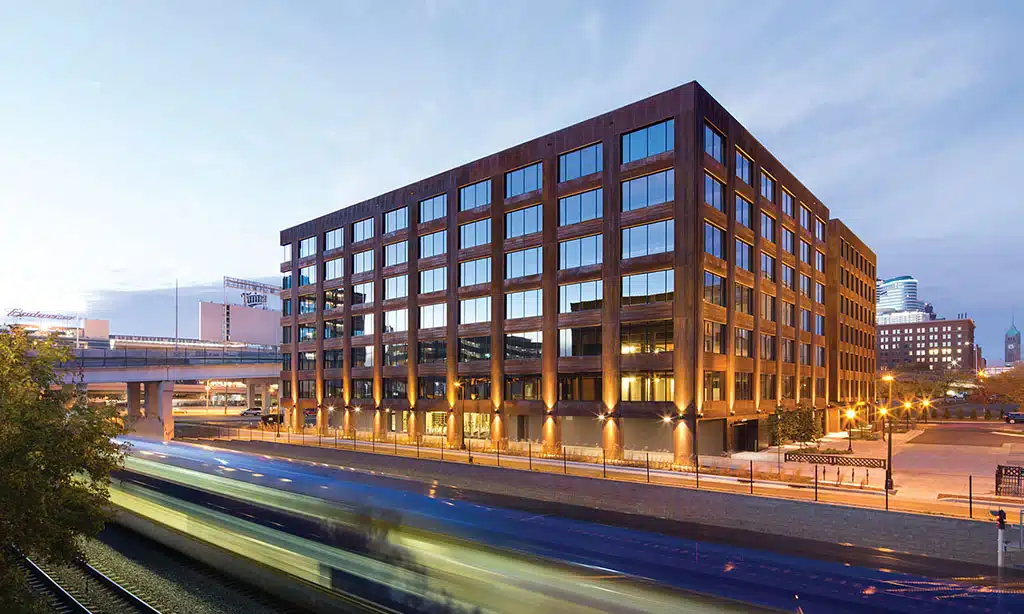
T3 Minneapolis, Minnesota, stands as a shining example of cross-laminated timber (CLT) in action. This seven-story office building, finished in 2016, uses mass timber for its structure.
It shows how sustainable materials can work in non-residential construction. Guess what? It’s one of the largest modern timber buildings in the U.S. at the time of its completion.
The project, backed by companies like Structurlam Mass Timber Corporation, proves that laminated wood can be strong and stylish.
Now, let’s chat about its impact. T3, short for “Timber, Technology, Transit,” fits right into the push for green building. With the non-residential sector set to lead CLT demand, driven by environmental rules for offices and hotels, this space is a trendsetter.
Future projections also hint at production soaring to 3.5 billion board feet over the next 15 years. So, imagine a city full of structures like this, cutting down on carbon and boosting energy-efficient designs.
How cool is that?
The Soto, San Antonio, Texas
Check out The Soto in San Antonio, Texas, folks. This stunning project showcases cross-laminated timber, often called CLT, in a big way. It’s a modern building that grabs your eye with its sleek design.
Plus, it uses sustainable materials like engineered wood products for a greener vibe. How cool is that?
Stick with me here, and let’s chat about its impact. The Soto proves that mass timber works wonders in non-residential construction. With adhesive-bonded CLT leading the market share, as seen in North America’s rapid growth, this structure stands tall.
It’s like a beacon, showing how we can combat climate change with renewable resources. What a game-changer for city building!
Framework Building, Portland, Oregon
Hey there, folks, let’s chat about the Framework Building in Portland, Oregon. This project stands tall as a prime example of cross-laminated timber (CLT) innovation. Built with mass timber, it shows off the strength and beauty of sustainable materials.
Imagine a structure that’s not just sturdy, but also kind to our planet, a real win for green infrastructure.
Now, get this, Swinerton Builders, a big name in mass timber construction since 2014, played a huge role here. Their first fabrication facility opened right in Portland back in 2020.
Plus, Timberlab Inc., part of Swinerton Incorporated, is pushing boundaries with one of the largest CLT manufacturing hubs in the U.S. Talk about setting the pace for energy-efficient builds with awesome fire resistance and insulation properties!
Sara Cultural Center, Skellefteå, Sweden (Inspiration for US Projects)
Gosh, have you heard about the Sara Cultural Center in Skellefteå, Sweden? This stunning building is a real game-changer, showing off the power of cross-laminated timber, or CLT, in a big way.
Built with sustainable living in mind, it stands as a towering example for mass timber projects across the US. Picture a structure that’s not just pretty, but also kind to our planet, using a renewable resource like wood.
It’s a true marvel, blending top-notch design with eco-friendly vibes, and it’s no wonder American builders are taking notes.
Now, let’s chat about why this matters. Europe, especially places like Germany, the UK, and France, leads the CLT market with tons of construction action. The Sara Cultural Center uses adhesive-bonded CLT, a top choice for its rock-solid structural stability, often with PRF and PUR adhesives.
This setup gives amazing fire resistance and insulation properties, making it a model for US urban growth. Honestly, it’s like a blueprint for how we can build smarter, greener cities over here with mass timbers.
CLT Hotel, West Hollywood, California
Hey there, folks, let’s talk about an impressive spot in West Hollywood, California. The CLT Hotel stands tall as a remarkable example of cross-laminated timber (CLT) in action. This project uses mass timber to craft a modern, striking design.
It’s not just about appearance, though; it’s constructed with sustainability at its core. Companies like Structurlam Mass Timber Corporation played a significant role in providing materials.
You can see how renewable resources truly make an impact here.
Now, imagine a hotel that connects to the broader vision of green building. With the global CLT market valued at $1.4 billion in 2023, and projected to reach $2.6 billion by 2028 at a CAGR of 13.7%, projects like this are part of a growing trend.
Plus, U.S. government investments in sustainable construction are driving progress in non-residential construction. This hotel demonstrates how CLT provides excellent fire resistance and insulation properties.
Isn’t it exciting to see market growth unfolding right in California?
Riverfront Square Development, Newark, New Jersey
Folks, let’s chat about an exciting project in Newark, New Jersey, called Riverfront Square. This development is making waves with its use of cross-laminated timber (CLT), a strong, sustainable material.
It’s a big step for mass timber in urban settings, showing off its power for non-residential construction.
Picture a bustling new hub rising by the river, built with renewable resources like glue-laminated timber (GLT). Timberlab, a key player here, sources locally harvested wood from rural Oregon.
They’ve poured investment into local economies through two GLT facilities, a sawmill, and a planing mill. This project isn’t just about building; it’s about energy-efficient design, great acoustic performance, and solid fire resistance, proving CLT is a game-changer for the timber industry.
Walmart Home Office Campus, Bentonville, Arkansas
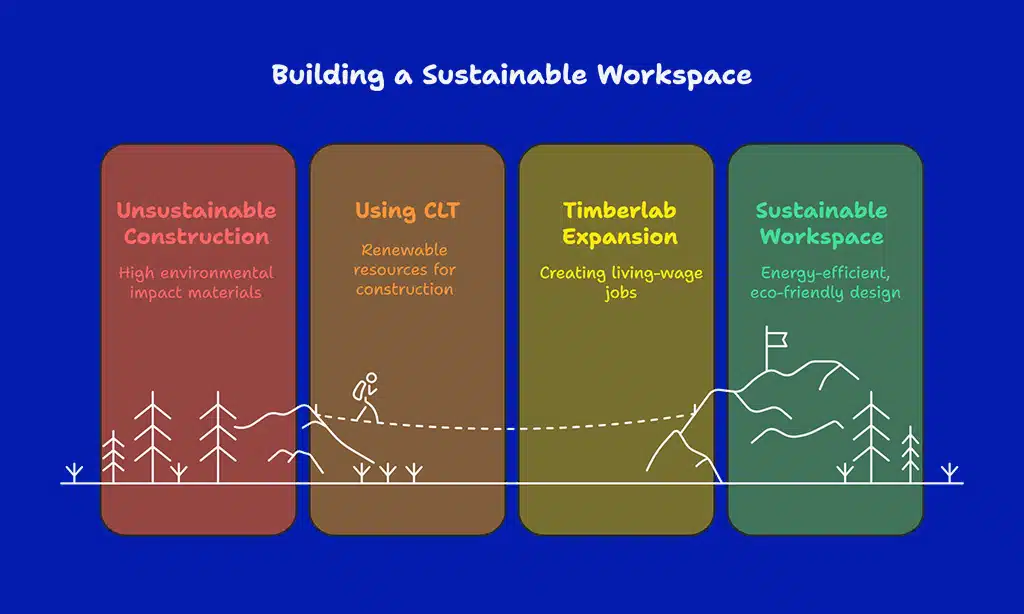
Hey there, readers, let’s chat about the Walmart Home Office Campus in Bentonville, Arkansas. This massive project is a game-changer, using cross-laminated timber, often called CLT, to build a sustainable workspace.
Picture a giant wooden puzzle, strong and eco-friendly, coming together as part of their huge campus overhaul. It’s not just about looks; this mass timber setup taps into renewable resources, cutting down on environmental impact.
Plus, with companies like Timberlab leading the charge, it’s a showcase of modern construction materials in action.
Speaking of Timberlab, they kicked off in 2021, focusing on mass timber systems, and expanded to the East Coast in 2023 with a new spot in Greenville, SC. That move is creating 100 direct living-wage jobs, not to mention a bunch of indirect ones.
So, this Walmart project isn’t just building offices; it’s building futures with energy-efficient designs and top-notch fire resistance. Stick with me to see how CLT is shaping non-residential construction right here in the US!
Portland International Airport Expansion, Oregon
Gosh, folks, let’s chat about the exciting expansion at Portland International Airport in Oregon. This project is making waves with its use of cross-laminated timber, or CLT, a super strong and sustainable material.
They’re building new spaces with this renewable resource, showing how mass timber can shine in big public projects. It’s like watching a giant wooden puzzle come together, piece by piece, right before our eyes.
Now, get this, the project links up with local efforts, including ties to a massive facility in Millersburg, Oregon, spanning 190,000 square feet. By the end of 2026, that place will churn out 7 to 9 million square feet of CLT each year.
Imagine the impact, with fire resistance and solid insulation properties built into every slab. This airport upgrade isn’t just about more room; it’s a bold step for energy-efficient, sustainable living in non-residential construction.
Benefits of Cross-Laminated Timber in Urban Development
Hey there, let’s talk about why cross-laminated timber, or CLT, is gaining attention in city building. It’s a game-changer, folks, thanks to its lightweight design. Think about transporting materials that aren’t heavy; it reduces costs and accelerates construction.
Plus, as Timberlab Inc. advocates for sustainable options in Oregon, CLT stands out as an eco-friendly choice over concrete and steel. It’s a renewable resource, so we’re not just building, we’re also protecting the planet.
Now, imagine remodeling with simplicity. CLT allows you to adjust spaces without major challenges, and here’s the best part, its consistent pricing remains stable even when markets fluctuate.
That’s a huge advantage for urban projects. On top of that, its insulation properties keep buildings comfortable, and the fire resistance provides an extra level of safety. So, with mass timber like this, cities can develop intelligently and sustainably, setting the stage for energy-efficient living.
Future Trends in Cross-Laminated Timber Construction
Gosh, folks, imagine a world where buildings grow taller with wood instead of steel! Cross-laminated timber, or CLT, is paving the way for this shift in the US. We’re seeing mass timber production soar, hitting a whopping 11 million board feet over the past 11 years.
Looking ahead, the global CLT market analysis for 2023-2028 shows exciting growth. It splits into types, regions, end uses, and industries, hinting at a boom in both residential construction and non-residential construction.
Companies like SmartLam NA and Structurlam Mass Timber Corporation are jumping in, pushing for more sustainable living. Plus, with awesome fire resistance and insulation properties, CLT is becoming a top pick for modern builders.
Now, let’s chat about what’s next for this renewable resource. Picture CLT blending with cool tech like the Internet of Things and sensors to make smarter structures. Think energy-efficient designs that cut costs and meet climate goals.
The compound annual growth rate, or CAGR, is climbing fast, showing how market share for firms like Binderholz GmbH and Stora Enso keeps expanding. Innovations in automation and advanced materials are also on the rise, making construction quicker and safer.
And get this, public investment is fueling projects, from bridges to flooring, in emerging markets across South America. So, stick around to see how CLT shapes our urban future!
Takeaways
Hey there, readers, let’s wrap up this journey through cross-laminated timber wonders! These nine projects show how mass timber is changing the game in US markets. From towering buildings to green designs, sustainable living is taking root.
Isn’t it cool to see wood as the future of urban growth? Drop your thoughts below, I’m all ears for your take on this timber trend!
FAQs
1. What exactly is cross-laminated timber, and why’s it making waves in the US markets?
Well, cross-laminated timber, or CLT as folks call it, is a strong, layered wood product used in mass timber builds. It’s gaining traction in both residential construction and non-residential construction for its fire resistance and insulation properties. Plus, it’s a renewable resource, which ties right into sustainable living, don’t you think?
2. Which companies are leading the charge with cross-laminated timber projects?
Big players like SmartLam NA, Stora Enso, and Binderholz GmbH are at the forefront, pushing the boundaries. Structurlam Mass Timber Corporation and Nordic Structures are also key names driving market share with mechanically fastened CLT.
3. How does cross-laminated timber stack up for energy efficiency in buildings?
Cross-laminated timbers shine bright here, offering top-notch insulation properties that cut energy costs. It’s like wrapping your home in a cozy blanket, keeping the heat in and the cold out, all while being energy efficient.
4. Are there challenges with CLT in the US, like with building codes or flammability?
Oh, you bet, navigating the International Building Code can be a real bear for CLT projects due to concerns over flammability. Though it boasts solid fire resistance, the combustible nature of wood still raises eyebrows among regulators. Companies like Hasslacher Holding GmbH and Schilliger Holz AG work hard to meet standards and boost consumer awareness.
5. What’s the market outlook for cross-laminated timber, considering growth stats?
The market’s buzzing with a promising CAGR, or compound annual growth rate, as statistics show steady climbs in demand. Firms like Mayr-Melnhof Holz Holding AG and KLH Massivholz GmbH are riding this wave, eyeing market expansion, especially with Porter’s Five Forces analysis guiding corporate strategies in developing countries.
6. How does CLT fit into modern trends like the Internet of Things or sustainable goals?
Now, picture this, cross-laminated timber blending with cutting-edge Internet of Things tech to monitor acoustic performance in builds. It’s not just about framing; it’s about tying into waste management and sustainable living goals that resonate with today’s crowd. Companies like XLam NZ Limited are exploring these connections, proving CLT isn’t just wood, it’s the future.