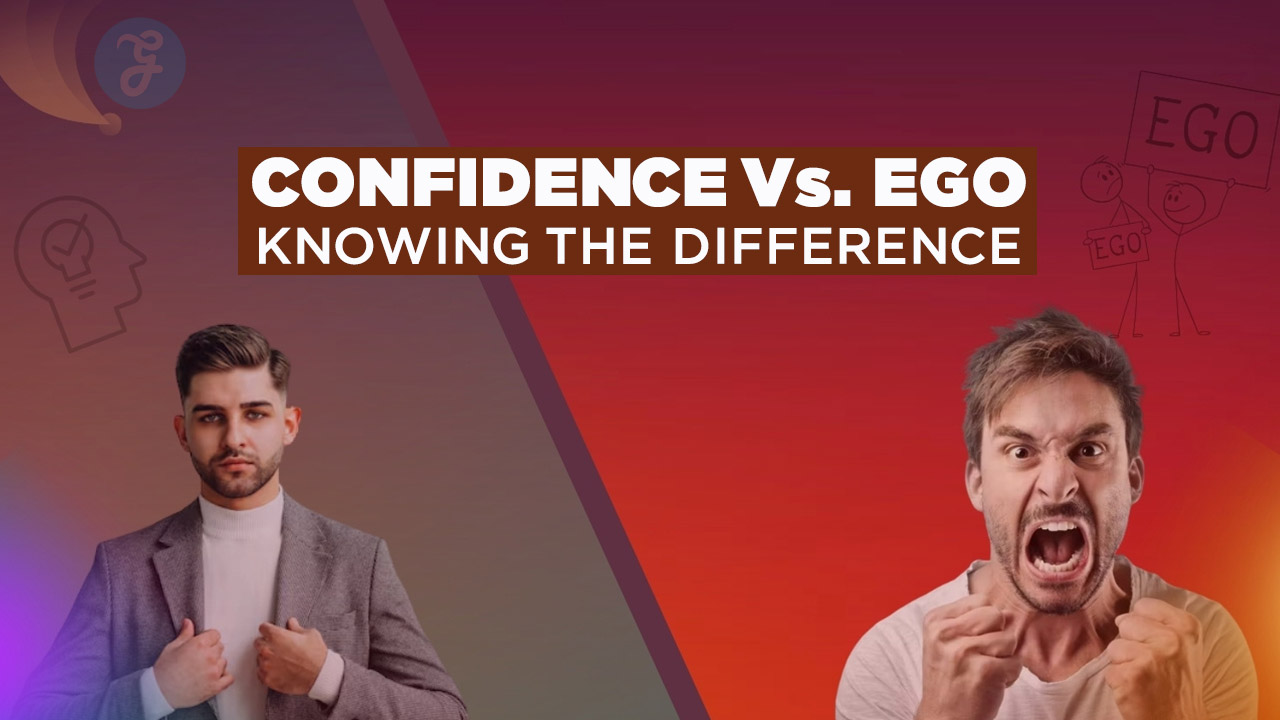
Have you ever met someone who lights up a room? They make you feel heard and important. Then, think about that other person, the one who sucks the air out of the conversation and only talks about themselves. We have all been there. It is easy to feel unsure if your own self-esteem is true confidence or just ego in disguise. It can be confusing. These blurred lines lead to many problems in friendships and even at work.
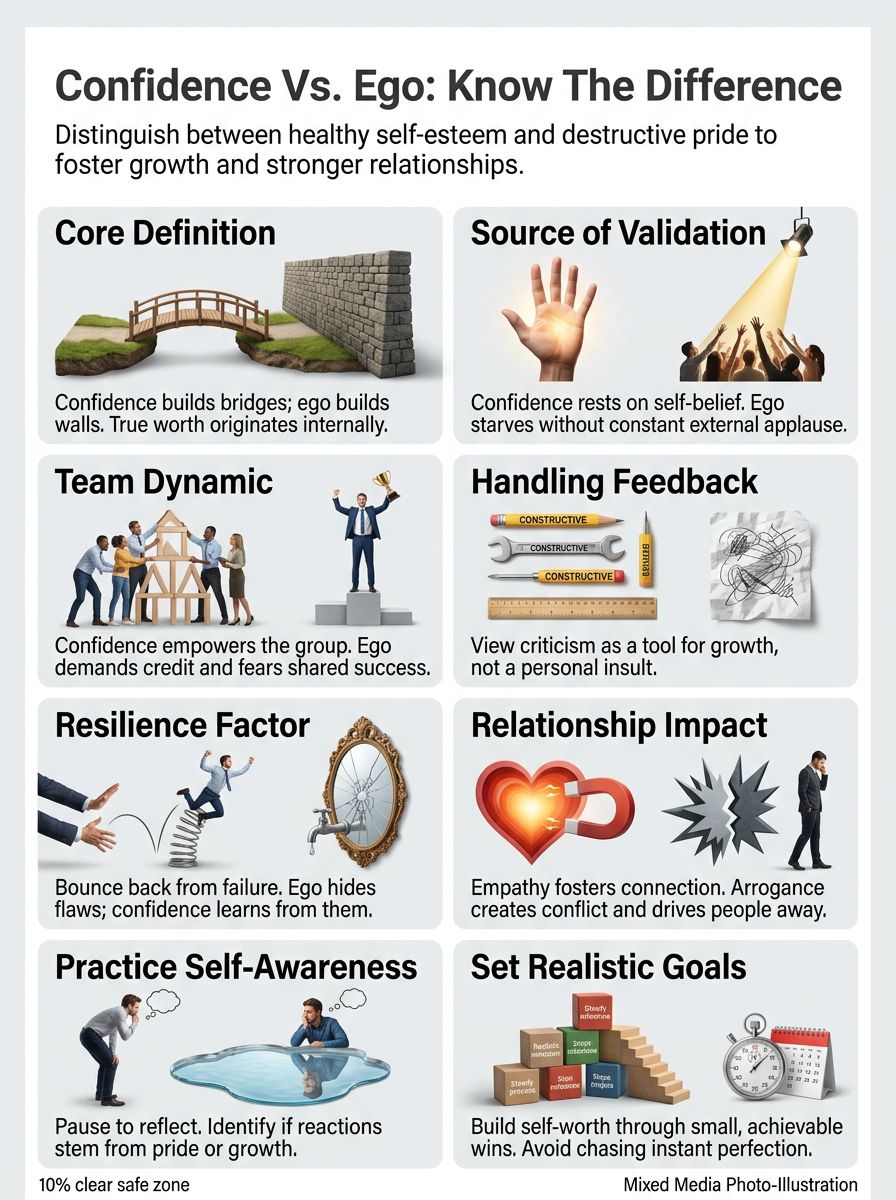
Research confirms this impact. A 2024 study from the University of Colorado Boulder found that humble leaders, those with true confidence, actually drive better team performance than those who are just loud or dominant. Confidence builds bridges. The ego tends to build walls. I want to help you clear things up. We are going to break down the differences between confidence vs ego using simple words, facts, and real-life tips you can use right away.
So grab a coffee and settle in. Let’s look at how knowing the difference could change your life for the better.
Understanding Confidence
Confidence comes from knowing your strengths and accepting your flaws. It helps you try new things, even when you feel a little scared.
Definition of confidence
Confidence means trusting yourself and your abilities. Psychologists often refer to this as “self-efficacy,” a term coined by Albert Bandura. It is the deep-seated belief that you can figure things out.
People with confidence do not pretend to be perfect. They know their strengths but also learn from mistakes. They do not depend on others for validation or praise.
Having confidence looks like speaking up for yourself without putting others down. You can admit you are wrong and still hold pride in who you are. This helps build strong relationships since others feel safe around someone real and steady. Confidence is linked closely to healthy selfesteem, humility, and true selfawareness.
Characteristics of confident individuals
Now that you know what confidence means, let’s see what sets confident people apart. A 2025 study from the University of Kent highlighted a fascinating nuance: true confidence does not always mean being right. It means being secure enough to make a decision.
These traits help them shine and handle life’s ups and downs with ease:
- They accept feedback: They do not take it personally but use it to improve.
- Self-assurance shows in action: Their words match their actions.
- They set healthy boundaries: They say no when needed without guilt.
- They value growth: Many try new things, even if failure is possible.
- They lift others up: They show humility and empathy daily instead of tearing people down.
- Internal validation: Their self-worth comes from within, not outside praise.
- Adaptability: Openness to change keeps them learning fast in new situations.
- Accountability: They own their mistakes and don’t blame others for setbacks.
- Assertiveness: They express needs clearly while respecting others’ views.
- Collaboration: Working with others is easy for them; they thrive in teamwork.
Each point shapes a strong yet gentle character that inspires trust and respect in any situation.
Understanding Ego
The ego wants to stand out, win at all costs, and be seen as better than others. It can feel like wearing a mask that hides real feelings underneath.
Definition of ego
Ego is how a person sees themselves and their importance. It often makes people focus more on self-interest than on others. Author Ryan Holiday, in his book Ego Is the Enemy, describes ego as “an unhealthy belief in our own importance.”
People with a high ego can act as if they matter most. This often happens at the cost of kindness or humility. “A big ego is like wearing blinders to your faults,” said an old friend once. That friend was onto something.
The ego looks for praise from outside sources. It seeks validation to feel good instead of finding worth inside. Ego-driven actions can grow into arrogance or pride. This makes it hard to accept feedback or see mistakes. This need for approval may lead to insecurity and shaky self-esteem over time.
Traits of ego-driven individuals
People with strong egos often show clear patterns. Their actions speak loudly and leave a mark on others.
- They crave validation from others to feel good about themselves.
- Pride rules their choices; they need to appear as the best, even if it is not true.
- Taking feedback feels like a threat, so they react with anger or denial.
- Boasting comes easily for them; stories make them the hero every time.
- Empathy seems to be missing, making it hard for them to see another’s pain or view.
- Apologies rarely cross their lips; admitting fault is too much for their self-image.
- Competing with friends or coworkers becomes a habit, leaving little room for teamwork.
- Self-interest guides many decisions, even if it hurts relationships or trust.
- Small mistakes seem huge in their eyes, causing blame and finger-pointing instead of learning.
- Jealousy surfaces quickly if someone else gets credit or praise.
Key Differences: Confidence vs Ego
Confidence lets you walk tall, while ego can make you trip over your own feet. Sometimes, the line between them is as thin as a sheet of paper.
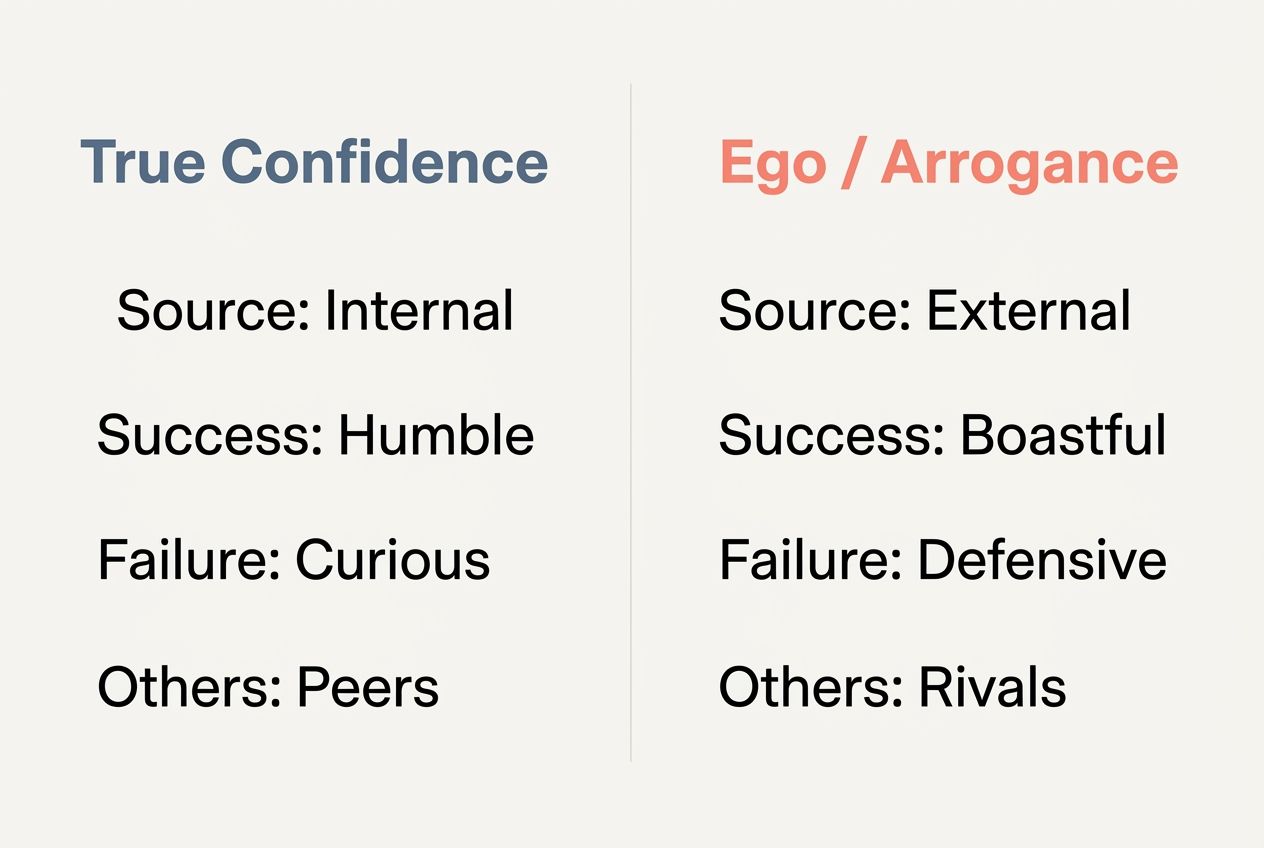
Let’s look at the specific differences side-by-side so you can spot them instantly.
| Feature | True Confidence | Ego / Arrogance |
|---|---|---|
| Source of Worth | Internal (Competence & Values) | External (Praise & Status) |
| Reaction to Success | Humble & Grateful | Boastful & Entitled |
| Reaction to Failure | Curious (“What can I learn?”) | Defensive (“It wasn’t my fault!”) |
| View of Others | Peers & Collaborators | Rivals & Threats |
Source: Internal validation vs. external validation
People with self-confidence get their sense of worth from inside. They trust their skills and make choices based on self-awareness. They do not depend on others’ approval to feel good about themselves. This kind of self-esteem stands strong even if praise or attention is missing.
Ego-driven people seek validation from outside sources. Their pride rises when they hear compliments or gain social status. However, it crumbles with criticism. Many actions come from a need for applause instead of true belief in personal strengths. Insecurity grows because happiness depends on what others think, not inner values or humility.
Behavior: Collaboration vs. competition
Confident people like to work with others. They share ideas and help the whole team shine. You will see confident folks cheering for teammates, not just themselves. This support builds strong bonds and trust. It brings out the best in everyone.
Ego-driven people want to win at all costs. Insecure about their self-worth, they may put others down or hog credit. Their motivation often centers on pride or personal gain instead of group success.
That attitude can cause conflict. It stops growth cold because they view feedback as a threat, not a chance to learn together.
Response to feedback: Openness vs. defensiveness
People with true self-confidence listen and accept feedback. Psychologist Carol Dweck calls this a “Growth Mindset.” They see critique as a way to grow their self-worth and learn new things. These individuals use emotional intelligence. They do not feel attacked or upset by suggestions.
If someone points out a mistake, they might say, “Thank you for helping me improve,” instead of making excuses. Ego-driven people act differently. They often have a “Fixed Mindset.” They take any feedback as an attack on their pride or self-image. Instead of listening calmly, they may interrupt others or blame outside factors for errors.
This defensiveness can stunt personal growth. Humility helps anyone handle tough words without letting insecurity lead the way. Facing feedback with openness takes real strength, not arrogance or narcissism.
The Impact of Confidence
Confidence acts like sunlight for personal growth. It helps people flourish in tough times. It opens doors to new chances and helps us face setbacks with a strong heart.
“Humility in leadership benefits teams, individuals and entire organizations. People experience more psychological freedom.” – University of Colorado Boulder Study, 2024
Fosters growth and learning
People with healthy self-esteem open their minds to new ideas. They ask questions and listen without feeling threatened. They treat mistakes like stepping stones.
Kids who feel sure of themselves try hard things in school and sports. They do this even if they might fail at first. Most teachers agree that students who show humility learn faster. This is because they accept help and adapt quickly.
Adults grow in the same way. The 2025 Career Confidence Index found that 47% of workers feel confident in their ability to advance their careers. Those confident workers handle change better at jobs and welcome feedback from bosses or coworkers.
Growth sticks best where people replace pride with honest self-awareness. A little bit of humor about life’s hiccups helps, too.
Builds strong relationships
Confident people listen more and judge less. They show respect, speak with honesty, and value others’ ideas. These attitudes help build trust between friends, family, or coworkers.
Trust acts like glue in any bond. Ego pushes some to need the last word or win every argument. This makes honest talks hard. Self-awareness matters most here. It opens doors for empathy, patience, and clear talk. Strong bonds grow when folks put pride aside. They focus on true connection instead of selfinterest.
Encourages resilience
Strong relationships help us stand tall together. Inner strength keeps us steady through tough times. People with true self-worth bounce back after setbacks. They see failure as a chance to learn, not a reason to give up.
A healthy level of self-esteem builds grit. Someone who trusts their own value listens to feedback and tries again. Each mistake becomes a lesson, not an insult. This outlook pushes personal growth forward every day and shrinks the fear of falling short.
The Consequences of Ego
The ego often trips us up. It makes relationships rocky and shuts doors we need open. The costs are often higher than we think.
Creates conflict and isolation
The ego puts people on edge. It can turn small problems into big fights. Someone with a strong ego might talk over others, ignore teamwork, or refuse ideas that do not match their own. These actions hurt relationships and trust. Friends may start to walk away. Coworkers may hold back from sharing thoughts.
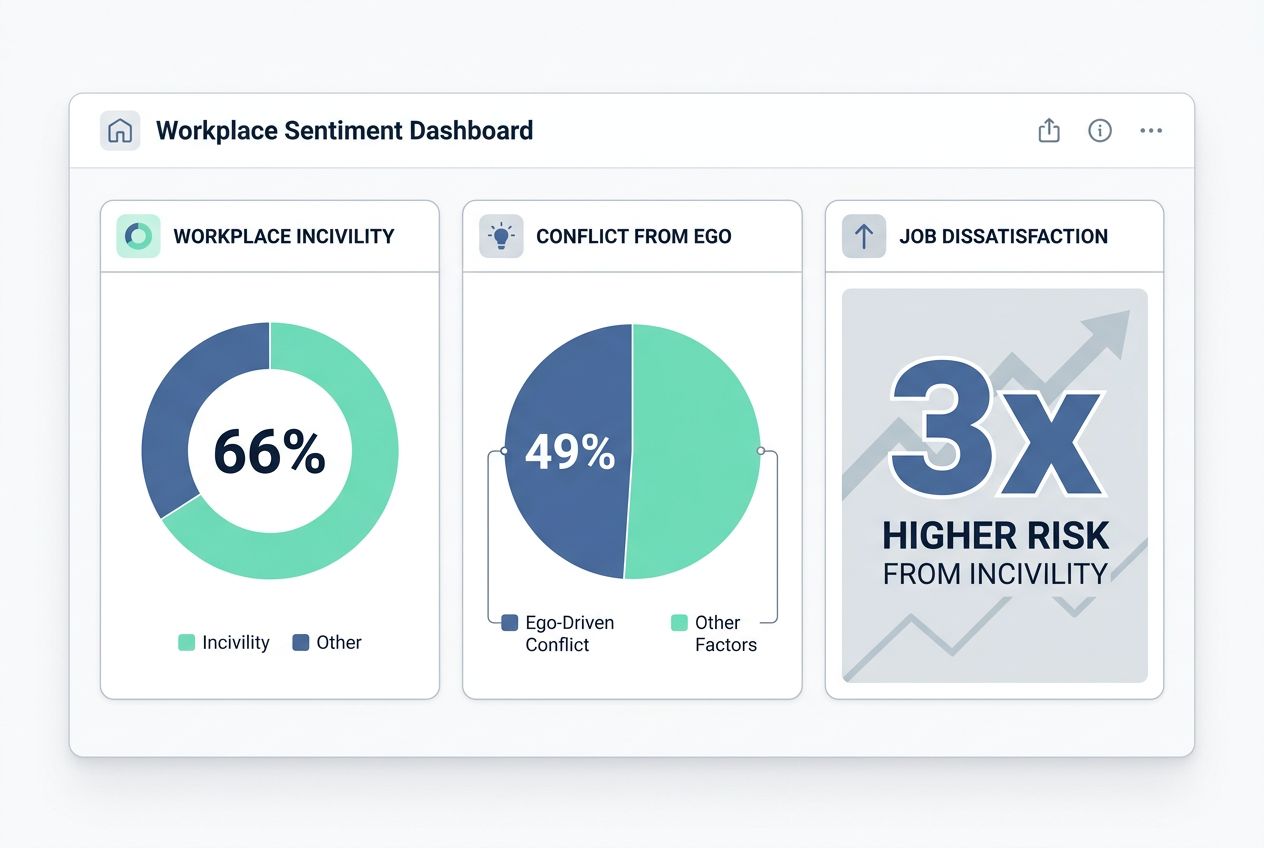
The data paints a clear picture of this damage:
- Widespread Incivility: A 2024 SHRM report found that nearly 66% of U.S. workers have experienced incivility at work.
- Conflict Origins: The Myers-Briggs Company reports that 49% of workplace conflict comes directly from personality clashes and egos.
- Employee Satisfaction: Workers in uncivil environments are three times more likely to be dissatisfied with their jobs.
A need for outside validation often drives this kind of behavior. People focused on self-interest lose touch with humility and empathy. Over time, they build walls instead of bridges. Pride traps them in loneliness. True confidence opens doors to new friends and growth at every turn.
Inhibits personal development
The ego acts like a wall. It blocks personal growth and learning. If someone feels too proud or self-important, they stop listening to others. Feedback becomes an attack instead of help.
Growth stalls because the person thinks they already know it all. This attitude makes it hard to build true self-esteem or practice humility.
People driven by ego fear being wrong. They avoid new challenges. They miss chances for real improvement and keep repeating old mistakes. Genuine confidence helps people admit faults, learn from failures, and boost their self-confidence over time. A high ego only feeds insecurity and limits personal progress.
Leads to dependency on approval
Ego-driven people often need others to praise or notice them. They chase validation like a thirsty person hunts water. This need for constant approval grows fast and can feel endless. It is like trying to fill a bucket with a hole in it.
Selfworth takes a hit because their value starts depending on what others think. It does not come from how they see themselves.
Insecurity slips in and grows stronger each time feedback is ignored unless it matches what the ego wants to hear. Real personal growth slows down because changes are made only if someone else claps for them.
True confidence feels good inside. The ego is always hungry for outside applause just to feel important for one more moment.
Striking a Balance Between Confidence and Ego
It is easy to walk a tightrope between pride and arrogance if you are not paying attention. Even the strongest trees bend with the wind. They don’t break just to prove their strength.

Practicing self-awareness
Self-awareness means knowing your own thoughts and feelings. People who check in with themselves often can spot pride, arrogance, or insecurity before these traits take over.
UFC Champion Frank Shamrock uses a system called “Plus, Minus, Equal” to keep his ego in check:
“Each day, find someone better than you to learn from (Plus), someone lesser than you to teach (Minus), and someone at your level to challenge yourself against (Equal).”
Simple steps help here. Pause to think about why you feel upset after feedback. Ask why praise makes you act boastful. That small moment of reflection helps stop the ego from running wild.
Honest self-talk keeps a person’s confidence strong without falling into narcissism. Think about how your words sound to others. This builds emotional intelligence and healthier relationships. Self-awareness works like a mirror for your self-image. It shines light on both strengths and weaknesses, so growth feels possible every day.
Focusing on humility and empathy
After checking in with self-awareness, it is wise to shift your focus to humility and empathy. Humility shows true confidence, not arrogance. A humble person does not always need praise or first place. Instead, they share credit and lift others up.
Empathy helps build healthy relationships by understanding people’s feelings. It creates trust and respect at home, work, or school. Acting with both humility and empathy can calm egos before they spark into conflict. This approach strengthens self-worth without feeding insecurity or pushing for constant validation from others.
Building self-confidence through action
Small steps make a big difference in self-confidence. You gain self-assurance by trying new things, even if they scare you.
For example, speaking up in class or sharing your thoughts at work builds courage. Each brave action adds to your sense of self-worth. Talking kindly to yourself also helps quiet that little voice of insecurity inside.
Mistakes might happen, but every try teaches something new. Every completed task makes you see what you can do on your own. This shows others’ authenticity and inner motivation, not arrogance or ego. Real growth comes from doing. It does not come from just wishing or waiting for praise from others.
How to Cultivate Healthy Confidence
Healthy confidence grows step by step. It is like planting seeds in a garden and watching them sprout. Small wins can light the path, showing you how strong you really are.
Setting realistic goals
Small steps count. Try setting goals you can reach, like reading for ten minutes a day or finishing one task at work before lunch. Many people use the SMART goal framework (Specific, Measurable, Achievable, Relevant, Time-bound) to ensure they hit these targets.
Big dreams are great. But many small wins boost your self-esteem much faster than chasing mountains all at once.
A confident person plans with honesty. They know their limits and strengths. Goals should stretch you just enough to grow, not break your spirit. This builds real self-worth and keeps arrogance in check because progress comes from effort, not luck or shortcuts.
Embracing failures as learning opportunities
After setting realistic goals, facing setbacks is part of growing self-esteem. Failure can sting like a bee, but it teaches lessons you cannot find in any textbook. Thomas Edison once said he found 10,000 ways that did not work before inventing the light bulb.
Every mistake shows what to improve and helps shape better decisions next time. Children learn to walk after many tumbles; adults grow stronger through missed chances, too.
Confidence grows as you handle failure with humility instead of arrogance or insecurity. See each mistake as an opportunity for personal growth and building true self-worth. It is not just proof that your ego needs protecting.
Seeking constructive feedback
Asking for feedback shows self-awareness, not insecurity. A confident person listens to advice or suggestions without taking it as criticism. Feedback shines a light on blind spots and helps personal growth.
For example, Olympic athletes use coaches’ tips to sharpen skills. You can use a method like “Radical Candor,” popularized by Kim Scott, to ask for direct and helpful guidance.
Take feedback with humility and openness. Don’t let pride block your ears. Treat each comment as a stepping stone toward stronger self-worth and higher emotional intelligence. Respond by thanking the person for their honesty. Then decide how you can improve next time.
Wrapping Up
Healthy self-esteem grows from inside, like a plant with deep roots. Confidence shines bright, lighting up your path and the paths of everyone around you. Ego, on the other hand, feels heavy and tricky.
People often mix pride with arrogance, but the gap is as wide as an ocean. Hold onto humility, even if you feel proud of what you do. Value feedback and be open to learning more about yourself every day.
Choose motivation that lifts you and those nearby. Personal growth will follow close behind.