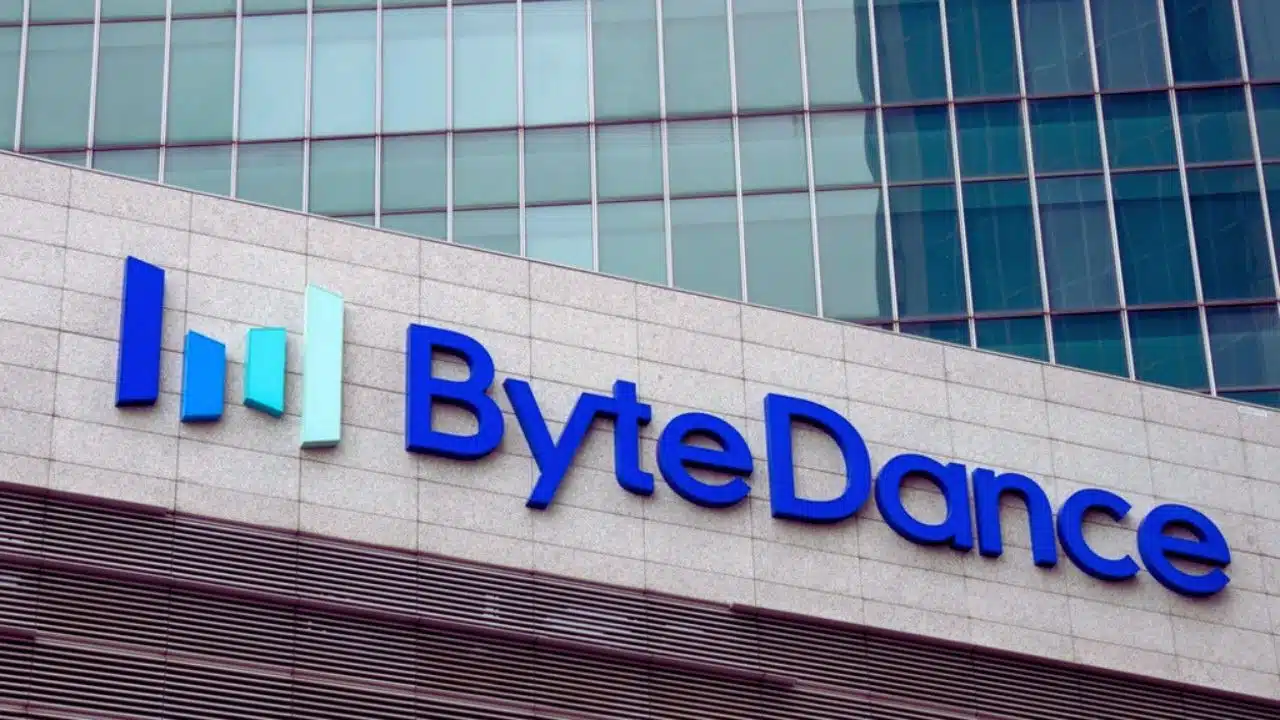
ByteDance is preparing to buy about RMB 40 billion (around $5.6 billion) worth of Huawei Ascend AI chips in 2026, pivoting to domestic compute after Nvidia’s China supply was disrupted by new export licensing rules and rising regulatory pressure to reduce reliance on US chips.
What triggered the shift
US export controls tightened around Nvidia’s China-legal H20 accelerator in April 2025, when the US government imposed an indefinite license requirement for H20 exports to China, creating uncertainty about deliveries and forcing Nvidia to book a large charge tied to inventory and commitments.
Later in 2025, China’s regulators also increased pressure on major tech firms to curb new Nvidia usage in sensitive or state-linked projects, including reported limits affecting ByteDance’s new data centers and broader official encouragement to adopt domestically produced AI processors.
This one-two squeeze—US licensing risk on supply and China’s push for domestic substitution—reshaped procurement strategies across China’s AI sector, where demand for compute is rising quickly due to large language model training and inference workloads.
Timeline of key events
| Date (2024–2026) | Event | Why it matters |
| Feb 2024 | Huawei prioritized Ascend AI chip output, which reportedly constrained some smartphone chip capacity. | Signals Huawei’s resource focus on AI accelerators as demand surged. |
| Sep 2024 | ByteDance planned AI model training primarily using Huawei chips amid US curbs, while also being a major buyer of Nvidia H20. | Shows early dual-track strategy: Nvidia for capacity, Huawei for resilience. |
| Nov 2024 | Huawei targeted mass production of Ascend 910C in early 2025, but faced yield constraints. | Highlights supply risk even for domestic alternatives. |
| Apr 2025 | US imposed license requirement for Nvidia H20 exports to China; Nvidia disclosed related financial impact. | Reduced predictability of H20 supply and raised procurement risk. |
| Aug 2025 | US began issuing some H20 export licenses again, though scope and recipients were unclear. | Partial reopening still leaves buyers exposed to policy swings. |
| Nov 2025 | Reported China-side restrictions/pressure on ByteDance’s Nvidia use in new data centers. | Reinforces domestic-chip preference in new infrastructure. |
| 2026 (planned) | ByteDance aims to procure ~RMB 40B of Huawei Ascend chips. | Marks one of the largest known single-buyer shifts toward Huawei AI compute. |
ByteDance’s Huawei procurement plan
ByteDance is reported to be planning purchases exceeding RMB 40 billion (about $5.6 billion) of Huawei Ascend AI chips in 2026, a sharp step up from near-zero procurement in the current year.
Initial deliveries are expected to begin soon, with an early order tranche described as worth “tens of billions of yuan,” indicating ByteDance is trying to lock in capacity rather than rely on spot availability.
The driver is not only supply risk but demand growth: usage has surged across ByteDance’s AI stack, including its enterprise cloud unit and its consumer-facing AI services, increasing the need for steady inference compute (the chips that run AI models in production).
Why ByteDance needs so much compute
ByteDance’s AI products have experienced rapid growth in token consumption (tokens are the units models process when generating or analyzing text), and rising token volumes typically translate into higher GPU/accelerator demand in data centers.
In 2025, ByteDance executives publicly cited Doubao daily token usage rising from about 12.7 trillion in March to over 30 trillion in September, reflecting a sharp increase in inference workloads.
Industry research also indicated ByteDance’s cloud unit led China’s public-cloud “token processing” market in the first half of 2025 with roughly 49.2% share, underscoring how much of the country’s LLM-serving load is flowing through ByteDance infrastructure.
Huawei Ascend: opportunity, but also constraints
Huawei’s Ascend line has become the most strategic domestic alternative for large-scale AI compute in China, particularly as access to top-end Nvidia accelerators remains restricted.
However, Huawei’s ability to supply at ByteDance scale is constrained by manufacturing realities: reported yields for advanced Ascend parts have been well below global best practice, complicating predictable high-volume delivery.
One report described the Ascend 910C as being produced at SMIC with yield around 20%, while the earlier 910B was described at roughly 50% yield—both far below the ~70%+ yield often cited as commercially comfortable for advanced chips.
What this means for delivery risk
Even before the newest procurement plan surfaced, ByteDance was reported to have ordered over 100,000 Ascend 910B chips in one year but received fewer than 30,000 as of July, illustrating the gap between orders and fulfilled supply.
For ByteDance, a multi-year purchase plan can be a way to secure priority allocation and co-develop software optimization, but it does not remove the underlying throughput limits of domestic chip fabrication.
For Huawei and China’s broader AI stack, every large anchor customer like ByteDance can justify more investment in compilers, libraries, and model tooling needed to narrow the gap with Nvidia’s mature CUDA ecosystem.
China AI chip options (high level)
| Chip family | Status in China market | Key constraint today |
| Nvidia H20 | Subject to US export licensing and periodic policy swings; China-side scrutiny also increased. | Procurement uncertainty and compliance risk for new projects. |
| Nvidia H200 | Chinese firms have explored purchases after signals from President Donald Trump about potential exports under conditions, but approvals and supply remain uncertain. | Approvals, geopolitics, and availability. |
| Huawei Ascend 910B/910C | Core domestic substitute; Huawei aimed to ramp newer parts, but yields and volume remain limiting factors. | Manufacturing yield and delivery pace at scale. |
Strategic and market implications
For ByteDance, the reported RMB 40 billion 2026 plan looks like a hedge against both US export controls and China’s domestic-policy direction, while also matching the compute demands created by fast-rising AI usage.
For Nvidia, the episode highlights how quickly China revenue exposure can shift when policy changes disrupt product continuity, even for “compliant” chips like the H20 that were designed specifically to meet earlier restrictions.
For China’s AI industry, a ByteDance-scale commitment can accelerate the “domesticization” flywheel—more demand leads to more tooling, more deployment know-how, and more incentive for capacity expansion—yet it also increases competition for a limited pool of domestic accelerators.
Final thoughts
ByteDance’s reported ByteDance Huawei Ascend chip buy plan is best read as a supply-security move and a capacity move at the same time: secure chips that are politically easier to buy, and secure enough compute to keep fast-growing AI services responsive.
The central question for 2026 is execution: whether Huawei can deliver volume on schedule given yield constraints, and how quickly ByteDance can adapt models and software stacks to run efficiently on Ascend at hyperscale.
Policy remains the wildcard, because both US licensing decisions for Nvidia exports and China’s domestic procurement guidance can change procurement economics quickly—even after contracts are drafted.