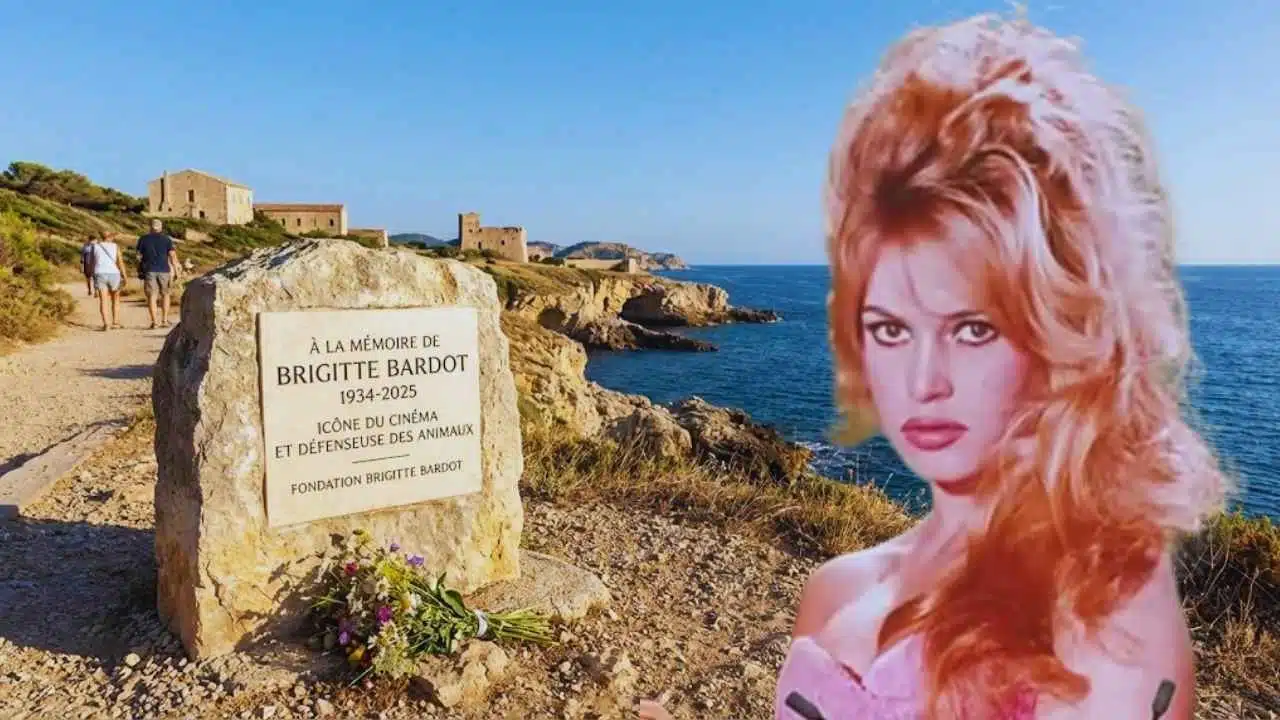
Brigitte Bardot dies at 91 after passing Sunday at her home in southern France, her foundation said. The actress-turned-animal advocate helped define 1960s pop culture and later devoted decades to animal welfare.
Brigitte Bardot dies at 91, according to an announcement from the Brigitte Bardot Foundation, which confirmed she died Sunday at her home in southern France. No cause of death was given. The news ends a life that spanned two public identities: one of the most photographed film stars of postwar Europe, and later one of France’s most forceful—and often polarizing—campaigners for animals.
Known globally as “B.B.”, Bardot rose to international fame in the 1950s and 1960s as a symbol of liberated glamour. Her influence reached well beyond cinema, shaping fashion, celebrity culture, and the image of French modernity. In 1973, she stepped away from filmmaking and later built a second career around activism—especially campaigns against seal hunting, fur, and animal cruelty—through the foundation she created in 1986.
What happened and what we know so far
The Brigitte Bardot Foundation said its founder had died Sunday at her home in southern France. The organization’s representatives did not provide a cause of death, and initial reports said no immediate details were given about funeral arrangements.
Recent coverage noted Bardot had faced health issues in the months leading up to her death, with periods of hospitalization reported in French and international media.
A star who reshaped the image of 1960s France
Born in Paris on Sept. 28, 1934, Bardot trained as a ballet dancer before she moved into modeling and film. She became an international sensation with And God Created Woman (1956), directed by Roger Vadim, her first husband. The film’s provocative marketing and Bardot’s on-screen presence helped make her a household name across Europe and the United States, while also fueling debate about censorship, sexuality, and the changing role of women in popular culture.
Her signature look—tousled blonde hair, heavy eyeliner, and an effortless mix of innocence and defiance—became shorthand for an era. Over roughly two decades, she appeared in dozens of films and worked with major directors, including Jean-Luc Godard in Contempt (1963). Even when critics were divided on her acting range, her cultural impact was undeniable: Bardot became a symbol of French celebrity, a figure whose private life and public persona were closely tracked long before today’s social-media spotlight.
Selected films and career highlights
| Year | Work | Why it mattered |
| 1956 | And God Created Woman | Breakout international success that cemented her global stardom. |
| 1960 | La Vérité (The Truth) | A dramatic role that broadened her screen reputation beyond “sex symbol.” |
| 1963 | Contempt | Major art-house milestone with Godard during a defining period for European cinema. |
| 1973 | Retirement from acting | Bardot left filmmaking at 39, setting up her long activism-focused second act. |
Marianne and the making of a national symbol
Bardot’s fame reached an unusual civic peak in 1969, when her features were chosen as the model for Marianne, the emblem of the French Republic. Marianne’s image appears in public buildings and across French civic life, and Bardot’s selection placed her in a lineage of famous French women whose likenesses have represented the nation.
For many admirers, that choice reflected Bardot’s role as a cultural shorthand for a more modern, outward-looking France—confident, glamorous, and newly central to global popular culture.
Why she left the spotlight—and why she stayed in public life anyway
Bardot retired from acting in 1973. In later interviews and profiles, she described growing exhausted by fame and the pressure of constant attention. Reports over the years also documented her mental health struggles during the height of her celebrity, including episodes of depression.
Yet leaving film did not mean leaving public life. Instead, Bardot redirected her notoriety into advocacy, using her celebrity to amplify animal-welfare campaigns that might otherwise have struggled to reach a mass audience.
The Brigitte Bardot Foundation and her decades of advocacy
In 1986, Bardot created the Brigitte Bardot Foundation to promote and organize animal protection for domestic and wild animals. The foundation has since grown into a major French animal-welfare organization, combining advocacy with on-the-ground support for rescues, shelters, and campaigns.
Public profiles of the organization describe an international donor base and a large network of investigators and volunteers. The foundation’s own communications and partner descriptions also highlight its refuges and sanctuaries in France, which support animals ranging from household pets to farm animals.
Foundation milestones at a glance
| Year | Milestone | Notes |
| 1986 | Foundation established | Bardot launched the organization to focus full-time on animal welfare. |
| 1992 | Recognized as serving the public interest/utility | Formal status strengthened its role and visibility in France. |
| Ongoing | Refuges and sanctuary network | Includes multiple refuges and partnerships supporting rescued animals. |
Bardot’s advocacy priorities were broad and frequently confrontational. Over the years, she campaigned against seal hunting, fur, animal experimentation, and aspects of industrial animal slaughter. Supporters credit her for bringing animal welfare into mainstream political and media conversations in France; critics argued her style was often combative and her rhetoric sometimes inflammatory.
Honors—and controversies that followed
Bardot received high-profile recognition for her activism, including France’s Legion of Honor in the mid-1980s, which she emphasized as recognition for animal protection rather than her film career.
Her later decades, however, were repeatedly marked by legal and public controversy over statements about immigration and Islam in France, leading to multiple convictions and fines for inciting racial or religious hatred. The contrast became a defining feature of her legacy: celebrated by many for animal advocacy and cultural impact, condemned by others for repeated inflammatory remarks and alignment with far-right politics.
Family and survivors
Bardot was married four times. She is survived by her husband, Bernard d’Ormale, and by her son, Nicolas-Jacques Charrier, from an earlier marriage.
Brigitte Bardot dies at 91 as one of the rare figures whose fame successfully bridged two lives—first as a screen idol who helped define an era of European cinema, and later as a relentless activist who kept animal welfare in the public eye for decades.
Her legacy is likely to be debated in the same breath as it is remembered. For admirers, she remains an icon of French cultural influence and a pioneer of celebrity-driven animal advocacy. For critics, her repeated legal troubles and political positions complicate any simple tribute. What is clear is that Bardot’s imprint on popular culture—and on animal welfare campaigning—will outlast the headlines announcing her death.