Do you hate slow bank transfers and high fees? You also face delays when you track a package or share health files. That hassle hits hard, and you deserve more speed. In this post, we explore the top blockchain disruption industries transforming how business is done.
Here is one fact: blockchain can track every step of a supply chain, boosting supply chain transparency and locking data with a distributed ledger. You will see ten industries where cryptocurrency, smart contracts, and tokenization can cut fees, speed payments, and boost data security.
Read on.
Key Takeaways
- Finance: Global banks hold over $5 trillion in assets. B2B cross-border deals hit $35 trillion in 2022. RippleNet links 300+ clients and cuts transfers from five days to three seconds. JPMorgan launched JPM Coin for real-time cross-border payments. The Abra app lets people send money without bank accounts.
- Supply Chain: Walmart and Sam’s Club joined a food data network in 2018. It traces leafy greens in seconds. The Pacific Tuna Project logs fishing steps and flags illegal nets. Alibaba filed a blockchain patent in Brazil in March 2020. BASF and arc-net trace meat footprints to boost buyer trust.
- Healthcare: UnitedHealthcare secures patient files on a distributed ledger. Change Healthcare’s network logs 50 million transactions daily (550 per second). MediLedger tracks drug supply chains since 2017. DeFi held $92.36 billion in total value locked by January 2022 to secure health finance tools.
- Government & Public Sector: MIVOTE runs secure blockchain ballots. The USPS patented a mail-in voting system in August 2020. Illinois and Vermont store public records on a shared chain. The UN World Food Programme pilots food aid tracking in Jordan. BitFury Group helped Georgia secure land titles on chain.
- Energy & Real Estate: LO3 Energy launched peer-to-peer power trading in Brooklyn. Acciona and Iberdrola issue digital tags to verify renewable kilowatt-hours. China Unicom and China Telecom saved $45.5 billion on a 5G grid build with Hyperledger Fabric. Propy and Ubitquity seal property deals in minutes. Metaverse Group paid $2.4 million for 116 virtual parcels in November 2020.
Blockchain Disruption Industries: Transforming Key Sectors in 2025
Blockchain technology is revolutionizing various sectors by enhancing transparency, reducing costs, and improving efficiency. In 2025, industries such as finance, healthcare, supply chain, and real estate are experiencing significant transformations due to blockchain’s decentralized and secure nature.
How is blockchain transforming finance and banking?
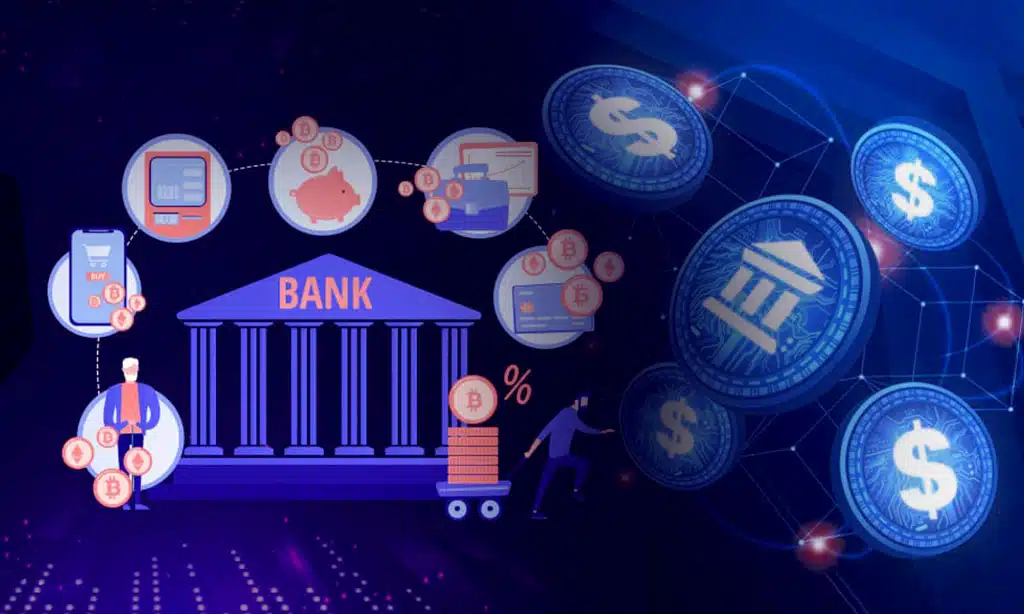
Banks adopt blockchain to slash transfer times, cutting costs. This ledger tech transforms finance and banking by speeding up transfers. The global banking sector holds over 5 trillion dollars.
B2B cross-border transactions topped 35 trillion dollars in 2022. RippleNet links more than 300 clients, making transfers in three seconds, not five days. JPMorgan Chase launched JPM Coin for real-time cross-border payments.
Firms expect blockchain payments to reach 1.8 billion transactions by 2025, up from 122 million in 2020. Abra app lets people send money without bank accounts, and use tellers to withdraw cash.
Credit Suisse ran the first same-day stock settlement with Paxos Settlement Service in April 2021. Numerai stakes 3,398 data models, holds 28 million tokens, and logged a 15 percent return in Q3 2021.
Smart contracts on the Ethereum network and Hyperledger Fabric automate deals. Decentralization cuts fraud and builds trust. Tokenization lets lenders issue digital bonds and assets.
Digital currency fuels new payment schemes. Cryptocurrency anchors modern settlement systems.
How does blockchain improve supply chain management?
Blockchain opens a shared ledger. It tracks every step in a supply chain. It boosts transparency, accountability, traceability. It speeds fraud prevention. It logs data in daily shipments.
The Pacific Tuna Project records fishing logs and flags illegal nets. It uses this secure list to fight bad catches. In 2018 Walmart and Sam’s Club joined a food data network. That effort forces leafy green growers to share produce data.
It cuts the time to find tainted lots to seconds, not weeks.
A standards group with nearly 500 members sets rules for fleets. That group shapes smart contract code. Home Depot uses a ledger to vet suppliers, spot delays, cut errors. Alibaba filed a blockchain patent in Brazil in March 2020.
Firms share product origin data to prove compliance. BASF and arc-net trace meat footprints on chain. They win buyer trust with clear records. This level of tracking drives sustainability.
It cuts waste and fights fraud. Better data sharing fuels better choices.
How can blockchain enhance healthcare services?
United Healthcare secures patient files on a distributed ledger to boost privacy and security. Change Healthcare’s Intelligent Healthcare Network logs 50 million transactions each day, that is 550 every second.
Automated agreements, known as smart contracts, let clinics share EHRs instantly. Tokenization can gate access to DNA data sales on platforms like EncrypGen and Zenome.
Chronicled’s MediLedger Network tracks drug supply chains since 2017. Deloitte joined that network in July 2020 to spot fake COVID-19 treatments. Audit trails boost data integrity for clinical trials and pharma compliance.
Nebula Genomics sold a genomic NFT of George Church’s DNA in May 2021. DeFi holds $92.36 billion in locked value by January 2022, showing strong demand for secure health finance tools.
What changes can blockchain bring to government and public sector?
Governments can swap paper ballots for blockchain ballots. MIVOTE runs secure online votes. The USPS patented a mail-in voting system in August 2020. Smart Contracts lock each vote on a Distributed Ledger.
Illinois and Vermont store public records on a shared chain. Network Decentralization stops single points of failure.
A UN World Food Programme pilot tracks food aid in Jordan. BitFury Group helped Georgia secure land titles on chain. News Provenance stores photo metadata for The New York Times on blockchain.
Students get verifiable credentials for schools and jobs. Digital Identity tools protect citizen data and lift trust. Tokenization can speed permit fees and slash red tape.
How is blockchain impacting the energy industry?
Decentralization shifts power from big plants to home units. Energy grids run like giant toll roads. Blockchain tears down those toll booths. It lets homes trade power with neighbors.
LO3 Energy launched a peer-to-peer project in Brooklyn. It cuts out middle parties in UK and US electricity trades. Firms like Acciona, Iberdrola issue digital tags to verify renewable energy.
They certify every sun or wind kilowatt. China Unicom and China Telecom code a new 5G grid on Hyperledger Fabric. They save $45.5 billion in build costs.
Recycling firms now pay with tokens, a move called tokenization. The Plastic Bank ropes local folks to drop bottles in eco bins. RecycleGO and BASF’s reciChain use tracking systems to follow plastic bales.
Abu Dhabi National Oil Company logs each barrel of crude on Ethereum. A global oil group, OOC, automates water waste moves and pays drivers with smart contracts. Data Gumbo’s GumboNet guards 3D printing records for pipeline projects.
Hyundai Merchant Marine and Samsung SDS tested paperless cargo bills. Smart code speeds shipment, cuts paper, slashes fraud.
How will blockchain disrupt entertainment and media?
Ujo Music fights digital piracy with digital rights management and smart contracts that pay artists instantly. VideoCoin taps peer to peer networks for content distribution, it cuts storage costs by half, speeds up streaming like greased lightning.
Huntercoin Project turns game points into cryptocurrency; gamers earn coins while they play, and Jetcoin Institute issues athlete tokens that fans can buy like trading cards.
Art lovers validate digital art and collectibles through tokenization on AURA, built by LVMH, Microsoft, and ConsenSys. Authors publish on Bookchain in Montreal or on Publica in Latvia, they charge readers directly with blockchain technology.
Users chat in Status or Signal over encrypted communication to dodge spies. Publishers deploy Basic Attention Token in ads, they reward real time attention, it pays as you read.
What benefits does blockchain offer to real estate?
Blockchain speeds up property deals and cuts down paperwork. It brings decentralization to the land registry. Smart contracts on Propy and Ubitquity seal real estate transactions in minutes.
They lock in digital ownership and nail down property rights. A shared ledger blocks fraud and boosts trust. Asset tokenization turns property shares into digital tokens you can trade.
Virtual land sees a boom too. The Metaverse Group paid $2.4 million for 116 parcels in November 2020. A Sandbox neighbor of Snoop Dogg spent $450,000 on a plot. Builders use blockchain to track construction details.
HerenBouw logs every step in its project files. SIMBA Chain and the U.S. Air Force use BASECAMP to watch 3D printed parts in real buildings. Vistory’s MainChain protects those blueprints with tamper proof code.
How can blockchain revolutionize education?
Immutable records sit on an open ledger, they cannot change once recorded. Employers link to smart contracts, they verify diplomas in seconds. Digital wallets hold cryptographic certificates, they prove skills with a tap.
An education hub uses a private ledger solution that logs every transcript move. Fraudsters hit a dead end thanks to near instant credential verification. Institutions save time on checks, they focus on teaching instead.
Decentralized ID tools let students own their data. They share transcripts without middlemen eating up privacy. Admissions teams swap credits across campuses via consensus rules. Microcredentials pop up like digital badges for each new skill.
Publishers track royalty flows with clear audit paths on the chain. Universities issue NFT diplomas that sit in student portfolios online. Students score a win with equal access to certificates, boosting educational equity in rural areas too.
How is blockchain used in agriculture?
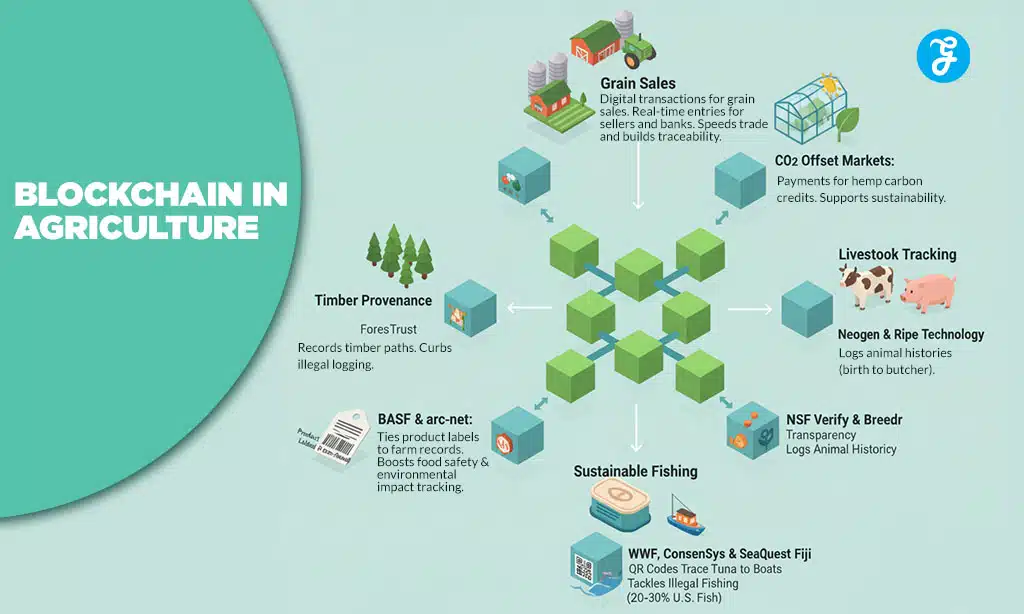
AgriDigital records digital transactions for grain sales on a distributed ledger, speeding agriculture trade. CO2 Offset Markets pay farmers for hemp carbon credits. This action supports sustainability and cuts greenhouse gas levels.
Sellers, buyers and banks all view real time entries. It builds traceability and supply chain confidence.
NSF Verify and Breedr act like farm detectives, tracking livestock on blockchain with full transparency. Neogen and Ripe Technology log animal histories, from birth to butcher. BASF and arc-net tie product labels to farm records, boosting food safety and environmental impact tracking.
ForesTrust launched in October 2020 by US Endowment for Forestry and Communities and IBM records timber paths, curbing illegal logging. WWF, ConsenSys and SeaQuest Fiji scan QR codes on tuna cans to trace fish back to boats.
This system tackles the 20 to 30 percent of U.S. fish caught illegally.
How will blockchain change advertising?
Basic Attention Token powers real-time ad payments on the Brave browser, cutting out middlemen, and boosting monetization. Advertisers can reward viewers directly for clicks or views, with microtransactions that cost just a few cents.
Publishers see instant payouts, not slow bank wires. Peer-to-peer deals use smart contracts on Ethereum, they trigger payment once an ad impression logs.
Blockchain locks down ad metrics, so ad fraud drops and trust climbs. Users keep control of personal data, they choose what to share for rewards. Transparent ledgers show every step in the digital marketing chain, they make billboards and banners traceable.
Tokenization seals value into ad slots, and decentralized dApps slash platform fees.
What emerging industries could benefit from blockchain?
New industries can gain from blockchain power. They boost data security, cut fraud, and speed up deals.
- Industrial Internet of Things IoT networks use Helium and NetObjex to link sensors with ledgers, locking readings on pipelines and machines in real time.
- Telecom identity management taps blockchain for ID checks, and Analysys Mason shows more people trust phone firms than Google, Facebook, or Apple.
- Weapon tracking runs on Blocksafe’s blend of blockchain and RFID, so law agents can trace every gun handoff.
- Digital evidence management sees Chronicled embed NFC chips in evidence bags, stamping each scan and blocking tampering.
- Recruitment platforms like Blocklancer and ChronoBank match talent worldwide on chain, cutting fees and proving skills fast.
- Cloud resource sharing gets a boost from Golem, which lets users rent idle CPU and GPU power on a secure ledger.
- Smart device automation comes from IBM’s ADEPT, where smart contracts flip switches and fix glitches without middlemen.
- Defense technology leverages SIMBA Chain’s US Department of Defense contract to lock mission logs on secure ledgers and share data in real time.
Takeaways
This tech will shake up banks, farms, media, and city halls. It cuts red tape, trims fees, and locks down data. Platforms such as a distributed ledger, smart contract platform, and crypto wallet bring fresh power.
You can trace every crate, guard medical records, and secure votes. Change lurks around the next corner. Grab your gear, and surf the blockchain wave.
FAQs
1. What does “10 industries blockchain will disrupt next” mean?
It means 10 areas, like money services, health care, supply chains, power grids, home deals, schools, election data, news, insurance, and law will all face big change soon. Blockchain tech cuts out middlemen, locks data, speeds deals. It is like swapping one wheel on a car.
2. Which areas top the list of industries blockchain will disrupt next?
The top spots go to money services, health care, product paths, home deals, power grids, schools, election data, news, insurance, and law. Each can use a digital ledger to boost trust, cut cost, track info.
3. How will blockchain disrupt supply chains?
It can trace each part, from farm to shelf, in clear view. You scan a code and see every step. It locks in proof, stops fraud, cuts waste, boosts safety.
4. When will these shifts happen?
Some projects run now. Others start within a year. You will see more apps in two to three years. The pace can feel slow, but this train rolls fast once it leaves the station.