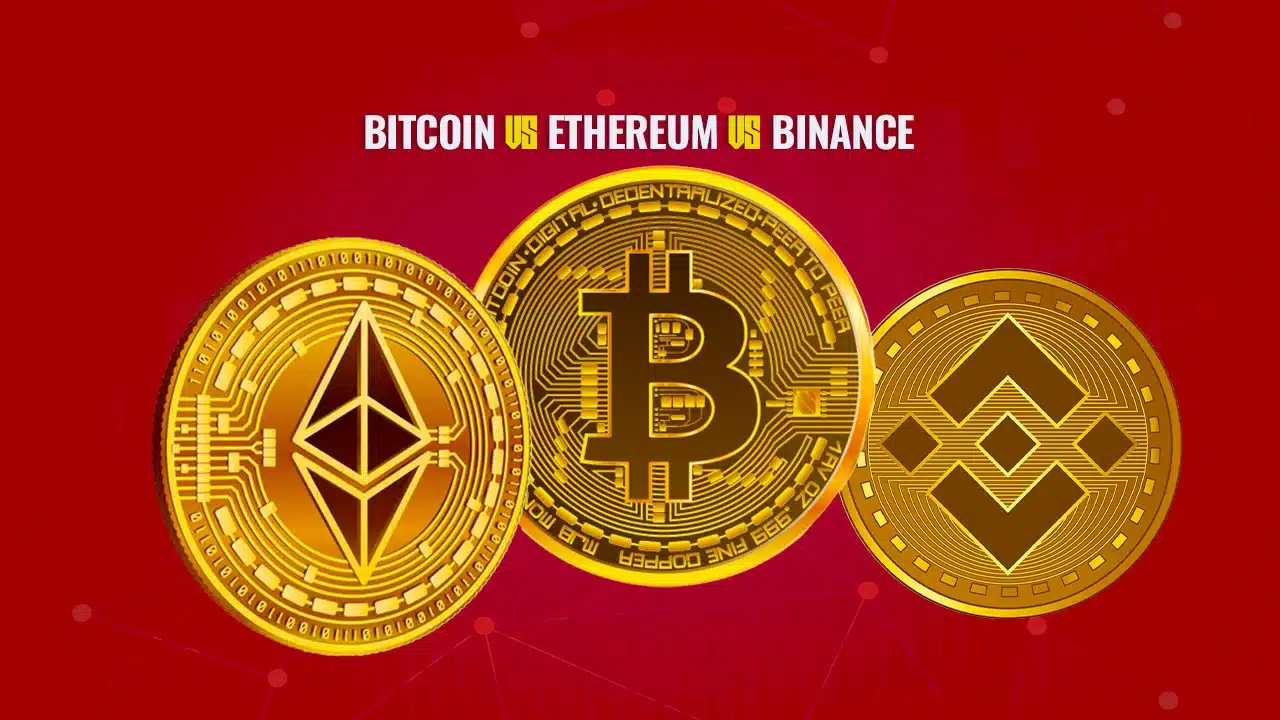
In the ever-evolving landscape of digital assets, understanding the performance of major cryptocurrencies is crucial for anyone keen on participating in this dynamic market. Whether you’re an investor looking to diversify your portfolio or a casual observer intrigued by the rise of digital currencies, the movements of Bitcoin, Ethereum, and Binance Coin offer valuable insights. These cryptocurrencies stand at the forefront of the market, each with unique features and underlying technologies that influence their performance.
As you navigate the fluctuations of Bitcoin, the original cryptocurrency, you might notice its reputation as a ‘digital gold’—a store of value and a hedge against traditional financial market volatility. Ethereum, on the other hand, is not just a currency but a platform that hosts a myriad of decentralized applications, making its value closely tied to the utility and adoption of its network. Binance Coin, with its roots in the Binance exchange ecosystem, brings a unique angle to the world of crypto through transaction fee discounts and other exchange-related benefits.
By comparing these cryptocurrencies, you’ll gain insights into risk profiles, market capitalizations, and technological innovations shaping the current and future states of digital assets. As you delve deeper, remember that this comparison isn’t just about charts and numbers; it’s about understanding the vision, technology, and community behind each coin, which are key drivers of their long-term value and stability. So, how do these major players stack up against each other today, and what might that signal for your engagement with cryptocurrencies?
Overview of Cryptocurrency Market
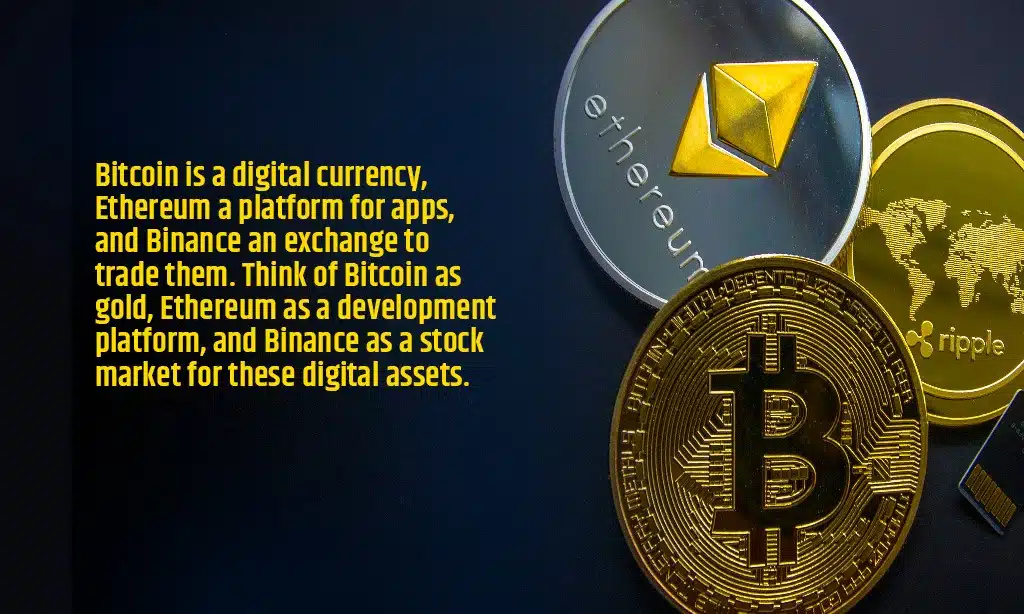
In the dynamic realm of cryptocurrencies, understanding market fundamentals is crucial for your investment and trading strategies. Here’s an insightful peek into the market dynamics and how major coins like Bitcoin, Ethereum, and Binance Coin shape the landscape.
Market Dynamics
Cryptocurrencies exhibit volatility, which creates both opportunities and risks for you as an investor. Multiplying the current price by the circulating supply yields market capitalization, a crucial indicator of a cryptocurrency’s overall value. It’s essential to monitor because it reflects the dominance and liquidity of a coin in the market. Liquidity, being the ease with which an asset can be bought or sold, influences trading activity significantly.
| Coin | Market Cap (USD) | Liquidity |
|---|---|---|
| Bitcoin | Highest in the market | High |
| Ethereum | Second highest | High |
| Binance Coin | Lower compared to BTC & ETH | Relatively high |
The market is also driven by investors and traders, who react to news, technological advancements, and regulatory changes. These reactions contribute to the short-term and long-term performance of different coins.
Influence of Major Coins
Have you ever wondered how certain cryptocurrencies seem to lead the charge in the market? Bitcoin, being the first and most well-known cryptocurrency, holds a significant portion of the market cap, often driving the overall market sentiment. Its performance can have a profound effect on other cryptocurrencies, commonly known as “altcoins,” such as Ethereum and Binance Coin.
Ethereum, with its smart contract capabilities, is not just a currency but a platform for decentralized applications, influencing the space beyond mere financial transactions. Binance Coin, on the other hand, is integrated into the Binance exchange, one of the largest crypto exchanges globally, and offers transactional utility, which can sway its market standing.
Each coin holds its own value proposition, and they collectively embody the market’s diversity and potential for innovation. Deciphering their influence can equip you with the foresight to make strategic decisions in a tumultuous market.
Technical Analysis
To effectively trade or invest in cryptocurrencies, it’s crucial for you to understand the nuances of technical analysis. This section breaks down the complex interplay of blockchain technologies, consensus mechanisms, and smart contracts, which are the backbone of major cryptocurrencies such as Bitcoin, Ethereum, and Binance Coin.
Blockchain Technologies
Do you know what underpins the value and security of cryptocurrencies? It’s blockchain technology—a type of distributed ledger that records all transactions across a network of computers. In the case of Bitcoin, the blockchain serves as a public ledger, allowing anyone to see the balance and transactions of any address. However, Ethereum takes blockchain technology a step further by enabling a platform where developers can create decentralized applications (DApps) using smart contracts.
Consensus Mechanisms
Have you ever wondered how transactions are verified on a blockchain? Here’s where consensus mechanisms come in. Bitcoin relies on Proof of Work (PoW), a resource-intensive method where miners compete to solve complex mathematical puzzles. In contrast, Ethereum is transitioning to Proof of Stake (PoS) with its Ethereum 2.0 upgrade, where validators stake their tokens to earn the right to validate transactions. This change has significant implications for energy consumption and transaction speed.
Smart Contracts and Dapps
Why are smart contracts so revolutionary? They’re programs stored on a blockchain that run when predetermined conditions are met, without the need for an intermediary. This ability to automate and decentralize agreements is why Ethereum stands out. It has become the go-to platform for creating DApps, contributing to its widespread use and cementing its position as a leader in blockchain innovation. With a rich programming language like Solidity, Ethereum provides a binding ground for developers to build a range of applications, from finance to gaming.
Remember, your understanding of these fundamentals can make a significant difference in your cryptocurrency endeavors.
Economic Impact
Cryptocurrency has become a prominent financial asset, attracting significant investment and stirring economic conversations. Your understanding of its economic impact hinges on comprehending market movements and considering cryptocurrencies as a new class of investment.
Market Fluctuations and Volatility
The cryptocurrency market is known for its high volatility, with drastic price movements that can occur in a very short time frame. Bitcoin, often referred to as “digital gold,” has seen its value soar and plummet within days, echoing the turbulence of fiat currencies like the U.S. dollar in unstable economies. Ethereum and Binance Coin have not been immune to such fluctuations. For example, investors have experienced Ethereum’s price swings based on network upgrades or shifts in usage patterns. Meanwhile, Binance Coin, linked to the Binance exchange’s operational decisions, also demonstrates notable volatility.
| Cryptocurrency | Notable High (USD) | Notable Low (USD) | Remarkable Swing Event |
|---|---|---|---|
| Bitcoin | ~$64,000 | ~$30,000 | April 2021 Crash |
| Ethereum | ~$4,300 | ~$1,700 | May 2021 Volatility |
| Binance Coin | ~$690 | ~$200 | May 2021 Market Dip |
Cryptocurrencies as Investment
What does considering cryptocurrencies like Bitcoin, Ethereum, and Binance Coin mean for your investment portfolio? As traditional assets like stocks and bonds exhibit correlation with broader economic indicators, cryptocurrencies have emerged as a form of investment that can operate independently of these markets. Some investors have adopted bitcoin as a store of value, echoing the function that gold has served for centuries. Ethereum’s smart contract capability offers a different allure, providing utility beyond simple speculation. And then there’s Binance Coin, which grants you lower fees on the Binance exchange, possibly affecting its valuation apart from pure market speculation. These digital assets offer you divergent opportunities and risks compared to established investment avenues.
Regulatory and Security Considerations
As you navigate the complex world of cryptocurrencies such as Bitcoin, Ethereum, and Binance Coin, it’s crucial to understand how regulatory stances and security protocols can impact their performance.
Legislation and Central Authority
Legislation on cryptocurrencies varies widely from one jurisdiction to another, influencing how you can use and trade digital assets. Countries may not have a unified approach, and this patchiness affects market performance. In the United States, for example, the regulatory climate is still evolving, with some states more forward-looking than others. Crypto exchanges are often at the center of these regulations, needing to comply with local laws to operate.
| Region | Regulatory Stance | Impact on Crypto Exchanges |
|---|---|---|
| USA | Evolving | High compliance costs |
| EU | Tighter regulations | Stricter verification processes |
| Asia | Mixed approaches | Varied market accessibility |
Decentralized networks such as those underlying Bitcoin and Ethereum, facilitate peer-to-peer transactions without the need for a central authority, which complicates the establishment of a unified regulatory framework.
Security Measures
Security is paramount in the realm of cryptocurrencies, with the decentralized and peer-to-peer nature of these networks both a strength and a vulnerability. Peer-to-peer transactions involve risks, such as the potential for scams, making security measures on platforms and wallets essential.
- Employ strong authentication mechanisms.
- Opt for crypto exchanges that offer insurance funds and robust security protocols.
- Regularly update your knowledge on security best practices to protect your assets.
Bold advances in blockchain technology have bolstered the security of transactions, but your vigilance remains your best defense against potential security breaches.
Future of Cryptocurrencies
As we navigate the ever-evolving landscape of digital currencies, significant shifts in mainstream adoption, technological advancements, and market forecasting are reshaping the future of cryptocurrencies.
Mainstream Adoption
The trajectory towards mainstream adoption of cryptocurrencies such as Bitcoin, Ethereum, and Binance Coin is becoming more apparent. Decentralized finance (DeFi) is one of the key drivers, leveraging blockchain technology to supplant traditional financial services with more open, efficient, and accessible alternatives. This sector’s growth signals a growing appetite for cryptocurrencies as part of everyday financial transactions. With use cases expanding beyond speculative investment to include payment systems, remittances, and cross-border transfers, demand is poised to rise.
- Key Drivers of Adoption:
- Increased utility in payments and transfers
- Growing DeFi platforms
- Expansion of merchant acceptance
Technological Advancements
Cryptocurrencies continue to benefit from technological enhancements that could shape their future. Notably, the anticipated upgrade from Ethereum 1.0 to Ethereum 2.0 introduces a transition from proof-of-work (PoW) to proof-of-stake (PoS), aiming to improve scalability and reduce energy consumption significantly. This advancement isn’t just a win for Ethereum; it sets a precedent for environmental sustainability in blockchain operations, possibly influencing other networks. Additionally, there has been a surge in non-fungible tokens (NFTs), tied to the Ethereum blockchain, creating entirely new markets and opportunities for digital ownership.
- Technologies to Watch:
- Ethereum’s shift to PoS
- NFT marketplace growth
- Developments in blockchain interoperability
Cryptocurrency Forecasting
Forecasting the future performance of cryptocurrencies is complex, given their volatile and unpredictable nature. However, credible sources point to continued growth in the value and utility of primary cryptocurrencies like Bitcoin and Ethereum, as well as a diverse array of altcoins. By examining patterns of adoption and market dynamics, you may glean insights into their potential trajectory.
| Year | Bitcoin (Projected Growth) | Ethereum (Projected Growth) | Binance Coin (Projected Growth) |
|---|---|---|---|
| 2024 | Moderate Increase | Significant due to Eth 2.0 | Steady Growth |
| … | … | … | … |
- Factors Influencing Growth:
- Evolving regulatory landscapes
- Advancement in cryptographic technologies
- Broader economic conditions affecting investor sentiment
Stick to the facts, stay updated with technological trends, and keep an eye on market analyses to make informed decisions about the evolving world of cryptocurrencies.
Comparative Analysis
When exploring the dynamic world of cryptocurrencies, you encounter several heavyweight contenders. Understanding their performance metrics and market positioning gives you a clearer view of where each stands in the financial arena.
Bitcoin vs. Ethereum
Bitcoin (BTC), created by an individual or group under the pseudonym Satoshi Nakamoto, is often recognized as the gold standard of cryptocurrencies. It’s not just a digital asset; it’s become a household name, pioneering the concept of decentralized finance. As of now, its market cap leads the industry, reflecting its widespread acceptance and usage. However, transaction fees and speed are points of contention, as Bitcoin aims to balance security with efficiency.
In contrast, Ethereum (ETH), proposed by Vitalik Buterin, goes beyond a mere currency—it’s a platform for decentralized applications (dApps). Ethereum’s native token, Ether, is used to execute smart contracts on its network. While it sits comfortably behind Bitcoin in market cap, Ethereum offers a faster transaction speed, which appeals to users looking for efficiency as well as versatility.
| Features | Bitcoin | Ethereum |
|---|---|---|
| Market Cap | Highest in the cryptocurrency market | Second to Bitcoin |
| Transaction Speed | Slower relative to some competitors | Faster due to a different block technology |
| Transaction Fees | Can be higher during peak congestion | Generally lower, but can increase with dApp usage |
| Purpose | Primarily seen as a store of value | Powers smart contracts and dApps |
Ethereum vs. Binance Coin
Moving to Ethereum and Binance Coin (BNB), it’s imperative to recognize that while Ethereum pioneered smart contract functionality, Binance Coin has swiftly risen in the ranks. Initially launched on Ethereum, BNB moved to its own blockchain, Binance Chain, which supports high-performance transactions and has a significant impact on Binance’s ecosystem.
Comparing Ethereum and Binance Coin in the context of transaction fees reveals that BNB often offers lower fees, which is advantageous for your frequent trading and transactional needs. Additionally, the Binance smart chain facilitates quick transactions, which can be a compelling aspect for users prioritizing speed.
Market Positioning of Leading Coins
The market positioning of Bitcoin, Ethereum, and Binance Coin is dynamic, with Bitcoin reigning as the leader in terms of market cap. Yet you must consider that market cap alone doesn’t tell the whole story—demand, supply, and utility play crucial roles. Bitcoin’s finite supply caps at 21 million coins, contributing to its high demand and value.
Ethereum follows Bitcoin in market cap, yet it’s more than a token; it’s a platform supporting myriad tokens, intensifying its demand. With an open-ended supply, Ethereum’s value is more dependent on its network’s utility.
Binance Coin may not match Bitcoin and Ethereum’s market cap but is essential in Binance’s vibrant exchange platform, offering utility through trading fee discounts and token purchases, leading to robust demand.
When you consider investing in tokens like Bitcoin, Ethereum, or Binance Coin, it’s essential to assess not just their market cap, but also how their unique characteristics—like transaction fees, speed, overall demand, and their platform’s utility—align with your investment goals.
Case Studies and Major Events
Diving into the world of cryptocurrencies, you’ll notice a history rich with dramatic price swings and significant market developments. These can serve as critical learning points for you, whether as an investor or an enthusiast.
Notable Price Movements
Bitcoin (BTC) and Ethereum (ETH) have both experienced monumental rises and falls in value. For instance:
- In December 2017, BTC reached an all-time high nearing $20,000, then saw an 80% drop in 2018.
- ETH saw a peak of around $1,400 in January 2018 before plunging below $200 in the same year.
Other cryptocurrencies like Bitcoin Cash (BCH) and Dogecoin (DOGE) also showed volatile movements:
- BCH, a fork of Bitcoin, reached upwards of $4000 in 2017 but fell significantly in subsequent years.
- DOGE, initially created as a joke, surged over 12,000% in early 2021, partly fueled by social media.
Volatility remains a cornerstone in the crypto market, directly impacting your potential investment returns.
Significant Developments in the Cryptosphere
The recent growth of Decentralized Finance (DeFi) reflects a significant shift in the crypto ecosystem. DeFi aims to replace traditional financial systems with peer-to-peer finance enabled by blockchain technology.
Let’s consider some market-defining moments:
- The launch of Tether (USDT), a stablecoin pegged to the US Dollar, aimed to reduce volatility.
- Solana (SOL) emerged, focusing on high throughput and low transaction costs, gaining traction among crypto developers.
- The XRP ledger introduced features like low transaction fees and fast confirmations, impacting how cross-border payments are conducted.
Major events, such as the FTX scandal in late 2022, underline risks associated with the cryptocurrency’s market infrastructure and governance.
Keep a close eye on these movements and developments, as they’re essential for understanding the market’s direction and the performance of specific cryptocurrencies.
Adoption and Use Cases
Cryptocurrencies such as Bitcoin, Ethereum, and Binance Coin have seen expansive growth in terms of both adoption and the variety of use cases they provide. Let’s explore how these digital assets are being used and the emerging patterns in their consumption.
Practical Applications of Cryptocurrencies
Smart Contracts: Ethereum has been a frontrunner in implementing smart contracts, which are self-executing contracts with the terms of the agreement directly written into code. These digital contracts run on the blockchain, allowing for trustless and autonomous transactions.
Mainstream Finance: Bitcoin’s acceptance as a legitimate financial instrument has seen its adoption by mainstream consumers and investors alike. Its role as a store of value and a hedge against inflation has been a topic of discussion across financial sectors.
Ripple (XRP): Primarily known for its rapid and low-cost international money transfer capabilities, Ripple has been adopted by a network of banks and financial institutions, aiming to streamline cross-border payments.
Emerging Trends in Crypto Usage
DeFi (Decentralized Finance): Ethereum has significantly contributed to the rise of DeFi, which provides financial services without the need for traditional financial intermediaries through decentralized applications (dApps).
Distributed Ledger: The technology underlying cryptocurrencies, the distributed ledger, has found numerous applications beyond just financial transactions. It ensures transparent, secure, and tamper-proof record-keeping across various industries.
Conclusion
Bitcoin, Ethereum, and Binance Coin are prominent players in the cryptocurrency market, each with unique attributes and varied performance metrics. Your investment strategy should consider the historical resilience of Bitcoin, widely recognized for its pioneer status and relative stability in the volatile crypto landscape.
Ethereum has displayed remarkable versatility through its support for smart contracts and decentralized applications. This versatility has driven a surge in its adoption and, often, its market performance. As the backbone of the DeFi sector, Ethereum’s transition to Proof-of-Stake could further enhance its efficiency and scalability.
Binance Coin, the native asset of the Binance exchange, stands out for its utility and the transaction fee discounts it offers, contributing to its market performance. While each coin has demonstrated growth potential, they react differently to market changes, technological advancements, and regulatory developments.
Your awareness of these aspects can guide your investment decisions. Despite the inherent risks associated with the unpredictable nature of the cryptocurrency market, it remains an intriguing sphere for investors seeking to diversify their portfolios. Always ensure to stay updated with the latest market trends and perform thorough research before financial commitment.