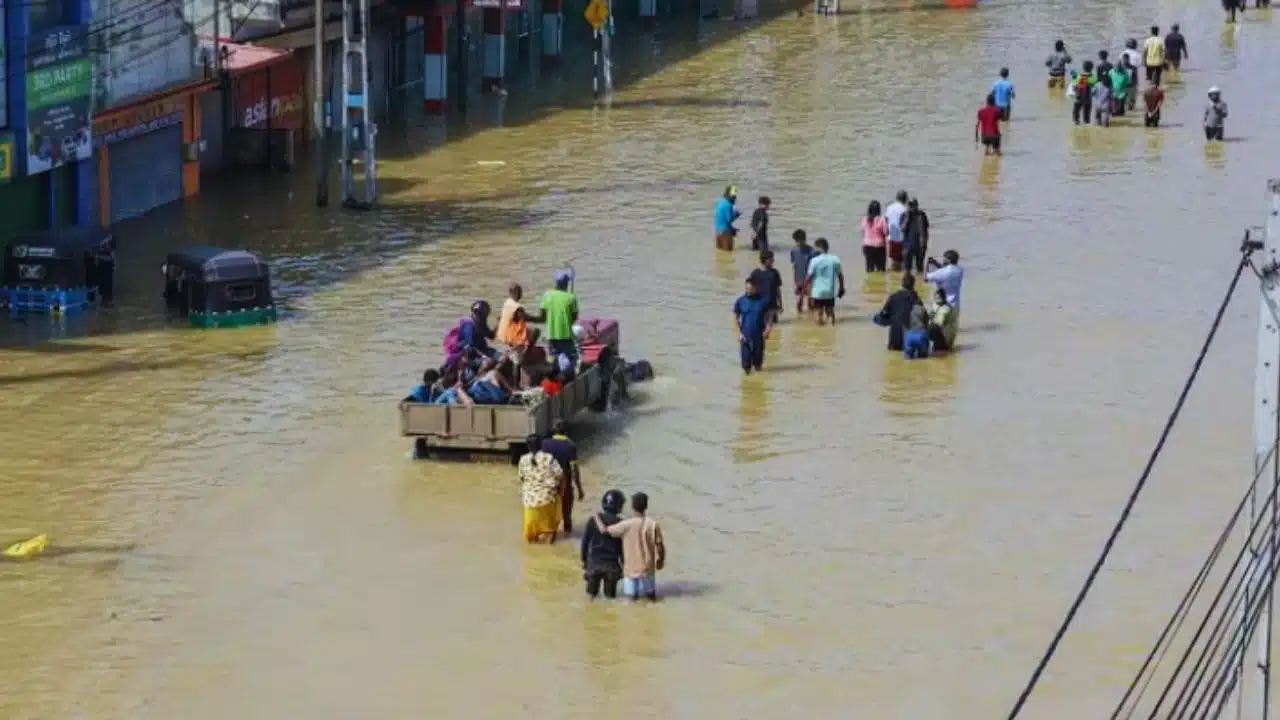
Catastrophic floods and landslides across Southeast and South Asia have resulted in the deaths of at least 1,035 people, with hundreds still missing as authorities struggle to reach isolated communities. Multiple countries — including Indonesia, Sri Lanka, Thailand, and parts of Malaysia — have mobilized large-scale military deployments and emergency response teams to deal with what officials describe as one of the most devastating climate-related disasters in decades.
The ongoing crisis began in late November after weeks of unusually intense monsoon rainfall, worsened by two tropical cyclones that developed in quick succession. Floodwaters swept through densely populated cities, rural farmland, and remote mountainous regions, destroying homes, bridges, and transport links and leaving entire communities cut off from the outside world.
Indonesia: Hundreds Dead, Hundreds Still Missing as Cyclone Senyar Triggers Widespread Destruction
Indonesia has recorded 502 deaths so far, while 508 people remain missing, making it the worst-hit nation in the region. The provinces of North Sumatra, West Sumatra, and Aceh have endured continuous torrential rainfall linked to Tropical Cyclone Senyar, which formed unexpectedly over the Malacca Strait — a rare location for cyclone formation.
Entire villages were swallowed by landslides after hillsides collapsed under saturated soil. Rescue teams reported that many casualties occurred when homes near rivers and mountain slopes were buried without warning.
President Prabowo Subianto Visits Ground Zero
On Monday, President Prabowo Subianto visited the devastated regions of Sumatra, promising rapid relief. Standing among collapsed bridges and flooded villages, he reassured survivors:
“The worst has passed, hopefully. Our priority now is to immediately send every form of necessary aid.”
Indonesia has deployed:
- Three naval warships loaded with emergency supplies.
- Two floating hospital ships staffed with doctors and paramedics.
- Dozens of military helicopters and amphibious vehicles.
- Engineering units to clear debris and rebuild access roads.
However, many communities remain unreachable because of washed-out roads, severed communication lines, and collapsed bridges. Authorities warn that the death toll could rise sharply as search teams reach more remote districts.
Sri Lanka Declares National Emergency as Cyclone Ditwah Leaves Trail of Chaos
Sri Lanka has suffered the most severe disaster in its modern history after Cyclone Ditwah made landfall on November 28, unleashing massive floods and landslides across all 25 districts.
The country has confirmed 355 deaths, with 366 people still missing. Officials fear the number will grow as rescue teams reach villages buried by mudslides or isolated by rising floodwaters.
President Dissanayake Calls It the Nation’s Largest Disaster in History
President Anura Kumara Dissanayake declared a state of emergency, calling the catastrophe:
“The largest and most daunting natural disaster in our history.”
Military forces have been fully mobilized, with:
- Helicopters airlifting stranded families from rooftops.
- Navy boats ferrying the injured across flooded districts.
- Engineering corps clearing roads blocked by landslides.
One rescue helicopter tragically crashed north of Colombo on Sunday evening during evacuation operations, highlighting the extreme conditions responders face.
Humanitarian Crisis Growing
According to the UN Office for the Coordination of Humanitarian Affairs (OCHA):
- 998,000 people have been affected.
- 180,000+ displaced residents are housed in 1,094 government shelters.
- Over 15,000 homes have been completely destroyed.
- Vital infrastructure — including hospitals, schools, and transport networks — has suffered severe damage.
For Sri Lanka, this flood surpasses all disasters since the 2004 Asian tsunami, which killed roughly 31,000 people.
Thailand: Record-Breaking Rainfall Brings Deadly Flash Floods
Thailand has reported 176 deaths across eight southern provinces, making this one of the country’s most severe natural disasters in recent memory.
The city of Hat Yai, a major commercial hub, experienced 335 millimeters of rain in a single day on November 21 — the highest recorded in 300 years. The unprecedented downpour overwhelmed waterways and drainage systems, leading to flash floods that inundated homes, markets, and industrial zones.
Millions Affected Across Southern Thailand
Authorities estimate that:
- Nearly 3 million people have been affected.
- Over 1.4 million households suffered damage.
- Transportation grids remain severely disrupted.
Schools and government offices in the south remain closed as cleanup efforts continue. Emergency teams are distributing food, medical supplies, and clean water to communities still surrounded by stagnant floodwaters.
Malaysia Also Impacted
Malaysia reported two confirmed deaths but has thousands of evacuees across several states as the same storm systems triggered flooding in northern regions.
While the damage is less severe compared to neighboring nations, authorities warn that persistent rainfall could worsen conditions in coming days.
Unprecedented Weather Events Driven by Climate Extremes
Meteorologists attribute the widespread destruction to a rare confluence of two cyclonic systems — Senyar and Ditwah — combined with intensified monsoon patterns. Climate scientists warn that such simultaneous extreme weather events are becoming more common due to warming sea temperatures, which fuel stronger storms.
Key contributing factors include:
- Increased rainfall intensity due to climate-driven atmospheric moisture.
- Deforestation and illegal logging, which destabilize hillsides.
- Urban overdevelopment in flood-prone regions.
- Aging or inadequate drainage systems unable to handle extreme rainfall.
- Rising sea levels exacerbating coastal flooding.
Experts caution that without large-scale environmental reforms, such disasters will grow more frequent and deadlier.
Massive Regional Relief Operation Underway
Humanitarian agencies across Asia are coordinating a multi-nation response. India, Pakistan, Japan, and several UN agencies have already offered assistance, particularly to Sri Lanka and Indonesia.
Regional Response Includes:
- Search-and-rescue missions using boats, aircraft, and drones.
- Mobile medical units for injured survivors.
- Psychosocial support teams for traumatized families.
- Temporary shelters with food and sanitation facilities.
- Restoration of electricity, water, and communication networks.
- Damage assessment teams to evaluate long-term reconstruction needs.
The scale of devastation means recovery could take months or even years, especially in remote rural communities.
Long-Term Concerns: Food Security, Health Risks, and Economic Damage
Beyond immediate casualties, experts warn that prolonged flooding will create serious secondary crises:
Risk of Disease Outbreaks
- Contaminated water sources.
- Rise in mosquito-borne illnesses like dengue and malaria.
- Poor sanitation in overcrowded shelters.
Food Supply Disruptions
- Thousands of acres of rice fields and crops destroyed.
- Livestock losses in rural areas.
- Impact on regional food prices.
Economic Losses
- Damage to transport, manufacturing, and tourism sectors.
- Billions in lost productivity.
- Long reconstruction timelines.
Governments are urging international donors to assist, emphasizing that the region faces a long road to recovery.
A Regional Wake-Up Call
This disaster highlights growing vulnerabilities in Asia’s densely populated regions. Analysts say governments must dramatically improve:
- Flood-management infrastructure.
- Landslide early-warning systems.
- Urban zoning and land-use policies.
- Climate resilience planning.
- Rapid-response capacity.
The floods and landslides of 2025 will almost certainly reshape disaster-preparedness strategies across Southeast and South Asia.