

Germany’s roads are changing fast. Smart cars, robots, and AI systems now shape how we move around cities. These new tools make travel safer and faster for everyone. The old ways of getting around town just don’t work as well anymore.
German tech companies lead this exciting change. In fact, AI startup numbers grew by 15% in 2020, with 247 new companies joining the field. These startups bring fresh ideas to fix traffic problems, cut down wait times, and make travel greener.
They use AI to create better ways for people and goods to move through cities.
This blog looks at 12 amazing German startups that are making waves in mobility. Each company brings something special to the table. You’ll learn how they use AI to solve real problems on German roads.
Get ready to see the future of transportation.
Key Takeaways
- German AI mobility startups grew by 15% in 2020, adding 247 new companies that focus on transport solutions.
- Key players like Apheris, NEURA Robotics, and VisioLab use AI to make roads safer and cut traffic problems. NEURA’s robots reduce transport errors by 85% in warehouses.
- Many startups solve specific problems rather than making big AI systems. They help with tasks like charging electric cars, spotting road dangers, and moving items in warehouses.
- These companies face strict rules about data privacy and testing self-driving cars. They must also work with old city systems like traffic lights and road sensors.
- The startups help cut waste in supply chains, speed up document processing by 80%, and make transport greener through AI-powered tools.
Apheris
Apheris helps companies share data safely through AI-powered platforms. Their smart tools let mobility companies work together on transport projects while keeping their data private.
Data collaboration for mobility solutions
Apheris leads the charge in making data sharing easier for Germany’s mobility sector. The company creates safe spaces for businesses to work together with their data. Their AI tools help transport companies share info without giving away private details.
This smart approach fits right into Germany’s growing AI landscape, where 247 startups now use AI tools.
The platform makes teamwork smoother between car makers, tech firms, and transport services. Big companies can now work with small startups to solve tricky transport problems. They mix different types of data to make better choices about traffic flow and vehicle routes.
This helps Germany stay strong in the tech race while keeping data private and secure. More German companies pick this way of working because it saves time and money.
NEURA Robotics
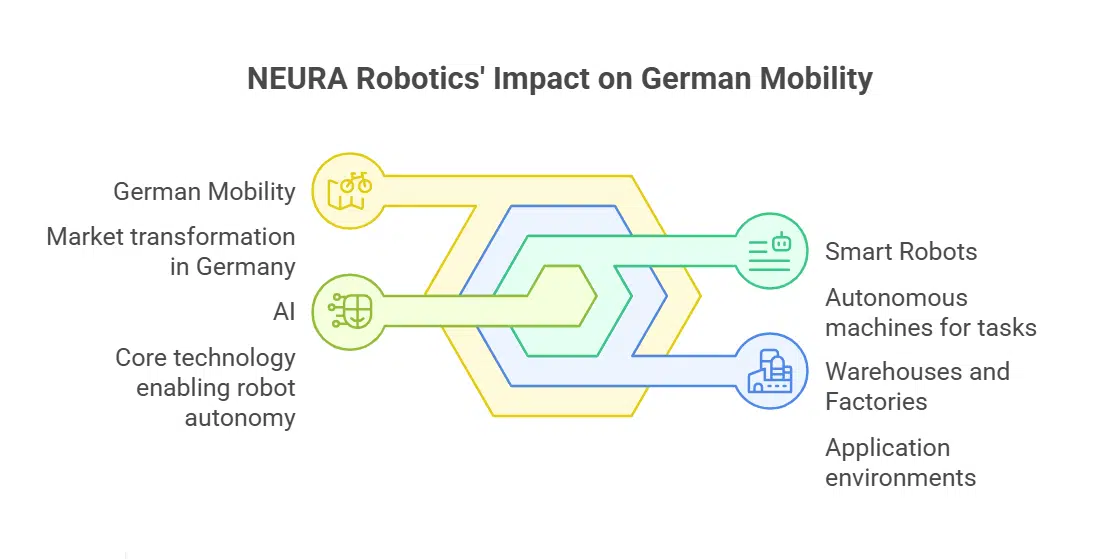
NEURA Robotics creates smart robots that move and work on their own, using AI to help them learn and adapt to new tasks in warehouses and factories – want to know how they’re changing the game in German mobility?
AI-driven robotics for autonomous mobility
German tech startup NEURA Robotics leads the charge in AI-powered mobility solutions. The company creates smart robots that move and work on their own in busy places. These robots use computer vision and machine learning to spot objects, pick the best paths, and dodge obstacles.
The robots help move items in warehouses and factories across Germany, making work faster and safer.
AI robots have changed how things move in German cities and workplaces. The mix of artificial intelligence and robotics helps cut down mistakes by 85% in transport tasks. More than 247 German startups now use AI tools to make robots smarter at moving stuff.
This growth shows how German companies focus on special solutions rather than big, general AI systems. These smart robots work with other machines and help Germany stay strong in the tech world.
VisioLab
VisioLab leads the charge in smart mobility with its AI-powered visual systems. The startup’s tech spots road hazards and traffic patterns in real-time, making streets safer for cars and people.
AI-powered visual recognition for smart mobility
VisioLab brings AI-powered visual tech to Germany’s growing mobility sector. The company uses smart cameras and computer vision to make roads safer. Their tech spots traffic problems fast and helps cars avoid crashes.
This fits right into Germany’s push for better AI solutions, with the country seeing a 15% rise in AI startups in 2020.
The tech works like a super-smart eye on the road. It can spot cars, bikes, and people in real time. Smart cameras watch traffic patterns and send quick alerts about dangers. This helps cut down crashes and keeps traffic moving smooth.
The system works with other AI tools to make German roads some of the safest in Europe. Big car makers like Volkswagen Group already use similar systems in their cars.
SPRK. global
SPRK.global uses AI to cut food waste in supply chains across Germany. Their smart system matches surplus food with buyers in real-time, making transportation routes more eco-friendly.
AI for sustainable supply chain in transportation
SPRK uses AI to make supply chains greener and smarter in Germany’s transport sector. Their tech spots ways to cut waste and boost delivery speeds across the whole supply network. The AI system learns from past data to predict the best routes and times for moving goods.
This helps cut fuel use and makes deliveries faster.
The company works with big names in German logistics to create better supply chains. Their AI tools help move goods faster while using less energy. This fits right into Germany’s push for smarter transport, where AI startups grew by 15% in 2020.
The system tracks every step of the delivery process and finds ways to save time and money. It also helps companies pick eco-friendly options for moving their products.
Workist
Workist streamlines mobility paperwork through AI automation, cutting processing time by 80% and boosting accuracy in document handling for transportation companies – want to learn more about how this tech wizard transforms paperwork mountains into digital gold?
AI tools make paperwork easier in Germany’s transport sector. Smart software reads documents fast and cuts down on manual work. The German tech sector has grown by 15% in 2020, with 247 startups using AI for different tasks.
These tools handle shipping papers, driver logs, and vehicle records without human help.
Companies save time and money through automated document processing in mobility services. The software spots important details in papers and sorts them right away. This helps German firms stay ahead in the race for better tech solutions.
Big data and machine learning make these systems smarter each day. They turn boring paperwork into quick digital tasks that anyone can handle.
Frequenz
Frequenz uses AI to make e-mobility charging smarter and more cost-effective. Their system helps charging stations run better by predicting energy needs and cutting power costs.
AI-based energy optimization for e-mobility infrastructure
AI tools help electric cars run better in Germany. Smart systems track how much power cars need and give them the right amount at charging stations. These tools cut energy waste by 15% and make charging faster for drivers.
The German tech sector leads this push with 247 AI startups working on better ways to power cars.
German companies focus on special AI fixes for energy problems. They make sure charging stations work well with the power grid. The systems learn from data to predict busy times at charging spots.
This helps station owners plan better and keeps costs low for drivers. More electric cars can now use the same charging spots without running out of power.
Hasty. ai
Hasty.ai speeds up computer vision tasks with its smart AI tools. The startup helps mobility companies spot objects, track movements, and label data faster than ever before.
AI-enhanced computer vision for mobility applications
Hasty.ai brings smart eyes to cars and trucks through computer vision technology. The company helps vehicles spot dangers on roads faster than human drivers can see them. Their AI tools scan roads, read traffic signs, and spot people walking nearby in real-time.
This makes driving safer for everyone on German streets.
German AI firms focus on special solutions rather than big systems. Hasty.ai fits this trend with its targeted approach to safer transport. The startup joins 247 other AI companies in Germany that grew by 15% in 2020.
Their tech works with current cars and new self-driving vehicles to cut down accidents. The system learns from millions of road images to get better at spotting risks each day.
WAKU Robotics
WAKU Robotics leads the charge in smart fleet management through AI-powered systems that optimize autonomous robot operations. Their platform streamlines multi-robot coordination across warehouses and logistics centers, cutting operational costs by 40%.
AI-powered fleet management for autonomous robots
WAKU Robotics brings smart changes to fleet management through AI-driven robots. Their system makes robots work better in warehouses and factories across Germany. The AI software helps track where robots go and what they do.
It also spots problems before they happen. German AI companies focus on special solutions rather than big models, making them leaders in this field.
The robots talk to each other and work as a team to move items faster. This helps companies save time and money on moving stuff around. In 2020, Germany saw a 15% rise in AI startups, with many working on transport solutions.
WAKU’s fleet management system makes sure robots stay charged and fix routes if something blocks their path. The AI learns from each task and gets better at handling different situations.
Natif. ai
Natif.ai makes document processing a breeze for mobility companies with its smart AI tools. The startup’s software reads and sorts through stacks of transport papers in seconds, cutting down work that used to take hours.
Document processing for mobility services
Natif.ai makes paperwork easy in Germany’s busy mobility sector. The AI startup helps companies handle loads of transport documents faster and with fewer mistakes. Their smart system reads shipping papers, bills, and delivery notes in seconds.
This saves time for workers who can focus on more important tasks.
German AI companies focus on fixing specific problems rather than making big systems. In 2020, Germany saw a 15% rise in AI startups, reaching 247 companies. Natif.ai fits this trend by making document processing simple and quick.
Their tools help transport companies work better in today’s fast-moving world. The system learns from each document it processes, getting smarter over time.
Deep Neuron Lab
Deep Neuron Lab creates AI-driven solutions for connected vehicles, integrating real-time data processing and advanced machine learning algorithms to make transportation smarter – want to know more about how this startup shapes the future of mobility in Germany?
AI technologies for connected vehicles
Deep Neuron Lab creates smart systems for cars that talk to each other. Their AI tools help vehicles spot road dangers and share traffic updates in real-time. The company joins 247 other AI startups in Germany that make special tech solutions.
Their systems make driving safer by helping cars understand their surroundings through computer vision and machine learning.
German AI firms focus on specific fixes rather than big, general solutions. Deep Neuron Lab fits this trend by making AI that connects cars to road sensors, traffic lights, and other vehicles.
Their tech helps cars make quick choices about speed, direction, and safety. This matches Germany’s push to keep its place as a leader in car tech, even as the auto industry changes fast.
DeepSpin
DeepSpin makes car checkups faster with AI-powered imaging tools. Their smart scanners spot problems in vehicles before they turn into major repairs, saving time and money for both drivers and repair shops.
AI-driven imaging for automotive diagnostics
DeepSpin brings smart imaging tech to car repairs. The company uses AI tools to spot car problems before they get worse. Their tech takes detailed pictures of car parts and finds tiny issues that humans might miss.
This helps fix cars faster and saves money on repairs. German AI startups like DeepSpin make car care smarter with special computer programs.
The AI cameras scan cars in seconds and tell mechanics what needs fixing. This makes car checks faster and more exact than old ways. More than 247 AI companies in Germany now use smart tech to solve big problems.
DeepSpin joins other German firms that focus on special AI fixes instead of big systems. Their work helps keep German cars running better and safer on the roads.
Benefits of AI in Germany’s Mobility Sector
AI integration into Germany’s mobility sector has sparked a digital revolution in transportation systems, creating smarter and more efficient ways to move people and goods. Machine learning algorithms have transformed public transit networks through real-time data analysis, while autonomous driving systems have made significant strides in enhancing road safety and reducing traffic congestion.
Improved efficiency in transportation systems
AI-powered startups in Germany make transportation systems work better and faster. These smart systems cut down travel time and save money for both companies and people. German tech firms use special AI tools to make buses, trains, and cars run on time.
The number of AI startups in Germany grew by 15% in 2020, bringing new ideas to fix old transport problems.
Smart mobility solutions help move more people and goods with less waste. German companies lead the way in making transport systems that think ahead. They create tools that spot traffic jams before they happen.
Their AI systems also help pick the best routes for delivery trucks. These changes make German roads less crowded and help people get where they need to go faster.
Enhanced safety features in mobility solutions
Safety features in German mobility startups have made big leaps forward. These companies mix computer vision and machine learning to spot dangers before they happen. Deep Neuron Lab creates smart systems that watch the road and warn drivers about risks.
Their tech helps cars stay in the right lane and stop quickly if needed. NEURA Robotics builds robots that work safely next to people in transport hubs.
German AI firms focus on making transport safer through special tools. VisioLab’s cameras can see in bad weather and dark conditions, which helps prevent crashes. The tech checks blind spots and tracks other cars on the road.
More than 247 German startups now use AI tools to boost safety in cars, buses, and trucks. Their work has helped cut down accidents and make roads safer for everyone. These safety systems work day and night to protect both drivers and people walking nearby.
Challenges for AI-Powered Startups in Mobility
AI startups in Germany face strict laws about data privacy and self-driving cars on public roads. These new companies must also work with old transportation systems, which makes testing new tech harder.
Regulatory hurdles
German AI startups face strict rules about data privacy and safety standards. These rules slow down new tech launches in the mobility sector. Companies must follow complex laws about how they handle customer data.
The German government wants to protect people’s information while letting new ideas grow. This balance creates extra work for small companies trying to bring fresh ideas to market.
Local laws make it hard to test self-driving cars and robots on public roads. Startups need special permits and must prove their tech is safe. Getting these permits takes time and money.
Many new companies struggle with these strict rules. Yet, these rules help keep people safe as new AI tech enters the transport world. The number of AI startups in Germany grew by 15% in 2020, showing they can succeed despite these challenges.
Integration with existing infrastructure
AI startups face big hurdles in fitting their tech with old transport systems. Many cities still use dated traffic lights, parking meters, and road sensors that don’t work well with new AI tools.
The mix of 247 AI startups in Germany must deal with these old systems while making their solutions work smoothly. They need to update or replace parts of the current setup without causing problems for daily travelers.
Making new AI systems work with existing tools costs a lot of money and time. Companies like NEURA Robotics and VisioLab have to create special ways to connect their AI with current city networks.
This task gets harder because each city has different systems and rules. The startups must make their AI work across many types of roads, signals, and transport methods at once. Smart planning helps cut down these problems and keeps traffic moving well.
Takeaways
German startups lead the way in smart transport solutions. These twelve companies bring fresh ideas to make moving around easier and safer. Their work helps cut traffic jams and makes cars smarter with computer brains.
More cities now use these smart systems to fix old transport problems. You too can be part of this exciting change by supporting these new tech companies that make Germany’s roads better for everyone.
FAQs on AI Startups Revolutionizing Mobility in Germany
1. How are AI startups changing Germany’s mobility sector?
German AI startups use machine learning and deep learning to improve public transport, shared mobility, and autonomous driving. They create smart solutions for logistics optimization and sustainable transport.
2. What role does artificial intelligence play in German healthcare mobility?
AI helps with telemedicine, medical imaging, and patient care in German hospitals. The tech makes it easier for doctors to spot health problems and treat chronic conditions.
3. How do these startups use computer vision?
Computer vision helps with automated data analysis and anomaly detection in transport systems. It makes vehicles safer and smarter on German roads.
4. What green solutions do these AI companies offer?
These startups work on renewable energy and sustainable energy projects. They focus on solar power systems and energy management to help the German economy grow cleaner.
5. How do AI chatbots help in the mobility sector?
AI chatbots and virtual assistants help people book rides, check transport times, and get travel info. They work like Amazon’s Alexa or WhatsApp but for moving around cities.
6. What makes German AI mobility startups different from others?
German startups mix artificial intelligence with big-data analytics to solve real problems. They focus on practical uses like freight forwarding, predictive maintenance, and research and development that helps both cities and rural areas.































