Can video games and mental health be connected in a useful way? Sometimes. A puzzle, a quiet building game or a shared session with friends may offer a break from pressure, a sense of progress or a reason to connect. But games affect people differently. They may support well-being for some players; they are not a proven treatment for anxiety, depression or other mental health conditions.
Research on video games and mental health is mixed. Some studies report short-term stress relief or improved well-being in specific settings. Others find little evidence that spending more time playing causes people to feel better. The practical question is how someone feels during and after a session—and whether gaming is getting in the way of sleep, responsibilities or relationships.
What “support” means
A clear conversation about video games and mental health starts by separating everyday well-being from clinical treatment. Mental health includes mood, stress, daily functioning and relationships. A game might help someone relax after work or keep in touch with a friend. That can be valuable without making the game a form of therapy.
Studies also measure different outcomes. One might ask whether players feel calmer immediately after a session; another might measure distress or life satisfaction over time. A short-term change in mood does not prove a lasting improvement.
Cause and effect can be difficult to separate, too. Someone who feels well may choose to play more, while someone under stress may turn to games for a break. Friendships, work pressures and health can affect both how much a person plays and how they feel.
Ways games may support well-being
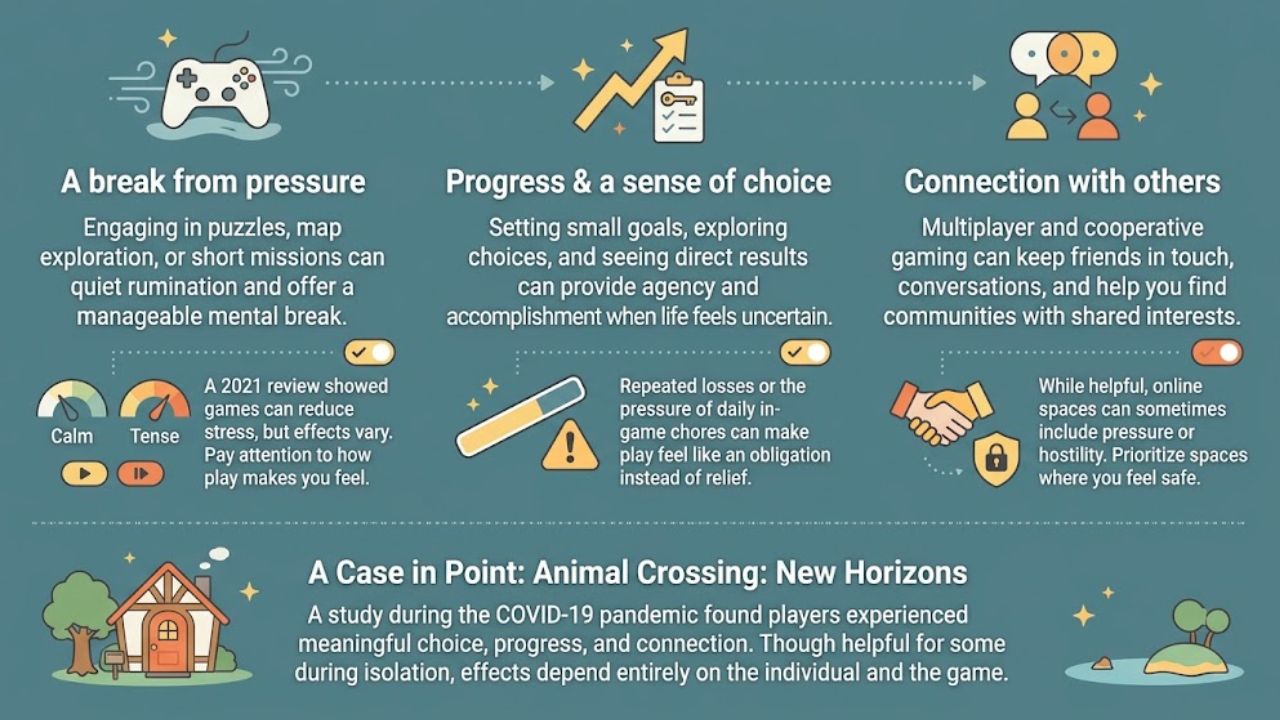
A break from pressure
A game gives attention a task: solve a puzzle, explore a map or finish a short mission. For some players, that focus can interrupt rumination or provide a manageable break.
A 2021 systematic review examined commercial games and stress or anxiety across 28 studies. It found evidence of stress reduction in some settings, but results varied by game, player and study method. Some sessions increased stress instead. A competitive match may be energising for one person and frustrating for another. If the aim is to unwind, notice whether play leaves you calmer or more tense.
Progress and a sense of choice
Many games let players choose what to do, set small goals and see the results of their effort. That can provide a sense of agency or accomplishment, particularly when other parts of the day feel uncertain.
It can also backfire. Repeated losses, difficult tasks or pressure to complete daily objectives may make play feel like another obligation. A satisfying win does not resolve a problem outside the game, and no game can guarantee a lasting lift in self-esteem.
Connection with others
Multiplayer games give friends a shared activity when they live far apart or have little time to meet. Cooperative missions can make conversation easier. Gaming communities can also help players find people with similar interests.
The experience depends on the people and the space. Online play may involve harassment, exclusion or pressure to spend money. If a community regularly leaves someone feeling unsafe or upset, changing the group, settings or game is a reasonable step.
A qualitative study of Animal Crossing: New Horizons players during the COVID-19 pandemic found that some participants experienced choice, progress and connection through the game. Those interviews help explain why the game felt supportive to some players during a period of isolation. They do not show that every game will have the same effect.
What research says about video games and mental health
A 2022 Oxford study analysed six weeks of play data from 39,000 adults across seven games. It found little evidence that the amount of time spent gaming caused changes in well-being. The researchers also called for data from more games and players.
A 2024 study in Nature Human Behaviour found a positive effect in a different setting. Researchers analysed nearly 98,000 survey responses from people in Japan aged 10 to 69 during the COVID-19 period. For the causal analysis, they used console-lottery data from a smaller group of 8,192 participants. The study estimated that access to a Nintendo Switch or PlayStation 5 improved mental well-being in that population.
These findings do not cancel each other out. The Oxford study examined play duration across several games; the Japan study used access to specific consoles during an unusual period of social restrictions. The evidence on video games and mental health remains mixed, and neither result promises that more gaming will improve everyone’s well-being.
Choose a game for how it feels
Any link between video games and mental health is personal. Someone hoping to relax may prefer a gentler pace and optional goals. Someone looking for social contact might choose a cooperative game with trusted friends. Competition can be enjoyable, but it may not be the best fit when a person already feels overwhelmed.
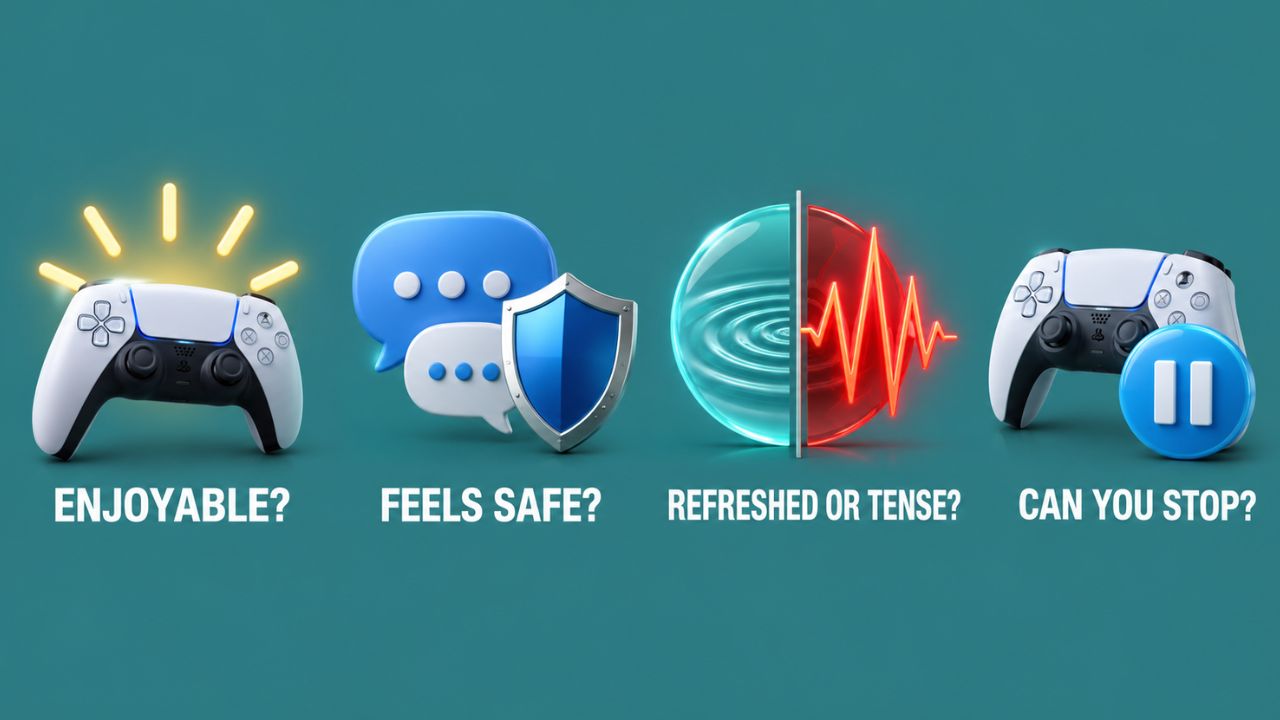
Before settling on a game, consider:
- Does it feel enjoyable, or does it create pressure to keep playing?
- Do online interactions feel welcoming and safe?
- Does the player feel refreshed afterward, or more tense and irritable?
- Can they stop when they planned to?
The player’s response is a better guide than a game’s genre label or promotional claims.
When gaming becomes a concern
Hours alone do not tell the whole story. Look at what gaming is displacing and whether the person still feels in control of when to stop.
The World Health Organization’s ICD-11 describes gaming disorder as a pattern involving impaired control, gaming taking priority over other activities, and continued or increased play despite negative consequences. The pattern must cause significant problems in important areas of life and would normally be evident for at least 12 months. WHO says gaming disorder affects a small proportion of people who play.
These criteria do not justify labelling someone based only on how often they play. They focus on persistent loss of control and harm to daily functioning. Concerns about video games and mental health should be judged by their effect on the person’s life, not by a screen-time number alone.
If gaming repeatedly disrupts sleep, responsibilities or relationships, consider discussing the pattern with a qualified health professional. Games should not replace professional support for ongoing or serious distress.
Keep gaming in balance
Anyone curious about gaming as a way to unwind can start with a game they already enjoy and notice how they feel before and after playing. Set a stopping point that protects sleep and other commitments. If a session leaves them more agitated, try another type of game—or choose a different activity.
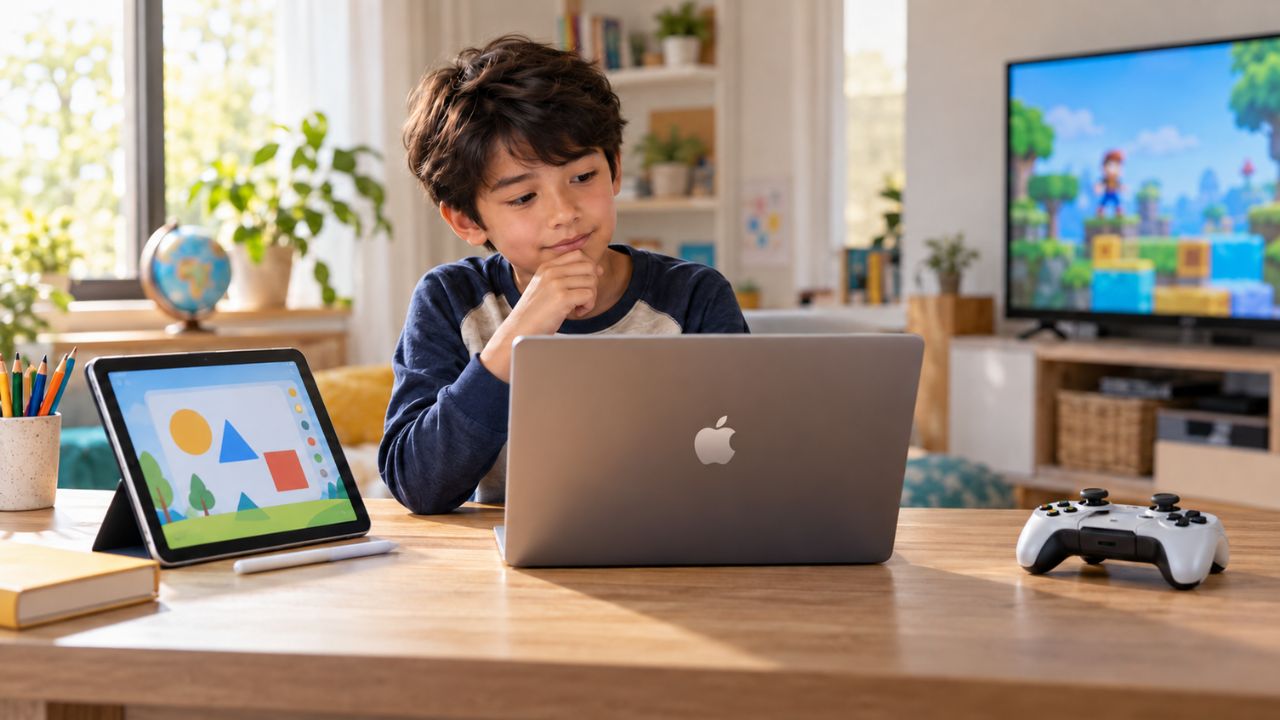
Parents can ask children what they enjoy about a game, who they play with and how they feel when they stop. Changes in sleep, mood, schoolwork or family routines are more useful signals than hours alone. It also helps to review online communication and privacy settings together, particularly when a child plays with people they do not know offline.
A balanced approach to video games and mental health leaves room for other sources of support: movement, rest, time outdoors, creative activities and conversations with trusted people. No single hobby has to meet every emotional or social need.
Final Thoughts
Video games and mental health can connect in helpful ways. Play may offer enjoyment, a short-term break or time with friends, but the effect varies. Research does not establish gaming as a reliable treatment, and more time playing is not automatically better.
Choose games based on how they affect the player and whether they fit into daily life. When play stays enjoyable and leaves room for sleep, responsibilities and relationships, it can be one part of a healthy leisure routine. When it repeatedly causes harm or feels impossible to control, seek support beyond the game.
Frequently Asked Questions (FAQs) About Video Games and Mental Health
Can video games treat anxiety or depression?
No. Some studies suggest that certain games may reduce stress in particular settings, but that does not make them a treatment for anxiety or depression. Persistent distress calls for appropriate professional support.
Does playing longer improve well-being?
There is no reliable rule that more play means better well-being. Research findings vary, and the effect may depend on the game, the player and what gaming replaces in their routine.
How can parents tell if gaming is affecting a child?
Look for changes in sleep, mood, school responsibilities, relationships and the child’s ability to stop. Hours alone do not establish a disorder; persistent loss of control and significant problems in daily life are more relevant signs.