
A closing can happen on a laptop and still fall apart over one unacceptable document. That is the catch behind the promise of online notarization: the video call may work perfectly while the lender, title insurer, or recording office refuses the finished file.
Choose the workflow first.
For U.S. property transactions, a useful e-notary platform needs to fit the closing team’s requirements, verify the signer, and leave a reliable record. Remote online notarization, or RON, brings the signer and notary together through live audiovisual communication, with electronic signatures and an electronic seal. In-person electronic notarization, or IPEN, keeps the paperwork digital but still puts both people in the same place.
The nine options below span on-demand notary services, software for existing notaries, and broader mortgage closing systems. “Apps” here includes business platforms; these are not all phone apps a buyer can independently choose for a mortgage closing.
1. Proof: A strong starting point for lender-led closings
Proof, the company behind Notarize, earns a place near the top of the shortlist because its Close product addresses the transaction around the notarization. It supports full eClosings, hybrid closings, refinances, home equity lines of credit, cash purchases, and seller-side transactions.
Title teams can use the Notarize Network or onboard their own notaries. Proof also lists integrations with Encompass and Resware, connecting the signing process to systems that lenders and settlement teams already use.
That matters more than a polished video window. When a team can keep document preparation, notary access, and completed-package delivery connected, it has fewer handoffs to manage.
For borrowers, the sensible route is to ask whether the lender or title company already uses Proof. Its help center says those organizations coordinate most real-estate closings on the platform. Independently uploading a mortgage package is not a substitute for their approval.
2. NotaryCam: For closings that need an organized appointment
NotaryCam’s real-estate service covers mortgage purchases, refinancing, home equity transactions, and other property-related work. Its eClose Quickstart gives the requesting escrow officer or attorney a structured way to submit the property details, signers, documents, and preferred appointment.
There is a useful dose of realism in its scheduling rules. NotaryCam asks for same-day requests by 1 p.m. Eastern and weekend requests by 5 p.m. Eastern on Friday. An online service still needs time to prepare a closing.
Its Quickstart page lists real-estate closings using its notary network from $199, with separate charges for specified extras, including rush requests. That is a closing-service starting price, not a promise that every purchase will cost the same.
NotaryCam suits a team that wants an arranged closing session with a signing professional. Someone expecting an instant mortgage closing should pay particular attention to the submission deadlines.
3. BlueNotary: Worth considering for transaction-based closing work
BlueNotary offers real-estate closing services alongside general online notarization. Its lender offering describes eNote execution and MERS registration capabilities, while its title-agent help center publishes package and loan-signing fees.
The public title-agent schedule lists a $99 package fee for a one-time loan closing. Other plans use different rates, so a title company should confirm its actual plan, notary arrangement, and extras before quoting a client.
The appeal is straightforward: an occasional closing should not automatically require a large software rollout. BlueNotary deserves consideration when a settlement team wants to explore a transaction-based option.
Pricing still needs careful reading. Platform fees, what a notary bills, and what the customer pays can represent different amounts. Compare the complete charge for the actual package rather than the cheapest number on a pricing page.
4. OneNotary: A practical route for an existing loan-signing agent
OneNotary’s package-signing instructions describe a workflow that lets a notary invite participants, upload the loan package, prepare signature tags, complete the online session, and download the finished documents.
That makes it relevant to title companies and signing services that already work with a particular loan-signing agent. The software can support that relationship instead of requiring the team to abandon it.
Its help center draws a useful billing distinction: in the documented package-signing workflow, notaries bill the requesting title company or signing service directly. The platform’s service fee does not represent the notary’s entire professional charge.
OneNotary also markets online notarization for deeds, title transfers, and closing documents. Confirm the intended package and transaction requirements before booking; a general notarization order and a lender-approved loan signing are different jobs.
5. PandaDoc Notary: For teams that want to use their own notaries
PandaDoc Notary’s real-estate offering combines document collaboration, electronic signing, and remote notarization. Its published examples include deeds, seller’s affidavits, and affidavits of title.
The ability to bring an in-house notary is the more interesting feature for an established title operation. Teams can invite commissioned notaries to an account, and PandaDoc says it verifies their commission status.
For an office with experienced staff, that preserves control over who handles the signing. A familiar notary can work through a digital platform rather than handing the customer to an unfamiliar service.
Keep the buying decision tied to the job. Document creation and notarization capabilities do not, by themselves, establish that a particular mortgage investor will accept the complete electronic loan package. Ask about the required eNote, storage, and delivery arrangements separately.
6. SIGNiX eNotaryDoX: For notaries who need a detailed evidence trail
SIGNiX’s eNotaryDoX provides identity authentication, video recording, an electronic notary journal, and digital signatures. The company says it cryptographically seals individual signatures and supplies its TotalAudit record of the signing and notarial process.
For a notary or business maintaining its own workflow, that emphasis on evidence deserves attention. A completed PDF should come with a defensible record of how the parties executed it.
There is an important purchasing distinction, though. SIGNiX’s separate consumer Notary Service currently says it does not accept real-estate documents such as mortgage documents or promissory notes, and instructs its notaries to cancel those appointments.
This recommendation concerns eNotaryDoX software for a properly arranged professional workflow. It does not recommend uploading a mortgage package to the consumer service. Confirm the software configuration, authorized notary, and recipient acceptance before committing a closing to it.
7. Secured Signing: For title teams focused on identity checks and records
Secured Signing’s title-company platform combines live video notarization, electronic signatures, identity verification, and an electronic journal. It supports RON and IPEN workflows, giving teams a way to handle remote and face-to-face electronic notarization within the same product family.
Its identity tools include biometric face matching and additional authentication options. The company also offers Realify, a feature it describes as detecting manipulated audio and video.
Those capabilities justify questions during vendor evaluation, not automatic confidence. Ask how the system handles a failed identity check, who reviews a suspected impersonation, and what the closing team receives after an interrupted session.
Secured Signing also describes audiovisual records and an exportable journal. For a title operation, access to those records after the transaction can matter as much as the convenience of the signing itself.
8. DocMagic Total eClose: For lenders building a complete electronic mortgage process
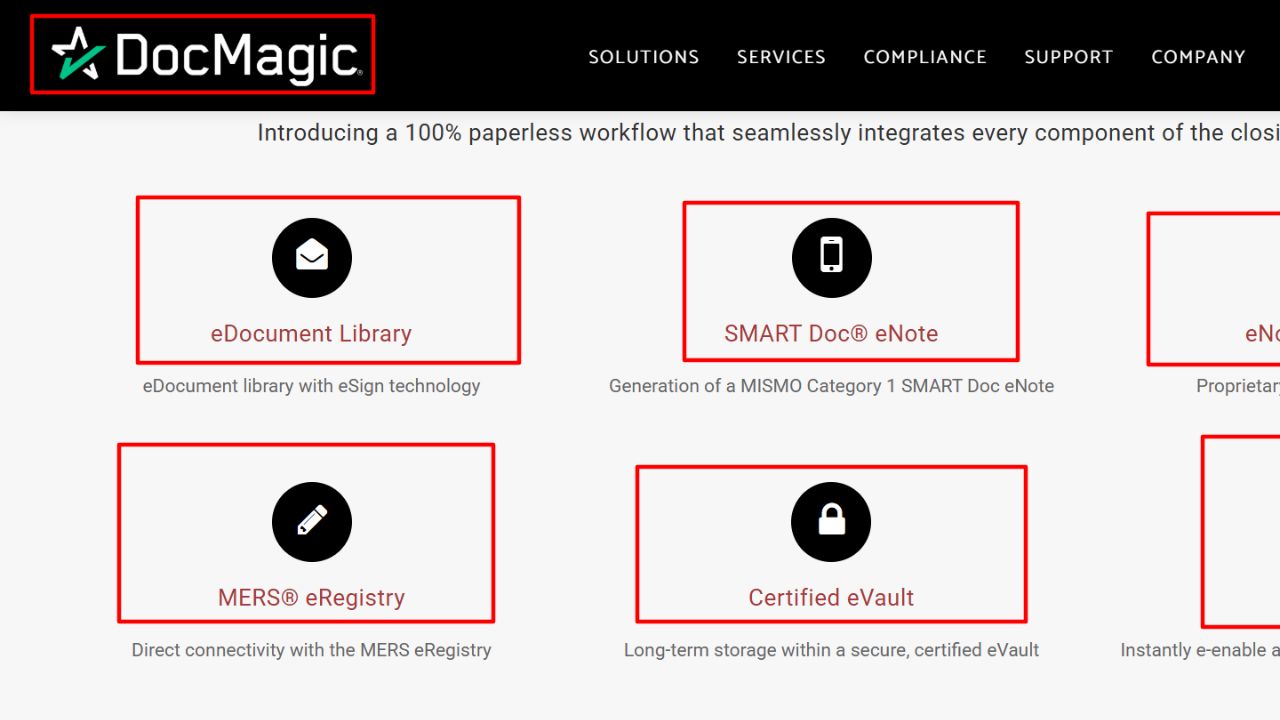
DocMagic Total eClose reaches beyond notarizing a closing document. Its published components include an electronic document library, SMART Doc eNotes, proprietary RON and IPEN technology, direct MERS eRegistry connectivity, and a certified eVault.
That scope makes it a serious candidate for a lender designing the full electronic mortgage process.
An eNote needs more than a signature on a PDF. Fannie Mae’s guidance treats electronic promissory notes separately from ordinary electronic records and requires special approval for sellers delivering eNotes. DocMagic’s note-generation, registration, and vault capabilities address parts of that broader operational requirement.
For a buyer who needs one affidavit notarized, this is excessive. For a lender connecting document preparation, closing, and electronic collateral management, the wider system is the point. Evaluate it with the operations and secondary-market teams involved.
9. Stavvy: For settlement teams handling several closing formats
Stavvy supports RON, IPEN, electronic signing, eNotes, and hybrid closings. Its eClosing offering also includes an eligibility engine.
The combination matters because a title office cannot assume every file will follow the same route. Some transactions can close remotely; others need an in-person electronic session or a mixture of digital and paper documents.
Stavvy also offers a notary signing service for occasions when an in-house notary is unavailable. Its title-company materials describe outsourced RON and IPEN closing support, including document tagging and oversight of the closing meeting.
That makes it worth evaluating for a settlement business whose main problem is coordinating different closing formats and staffing arrangements. Ask how eligibility decisions, lender instructions, and the final package travel through the system together.
Before sending the borrower a meeting link
A lender or title team should settle acceptance before scheduling. Fannie Mae’s RON guidance, for example, requires county-recorder acceptance for documents that need recording and places conditions on title-insurance coverage. It also says lenders must offer other notary options when borrowers request them.
A platform’s general availability does not settle those questions for a particular property.
For buyers and sellers, the practical next step is to ask the closing team which provider it approves, which identification documents the session requires, and whether any papers still need an in-person signature. For a business comparing vendors, request an itemized price for the intended package, including preparation, additional participants, witnesses where needed, and rescheduling.
Old software lists need checking, too. Pavaso’s official support notice says its business wind-down is complete; it now directs customers to request records of orders closed before January 1, 2026. It no longer belongs on a shortlist for new closings.
Finally, put the failure plan in the appointment instructions. Name the person the borrower should contact if identity verification fails or the video session disconnects. Decide who can authorize a replacement session and whether the closing deadline can move. The borrower should have that phone number before the call begins.