The best productivity book is the one that addresses the problem you actually have. A crowded task list needs a different solution than constant interruptions. Procrastination calls for something else again. Reading another book about doing more can even become a way to avoid choosing what matters.
These twelve books cover habits, focus, planning, workload, and the limits of time. Each gets a one-line summary first, followed by enough context to help you choose. Start with the book that fits your week; there is no need to read all twelve.
I chose books with a clear central idea and a distinct use case, mixing established titles with newer approaches. I checked their methods and authors against publisher and author material. The order is a reading guide, not a claim that one method works better for everyone.
The 12 Best productivity books in one line each
| Book | Best for | One-line summary |
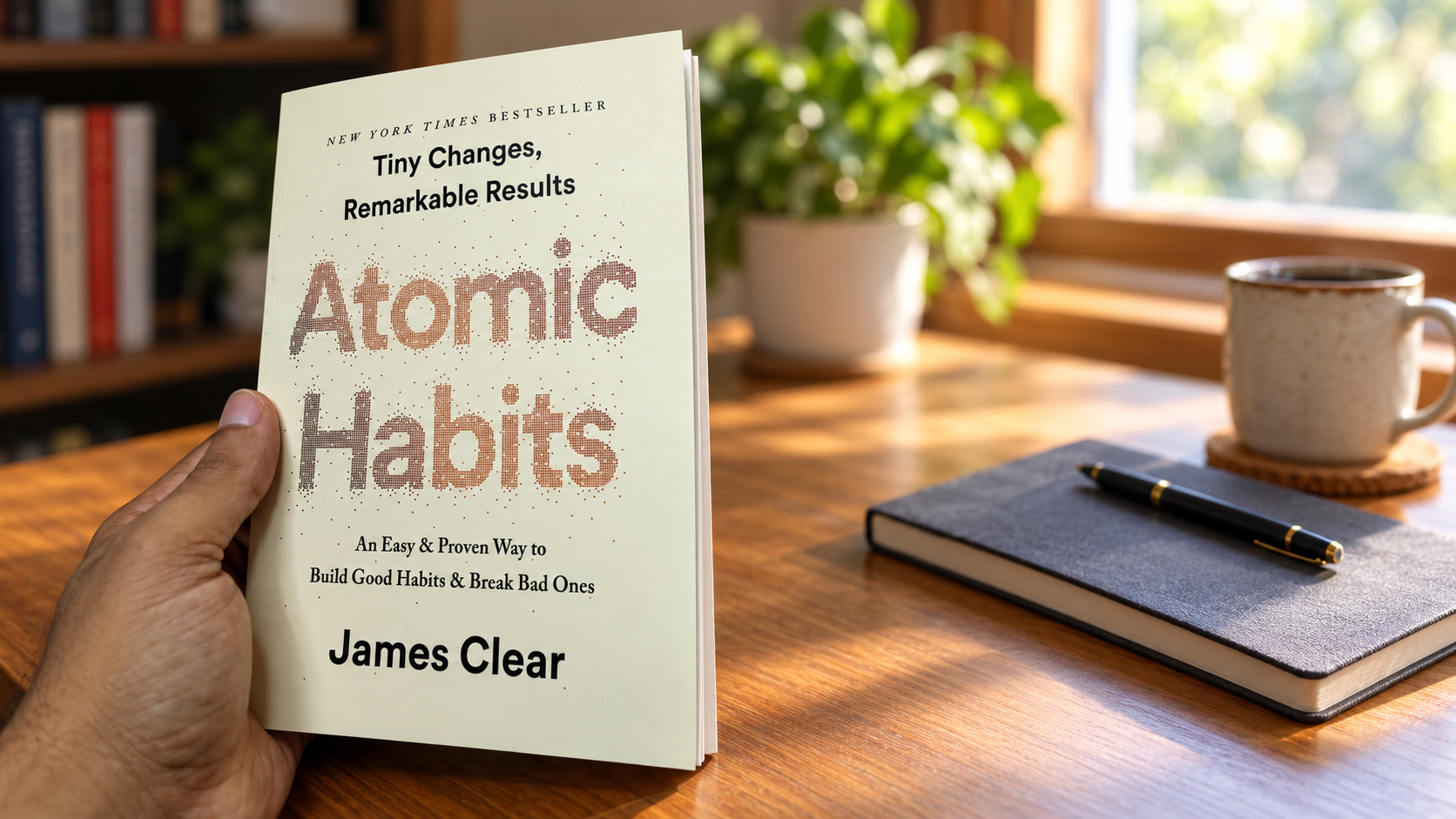
| Atomic Habits — James Clear | Building a routine | Make a useful behavior easier to repeat by changing its cues, effort, and rewards instead of waiting for motivation. |
| Deep Work — Cal Newport | Concentration | Protect uninterrupted time for difficult work and reduce the activity that repeatedly breaks your attention. |
| Getting Things Done — David Allen | Scattered commitments | Capture what needs doing, identify each next action, organize it, and review your system regularly. |
| Essentialism — Greg McKeown | Too many commitments | Choose the few things that matter most and make less room for everything else. |
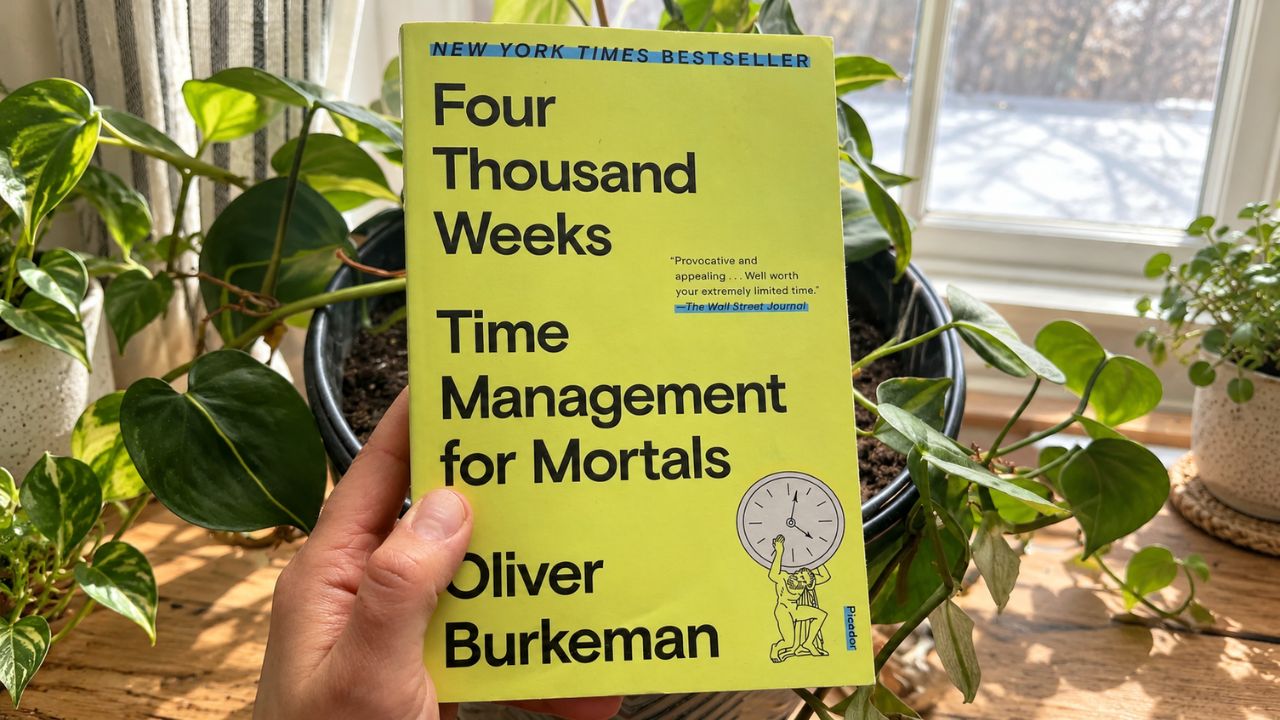
| Four Thousand Weeks — Oliver Burkeman | Time anxiety | Accept that you cannot do everything and choose deliberately how to spend the time you have. |
| Make Time — Jake Knapp and John Zeratsky | Reactive days | Pick a daily highlight, protect time for it, and learn from what worked. |
| Eat That Frog! — Brian Tracy | Procrastination | Start the important task you keep avoiding before smaller jobs fill the day. |
| Indistractable — Nir Eyal | Repeated diversion | Understand what pulls you off course, then plan your time and boundaries around those triggers. |
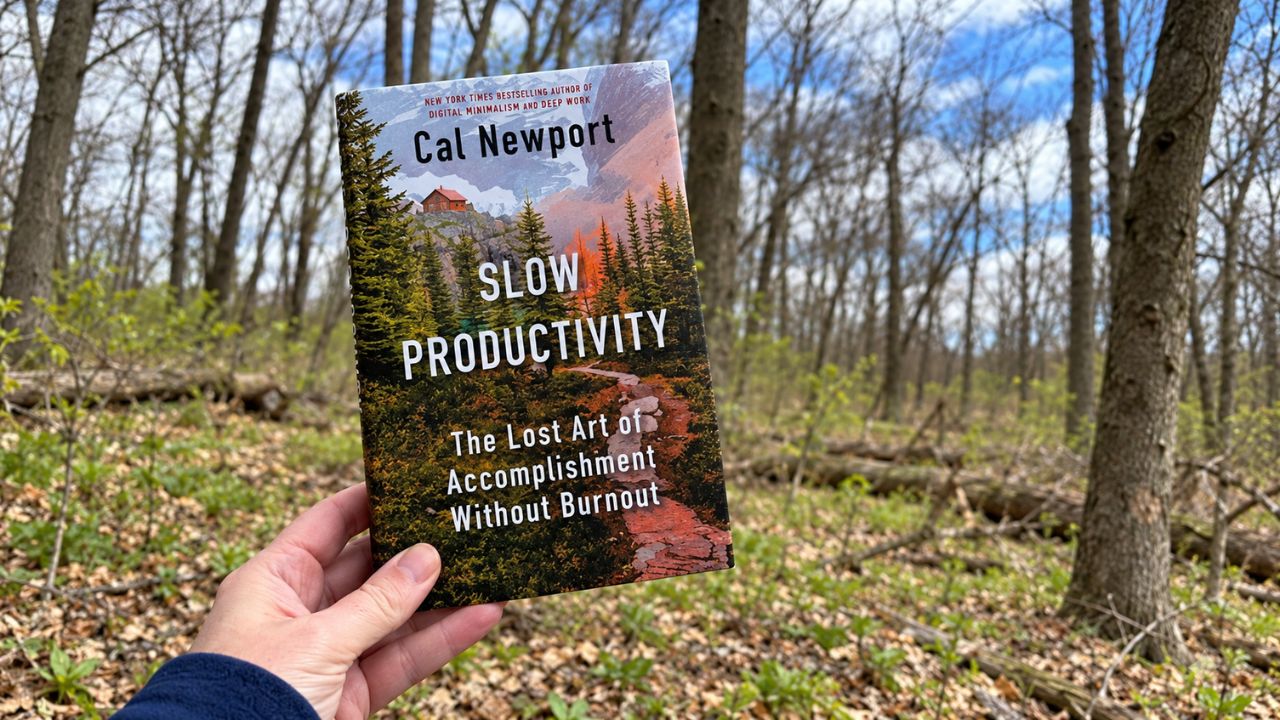
| Slow Productivity — Cal Newport | Work overload | Carry fewer active projects, work at a sustainable pace, and invest attention in lasting quality. |
| Tranquility by Tuesday — Laura Vanderkam | Busy weeks | Make a flexible weekly plan that leaves room for priorities, personal life, and disruption. |
| Tiny Experiments — Anne-Laure Le Cunff | Unclear goals | Test a small approach, learn from the result, and adapt your next step. |
| The Checklist Manifesto — Atul Gawande | Complex repeatable work | Use a well-designed checklist to catch important steps that even experienced people can miss. |
1. Atomic Habits by James Clear
A habit is easier to keep when your surroundings support it. Clear’s framework considers the cue that prompts a behavior, how appealing it feels, how easy it is to start, and what makes you want to repeat it.
Say you want to plan the next day before leaving work. Keeping a short planning note where you will see it removes a little friction; a promise to “be more organized” gives you no such prompt. Atomic Habits is a sensible first pick for a routine that never sticks. It has less to offer when you already have good routines but far more work than your hours allow.
2. Deep Work by Cal Newport
Deep Work makes the case for sustained attention on demanding tasks. Writing a difficult report, learning a technical skill, or solving a complicated problem may require a different kind of time from answering messages.
The practical question is where that time can fit. You might reserve a quiet block for drafting and handle routine replies afterward. Someone covering breaking news or responding to urgent customer issues cannot simply shut out the world for half a day. Newport’s idea is still useful there, but a realistic protected window may be shorter. The point is to give important thinking some dependable space.
3. Getting Things Done by David Allen
When requests arrive by email, chat, meetings, and passing conversation, remembering them becomes work of its own. Allen’s Getting Things Done system, or GTD, moves those commitments into a trusted place. Its steps are capture, clarify, organize, reflect, and engage.
The value is in deciding what a vague item means. “Sort out the report” becomes an action you can take or a project with several actions. GTD suits people managing many open loops, though its lists need regular review. If you have only a handful of predictable tasks, you may need the capture habit without adopting the entire system.
4. Essentialism by Greg McKeown
Essentialism is one of my favourite books; it starts before scheduling. If you agree to too many reasonable requests, arranging them more efficiently may still leave too little time for your best work. McKeown’s answer is to be more selective about what earns your attention.
That sounds simple until another person controls the assignments. You may be unable to decline a deadline outright. You can, however, put competing work in front of a manager and ask what should come first or move later. This book is a strong choice when your problem is the number of commitments, rather than a failure to organize them.
5. Four Thousand Weeks by Oliver Burkeman
The title uses roughly four thousand weeks as an illustration of a finite life. Burkeman challenges the hope that the right system will eventually let you finish everything. There will always be more worthwhile possibilities than time to pursue them.
This is a book for the person who feels defeated by every unfinished item, even after a productive day. It asks you to decide what deserves your limited attention, including time outside work. Do not pick it expecting a detailed task-management method. Its contribution is a clearer relationship with the things you will choose, and the things you will leave undone.
6. Make Time by Jake Knapp and John Zeratsky
Knapp and Zeratsky suggest choosing a Highlight: one thing you want to make time for today. Their framework then looks at distractions, energy, and a short reflection that helps you adjust tomorrow’s plan.
A highlight could be finishing a draft, taking a walk, or spending unhurried time with someone. That makes Make Time a good fit if you end most days having responded to everyone else without reaching what mattered to you. It does not demand a perfectly controlled calendar. On an unpredictable day, move the highlight to a workable slot instead of treating a changed plan as a failure.
7. Eat That Frog! by Brian Tracy
Tracy’s “frog” is your most important challenging task, the one you keep finding reasons to postpone. His advice is to tackle it early, before easy work creates a misleading sense of progress.
If opening a difficult project feels too big, the first action might be drafting its outline or identifying the decision that is holding it up. That makes the book immediately useful for a known priority you keep avoiding. Treat “first thing in the morning” as a tactic to consider, not a rule for every job or schedule. What matters is reserving time for consequential work before avoidance consumes it.
8. Indistractable by Nir Eyal
Muting notifications helps, but it may not explain why you keep leaving a task. Eyal examines external interruptions alongside internal triggers such as boredom or discomfort. He also encourages readers to plan time for the activity they intended to do.
Notice when you switch away from a task. Was there a message, an unclear next step, or an expectation that you reply immediately? The answer may change what you do next. A team norm around response times may help more than another personal screen limit. Indistractable is worth considering when you have protected time on paper but struggle to stay with the work.
9. Slow Productivity by Cal Newport
Newport appears twice because these books address different scales of the problem. Deep Work concerns focused sessions; Slow Productivity questions an overall workload that leaves too little attention for meaningful projects. Its principles are to do fewer things, work at a natural pace, and care about quality.
This productivity book speaks to people who stay busy yet rarely get to finish important work well. It is harder to apply when you cannot control what gets assigned. In that situation, its most practical use may be a workload conversation: show the active projects, the time each needs, and the trade-offs required to do them properly.
10. Tranquility by Tuesday by Laura Vanderkam
A schedule should survive an ordinary interruption. Vanderkam’s nine time rules include planning ahead and leaving a backup slot for something important when the first plan falls through. The book draws on a time-diary project involving more than 150 people who tried the rules.
Its attention to work, family, leisure, and daily maintenance makes it useful for readers whose responsibilities cannot be packed into a neat workday. A plan with no spare space may look efficient and fail by Tuesday. This book encourages a week you can adjust while still making room for what matters.
11. Tiny Experiments by Anne-Laure Le Cunff
Some goals are difficult to plan because you are still learning what you want or what will work. Tiny Experiments suggests trying a small approach, observing the result, and adapting rather than committing to a rigid long-term plan too soon.
If you are considering a writing routine, for example, try a manageable version for a short period and record what helps you return to it. That is an application of the book’s idea, not a prescribed formula. The approach is valuable for uncertain or exploratory work. A firm deadline, meanwhile, still calls for a clear deliverable and enough time to complete it.
12. The Checklist Manifesto by Atul Gawande
Gawande draws on medicine, aviation, and other complex fields to show how a brief checklist can help people catch consequential omissions. The lesson applies beyond high-stakes professions whenever work has repeatable steps that are easy to miss under pressure.
For an editorial team, a prepublication checklist might cover names, dates, image rights, links, and the final headline. Keep it short enough to use and focused on errors that matter. A long form filled with obvious instructions soon becomes something people rush through. Checklists support expert judgment; they cannot replace it.
Which productivity book should you read first?
I would start with the obstacle that showed up most often last week. If tasks disappeared between channels, choose Getting Things Done. If you captured every task but agreed to too many, choose Essentialism. Those books can work together, but they solve different problems: one tracks commitments; the other helps you choose them.
For attention, ask whether you lack quiet time or lose focus during the time you already have. Deep Work speaks more directly to the first problem. Indistractable helps you investigate the second. If the entire workload is too large for sustained thought, look at Slow Productivity as well.
If productivity itself has begun to feel like an endless demand, Four Thousand Weeks offers a wider view. Make Time is a lighter place to begin when you simply want tomorrow to include one thing that matters to you.
What these books cannot fix on their own
A book can help you try a better reading habit or make a clearer choice. It cannot solve understaffing, conflicting instructions, or a job that requires immediate replies throughout the day. Advice to protect three quiet hours or refuse extra work assumes a degree of control that many readers do not have.
Use a book’s method as a trial, not a verdict on your discipline. Try one change during a normal week. See what improves, what takes too much effort to maintain, and what needs a conversation with someone else. An author’s examples or research claims do not guarantee the same result in every setting.
Frequently asked questions on Best Productivity Books
1. What is the best productivity book for beginners?
Start with the problem rather than a universal winner. Atomic Habits is approachable if you want a small behavior to stick. Make Time offers a straightforward way to shape tomorrow. If many unfinished commitments are crowding your mind, Getting Things Done is more directly relevant, though its full system takes more setup.
2. Which productivity book helps most with procrastination?
Eat That Frog! is the clearest match when you know which important task you are avoiding. If you keep drifting away after you start, Indistractable may help you examine the trigger. If you cannot begin because the goal itself is unclear, Tiny Experiments offers a way to learn through a small trial.
3. Do I need to read all twelve?
No. Reading another productivity book can be its own form of delay. Choose one that matches your current obstacle, try a single practice, and judge whether it helps in your actual schedule before adding another system.