You dream of chatting with locals in Spain or Italy, but picking up a new language feels like climbing a mountain without a map. Many folks start with high hopes, like those New Year’s resolutions, only to hit roadblocks from boring lessons or apps that don’t stick.
It’s frustrating when you want quick progress in Spanish, Italian, or even American Sign Language, yet daily practice slips away amid busy life.
Duolingo leads the pack in language learning apps, boasting about 50 million daily active users who take on gamified lessons on the Apple App Store and Google Play Store.
This post breaks down the top apps for 2026, from beginners’ picks like Babbel with its structured lessons to immersive options like Rosetta Stone for no-English methods. We’ll cover trends like AI-driven tutoring and spaced repetition, plus tips to match your style, whether you crave speaking practice or video lessons from Netflix-style content.
Ready to master that language?
Key Trends in Language Learning Apps for 2026
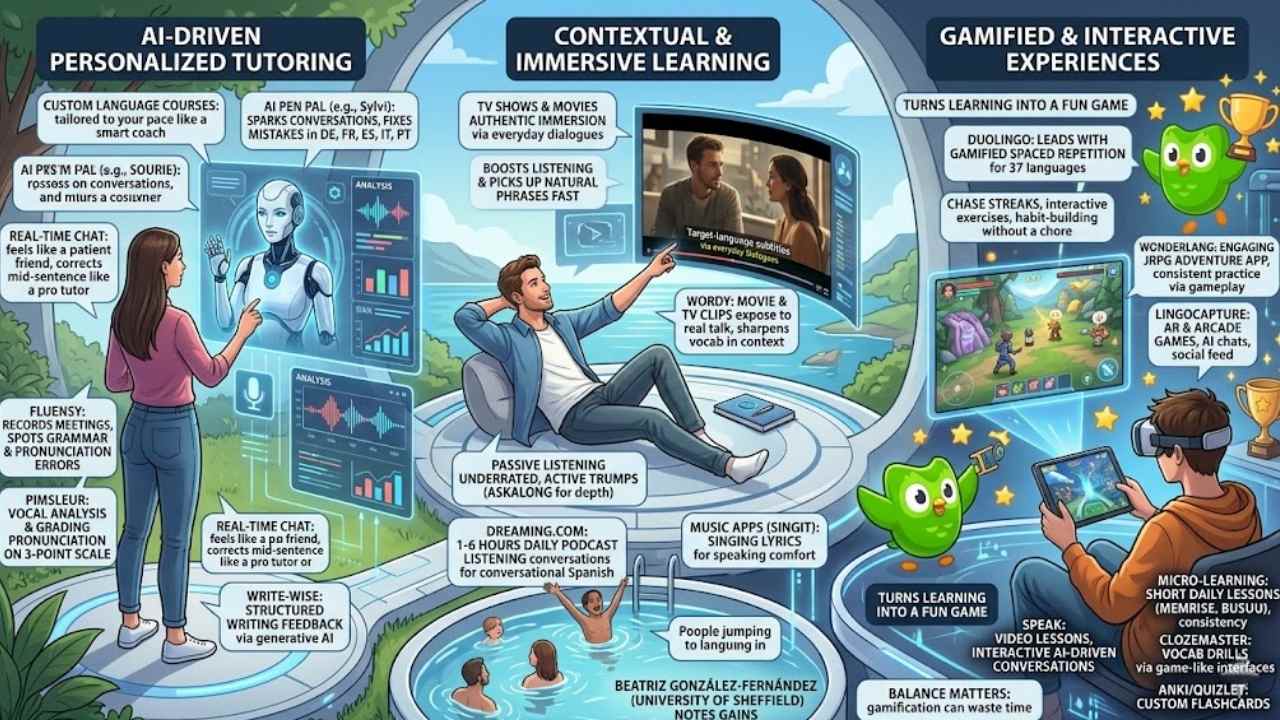
Apps now use generative AI to create custom language courses that fit your pace, like a smart coach whispering tips in your ear. They pull you into immersive learning with gamified challenges and real-world chats, turning tough grammar into a fun adventure that sticks.
AI-driven personalized tutoring
AI-driven personalized tutoring changes how you learn languages in 2026. Apps like Sylvi pair you with a digital AI pen pal that sparks conversations, fixes mistakes, and supports German, French, Spanish, Italian, and Portuguese.
Grab their free trial or snag a 10% discount through our link. Fluensy records your online meetings, spots grammar and pronunciation errors with AI, and charts your progress; it stays in beta for English, Spanish, and German.
Other tools, such as AskAlong, give instant answers to your spoken questions and tie feedback to exact timestamps in native podcasts. Langua shines in AI conversations for effective chats, even if it skips some structure from traditional language courses.
Duolingo’s premium plans and the Speak app offer AI-powered chat features for conversational practice with quick feedback. Pimsleur uses transcription and voice analysis to grade pronunciation on a three-point scale.
Many users find AI language chatting builds conversational skills better than old-school educational apps. Write-Wise provides structured writing feedback through generative AI for your personal growth in language practice.
Imagine chatting with an AI that feels like a patient friend, correcting you mid-sentence like a pro tutor. Tools like these make immersive learning fun and customized to your user experience.
Some users believe language chatting with AI is more effective for building conversational skills than traditional, non-AI apps.
Contextual and immersive learning methods
Contextual and immersive learning methods put you right in the middle of real-life language use, like jumping into a pool to learn swimming. Apps like Lingopie let you explore TV shows and movies for authentic immersion, building skills through everyday dialogues.
Imagine watching your favorite series with subtitles in the target language; this boosts listening and picks up natural phrases fast. Users often feel comfy speaking in just 4 to 6 weeks by combining this with daily micro-learning.
Take Wordy app, it grabs movie and TV clips to expose you to real talk, which sharpens vocabulary retention in context.
Passive listening gets underrated, yet active engagement trumps it, say with tools like AskAlong for deeper interaction. Dreaming.com pairs with 1 to 6 hours of daily podcast listening and generated conversational Spanish in six months for some folks.
Music apps such as Singit have you singing lyrics, creating quick comfort in speaking through fun tunes. Immersion beats curated lessons for listening, pulling from real conversations and media.
Real-world practice, consider movies with target-language subtitles, hones those natural phrasing skills. Folks report big gains from blending language immersion with active recall, much like Beatriz González-Fernández from the University of Sheffield notes in her work.
Gamified and interactive experiences
Apps turn language learning into a fun game these days, like playing your favorite video game while picking up new words. Duolingo leads the pack with its gamified spaced repetition system, supporting 37 languages for English speakers and boasting around 50 million daily active users.
Imagine chasing streaks with an animated owl mascot, tackling interactive exercises that build habits without feeling like a chore. WonderLang takes it up a notch as an engaging JRPG adventure app, pushing consistent practice through gameplay, all for a one-time purchase.
Lingocapture mixes in AR and arcade language games, plus AI chat personalities and a social feed for sharing lessons, though premium spots sit on a waitlist. Speak blends video lessons with interactive AI-driven conversation exercises, giving pronunciation feedback via transcription, much like chatting with a smart friend.
Critics point out gamification can waste time if it goes overboard, as seen in some Duolingo reviews, so balance matters. Micro-learning shines here with short daily lessons from apps like Memrise or Busuu, boosting consistency and quick jumps past A1 level per the Common European Framework of Reference for Languages.
Clozemaster drills vocabulary through spaced repetition and game-like interfaces, feeling more like a quiz than hard work. Tools such as Anki or Quizlet amp up the interactive side with custom flashcards, turning study into a lively match.
Even Promova and Mondly weave in full-sentence learning with gamified twists, keeping you hooked like a good story.
Best Apps for Beginners
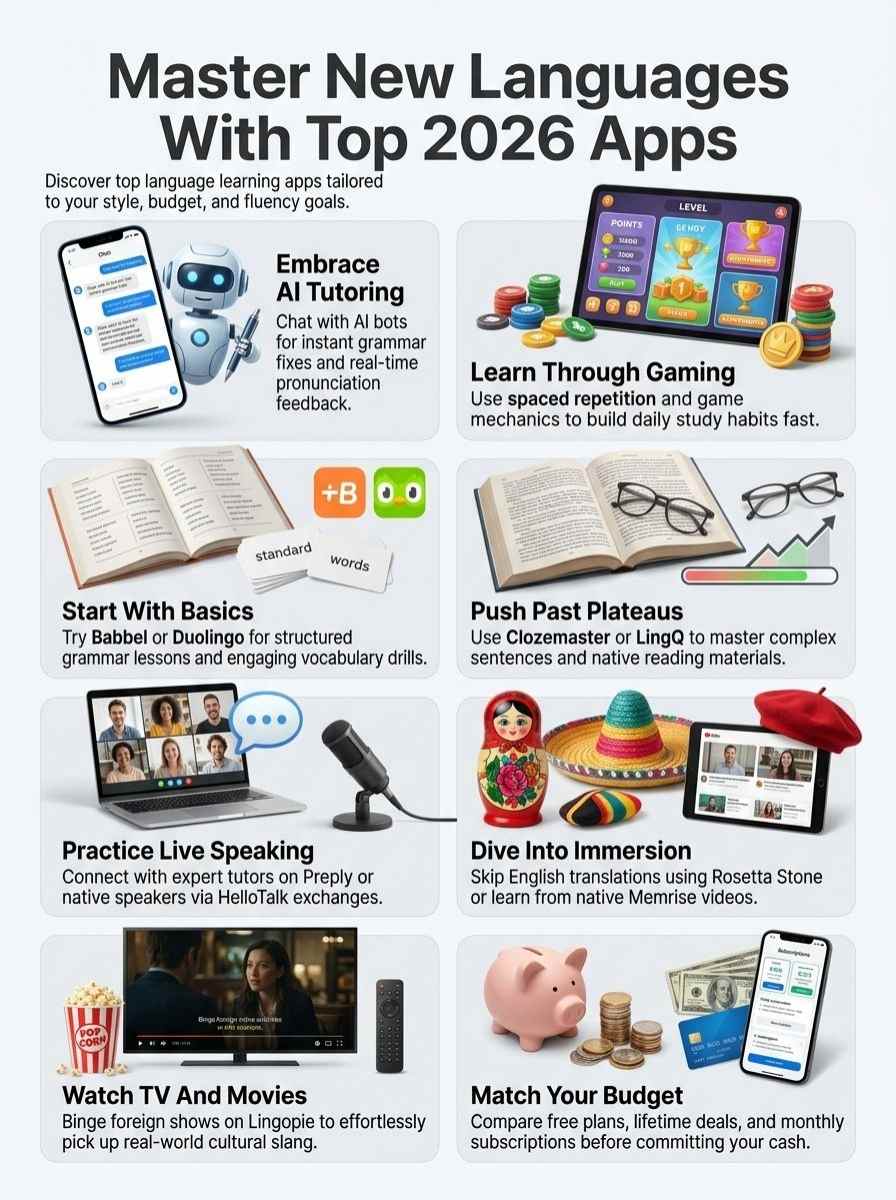
Jumping into a new language feels like dipping your toes in the ocean, exciting yet a bit chilly at first. Pick apps that spark joy with easy steps, and you’ll chat like a local before you know it.
Duolingo: Gamified and accessible learning
Duolingo shines as a top pick for beginners starting language learning. It supports 37 languages for English speakers, plus lessons for folks using 27 other tongues. Core lessons stay free, though ads and limits pop up; snag advanced perks like AI chat with a $168 yearly fee.
The app hooks you with spaced repetition and gamification, that animated owl mascot cheering you on like a feisty coach. Over 50 million users worldwide jump in daily, making it a global hit.
Setup might drag with over 20 taps and permissions, but hey, it’s worth the hassle for building habits.
Vocabulary drills and speech recognition take center stage, backed by pro voice actors for smooth text-to-speech. Progress feels slow on purpose, hammering home memorization through repeats and smart reviews.
Experts like Jill Duffy from PCMag often praise it for kickstarting daily study routines, even if grammar coverage stays shallow. Pair it with YouTube tips from Matt Kessler at the University of South Florida for extra boosts, especially around New Year’s resolutions.
Duolingo makes learning feel like a game, not a chore, says Ben Moore from Wirecutter.
Babbel: Structured lessons with grammar focus
Babbel stands out for folks starting their language journey, especially if you crave structure. It covers 14 languages like Spanish, French, German, Italian, and Russian. Lessons build from Newcomer A1 to Intermediate B1 levels.
Four options even hit B2. You get grammar theory mixed with vocabulary, plus a handy Grammar Guide. Situational scenarios make it real, like chatting in a cafe. Five-minute sessions blend speaking and reading, full of interactive bits.
Audio recaps last 12 minutes, and podcasts feature native speakers. The app spots your weak spots and creates review lessons on the fly. AI tools check your pronunciation through transcription, and chatbots handle set topics.
It works on iOS, Android, or web, a solid pick over flashy games.
Imagine you’re eyeing New Year’s resolutions, maybe learning with Preply tutors or Lingoda classes. Babbel fits right in, offering $54 for three months, $108 yearly, or $299 lifetime.
It feels mature, like a steady coach. Folks love how it pairs with tools from the Foreign Service Institute, or even apps like Fluenz for immersion. If you swap languages, try Languatalk for chats, or MakesYouFluent for vocab drills.
Babbel keeps it practical, no wild gamification here.
Best Apps for Advanced Learners
You’ve nailed the basics, now crank it up a notch with apps that dive deep into real-world words and smooth talking. Picture chatting like a local after practicing tough sentences, it’s like upgrading from training wheels to a speedy bike.
Clozemaster: Vocabulary and sentence practice
Clozemaster grabs attention from advanced learners who crave vocabulary boosts. It delivers sentence-based exercises packed with real context. Users praise it for breaking that tricky intermediate plateau, from B1 to B2 levels.
The app employs spaced repetition, you know, to lock in those challenging words. Game-like mechanics make retention fun and effective. Progression shows up clear through level tracking.
Repeated drills expose you to practical sentence usage, far beyond beginner stuff.
Folks report Clozemaster tops Memrise and Glossika for advanced vocabulary and sentence practice. It supports a wide range of languages, perfect for fluency chasers. Pair it with tools like Taalhammer for full-sentence AI repetition, or even Sign It ASL if you’re mixing in sign language vibes.
Think about Lingo Llama for gamified twists. Emmanuel, an avid user, swears by it to smash New Year’s resolutions on language goals. This app supplements immersion methods, like conversation chats, with solid drills.
LingQ: Reading and listening for fluency
LingQ gives you access to real reading and listening stuff, like articles and podcasts, that build fluency with everyday content. It fits advanced learners who tackle tough texts and talks.
You track your word growth and reading gains with built-in stats. Import your own items, say news stories or scripts, for study that matches your life.
Lessons group by topics, so you pick up lingo on themes you love, like travel or tech. The setup suits long immersions into reading or listening, ditching quick bites for real depth.
It stresses context, not just cramming facts, to help you grasp meanings better. Jump from basic app work to full immersions in native materials, making language stick as part of new years resolutions for growth.
Best for Speaking Practice
Speaking a new language feels like jumping into a lively chat at a global party, doesn’t it? Apps like these connect you with tutors and native speakers, sparking real conversations that build your confidence fast.
Preply: Personalized lessons with professional tutors
Preply connects you with professional tutors for customized one-on-one lessons, like having a personal coach in your pocket. You pick tutors based on ratings, experience, and teaching style, so it feels just right, you know? Sessions tailor to your learning goals, schedules, and proficiency levels, making every chat count.
Imagine chatting about business lingo or travel phrases; the app covers a broad spectrum of languages and specializations.
Tutors give direct, structured feedback on pronunciation, grammar, and fluency, helping you sound like a pro. Schedule regular lessons, say weekly, for steady progress that sticks.
Advanced booking and payment systems make managing it all a breeze. This setup shines for folks craving accountability and quick gains through live interaction, turning “uh-oh” moments into “aha!” wins.
HelloTalk: Language exchange with native speakers
HelloTalk connects you with native speakers for real chat and voice messaging. You find language partners from around the world, engaging in true conversations that build skills fast.
Imagine swapping stories with someone in Tokyo while practicing Japanese; it feels like a friendly coffee chat, not a chore. Those built-in correction tools give instant feedback on your messages and pronunciation, helping you fix slip-ups on the spot.
Plus, the app mixes structured lessons with casual exchanges, so you pick what fits your vibe.
Group chats and topic-based discussions create a lively community, perfect for beginners or advanced folks craving immersion. Users often say their speaking confidence skyrockets after steady use, like turning shy mumbles into bold talks.
Folks recommend HelloTalk as a great add-on for apps that skip real-life talks, filling that gap with ease.
Best for Unique Learning Approaches
Imagine watching videos of folks chatting in their mother tongue, picking up words like a sponge soaks up water, and suddenly you’re building your vocab without even trying. Or think about jumping into lessons that ditch English entirely, forcing your brain to adapt fast, like a fish learning to swim in new waters, all while AI drills full sentences into your memory for that real fluency kick.
Memrise: Native speaker videos for vocabulary building
Memrise brings vocabulary to life with video clips of native speakers. These clips show folks pronouncing words, which boosts your listening and pronunciation skills. Imagine a local from Paris saying “bonjour” in a bustling cafe, it sticks in your mind like glue.
The app explores contextual learning, placing words in real-life settings that feel natural and fun. It uses spaced repetition to reinforce what you learn, mixing in video and audio cues for better recall.
You get interactive quizzes and recall exercises tied right to that video content, keeping things lively. Pick from themed vocabulary lists like travel, business, or daily life to match your goals.
Memrise covers a wide variety of languages, even those less commonly studied, so no one gets left out. Folks praise it for turning vocabulary building into an engaging, memorable adventure.
Plus, performance analytics track your word retention and flag what needs review, helping you stay on top of progress.
Rosetta Stone: Immersive, no-English learning method
Rosetta Stone jumps right into languages with a full-immersion style, ditching translations and English hints altogether. It teaches you through pictures, audio clips, and smart repetition, letting the target language sink in naturally.
This app has hooked learners since the 1990s, now thriving on mobile devices with fresh updates. Imagine piecing together a puzzle without the box top; you infer meanings and grammar rules just by soaking it all up, like a kid learning to talk.
It packs over 24 languages into detailed courses, structured in step-by-step units that build from beginner basics to intermediate skills. Speech tech checks your pronunciation and gives instant feedback, sharpening your accent on the spot.
Folks who love this intuitive vibe swear by it, especially if rote rules bore you to tears. Swap drills for real exposure, and watch fluency sprout like weeds in spring.
Taalhammer: Full-sentence training with AI repetition
Taalhammer jumps straight into teaching full sentences with AI-driven spaced repetition. It adapts review intervals based on your performance and the sentence difficulty. Lessons zero in on practical phrases and conversational structures.
Forget isolated words; this app builds real talk skills fast.
The AI picks sentences to boost retention and fluency. You customize sets for needs like travel or work. Analytics track your mastery of sentence patterns. It supports multiple languages, especially European ones.
Folks love how it speeds you from vocab to chatting with ease.
Best Apps for Niche or Hard-to-Find Languages
Craving to master rare tongues like Basque or Quechua, folks? Apps packed with broad libraries and video streams make it a breeze, so keep scrolling to uncover the top picks that fit your wild language quests.
Transparent Language Online: Extensive language collection
Transparent Language Online opens doors to over 100 languages, many you won’t find anywhere else. Schools, libraries, and government groups rely on it every day. It explores modern tongues, ancient ones, dialects, and even endangered languages that hang on by a thread.
Imagine tackling a rare dialect with ease, like chatting with an old friend from a forgotten village.
You get practice in reading, writing, listening, and speaking for most options. Track your progress with built-in tools and check your skills through assessments. Jump in via mobile or web, whatever fits your day.
Pick structured courses or go self-paced, like choosing your own adventure. Plus, join the community to swap tips and stories with folks chasing those same niche gems.
Lingopie: Learn languages through TV shows and movies
Lingopie turns binge-watching into a smart language adventure. This app jumps straight into TV shows and movies to teach you, giving immersive exposure to native speech and culture.
You get thousands of hours of video content across multiple languages, perfect for picking up real-world lingo. Click on interactive subtitles for quick translations and pronunciations, like having a dictionary at your fingertips.
Users build custom flashcards from video dialogues to review tough spots. Beginners and advanced folks both thrive here, chasing authentic listening practice. Track your progress through watched content and mastered vocabulary; it feels like unlocking levels in a game.
Lingopie shines for underrepresented languages, and it draws in folks craving cultural immersion alongside their studies.
How to Choose the Right App for Your Needs
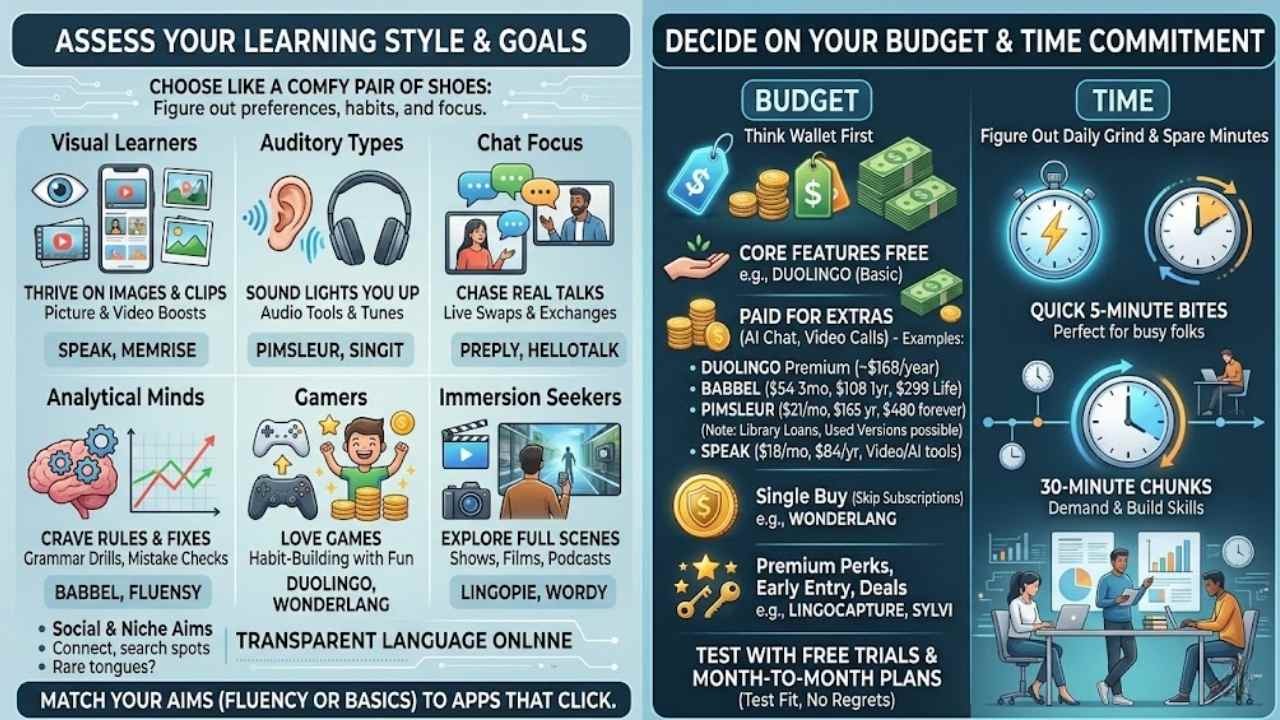
Picking a language app that fits you, like a comfy pair of shoes, starts with figuring out if you prefer games or thorough explorations of grammar, and then weighing how much cash and hours you can spare—stick around for the full scoop on making your choice a breeze.
Assess your learning style and goals
Visual learners, you thrive on images and clips. Pick apps like Speak or Memrise for video and picture boosts. Auditory types, sound lights you up. Go for audio tools such as Pimsleur or Singit with its tunes.
Folks set on chatting, chase real talks. Grab Preply or HelloTalk for live swaps.
Analytical minds crave rules and fixes. Choose Babbel or Fluensy for grammar drills and mistake checks. Love games to stay hooked? Duolingo or WonderLang builds habits with fun. Explore full scenes if immersion calls you.
Try Lingopie or Wordy for shows, films, and podcasts. Social butterflies, connect with others. Seek exchange spots in community apps. Hunt rare tongues? Transparent Language Online covers tons.
Match your aims, like fluency or basics, to fit apps that click.
Decide on your budget and time commitment
Think about your wallet first when picking a language app. Duolingo gives core features for free, but you pay $168 a year for extras like AI chat and video calls. Babbel charges $54 for three months, $108 for a year, or $299 for life.
Pimsleur costs $21 a month, $165 yearly, or $480 forever, and you might cut costs with library loans or used versions. Speak runs $18 monthly or $84 yearly for its video and AI tools.
WonderLang skips subscriptions with a single buy. Apps such as Lingocapture and Sylvi tempt you with premium perks, early entry, or deals.
Figure out your daily grind too, since time shapes your pick. Check how many minutes you can spare each day. Some programs dish out quick 5-minute bites, perfect for busy folks. Others demand 30-minute chunks to build skills.
Users often say try free trials or month-to-month plans first. That way, you test the fit without big regrets.
Final Thoughts
We’ve covered the top language apps for 2026, from Duolingo’s fun games for beginners to HelloTalk’s chats with native speakers for practice. These tools make learning straightforward and fit into busy lives, so you pick what suits your style without hassle.
Mastering a new tongue boosts your career and connections, and apps like Babbel or Memrise speed up that journey to fluency. Check out app stores for free trials, or join online forums for user tips to dive deeper.
Jump in now, your next conversation in French or Spanish awaits!
Frequently Asked Questions (FAQs) About Language Learning Apps
1. What makes the top apps for learning new languages in 2026 stand out?
Well, picture this, these apps like Duolingo and Babbel, they’ve got AI buddies that chat with you in real time, making lessons feel like a coffee talk with a friend from abroad. They adapt to your pace, you know, like a smart coach spotting your weak spots and drilling them gently. And hey, by 2026, virtual reality dives you into street scenes in Paris or Tokyo, turning study into an adventure.
2. How do these language learning apps keep you hooked day after day?
They sprinkle in gamified streaks and rewards, turning practice into a fun habit you won’t ditch. Plus, with voice recognition that corrects your accent on the spot, it’s like having a patient tutor in your pocket.
3. Are there free top apps for picking up new languages in 2026?
Oh, absolutely, apps such as Memrise offer solid free tiers with bite-sized lessons that build vocab fast; you just upgrade for extras like offline access.
4. What’s the big deal with tech updates in language apps by 2026?
Imagine neural implants syncing with apps for instant translations in your brain, but kidding aside, real updates include augmented reality overlays that label objects in foreign tongues as you walk around. These tweaks predict your slip-ups before they happen, based on data from millions of users, so you learn smarter, not harder. It’s like the app reads your mind, easing that frustration of hitting a wall in conjugation.