Modding—changing or adding content to video games—has evolved from a niche hobby into a massive professional industry. It’s no longer just about passionate fans tweaking code in their basements; it’s a legitimate modding as a career path where talented creators are earning six-figure incomes.
You’ve likely seen the shift yourself. Major studios aren’t just tolerating mods anymore; they are actively building entire business models around them.
From what I’ve seen in the market, the numbers back this up. The global creator economy is projected to hit over $252 billion in 2025, with gaming content making up a massive slice of that pie.
Platforms like Roblox and Overwolf are paying out hundreds of millions of dollars to creators annually. This isn’t “pocket money” anymore—it’s a payroll.
So, let’s look at the data driving this economy, the specific tools you need to master, and the practical steps to turn a passion for game design into a paying career.
What is Modding?
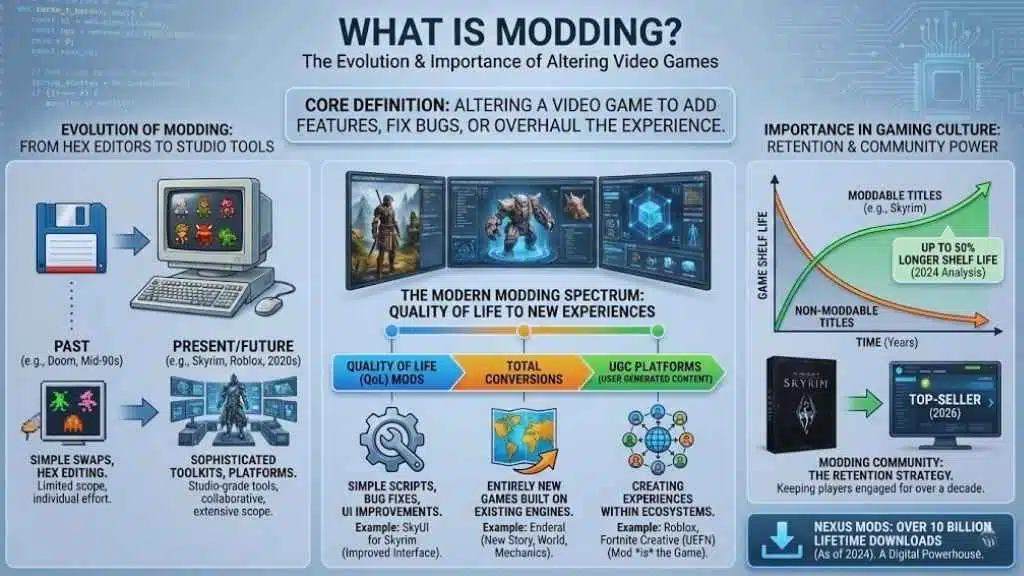
At its core, modding is the act of altering a video game to add features, fix bugs, or completely overhaul the experience. But the scope has changed dramatically.
Definition and evolution of modding
Modding used to be about hex editors and swapping sprite files on floppy disks for games like Doom. Today, it involves sophisticated, studio-grade toolkits.
Modern modding spans a spectrum:
- Quality of Life (QoL) Mods: Simple scripts that fix bugs or improve UI (like SkyUI for Skyrim).
- Total Conversions: Projects that use a game’s engine to build an entirely new game, like Enderal.
- UGC Platforms: Creating experiences within ecosystems like Roblox or Fortnite Creative (UEFN), where the “mod” is the game itself.
This evolution has turned platforms like Nexus Mods into digital powerhouses, hosting over 10 billion lifetime downloads as of 2024.
Importance of modding in gaming culture
Studios value modding for one specific reason: retention. A 2024 industry analysis showed that active modding communities can extend a game’s shelf life by up to 50% compared to non-moddable titles.
Take The Elder Scrolls V: Skyrim. Released in 2011, it remains a top-seller in 2026 largely because of its modding community. Developers know that engaging with these creators isn’t just “community service”—it’s a retention strategy that keeps players logging in for years.
Why Modding is More Than a Hobby
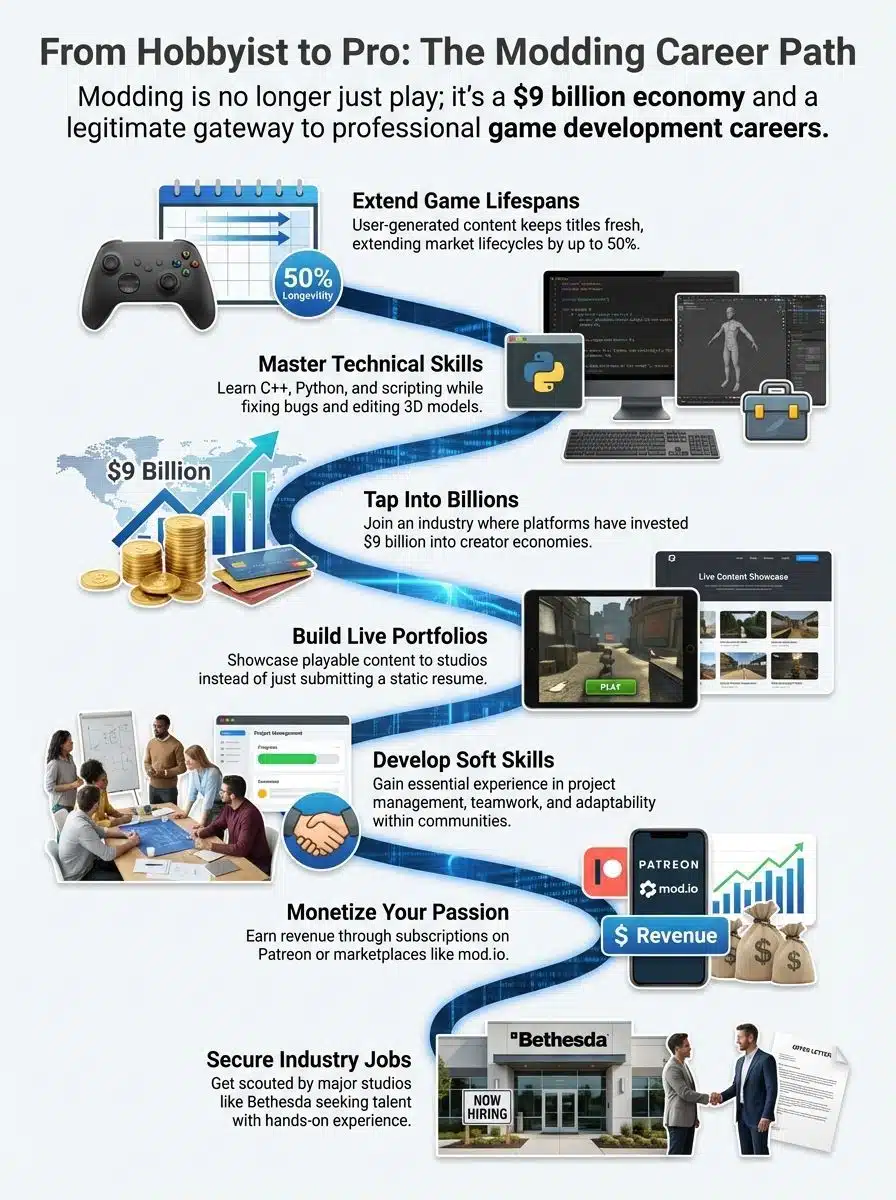
Many professional developers start here because the barrier to entry is low, but the ceiling for skill growth is incredibly high.
Hands-on experience in game development
Modding forces you to learn the actual tools pros use. You aren’t just playing; you are working with:
- Blender or Maya: For 3D modeling and animation.
- Unreal Engine or Unity: For understanding game physics and logic.
- Visual Studio: For writing the C++ or C# scripts that drive gameplay.
A specific example is the Unreal Editor for Fortnite (UEFN). It’s not a “toy” version of the engine; it’s a professional toolset that requires understanding Verse code and asset management, mirroring the workflows used at Epic Games.
A platform for creativity and experimentation
Some of the biggest genres in gaming history were born from mods, not boardrooms.
“Counter-Strike began as a Half-Life mod. Dota started as a custom map in Warcraft III. PUBG’s battle royale concept has roots in Arma modding.”
This space allows for rapid prototyping. If you have an idea for a new mechanic, you don’t need to build a physics engine from scratch—you just mod it into an existing game and test if it’s fun.
Development of technical and soft skills
Beyond coding, modding teaches “soft” skills that are critical in a studio environment.
On forums like r/gamedev, veteran modders frequently warn beginners about “Scope Creep”—the tendency to keep adding features until a project becomes unfinishable. Learning to cut features and ship a finished mod is a skill that hiring managers look for.
You also learn to handle feedback. When you release a mod on Steam Workshop, you get immediate, unfiltered user reviews. Learning to filter constructive criticism from noise is a vital professional skill.
Modding as a Gateway to Game Development Careers
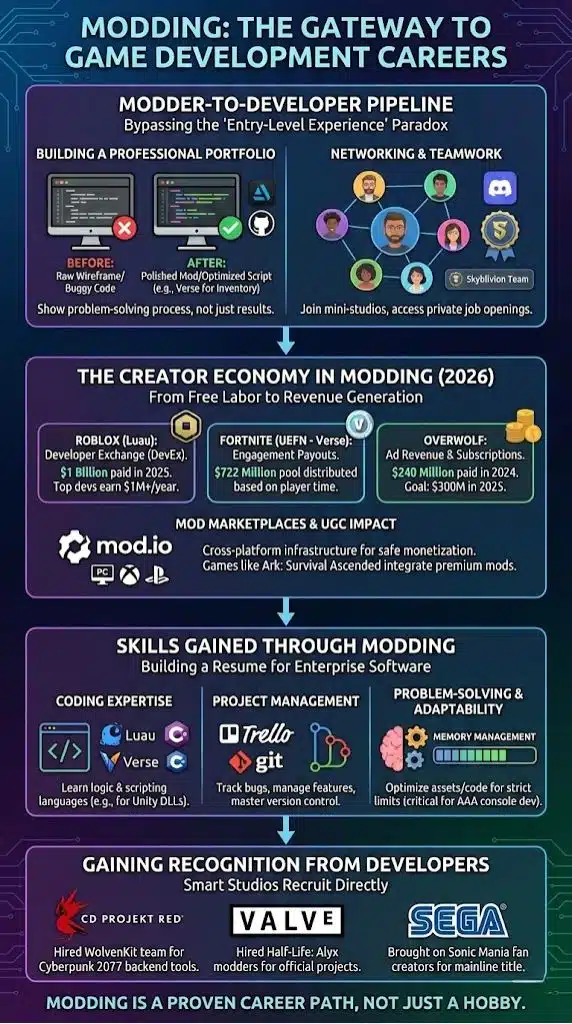
The “modder-to-developer” pipeline is real and well-documented. It is one of the most effective ways to bypass the traditional “entry-level experience” paradox.
Building a professional portfolio with mods
A portfolio of working mods is often more impressive than a degree. It shows practical application.
When building your portfolio on sites like ArtStation or GitHub, don’t just post the file. Post the “Before and After.” Show the wireframe, explain the bug you fixed, or detail the specific Verse script you wrote to handle player inventory. Studios want to see your problem-solving process, not just the result.
Networking opportunities within the gaming community
Modding teams operate like mini-studios. Joining a large project, such as the Skyblivion team, puts you in direct contact with other talented artists and coders.
These connections are invaluable. Many modders share job openings in private Discord servers long before they hit public job boards.
Gaining recognition from game developers
Smart studios recruit directly from modding communities.
- CD Projekt Red: Officially hired the team behind WolvenKit (the modding tool for Cyberpunk 2077) to work on the game’s backend tools.
- Valve: Famously hired the team behind the Half-Life: Alyx mods to work on official projects.
- Sega: Brought on the creators of Sonic Mania (who started as fan game creators) to develop an official mainline title.
The Role of the Creator Economy in Modding
This is where the industry has shifted most in 2026. Modding is no longer just “free labor”; it is a revenue-generating sector.
Monetization opportunities through platforms
There are now clear, legitimate paths to getting paid:
| Platform | Primary Revenue Model | Payout Context |
|---|---|---|
| Roblox | Developer Exchange (DevEx) | Paid out $1 billion to creators in 2025. Top devs earn $1M+/year. |
| Fortnite (UEFN) | Engagement Payouts | Pool of over $722 million distributed to island creators based on player time. |
| Overwolf | Ad Revenue & Subscriptions | Paid $240 million to modders in 2024, with a goal of $300M in 2025. |
The rise of mod marketplaces like mod.io
Platforms like mod.io provide cross-platform modding infrastructure for studios. They allow creators to upload content that works on PC, Xbox, and PlayStation. This standardization has made it easier for creators to monetize their work safely, ensuring they get paid for downloads without legal grey areas.
The impact of user-generated content on the gaming industry
The numbers don’t lie. UGC (User-Generated Content) is reshaping budgets. Games like Ark: Survival Ascended have integrated premium mods where creators can sell high-quality maps and skins directly to players, with the developer taking a platform cut.
This “Creator Economy” model turns players into partners. It incentivizes the community to keep the game alive, while the original developer focuses on engine updates and core stability.
Skills Gained Through Modding
You are building a resume, whether you realize it or not. The skills you sharpen here are directly transferable to enterprise software development.
Coding and programming expertise
Different ecosystems require different languages:
- Roblox: Uses Luau, a derivative of Lua. It’s excellent for learning logic and scripting.
- Fortnite (UEFN): Uses Verse, a functional logic language designed by Epic Games specifically for the metaverse.
- Unity Games: Often require C# knowledge for creating DLL mods.
Project management and teamwork
Successfully shipping a mod requires using tools like Trello or Jira to track bugs and features. You learn version control (Git), which is an absolute requirement for any professional software job.
Problem-solving and adaptability
A common hurdle mentioned on the r/FortniteCreative subreddit is “Memory Management.” Creators have a strict memory limit for their islands. Learning how to optimize textures and code to fit within these limits is exactly the kind of optimization skill AAA studios need for console development.
Challenges and Ethical Considerations in Modding
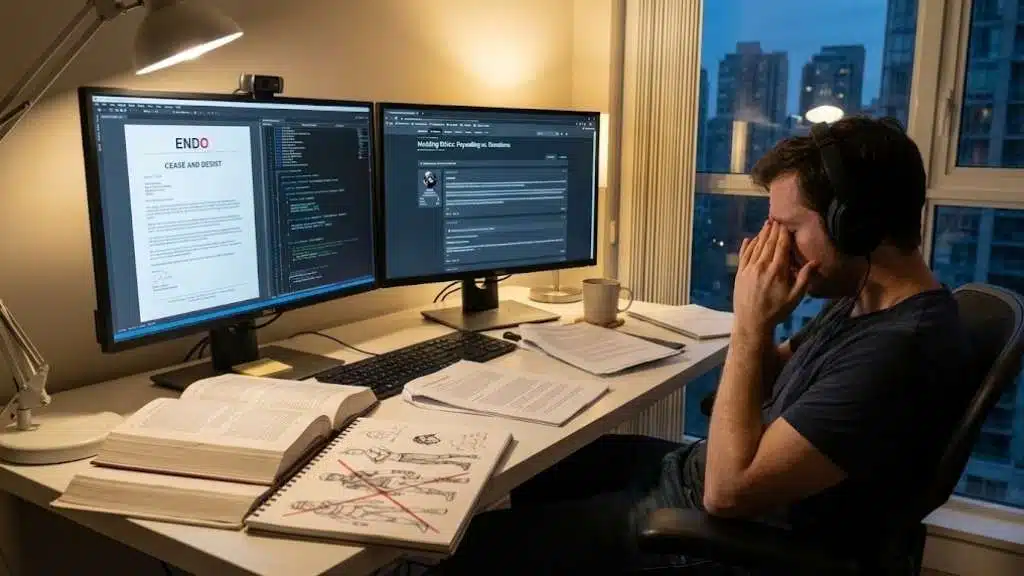
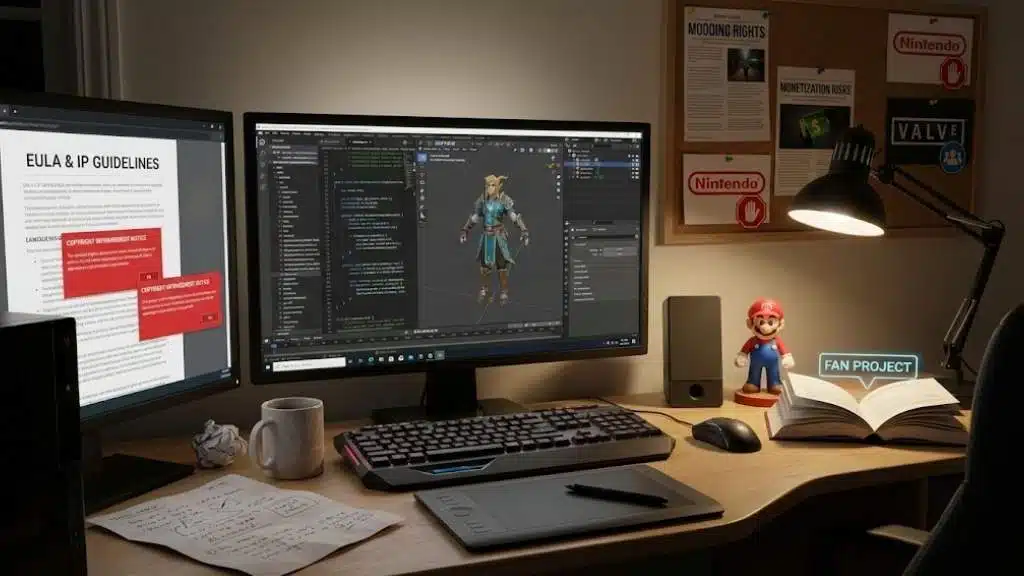
It’s not all profit and creative freedom. The legal landscape is tricky, and one wrong move can get your project shut down.
Issues with intellectual property rights
The “Freedom of Modding” is constantly being tested in courts. While the EU has seen rulings (like Case C-159/23) that protect certain forms of software modification, using copyrighted assets is a red line.
Nintendo is infamous for shutting down fan projects that use their characters. Conversely, Valve encourages it. You must know the stance of the specific company whose game you are modding.
Balancing creativity with industry regulations
If you plan to monetize, you must adhere to strict EULAs (End User License Agreements). For example, you cannot sell a mod that uses assets “ripped” from another game.
Professional modders mitigate this risk by using only original assets or assets they have licensed. Platforms like Patreon allow for support, but “Paywalling” essential fixes is often controversial and can lead to community backlash or bans from the game publisher.
Final Thoughts
Modding has matured from a hobbyist’s pastime into a pillar of the gaming industry. With the creator economy projected to exceed $252 billion, the opportunities for skilled creators have never been greater. Whether you are scripting in Verse for Fortnite, building models for Skyrim, or managing a community on Roblox, you are developing a professional toolkit.
My advice? Start small. Download the Unreal Editor or Roblox Studio today. Fix a bug, change a texture, or build a simple map. That single small step is the beginning of a real career path.