New third-party estimates and recent company commentary point to fast adoption for Google’s AI assistant, even as measurement methods vary across reports.
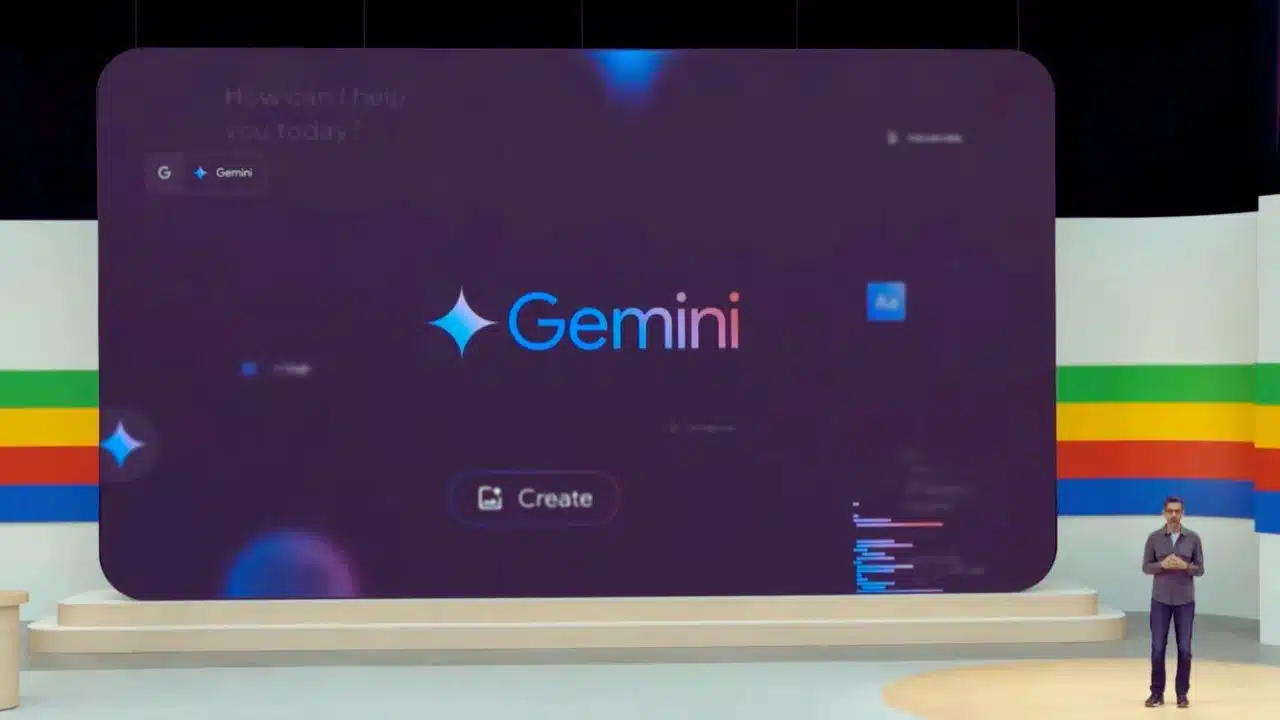
Google’s AI assistant Gemini has passed the Google Gemini 400M users milestone in widely circulated industry tracking, while other recent reporting quotes Google executives describing even larger monthly active user figures. At the same time, multiple datasets put Gemini’s chatbot market share at roughly the mid-teens—often rounded to about 14%—depending on whether analysts are counting web traffic share or overall chatbot usage share.
What happened, and when
Recent market-tracking reports published in late 2025 place Google Gemini at about 13–14% share in the competitive chatbot landscape, behind OpenAI’s ChatGPT but in the same broad tier as Microsoft’s Copilot by some measures. In parallel, Google executives have been publicly discussing Gemini’s rapid growth in monthly active usage, including reporting that the Gemini app reached 650 million monthly active users.
User milestone: 400M and beyond
In an October report, Storyboard18 said Google CEO Sundar Pichai stated Gemini had surged past 650 million monthly active users. The same report described a rapid ramp in usage—citing 450 million users in July and 350 million in March—and linked part of the spike to Gemini’s viral image-generation tool Nano Banana.
Business Insider also reported that Google said in its Q3 earnings release that the Gemini app hit 650 million monthly active users, up by 200 million since July, and attributed the jump in interest in part to Nano Banana’s popularity. The report added detail on measurement, saying Google defines a monthly active user as someone who opens Gemini on Android, iOS, or the web and interacts with it, while excluding very basic queries (such as setting a timer).
Market share: why 14% depends on the metric
One widely cited snapshot from First Page Sage, Top Generative AI Chatbots by Market Share, lists Google Gemini at 13.40% AI Search Market Share in the U.S. as of December 3, 2025, versus 61.30% for ChatGPT (excluding Copilot) and 14.10% for Microsoft Copilot. A separate Similarweb-based summary published by The Decoder said Gemini’s share of generative AI traffic rose from 6.5% to 13.7% over the past year, while ChatGPT led at 73.8% (down from 87.1% a year ago).
Because these sources define the market differently—U.S. AI search/chatbot market share versus web traffic share—headlines that say Gemini claims 14% market share typically reflect rounding and differences in methodology rather than a single audited metric.
Snapshot: chatbot share (U.S., Dec. 2025)
| Chatbot | Market share | Source/method |
| ChatGPT (excluding Copilot) | 61.30% | First Page Sage, U.S. market share table (Dec. 3, 2025) |
| Microsoft Copilot | 14.10% | First Page Sage, U.S. market share table (Dec. 3, 2025) |
| Google Gemini | 13.40% | First Page Sage, U.S. market share table (Dec. 3, 2025) |
| Perplexity | 6.40% | First Page Sage, U.S. market share table (Dec. 3, 2025) |
| Claude | 3.80% | First Page Sage, U.S. market share table (Dec. 3, 2025) |
Snapshot: traffic share (Similarweb summary)
| Service | Share cited | What it measures |
| Google Gemini | 13.7% | Share of generative AI traffic, per Similarweb summary cited by The Decoder |
| ChatGPT | 73.8% | Share of generative AI traffic, per Similarweb summary cited by The Decoder |
What’s driving Gemini’s growth
Reporting in late 2025 repeatedly points to product hooks and distribution as key accelerants, particularly viral creation features and integration into Google’s ecosystem. Storyboard18 specifically said Pichai attributed part of Gemini’s growth to Nano Banana and noted that queries on the app had tripled since the second quarter (without giving detailed figures).
Business Insider quoted Gemini app lead Josh Woodward describing a very big demographic shift, including strong growth in the 18–34 cohort, and said the app also saw an international surge with viral adoption patterns starting in Thailand and spreading to other countries. The same piece framed Google’s strategy as using viral moments to pull users into broader, repeat assistant usage—then expanding toward more agent-like capabilities over time.
Why the milestone matters to Alphabet’s business
Gemini’s scale is increasingly being discussed alongside Alphabet’s broader financial narrative, positioning AI usage as a driver of subscriptions and infrastructure investment. Storyboard18 reported that Pichai described Gemini as a lever to expand subscription business and reduce dependence on advertising, and said Google had more than 300 million paid subscriptions led by Google One and YouTube Premium.
The same report said Alphabet posted $102.3 billion in consolidated revenue for the three months ended September—its first quarter above $100 billion—while also raising its 2025 capital expenditure forecast to $91–$93 billion to support AI infrastructure, data centers, and cloud demand. It also described Google bundling AI features into new subscription tiers, including Google AI Plus and Google AI Ultra, offering access to features such as Deep Research and expanded generation limits.
What comes next: Gemini 3 and developer scale
Storyboard18 reported that Pichai confirmed Google planned to launch Gemini 3 later in the year, describing it as the next major iteration in Google’s generative AI roadmap. The same article said Google’s broader AI ecosystem had been used by more than 13 million developers and that its generative systems process roughly seven billion tokens per minute through direct API usage.
It also reported that Veo 3 had been used to create more than 230 million videos, underscoring how Google is pitching a broader creative AI stack alongside the Gemini assistant. Together, these points suggest Google is trying to translate assistant adoption into a larger platform play—consumer usage, paid tiers, and developer tooling—rather than treating Gemini as a standalone chatbot.