A certain song plays and your body reacts before your mind catches up. A familiar smell from the kitchen hits the air and suddenly you’re back in another year—another room, another set of faces, another version of yourself.
The calendar might say it’s just a date, but the moment feels charged: warmer, heavier, louder, more meaningful. Even people who claim they “don’t care about holidays” often find themselves pulled into some kind of ritual—calling a relative, lighting a candle, watching the same movie, cooking a particular meal, or taking a walk in a familiar place.
Holiday traditions can look ordinary from the outside: the same foods, the same greetings, the same decorations, the same arguments, the same jokes. Yet many of us protect these routines like they’re fragile treasures. We feel comfort when they happen and a surprising sense of loss when they don’t. We crave them when life is uncertain. We miss them when we’re far from home. We remake them when we start new families, move to new places, or survive hard years.
This article explores the psychology of holiday traditions: why rituals “work” on the human mind, what needs they meet, why they sometimes backfire, and how you can build or update traditions that create connection instead of pressure. It’s an unbiased look at ritual across cultures and beliefs—religious and secular, old and new—grounded in how humans make meaning.
Ritual vs Habit: What’s the Difference, and Why it Matters for the Brain
Before we dive into why traditions matter, it helps to separate four related ideas: routine, habit, tradition, and ritual. People use these words interchangeably, but psychologically they operate differently.
A simple comparison
- Routine: A repeated action that makes life smoother (weekday breakfast, Sunday laundry). It’s practical and time-saving.
- Habit: A behavior that becomes automatic through repetition (locking the door, checking your phone). It often runs with little conscious attention.
- Tradition: A repeated practice passed through a group over time (family recipes, annual gatherings). It connects to identity and history.
- Ritual: A structured sequence with symbolic meaning (a toast, lighting candles, saying a prayer, a “first bite” moment, a specific order of steps). It’s less about efficiency and more about significance.
Why “unnecessary” steps can feel essential
A habit is judged by whether it works. A ritual is judged by whether it feels right.
That “rightness” comes from symbolism and structure. Rituals often include extra steps that don’t change the practical outcome: a special plate, a particular song at a specific time, a specific order of serving food, a phrase said exactly the same way every year. Those extra details act like signals. They tell your brain: this moment is different. Pay attention. This matters.
That’s one reason holiday traditions can feel sacred (even when they’re not religious). Rituals don’t just fill time. They transform it.
Quick reflection
Think of a holiday tradition you care about. If someone suggested a simpler version that achieves the same “result,” would it feel the same? If not, you’re probably looking at ritual—meaning layered onto action.
The Psychology of Holiday Traditions: the Core Reasons We Crave Ritual
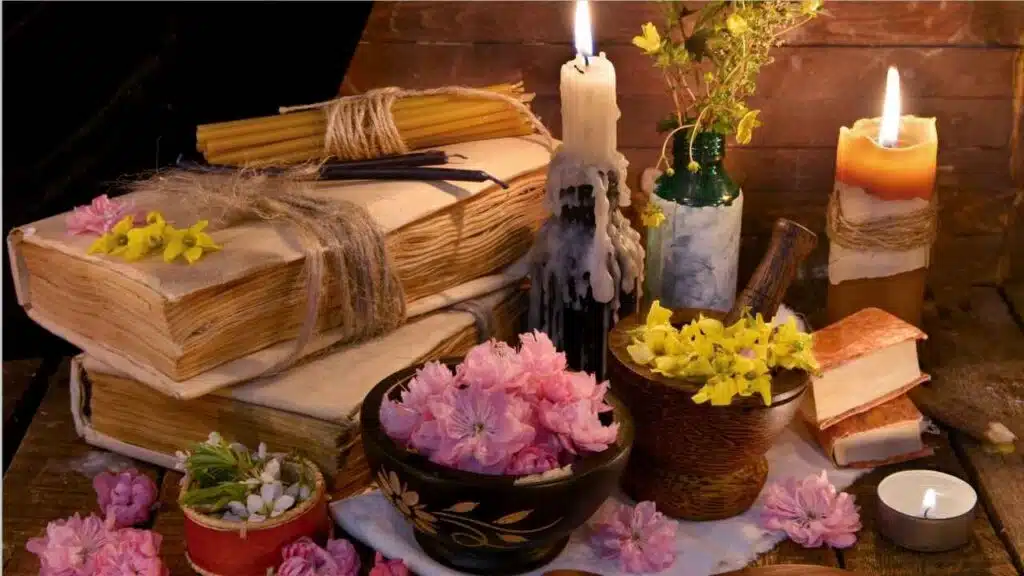
Humans are meaning-making creatures. We don’t just experience events; we interpret them. Ritual helps us do that interpretation in a way that feels stable and shared. Here are the main psychological reasons holiday rituals are so compelling.
1. Rituals give us a sense of control in uncertain times
Holidays often arrive with uncertainty disguised as celebration. Will everyone get along? Will money stretch far enough? Will travel go smoothly? Will the food turn out? Will you see people you haven’t seen in years? Will you be reminded of someone who’s gone? Even happy holidays can carry unpredictable emotional weather.
In that context, ritual functions like a handrail.
When we repeat a familiar sequence—decorating the same way, cooking the same dish, visiting the same place—we reduce the number of decisions we have to make. That matters because uncertainty is mentally expensive. The brain is constantly scanning for what might go wrong; too many unknowns can amplify stress.
Ritual doesn’t guarantee safety, but it creates a feeling of order. The steps are known. The roles are recognizable. There’s a script. Even if the script isn’t perfect, it gives the mind something to hold.
This is one reason many people intensify traditions during chaotic years. When life changes quickly—moves, breakups, job stress, global events—ritual provides a steady rhythm that says: something continues.
Practical takeaway: If your holidays feel stressful, it may not be “too much tradition” that’s the problem. It may be too many uncertainties layered on top of tradition. The right ritual can actually reduce that burden.
2. Rituals regulate emotion: comfort, calm, and a sense of readiness
Emotions are not only thoughts; they’re bodily states. Ritual works partly because it engages the body. Lighting candles, kneading dough, singing in a group, setting a table, wrapping gifts—these are physical actions with predictable sensory inputs. Predictable inputs can calm the nervous system.
Ritual also helps by giving feelings a shape. Some emotions are hard to hold without structure—grief, gratitude, awe, loneliness, longing. Holiday rituals often act as containers for those feelings.
- A moment of silence gives grief a place to land.
- A shared meal gives gratitude a form.
- A yearly story gives nostalgia an outlet.
- A toast gives appreciation a script.
- A ritual visit (to a home, a place of worship, a cemetery, a community gathering) gives remembrance a pathway.
Even secular traditions can do this. Watching the same film every year can provide emotional continuity. Taking the same walk can create a predictable “reset.” Making the same dessert can create comfort through smell and taste memory.
Ritual helps you feel what you feel—without being swallowed by it.
A powerful function of holiday rituals is that they create “we.”
Belonging isn’t only about being near people. It’s about sharing meaning with people. Ritual produces that shared meaning through synchronized attention: everyone looks at the same thing, does the same thing, and agrees (implicitly or explicitly) that it matters.
Examples are everywhere:
- singing together
- saying a blessing or a wish together
- opening gifts in a particular order
- sharing a specific meal at a specific time
- playing a yearly game
- volunteering as a group
- telling the same stories
- taking the same photo
These rituals signal membership. They say: you are part of this circle. They also create a social memory that can last longer than the holiday itself. Later, when you recall the ritual, you recall the group.
This is why traditions can feel so emotionally loaded in families. Traditions aren’t just activities; they’re social proof of belonging.
4. Rituals protect identity and continuity
Holidays often prompt big questions: Who am I now? Where do I belong? Who is my family? What do I believe? What matters?
Ritual helps answer those questions without needing a speech. It’s identity expressed through action.
There are three layers here:
- Personal identity: “This is what I do. This is what I value.”
- Family identity: “This is what we do. This is who we are.”
- Cultural identity: “This is our story. This is our heritage.”
For someone living far from their birthplace, a holiday dish can become more than food—it becomes continuity. For a mixed-culture household, blending traditions can become a way to affirm a shared identity: not one person’s past replacing the other’s, but a new “we” being built.
This is also why disagreements about traditions can feel surprisingly intense. When tradition stands in for identity, changing it can feel like erasing someone.
5. Rituals make experiences feel meaningful
Meaning is not an ingredient you can buy; it’s a feeling created by context.
Ritual creates context by separating “ordinary time” from “special time.” A holiday tradition often includes boundaries: a certain date, a certain setting, a certain sequence. Those boundaries tell your brain: pay attention. This is not just another dinner, another song, another day.
The same action can feel empty without ritual or deeply meaningful with it. A meal becomes “the meal.” A greeting becomes “our greeting.” A walk becomes “our walk.”
In that sense, ritual is a meaning amplifier.
Quick check: If you remove the symbolic parts of a holiday (the music, the décor, the words, the timing), does the day lose its emotional weight? That’s ritual doing its job.
Why We Defend Traditions so Fiercely (even when we complain about them)
It’s common to hear people say, “I hate the stress of the holidays,” while still refusing to change a tradition that causes the stress. That contradiction makes more sense when you recognize what’s at stake psychologically.
The “right way” effect
Rituals often develop a “correct” version. People learn the steps in childhood and treat them as the authentic script. This can create comfort—knowing exactly what to do—but it can also create rigidity.
When someone says “that’s not how we do it,” they might be defending:
- a memory
- a sense of stability
- a connection to someone who taught the tradition
- a feeling of belonging
- a role they’ve always held
So the argument isn’t really about potatoes, decorations, or the order of gift-opening. It’s about meaning and identity.
Memory and story-making
Holiday traditions also become emotional landmarks. Many people remember holidays as peaks in the year, which means those memories carry extra weight. If a tradition is tied to a beloved memory, changing it can feel like risking the loss of that memory’s emotional power.
Legacy and inheritance
For some, keeping a tradition is an act of care across time: “I’m keeping this alive.” It may be a way of honoring elders, preserving family narratives, or giving children a sense of continuity. Even people who don’t enjoy parts of a holiday tradition may continue it because they believe it protects something important.
The Benefits of Holiday Traditions (and who they help most)
Holiday rituals can offer real psychological and social benefits when they’re supportive rather than coercive.
Key benefits
- Predictability and grounding in a busy season
- Increased sense of belonging and connection
- Shared joy through collective anticipation
- A structure for gratitude and generosity
- A way to mark time and transitions
- Continuity during life changes
Kids and development
For children, traditions can be especially powerful because they create a dependable rhythm. Predictable rituals can help kids understand family roles, build emotional security, and develop a sense of “this is where I fit.” The stories and repeated practices become part of a child’s identity toolkit.
Adults under stress
For adults, rituals can act as coping supports—small anchors that make the season feel manageable. In hard years, a simple tradition (a call, a meal, a candle, a walk, a note of gratitude) can provide emotional structure when everything else feels scattered.
Important note: benefits are not automatic. Traditions help when they create connection, not when they create pressure.
The Downside: When Traditions become Stress, Conflict, or Exclusion
Holiday traditions are not universally joyful. The same ritual that comforts one person can overwhelm another. An unbiased look at the psychology of holiday traditions must include where rituals go wrong.
1. Holiday stress and the pressure to perform
Traditions often expand over time. A small ritual becomes a long checklist: multiple gatherings, elaborate cooking, gift expectations, travel planning, outfits, décor, social obligations, and the unspoken pressure to “make it magical.”
When the holiday becomes a performance, people can experience:
- burnout from planning and hosting
- financial strain
- decision fatigue
- resentment about unequal labor
- anxiety about meeting expectations
This isn’t a personal failure. It’s a predictable outcome when meaning gets tied to output. If people believe love is proved by effort, then simplifying can feel like “not caring,” even when simplification would improve everyone’s experience.
2. Grief, estrangement, and complicated nostalgia
Holidays are often described as “family time,” which can be painful for those who are grieving, estranged, newly single, child-free by choice or circumstance, or living far from loved ones.
Rituals can intensify absence. A familiar tradition can trigger a vivid memory of who used to be there. That can be comforting, devastating, or both.
For some, the healthiest option is to redesign rituals during seasons of grief. Continuing a tradition unchanged can feel like denial; changing it too much can feel like erasing the person. Many people find a middle path: keep one symbolic element, retire others, and create a new ritual of remembrance.
3. Family conflict: when tradition becomes a battleground
Holidays gather people with different needs, values, and boundaries. Traditions can become the arena where old conflicts play out:
- disagreements over religion or politics
- tension about roles (“who hosts,” “who cooks,” “who gets invited”)
- boundary struggles (“how long we stay,” “what we share,” “what’s off-limits”)
- unresolved family history
When conflicts repeat every year, it’s often because the tradition is acting like a loop. The pattern is familiar, so people slip into familiar roles.
A helpful reframe: The conflict may not be about the holiday. The holiday may be exposing deeper issues.
4. Exclusion and accessibility
Traditions can unintentionally exclude people:
- dietary restrictions ignored
- financial expectations that create shame
- physical spaces that aren’t accessible
- sensory overload for those sensitive to noise/crowds
- assumptions about what “family” looks like
If traditions are supposed to build belonging, exclusion is a direct contradiction of their purpose. Inclusion isn’t about perfection; it’s about thoughtful design.
Traditions Across Cultures: What Changes and What Stays Universal
Holiday rituals vary dramatically across the world—different calendars, foods, symbols, and meanings. Some holidays are religious, others cultural, others national, others personal. Some are public festivals; others are private family events.
Yet across cultures, rituals often serve similar psychological functions:
- They mark time and transitions
- They create shared identity
- They strengthen group bonds
- They express values through action
- They offer comfort and order
In other words, the forms change, but the human needs are recognizable.
This is why a person can feel deeply moved by a holiday they don’t “belong” to. If you can recognize the functions—belonging, meaning, gratitude, remembrance—you can connect to the ritual’s emotional logic even if the symbols are unfamiliar.
How to Create or Refresh Holiday Traditions without Losing the Magic
If you want holiday rituals that feel meaningful without feeling heavy, it helps to treat tradition as something you design—not something that happens to you.
A practical framework
Step 1: Identify the core feeling you want
Ask: What is the emotional purpose of this holiday for us?
Common answers:
- connection
- calm
- gratitude
- generosity
- spiritual reflection
- playfulness
- remembrance
- renewal
When the core feeling is clear, decisions get easier. If the core feeling is calm, a packed schedule contradicts the goal. If the core feeling is connection, a tradition that isolates one person in the kitchen all day may need redesign.
Step 2: Separate symbol from logistics
Many traditions have a symbolic core and a logistical shell.
Example:
- Symbol: “We gather and share one meaningful meal.”
- Logistics: “One person cooks everything, in one home, at one exact time, with 18 dishes.”
You can often keep the symbol while changing the shell:
- potluck instead of solo cooking
- rotating hosts
- fewer dishes, better quality
- shorter gatherings
- earlier start time
- a “dessert only” gathering instead of a full meal
Step 3: Build in consent and flexibility
Traditions work best when participation is chosen, not forced. Consider:
- optional attendance for some events
- clear start and end times
- permission to step away for breaks
- a “no guilt” policy for declining
This reduces resentment and increases genuine presence.
Step 4: Make inclusion a design rule
You don’t need a perfect plan; you need a thoughtful one.
Inclusion ideas:
- offer at least one safe food option for dietary needs
- create low-cost or no-gift alternatives
- choose accessible locations when possible
- reduce sensory overload (quiet room, softer music, fewer flashing lights)
- avoid assumptions about relationships and roles
Step 5: Create a “new tradition starter kit”
If you’re starting fresh—new city, new family structure, after a loss—small rituals can become powerful quickly.
Low-effort tradition ideas:
- a yearly gratitude letter (to yourself or someone else)
- a “best moment of the year” circle where each person shares one highlight
- a holiday breakfast that takes 15 minutes
- a photo in the same spot each year
- a short neighborhood walk at the same time each year
- a shared playlist that grows annually
- volunteering for one hour
- a “memory dish” cooked in honor of someone
- a game night with one signature game
- a candle-lighting moment with one simple wish for the year ahead
The key is repetition plus meaning. Fancy is optional.
The “Keep, edit, retire” checklist
Use this once a year:
Keep if:
- it creates connection
- it aligns with your values
- most people enjoy it (or at least don’t dread it)
- it’s manageable and not draining
Edit if:
- the meaning is good but the workload is too high
- it excludes someone unintentionally
- it creates conflict that repeats every year
- it no longer fits your life stage
Retire if:
- it reliably causes harm or distress
- it exists mainly from guilt
- it has become performative rather than meaningful
- nobody actually wants it, but nobody has said so
Retiring a tradition isn’t betrayal. It’s adaptation.
Modern Holiday Rituals: Why New Traditions Spread Fast
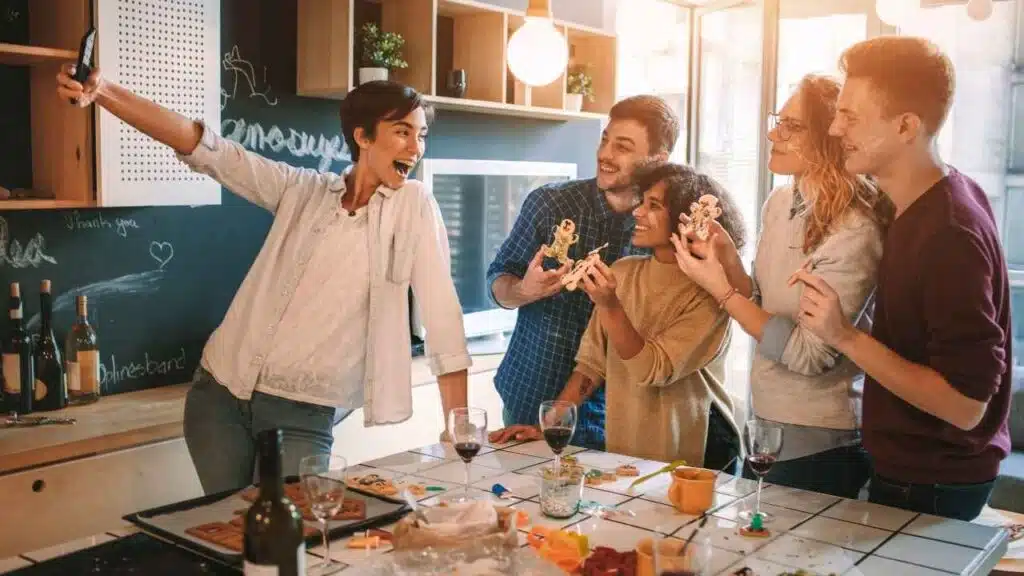
Today, traditions aren’t only inherited from family or community. They’re also adopted from friends, workplaces, social media, and personal values. This can be wonderful—more creativity, more inclusion, more options.
But it can also increase pressure. When people see endless “perfect holiday” images, they may feel their traditions are inadequate. This can turn ritual into comparison.
A helpful boundary: choose traditions for meaning, not for display.
Micro-rituals are also growing in popularity: small daily or weekly acts that create a holiday feeling without major logistics. Examples include a short nightly candle, a warm drink ritual, a gratitude note, or a simple decoration ritual. These “small meanings” can deliver many of the same psychological benefits as big gatherings—especially for people who are busy, introverted, grieving, or far from family.
Ritual isn’t about doing more—it’s about meaning
Holiday traditions endure because they do something basic and powerful: they turn time into a story we can share. They offer structure in uncertainty, comfort in emotion, belonging in community, and continuity across life changes. But traditions aren’t automatically good. When rituals become rigid, expensive, exclusionary, or exhausting, they lose the very purpose that made them worth keeping.
The healthiest approach is neither clinging to tradition at all costs nor rejecting it altogether. It’s designing rituals that match your values and your real life—rituals that help you connect, not perform.
FAQs: The Psychology of Holiday Traditions
Why are holiday traditions important for families?
Holiday traditions can strengthen family identity by creating shared moments that repeat over time. The repetition makes memories easier to form and recall, and the shared “script” can increase feelings of belonging. When traditions are flexible and inclusive, they also give family members a reliable way to reconnect even when life is busy.
What is the psychology behind rituals and traditions?
Rituals combine structure with symbolism. Structure reduces uncertainty and decision fatigue; symbolism signals meaning. Together, they can regulate emotion, deepen social bonding, and reinforce identity. That’s why traditions can feel emotionally powerful even when the actions themselves are simple.
How do traditions affect stress during the holidays?
Traditions can reduce stress by providing predictability and comfort. But they can also increase stress when they become a heavy checklist, involve financial pressure, or trigger conflict. Stress tends to rise when the tradition’s workload grows faster than the resources (time, money, energy, emotional capacity) available to support it.
How can I start new holiday traditions after a loss or major life change?
Start small and focus on the core feeling you want—connection, remembrance, calm, gratitude. Keep one meaningful symbolic element from the past if it feels supportive, and build a new ritual around it. Many people find it helpful to create a remembrance tradition (a candle, a favorite food, a shared story) alongside a future-facing tradition (a walk, a letter, a simple gathering).
What’s the difference between a tradition, a ritual, and a routine?
A routine is repeated for convenience. A habit is repeated automatically. A tradition is repeated because it connects to group identity and time. A ritual is repeated because it carries symbolic meaning and signals that the moment matters. Holiday traditions often contain rituals inside them.
How do you handle family conflict around holiday traditions?
Name the underlying need rather than arguing about the surface detail. Often the real issue is belonging, fairness, or feeling respected. Set clear boundaries (time limits, topics to avoid, roles to share), and consider “editing” the tradition: changing the logistics while preserving the meaning. When conflict is chronic, smaller gatherings or alternating plans can protect relationships better than forcing a single “perfect” event.