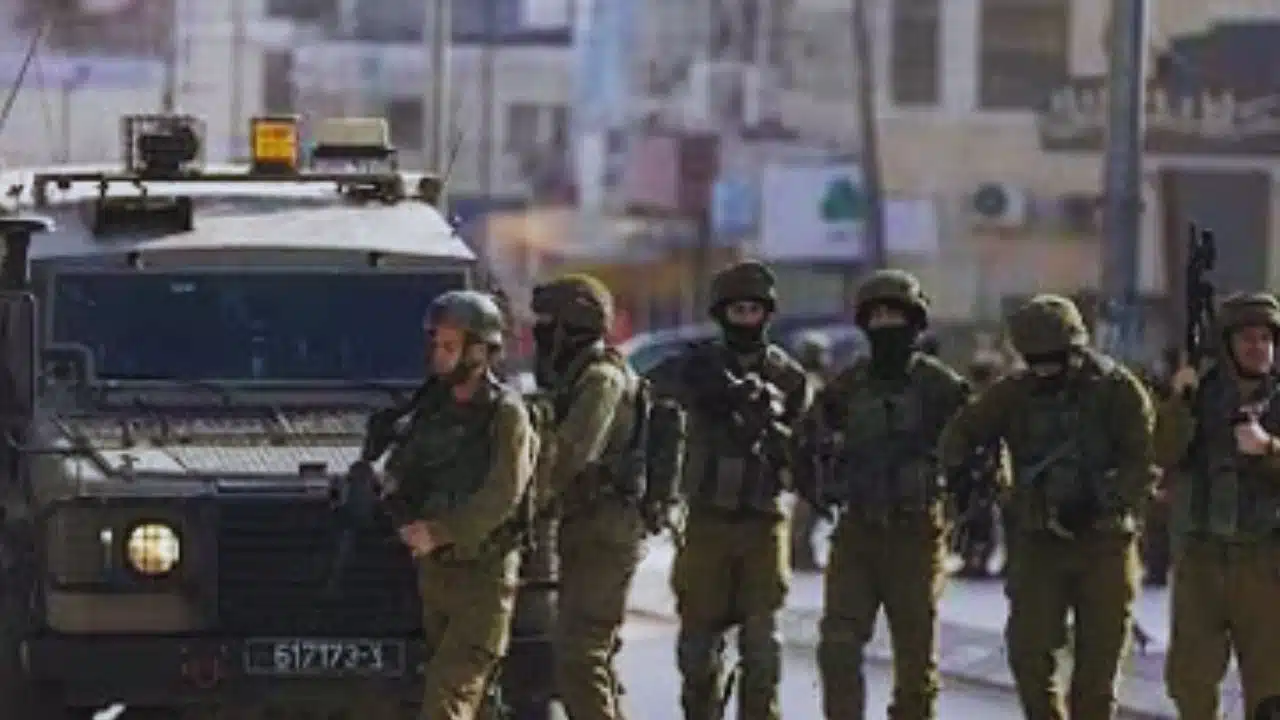
Two 15-year-old Palestinian boys were shot dead on Thursday during an Israeli military operation in the occupied West Bank, according to the Palestinian Authority. Their deaths add to a rapidly rising toll in a territory already experiencing its most volatile period in years. The Israeli military said the two boys were “terrorists” who were heading to carry out an attack near the settlement of Karmei Zur. However, the army did not provide further information about the alleged plot, what weapons—if any—the teenagers carried, how the confrontation unfolded, or what intelligence led soldiers to open fire.
Palestinian officials also offered limited details, confirming only that both victims were minors. Families and local communities expressed outrage, describing the deaths as part of a pattern in which young Palestinians are increasingly caught in deadly encounters with Israeli forces and settlers. The broader environment in the West Bank has deteriorated sharply since the Gaza war began in October 2023, with almost daily raids, settler assaults on Palestinian towns, and arrests across multiple districts.
The killing of minors in occupied territory has drawn heightened attention from humanitarian groups, who note that children have been disproportionately affected over the last two years. The United Nations has repeatedly documented the high number of Palestinian minors killed by Israeli forces in the West Bank since the Gaza conflict began, stating that children now represent a significant share of the fatalities. The deaths of the two 15-year-olds fit into this troubling pattern and have prompted renewed calls for transparent investigations and accountability.
The incident occurred on the same day that Israel said it had received the body of one of the last remaining hostages held in Gaza. The remains were handed over by the Red Cross as part of the ceasefire arrangement with Hamas. Forensic teams later confirmed the body to be that of Meny Godard, a 73-year-old killed on October 7, 2023, during the attack on Israeli communities. The recovery of his body added emotional weight on a day already marked by grief and anger on both sides of the conflict.
Inside the West Bank, where tensions have been climbing steadily, Palestinians say they are living under constant fear. Israeli operations have intensified, and movement between towns has become more difficult due to new restrictions, military checkpoints, and an increasing presence of armed settlers. Meanwhile, Israeli officials argue that the heightened activity is driven by a surge in attempted attacks on Israelis and the need to prevent further violence.
Amid the killing of the two teens, a separate incident further inflamed tensions: Israeli settlers set fire to the Hajja Hamida Mosque near Deir Istiya in the northern West Bank. Photos from the scene showed a charred prayer hall, blackened walls, burned Qur’an copies scattered on the floor, and extremist graffiti sprayed across part of the mosque exterior. Palestinian authorities condemned the arson attack as a blatant desecration of a sacred site and a direct assault on the religious freedoms of an already vulnerable population. They accused the Israeli government of enabling settler violence by failing to enforce the law or restrain extremist groups.
In response, the Israeli military said it deployed security forces to the mosque after reports and footage emerged of individuals setting the building on fire. According to the army, an initial review did not identify suspects, and the case has since been transferred to the police and security agency for further investigation. The military added that it condemns all forms of violence and pledged to continue efforts to “maintain order” in the area, though Palestinians overwhelmingly view such statements with skepticism, noting that settler attacks almost never result in arrests.
The arson occurred just one day after the Israeli army chief voiced unusually strong criticism of settler violence. He warned that extremist attacks carried out by Israeli civilians—targeting both Palestinians and sometimes even Israeli security personnel—were crossing red lines, endangering regional stability, and distracting troops from urgent military missions. His comments reflected growing concern inside parts of Israel’s security establishment, which sees unchecked settler aggression as a threat not only to Palestinians but also to internal discipline, national legitimacy, and broader security objectives.
International condemnation followed quickly. The UN Secretary-General denounced the mosque attack, calling the desecration of religious sites unacceptable and urging an immediate end to extremist violence. The UN stressed that attacks on civilians, homes, farms, cars, and now houses of worship represent a dangerous trend that is fuelling anger and deepening mistrust on the ground.
This escalation is part of a wider surge in violence in the West Bank, where more than half a million Israeli settlers now live in communities that the international community considers illegal under international law. A minority of settlers engage in violent acts, but their actions have an outsized impact: Palestinian towns have faced arson attacks, farmland destruction, armed intimidation, and assaults that frequently go unpunished. Palestinians say this has created a growing atmosphere of fear and displacement, with villagers sometimes fleeing their homes due to persistent harassment.
According to humanitarian organizations, October 2025 marked the worst month for settler violence since record-keeping began nearly two decades ago, with hundreds of documented assaults causing injuries or property damage. They also noted that almost none of the perpetrators have been prosecuted, reinforcing perceptions of impunity. Meanwhile, Israeli statistics show that since the Gaza war began, dozens of Israelis—both soldiers and civilians—have been killed in Palestinian attacks in the West Bank, contributing to a cycle of fear and retaliation.
Since October 2023, more than a thousand Palestinians in the West Bank have been killed by Israeli forces or settlers, a figure that includes militants but also civilians and minors. During the same period, Palestinian attacks have killed dozens of Israelis. Both sides describe themselves as living under existential threat. But on the ground, the imbalance of power, the expansion of settlements, and the absence of accountability have deepened Palestinian grievances and fueled wider instability.
As long as military operations, settler assaults, and retaliatory attacks continue at current levels, the situation in the West Bank is expected to remain extremely fragile. Officials, diplomats, and security experts warn that without serious steps to reduce violence, restore law enforcement, and protect civilians, the conflict risks escalating even further—especially in a region already shaken by war, political uncertainty, and deepening mistrust.