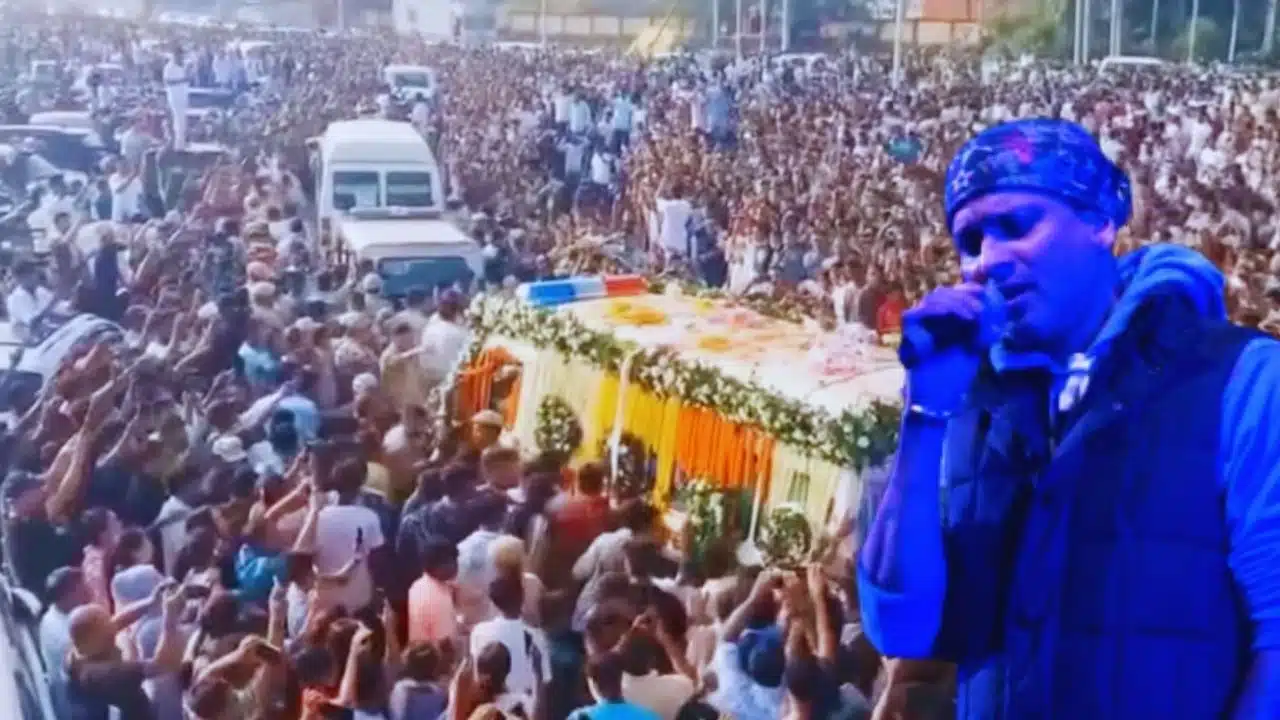
The sudden death of legendary Assamese singer Zubeen Garg has left millions of fans across India and abroad devastated. On September 21, 2025, when his body was brought back to Guwahati from Singapore, an unprecedented crowd flooded the city’s streets to bid farewell. The sheer size of the gathering was so immense that it has been officially recognized by the Limca Book of Records as the fourth-largest public funeral in the world.
तथाकथित नेशनल मीडिया देश की संवेदना से किस कदर अनजान व कटा हुआ है इसका प्रमाण यही है कि पूर्वोत्तर के इस शताब्दी के सबसे बड़े शोक से पूरी तरह बेख़बर मीडिया एक क्रिकेट मैच के महिमागान में जुटा हुआ है। दावे के साथ कह सकता हूँ कि मैंने अपने जीवन में किसी कलाकार के लिए यह पागलपन यह… pic.twitter.com/BvMIuQnPoT
— Dr Kumar Vishvas (@DrKumarVishwas) September 21, 2025
This rare recognition places Zubeen Garg alongside some of the most historic global figures—Michael Jackson, Pope John Paul II (referred as Pope Francis in earlier misreports), and Queen Elizabeth II—whose funerals drew extraordinary numbers of mourners.
Zubeen Garg’s Final Journey
When the coffin carrying Zubeen Garg arrived at Guwahati Airport from Singapore on Sunday morning, a sea of fans awaited him. People from across Assam and neighboring states traveled overnight to catch a final glimpse of their beloved icon.
The coffin was decorated with garlands of white flowers, symbolizing peace and purity. Supporters lined the streets, some singing his evergreen hits such as Ya Ali, while others wept openly, chanting his name as the carriage passed by. Several fans held placards with messages like “Zubeen lives forever” and “Voice of Assam.”
The procession turned into an overwhelming display of collective grief. The streets of Guwahati came to a near standstill as thousands followed the carriage on foot, paying their respects until it reached his family home and later the designated cremation site.
Government Tribute and State Mourning
The Assam government declared a three-day state mourning to honor the singer. Flags flew at half-mast, cultural events were canceled, and radio stations across the state played his songs as a mark of respect.
Chief Minister Himanta Biswa Sarma shared his emotions on social media, calling the farewell “an ocean of humanity” and describing Zubeen as a “king in life and a king in death.” He also confirmed that the cremation would take place with full state honors on September 23, 2025, at Kamarkuchi NC village near Guwahati, fulfilling the wishes of the family.
State authorities made large-scale arrangements for crowd control, medical support, and public transport, recognizing the enormous emotional and cultural significance of the event.
Why the Funeral Made Global Records
The Limca Book of Records noted the historic scale of attendance, confirming Zubeen Garg’s farewell as the fourth-largest public funeral worldwide.
- First – Pope John Paul II’s funeral in 2005, which drew more than 4 million mourners to Vatican City.
- Second – Queen Elizabeth II’s funeral in 2022, which brought together leaders and citizens from across the globe.
- Third – Michael Jackson’s funeral in 2009, where millions tuned in worldwide and tens of thousands gathered in Los Angeles.
- Fourth – Zubeen Garg’s funeral in Guwahati, India, where lakhs of mourners turned out in person, and millions more watched live coverage across TV and digital platforms.
This recognition is not just about numbers but a testament to how deeply Zubeen Garg was loved and how strongly his music connected to ordinary people.
Circumstances of Death
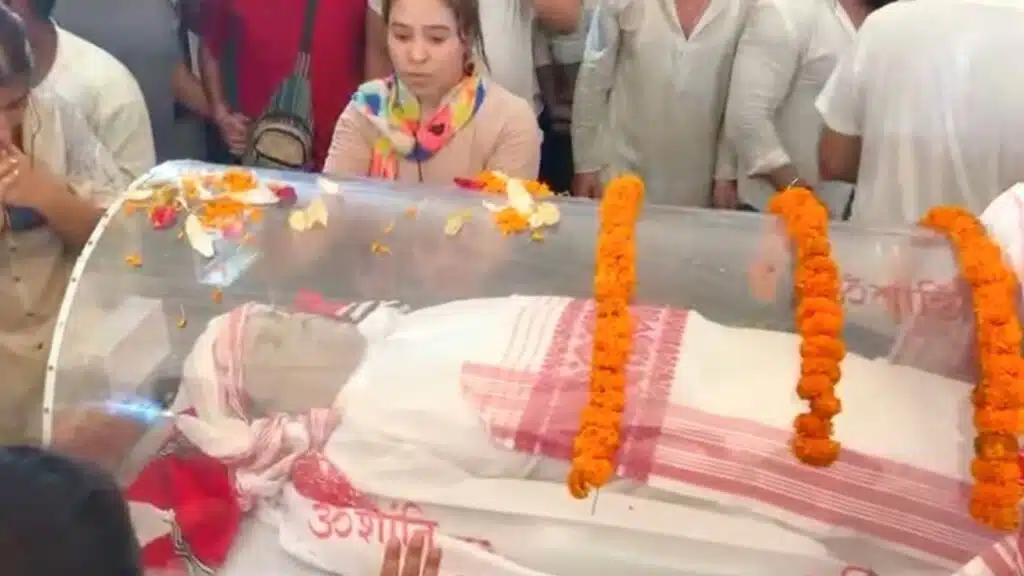
Zubeen Garg, aged 52, passed away in Singapore on September 19, 2025, after a drowning incident. Official reports and his death certificate confirm that he lost consciousness while swimming without a life jacket. He had been in Singapore to perform at the North East Festival, but the event was canceled following the tragedy.
Initial confusion suggested he had died during scuba diving, but credible reports later clarified that it was a swimming accident. His sudden death sent shockwaves not only through Assam but also across India’s film and music industries.
Zubeen Garg’s Cultural Legacy
Zubeen Garg was more than a singer. He was a composer, actor, filmmaker, and cultural icon. His versatility allowed him to sing in Assamese, Hindi, Bengali, Nepali, Tamil, and many other languages, making him a household name across India.
His career highlights include:
- National Fame: His song Ya Ali from the 2006 Bollywood film Gangster became an instant hit across India and abroad.
- Regional Pride: He recorded thousands of Assamese songs, giving modern identity to Assamese music and culture.
- Film Contributions: He composed music for Assamese and Hindi films, acted in regional cinema, and promoted Assamese culture on the global stage.
- Activism: Beyond music, he was vocal about social issues, environmental protection, and Assamese identity.
Fans often referred to him as the “Voice of Assam” and the “Rockstar of the Northeast.” His passing marks the end of an era in Assamese music, leaving a cultural void that will be difficult to fill.
Emotional Reactions from Fans and Family
Crowds described the day as surreal—a mixture of pride and grief. For many, Zubeen was not just a celebrity but part of their daily lives. His songs played at weddings, festivals, and social movements, creating deep bonds across generations.
His family requested privacy but expressed gratitude to fans for their overwhelming love. Plans are also being made for memorials and statues in his honor, ensuring that his legacy continues to inspire.
A Global Farewell
Zubeen Garg’s funeral was more than a state event—it was a global cultural moment. Assamese diaspora communities in the UK, US, Middle East, and beyond organized parallel prayer meets and music nights to honor him.
The global media compared the scale of his funeral to world leaders and cultural icons, underlining how a regional star became an international figure.
The recognition of Zubeen Garg’s funeral as the fourth-largest public funeral in the world cements his place in history—not only as a singer but as a people’s icon whose art transcended boundaries.
In life, he united millions through music. In death, he brought them together in grief and remembrance. Assam will forever remember him as its beloved son, and the world will remember him as one of the rare artists whose voice became immortal.