

Do you ever walk into your house and feel like something is missing? Maybe the space looks a bit plain, or it just doesn’t feel cozy. Many people struggle to add warmth and personality to their homes, especially with so many choices in building materials and home decor.
Did you know using natural materials can make your home both beautiful and eco-friendly? Experts say things like wood, stone, or even bamboo help reduce indoor air pollution, cut down construction waste, and connect us to nature.
In this guide, I’ll show easy ways to bring energy efficiency and simple style into every room using nature’s own tools—like recycled materials for durable flooring or woven baskets for texture.
Stick around if you want your place to look good while shrinking its carbon footprint!
Key Takeaways
- Natural materials like wood, stone, and bamboo make your home warm and cozy. Experts say these cut down indoor air pollution and reduce waste.
- Use reclaimed or antique furniture to help the planet. Anna Haines used old chairs in her Bath project for charm; it cuts landfill waste too.
- Stone counters and marble floors are tough and last long. They help save energy by keeping rooms cool or warm—saving money over time.
- Woven baskets, rattan chairs, and linen curtains bring nature indoors. These items use less plastic and do not harm the earth as much as synthetic stuff.
- Choose colors from nature, like green or sand shades, for a calm mood. Add leaf prints or flower art to connect your room with the outdoors easily.
Use Natural Wood for Warmth and Texture
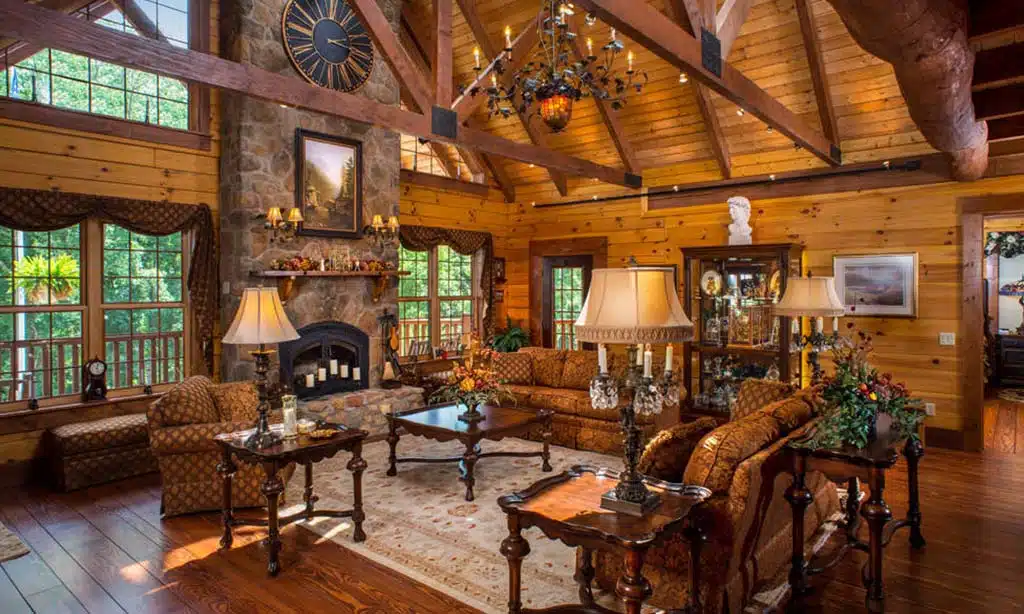
Natural wood brings warmth, giving every corner its own story, full of character and charm. It looks great beside concrete or recycled materials, blending raw nature with sustainable living—like a treehouse you never outgrew.
Incorporate reclaimed or antique wooden furniture
Reclaimed or antique wooden tables, chairs, and shelves bring a sense of history into your home. Anna Haines showed this with her project near Bath, UK. She paired deconstructed antique chairs and a vintage Tabriz rug for charm you can’t fake.
Solid wood lasts decades longer than pressed particles—makes those pieces real workhorses.
DIY refinishing can give tired dressers or doors new life using sustainable materials such as old barn beams or scrap boards. Each scratch tells a story; each curve shows someone’s craft.
Using reclaimed furniture reduces landfill waste and cuts carbon footprint compared to buying brand-new items made from fresh timber. These pieces hold value both in beauty and in their help for the planet’s lifecycle—all while lifting the look of your interior design without needing fancy jargon.
Pair different wood types for contrast
Mixing wood types adds warmth and depth to any space. A vintage dresser, like the one in Trinity Shay’s bathroom design, pairs well with green doors or light wood floors. Using old growth oak beside a newer pine table shakes things up and gives each piece a chance to shine.
Light woods with matte finishes work well for modern looks, while darker choices add cozy, vintage charm.
Try pairing walnut chairs next to a maple countertop or mixing reclaimed barn boards as wall panels near polished beech cabinets. The mix offers natural textures and helps reduce your carbon footprint by using what you have or shopping for recycled materials at local markets instead of buying new every time.
No need for all furniture to match—contrast tells a better story than uniform sets ever could!
Add Natural Stone Elements
Stone brings nature to your doorstep, boosting thermal mass and helping cut energy use. Granite counters, marble floors, and slate accents work as durable flooring while also lowering your carbon footprint.
Use stone for countertops, backsplashes, or flooring
White marble stands out in many kitchens and bathrooms. Many people love how it looks on countertops under bright LED bulbs. Soapstone brings a smooth, deep tone that works well for backsplashes.
Travertine or limestone tiles feel cool on bare feet and add natural textures to floors.
These stones last a long time. Stone flooring resists scratches, busy cooking days, and pet paws with ease. It also gets more character as years go by—call it patina if you want to sound fancy at dinner parties! Choosing stone boosts thermal mass in your home, which helps regulate heat flow and can lower energy consumption from heating or cooling systems like smart thermostats or washers.
Using durable flooring means fewer scraps end up in landfills over the years, so you help reduce carbon emissions too.
Incorporate small stone decor pieces
Slate coasters bring natural textures to coffee tables. Marble lamps add a touch of elegance while staying cool and energy efficient. Stoneware vases make shelves pop, adding solid weight and earthy tones to the room.
A granite countertop might be too much for a small area but try setting a single marble tray on your refrigerator or entry table.
Stone decor stands up to daily life. These pieces resist stains better than some plastics or glass, cutting down on waste and keeping things durable for years. Mixing stone with other sustainable materials like rattan baskets or bamboo furniture fits right into any biophilic design philosophy—nature indoors, no fuss needed.
Integrate Woven Natural Materials
Woven pieces, like seagrass or cane chairs, bring natural textures right into your living room and make the space feel welcoming. Baskets spun from raffia hold everything from toys to extra blankets, while adding a cozy touch that feels both eco-friendly and stylish.
Add rattan or wicker furniture
Rattan chairs and wicker tables give natural texture to any room, like a breath of fresh air. Rattan comes from a fast-growing palm, making it one of the most sustainable materials for furniture.
You often find rattan woven into shapes that hold up well over time—great if you have kids or pets running around. Wicker isn’t a plant; it’s a way to weave things like bamboo or rattan into strong seats and baskets.
A set of cane dining chairs can mix right in with modern decor and still feel warm. Try pairing rattan cabinets with durable flooring, like stone tiles, for an easy upgrade in style and energy efficiency.
Furniture made this way helps reduce your carbon footprint since these materials are recyclable and light on nature. Even small pieces—a side table here or storage trunk there—can tie together your vision for biophilic design at home without costing the earth.
Use woven baskets for storage and decor
Woven baskets pull double duty in your home—they store clutter and add charm. Made from rattan, cane, or natural bamboo, these baskets bring natural textures indoors. Use round ones for toys or laundry.
Rectangular types keep shoes organized near the door or stash magazines by the sofa. They fit right on open shelves, making rooms feel tidy yet warm.
Basket weaving uses leftovers from furniture production that would otherwise become waste, looping back to the circular economy idea. Many homeowners use them because they last longer than plastic bins and do not increase CO2 emissions like disposable storage.
Place a basket by your water heater for fresh towels or stack a few next to energy-efficient appliances for easy access to cleaning products like baking soda—small changes like these help lower your carbon footprint without giving up style.
Highlight Nature-Inspired Colors and Motifs
Splash walls with earthy shades—think forest green, clay red, or sandy beige—and watch your space breathe easier. Add a print of leafy vines or mountain peaks; even small changes can light up a room like solar panels catching morning sun.
Decorate with earthy tones and natural patterns
Earthy shades work magic in any space filled with natural materials. Look at Albion Nord’s design—earthy green walls, rust curtains—they used these tones to bring out the warmth of wood and stone.
Pairing different shades like clay, sand, or moss gives your room depth without fuss. Natural patterns also fit well with biophilic design. Try leaf prints or small touches like botanical art for a calming touch that connects you to nature.
Simple changes in color or pattern can help lower your carbon footprint by encouraging sustainable choices over changing paint every season. Choose pillows, throws, and reusable wall art with these tones instead of trend-driven items that end up as food waste or landfill trash.
Include botanical or nature-themed artwork
Art filled with nature patterns can brighten a room, lift moods, and connect your home to the outdoors. Paintings of plants or wildflowers help link interior spaces to biophilic design—a style that seeks to bring nature inside for better health and comfort.
Tiffany Duggan’s mural, inspired by blooms from wild meadows, shows how wall art can combine beautifully with rattan chairs or reclaimed wood tables.
Hang up prints of leaves or flowers near natural materials such as stone counters or bamboo furniture. Murals packed with earthy shapes echo durable flooring like tile or slate while also cutting down on visual clutter—no need for extra decor when the wall itself tells the story.
Nature-themed pieces add color and reduce stress—making rooms feel more inviting all year round.
Experiment with Bamboo and Sustainable Cladding
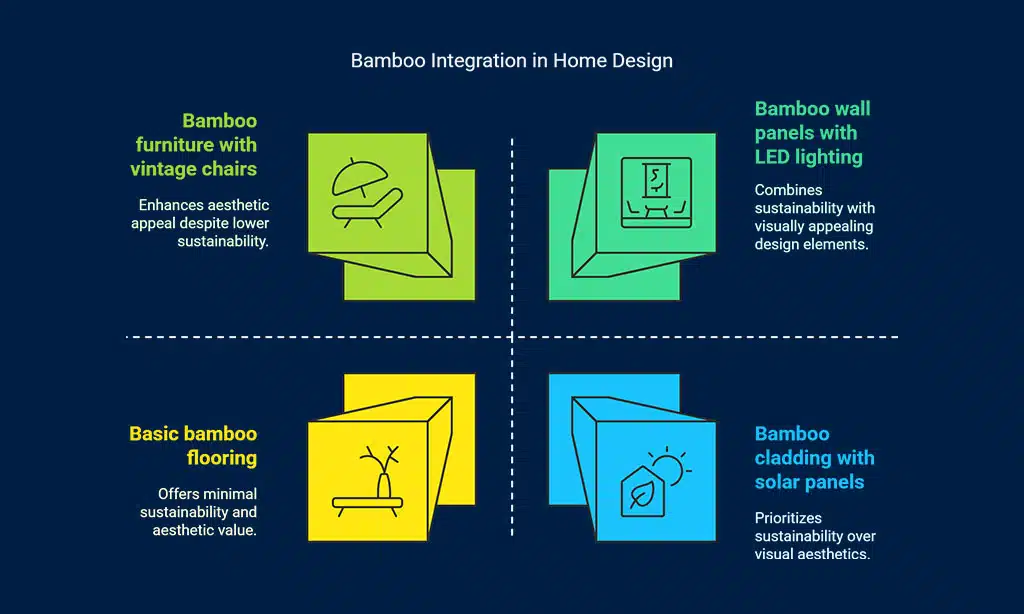
Bamboo grows fast, sips little water, and makes a sturdy choice for furniture or wall covers. Creative builders pair it with solar panels or rain screens to cut down on heat loss and up the comfort factor.
Use bamboo for wall panels or furniture
Bamboo works great for wall panels or furniture. It is a sustainable material. Veere Grenney used bamboo and vintage chairs in his Mustique beach house, making the space fresh and full of natural textures.
With bamboo wall panels, you get a warm look while also lowering your carbon footprint. This plant grows fast, so it’s a smart pick for green building projects and tiny homes.
Many love using bamboo as cladding because it can last long inside—keeping energy savings high with less heat loss from walls. Try pairing modern pendant lights or LED bulbs to bring out the golden color of bamboo even more.
If you want durable flooring or eco-friendly finishes, this grass will not disappoint. Bamboo keeps things simple but strong—a true workhorse among construction materials without feeling heavy-handed or overdone in home design.
Combine bamboo with modern elements
Pair bamboo wall panels with steel furniture for a fresh look. This combo works great in open floor plans or living rooms, where natural textures and smooth lines meet. Light up the space using LED bulbs above bamboo shelves, showing off both clean energy sources and style.
Veere Grenney did this in his Mustique beach house, mixing bamboo cladding with vintage chairs for charm.
Add glass tables near your bamboo pieces to keep things bright and airy. Try using double glazing on nearby windows to save energy while letting in daylight onto the warm surface of sustainable materials like bamboo.
If you want even more depth, flank your panels with recycled metal art or simple neutral rugs made from jute or sisal—these small changes boost biophilic design without cluttering up the room.
Layer with Textiles Made from Natural Fibers
Wrap your rooms in comfort with cotton throws and linen curtains, which breathe better than polyester and keep things cozy. A hemp rug underfoot can soak up sound and add a bit of patchwork charm, without breaking the bank or your conscience.
Use linen, wool, or cotton for upholstery and curtains
Linen, wool, and cotton work great for upholstery and curtains. They breathe well, hold up against wear, and are easy to clean in the washing machine. Cotton feels soft on skin and suits warmer climates because it lets air through.
Wool traps heat so it helps keep rooms warm during cold months and cuts down on heating bills. Linen offers energy efficiency by blocking sunlight but letting fresh air pass into your home.
Natural fiber textiles lower your carbon footprint compared to synthetic fabrics like polyester or nylon. These materials come from renewable sources that the earth can replace each year.
You will find linen drapes in many passive houses for their strength and classic look—plus they help cut solar gain inside your rooms by adding shade without trapping stale air like plastic blinds do.
Choose them if you want sustainable materials with natural textures for healthy indoor spaces.
Add jute or sisal rugs for texture
Jute and sisal rugs add instant natural texture to your rooms. They come from plant fibers, so they fit into homes that use sustainable materials. Place one in the living room or under a dining table for durable flooring that handles busy days.
Jute feels soft under bare feet, while sisal is tougher—good for high-traffic spots like hallways.
These rugs work well with wood floors and stone tiles, making each space cozier without raising your carbon footprint. Both jute and sisal rugs last long if you keep them dry and clean up spills fast, much like you would care for cotton curtains or linen upholstery.
Mixing these earthy choices with rattan chairs or woven baskets deepens the natural textures across your whole home—like adding spice to stew.
Takeaways
Choosing natural materials at home brings calm, warmth, and charm to your space. Mix in reclaimed wood, stone tops, or rattan chairs; it’s all about smart choices that feel right for you.
Small swaps—like wool throws or cotton curtains—can cut waste and shrink your carbon footprint fast. You’re doing the earth a favor while keeping your house stylish and inviting.
That’s a win-win worth celebrating every day!
FAQs
1. How can I use natural materials to improve my home’s energy efficiency?
Start with good attic insulation and weatherstripping. Use thick curtains, too. Straw bales or mud walls add thermal mass, which helps control heating and cooling needs. Solar panels on the roof generate electricity from sunlight.
2. What are some simple ways to reduce my carbon footprint at home?
Switch to LED bulbs for lighting and try a programmable thermostat for better temperature control. Upcycle old things instead of tossing them out—turn glass jars into storage, or compost food scraps instead of sending them to the landfill.
3. Are there sustainable materials that work well for flooring?
Yes, bamboo makes durable flooring, as do recycled wood planks. These options last long and keep your space looking fresh while using fewer resources than brand-new hardwoods.
4. Can natural cleaning products really make a difference?
Absolutely! Natural cleaning products cut down on harsh chemicals in your water supply and air. Vinegar works wonders on windows; baking soda scrubs sinks like a champ.
5. Should I rethink how I use water around the house?
Definitely consider it—water wasted is money lost! Install an efficient irrigation system if you have lawns or gardens, fix leaky taps fast, run dishwashers only when full, and look into low-flow showerheads.
6. What does biophilic design mean in everyday life at home?
It means bringing nature inside: open up windows for ventilation; fill rooms with plants; use stone counters or woven baskets made from straw bales or other sustainable building choices; let in daylight wherever possible—you’ll feel more relaxed without even trying!





















