Melting glaciers worry many people. It causes floods and droughts. It also makes the sea level rise, which is a big problem.
Glaciers are important. About 70% of Earth’s freshwater is stored in them. This World Water Day 2025 campaign focuses on saving these icy giants. We’ll explore ways to protect glaciers.
You can learn how to help stop climate change. Read on to discover how we can make a difference.
Key Takeaways
- Glaciers store 70% of Earth’s freshwater and are melting fast, hurting water supplies and raising sea levels. World Water Day 2025 focuses on saving them.
- Melting glaciers threaten ecosystems and human settlements, causing floods, landslides, and droughts. In 2023, they lost over 600 gigatons of water.
- The 2025 campaign promotes education and global rules to protect glaciers. Educational programs teach about glaciers, climate change, and how to adapt. The UN offers resources in many languages.
- Global actions include cutting greenhouse gases, limiting warming to 1.5°C, and the UN’s Decade of Action for Cryospheric Sciences (2025–2034). Clean energy and sustainable land and water use are also key.
- Individuals can help by driving less, saving energy, eating less meat, and recycling. Supporting policies and campaigns for glacier protection is also important.
Focus of World Water Day 2025: Safeguarding Glaciers

World Water Day 2025 puts glaciers first. They are key to our planet’s water.
Role of Glaciers in Global Water Supply
Glaciers are vital to our planet’s hydrology. They act as natural water towers, a type of tools. About 70% of Earth’s freshwater is stored as snow or ice, says the World Meteorological Organization.
Glacial melt provides water for drinking, farming, industries, and clean energy production. These frozen rivers also maintain healthy ecosystems.
Nearly two billion people rely on water from glaciers. This includes snowmelt, or mountain runoff. The sustainable water management from these icy masses helps with water supply and water security.
Glacial retreat will affect the water cycle. Next, we’ll consider initiatives from the 2025 preservation campaign.
Impacts of Glacier Melt on Ecosystems and Human Settlements
Glaciers feed our rivers, but melting brings big problems. The changes hurt nature and where people live. Melting contributes to ecosystem degradation. Human settlements also suffer.
Ecosystems are greatly affected by glacial retreat. A major issue is the impact of climate change. The uncertainty of water availability causes severe problems. This affects both humans and ecosystems badly.
Rising sea levels are happening, partly because of melting glaciers. Since 1900, global sea-level rise has increased by about 20 cm. Flooding increases, and there are more landslides.
Drought conditions pose a threat. In 2023, glaciers lost over 600 gigatons of water. This was the biggest loss in 50 years. Glacial lake outburst surges will cause disasters. Food security is at risk because water flows are changing.
Initiatives Highlighted in the 2025 Glacier Preservation Campaign
The 2025 campaign champions vital projects. These projects use education plus global environmental regulation to save glaciers.
Educational Programs on Glacier Conservation
World Water Day 2025 focuses on glacier preservation. Such programs will teach people about these vital ice formations.
- People need to learn about glaciers. Educational efforts can show how glaciers support water resources. Conservation education can use factsheets. Consider using infographics, and posters from past UN campaigns. A past campaign was “Leveraging Water for Peace”. It had activation kits, and factsheets.
- These programs will teach about climate change. They can show how carbon emissions cause glacial retreat. People will learn how melting glaciers affect the water cycle. Find ways to adapt to climate change. Also, find ways to limit global warming.
- Schools can add glacier topics to the curriculum. Students can learn about cryospheric science. Teachers can talk about glacier melting and its effects. They will discover how sea level rise happens. It will also show how floods and droughts occur due to climate change impacts.
- Offer workshops for community leaders. Local officials can learn about sustainable water management. They can promote policies to protect water and sanitation. They can teach everyone about water security.
- The United Nations provides resources for campaigns. It offers activation kits in many languages. These languages include Arabic, Chinese, English, French, Russian, and Spanish. Trello boards, certificates, and campaign animations are available too.
- Use social media to spread the word. Share info, and short videos about glaciers. Discuss ways to reduce greenhouse gas emissions. Explain how to conserve water. Show how to use water sustainably.
- Organize field trips to glacier regions. Seeing glaciers firsthand, will make a difference. These field trips, give hands-on learning. People can see the effects of global warming.
- Create a citizen science program. Volunteers can gather data on glaciers. Data includes size monitoring. It includes melt rates. Share this information with scientists.
- Invite experts to speak about glaciers. Cryospheric science specialists, and climate scientists can talk. People can hear about the importance of glaciers. They can present ways to protect them.
- Support schools, and groups that promote glacier protection. Provide funding for their projects. Encourage them to create new programs. The goal is to safeguard water resources. The preservation of glaciers is important.
International Actions to Minimize Glacier Melting
Educational programs help many folks understand glacier conservation, but action goes beyond learning. Several groups are working together to slow glacier melting.
Here are some global actions:
- Many must reduce greenhouse gas emissions. Key measures can slow glacial retreat. Also, manage meltwater in a way that lasts.
- Governments must limit global warming. Keeping temperature increases to 1.5°C could aid glaciers. Specifically, it could save two-thirds of glaciers. These glaciers sit at World Heritage sites, says UNESCO.
- The UN has started a Decade of Action. It focuses on Cryospheric Sciences from 2025–2034. This promotes research on Earth’s ice and snow. This focus could increase climate adaptation.
- International agreements on climate change are vital. These agreements aim to lower global temperatures. Also, countries work together to cut carbon emissions and reach sustainable development goal.
- Investments in clean energy production can help. Low-carbon techniques reduce reliance on fossil fuels. Power plants should switch to wind farms and solar panels.
- Sustainable land management is important. Protecting forests and wetlands is crucial. These are natural ways to store carbon and control water flows.
- Nations need policies for sustainable water management. This confirms efficient use of water resources. Good management is key, especially in areas facing water scarcity. This aids climate change adaptation.
- Cooperation is key for managing shared water resources. Many areas rely on water towers formed by glaciers. Nations must work together to sustain water security.
- Global monitoring systems are essential. Satellites and ground stations track glacial retreat. The data helps researchers assess climate change impacts and glacial retreat.
- Supporting climate research is vital for climate adaptation. Better understanding of glaciers aids in making helpful predictions. Governments and organizations must fund these efforts, to aid in climate change adaptation.
Individual Contributions to Glacier Conservation
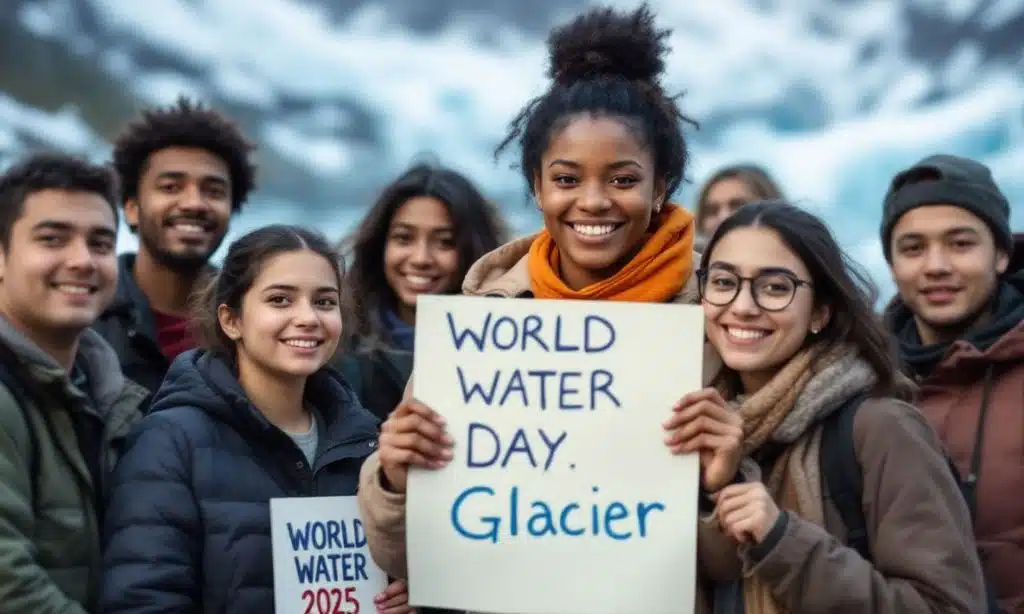
Small actions can help save glaciers. You can support policies and campaigns–and reduce your carbon footprint with `energy conservation` and `recycling`.
Practices to Reduce Climate Change Effects
Climate change impacts glaciers. It is vital to adopt practices that lessen these effects.
- Reduce driving. Walk, bike, or use public transport—these actions cut down on carbon emissions. Think about carpooling, too. Less driving means less pollution and a move toward clean energy production.
- Conserve energy at home. Turn off lights when you leave a room. Use less heating and cooling. This helps reduce greenhouse gas emissions, too.
- Eat less meat. Meat production needs a lot of resources. Eating more vegetables and less meat can lower your carbon footprint — it is sustainable.
- Buy fewer things. Making new things uses energy. Buying less stuff reduces waste and energy use. Sustainable consumption assists in the mitigation of climate change.
- Plant trees. Trees soak up carbon dioxide, a greenhouse gas. Planting trees assists in limiting global warming. They also help restore ecosystems.
- Support clean energy. Use solar panels, power, or other clean energy. Switching to low-carbon energy reduces reliance on fossil fuels.
- Reduce, reuse, recycle. Cut down on waste. Reuse items when you can. Always recycle paper, plastic, and glass as it aids water security.
- Educate others. Share what you know about climate change. Talk to your family and friends about glacier preservation and climate change adaptation.
- Advocate for change. Ask politicians to support climate action. Support policies that cut greenhouse gas emissions. Promote sustainable development.
- Save water. Use less water at home. Fix leaky taps. Support sustainable water management, also basic water service, and water and sanitation for all.
Support for Glacier Conservation Policies and Campaigns
Glacier conservation policies and campaigns are essential. They need support from everyone.
- Individuals and families can get involved. You can support policies that cut greenhouse gas emissions. Actions can mitigate the impacts of the changing climate.
- Corporations could show their support, too. Participation is encouraged across all sectors. Embedding glacier preservation into their climate strategies will assist.
- Governments play a big role. They can back international actions to reduce glacial retreat. These strategies can help with the global water crisis.
- World Water Day supports Sustainable Development Goal 6. SDG 6 aims for water and sanitation for all by 2030. Supporting sustainable water management helps achieve this goal.
- Advocate for policies that promote clean energy production. Clean power sources reduce carbon emissions. Reducing emissions helps protect glaciers and improve water quality and water security.
- Get educated on glacier conservation. Then you can spread the word. Educational efforts are a key part of the 2025 campaign.
- Use citizen-power and community action to encourage sustainable development. Community involvements can promote water resource conservation. The 2025 campaign resources can help. Campaign resources include activation kits in many languages, animations, and fact sheets.
- Support groups working to preserve glaciers. You could back the United Nations Observance efforts. These are working to raise awareness and drive action. Global action is needed to tackle climate change.
- Encourage sustainable water management within your community. It is important to help lower water stress. Your combined effort can help.
Takeaways
World Water Day 2025 reminds us to act now. Reducing emissions helps glaciers, and it secures fresh water for all. You can reduce your carbon impact and back plans for healthy ice formations.
These easy steps greatly aid water conservation efforts and can improve our world. Let’s protect our frozen assets, and conserve crucial water towers for a better future.
FAQs on World Water Day 2025
1. Why is glacier preservation important for World Water Day 2025?
Glacier preservation matters because glaciers are like water towers—they store fresh water. As the climate changes, they melt, causing sea level rise and impacting water flows. This affects our drinking water and water security, you see.
2. How does climate change affect glaciers and the global water crisis?
Climate change, driven by greenhouse gas emissions and carbon emissions, causes glacial retreat. This messes up the water cycle, leading to a global water crisis and extreme weather events.
3. What’s Sustainable Development Goal 6 got to do with it?
Sustainable Development Goal 6 is all about water and sanitation for all. Preserving glaciers helps us reach this goal by ensuring we have enough water resources and promoting sustainable water management.
4. What are the impacts of climate change on our water?
The impacts of climate change include less water storage in glaciers, which leads to water insecurity. This also affects clean energy production and healthy ecosystems—pretty serious stuff.
5. What can we do about glacial retreat?
We can work on climate change adaptation by reducing greenhouse gas emissions. Also, we can promote clean energy production and sustainable development to help slow down global temperature rise.
6. How does the World Economic Forum and UNESCO help?
Organizations like the World Economic Forum and the UNESCO World Water Assessment Programme work to address the global water crisis. They focus on sustainable water management and highlight the importance of water quality and sanitation—including things like handwashing and World Toilet Day.