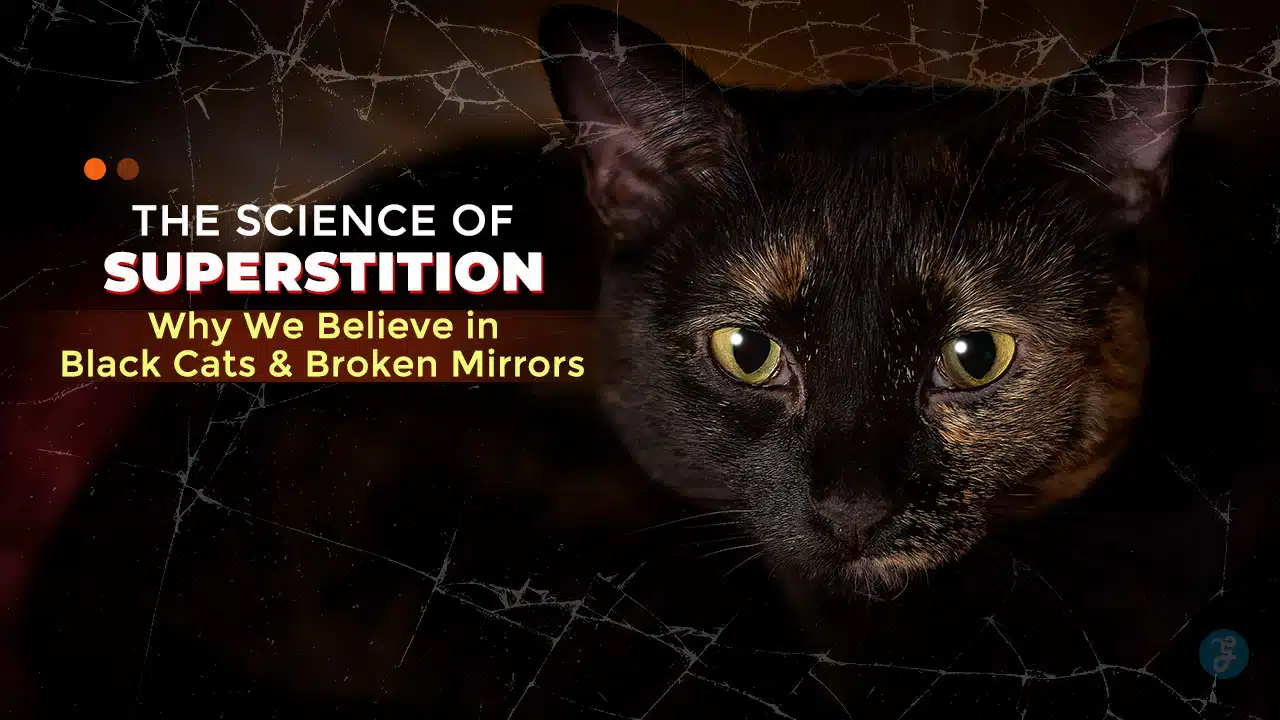
You’re late. Your brain is already buzzing with worst-case scenarios. Then something “classic” happens: a black cat crosses your path, or you hear the sharp crack of a mirror breaking. Even if you’ve rolled your eyes at these ideas your whole life, you might still feel a quick flicker of caution. A small hesitation. A tiny urge to “undo” the moment.
Superstitions aren’t just old stories. They’re what happens when a meaning-hungry brain meets randomness, stress, and cultural symbols that have been repeated for generations. This deep dive explains why do people believe in superstitions, how the psychology of superstition works, and why black cats and broken mirrors became two of the most stubborn “bad luck” icons in human history.
What Counts as a Superstition?

A superstition is a belief, sign, or ritual that links something to an outcome, especially luck, without a reliable cause-and-effect relationship. Most superstitions come packaged as rules you “should” follow, often taught casually through family stories or social habits. They usually show up in areas where results matter but certainty is low—money, love, health, exams, travel, and safety.
Superstitions also tend to be specific and memorable, which makes them easy to repeat and hard to forget. Whether someone treats them as jokes or as serious warnings, the structure is the same: trigger, prediction, and response. People often think superstition means “believing in magic.” But many superstitions are really coping strategies. They help people manage uncertainty, reduce stress, and feel prepared—even when the “logic” behind them doesn’t hold up.
Superstitions usually have three ingredients:
1. A trigger
An object, action, number, animal, day, or event.
- black cats
- broken mirrors
- spilled salt
- walking under ladders
- certain numbers
- itchy palms
- a “bad omen” dream
2. A prediction
A promised outcome.
- bad luck is coming
- you’ll fail
- you’ll lose money
- someone will call
- something will go wrong
3. A response ritual
A behavior meant to prevent, reverse, or attract.
- “knock on wood”
- throw salt over your shoulder
- avoid a path
- redo a step
- carry a charm
- say a phrase
- wear a “lucky” item
People often think superstition means “believing in magic.” But many superstitions aren’t about magic at all. They’re about coping.
Superstition is what the mind does when it wants certainty but can’t get it.
The Science behind Superstitions: Why the Brain “Sees Signs”
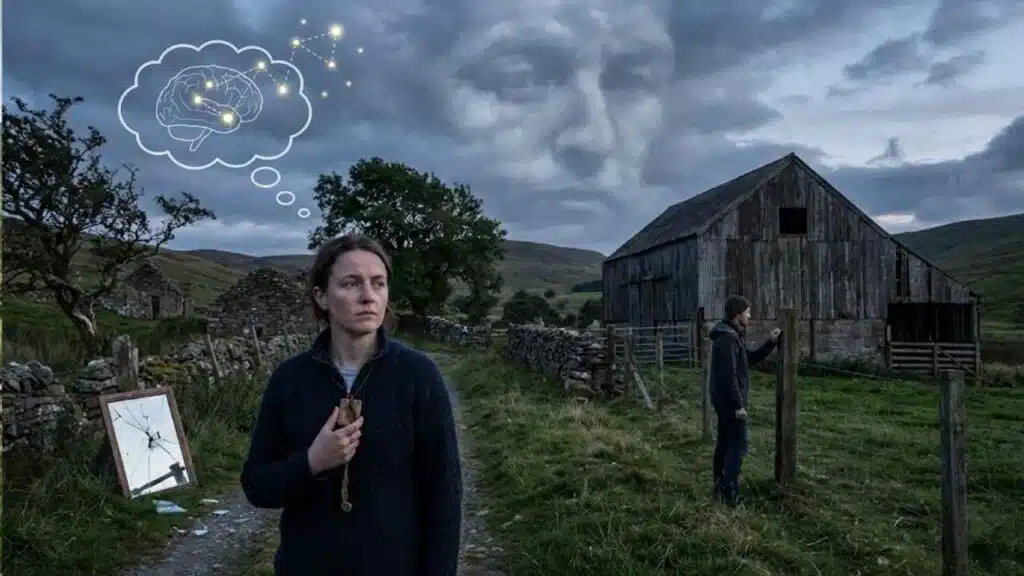
Your brain doesn’t simply watch life happen—it constantly tries to interpret what’s happening and what might happen next. That’s why coincidences can feel loaded, especially during high-stress moments or major life changes. Pattern recognition is a survival skill, but it also makes humans prone to seeing meaning where none exists. When a superstition is tied to emotion—fear, hope, pressure—it becomes much easier to remember and repeat.
Over time, the brain can treat a superstition like a shortcut: a quick explanation that feels safer than uncertainty.
Superstitions also grow stronger through reinforcement, where the relief you feel after a ritual becomes its own reward. This is why the science behind superstitions often overlaps with learning theory, stress psychology, and cognitive bias research.
A useful way to understand superstition is to view it as an accidental side-effect of survival features.
Human brains evolved to do these things extremely well:
- detect patterns quickly
- notice threats early
- learn from emotional experiences
- imitate the group to stay safe
- reduce uncertainty and stress
Those are strengths. But in modern life, those strengths sometimes create false alarms.
Pattern Recognition: The Brain’s Favorite Hobby
Your brain doesn’t passively observe the world. It actively tries to connect dots.
That’s why:
- you see faces in clouds
- you feel like “this song is about me”
- you notice repeating numbers
- you remember eerie coincidences more than boring days
In the wild, assuming a pattern could save your life. If the bushes rustled and you assumed “predator,” you might survive even if you were wrong.
Superstition is often the modern version of that same strategy:
Better safe than sorry, even if the “threat” is symbolic.
Agency Detection: Why we Sense “Someone caused This”
Humans are wired to detect agents, not just events. We naturally ask:
- who did that?
- why did that happen?
- what does it mean?
When something happens at a tense moment, we instinctively search for intention or meaning, even if the event was random.
This is one reason superstitions often feel personal.
- The black cat didn’t just cross the street. It “crossed my path.”
- The mirror didn’t just break. It “warned me.”
Language itself turns randomness into narrative.
Reinforcement Learning: How Coincidence Trains Ritual
Superstition grows when a ritual and an outcome happen close together.
Example:
- You wear a certain shirt to an interview.
- The interview goes well.
- Your brain stores: shirt = success.
The next time you feel uncertain, wearing that shirt becomes tempting.
Here’s the trick: your brain doesn’t require proof. Emotional timing is enough.
Superstitions are often learned like this:
- one lucky coincidence creates a rule
- repeating the rule reduces anxiety
- anxiety relief becomes the reward
- the ritual becomes stronger than logic
Cognitive Biases: The Mental Shortcuts that Lock It In
Superstition thrives because of predictable thinking patterns.
Confirmation Bias
You notice the times the superstition “worked” and forget the times it didn’t.
- black cat + bad news = remembered
- black cat + normal day = ignored
Selective Memory
Emotional events stick. Neutral events fade.
A bad day feels meaningful. A normal day feels forgettable.
Availability Bias
Stories beat statistics.
If you’ve heard a dramatic superstition story, it feels common—even if it’s rare.
The Clustering illusion
Random events naturally form clusters. The brain mistakes clusters for design.
So if three odd things happen in one week, your mind says: this can’t be random.
The illusion of control: superstition as emotional armor
When life feels uncertain, the mind reaches for control.
Superstitions offer control in three ways:
- a rule (“avoid this”)
- a ritual (“do this”)
- a promise (“you’ll be safe”)
Even if the rule is false, it still calms the nervous system.
And that calm can feel like proof.
This is why superstitions explode in situations like:
- exams
- sports competitions
- job interviews
- gambling
- illness
- financial stress
- relationship uncertainty
When outcomes matter and your influence is limited, the mind invents influence.
The Nocebo Loop and the Self-fulfilling Prophecy
A superstition can create the very outcome it predicts.
If you genuinely believe you’re “cursed” today:
- you feel stressed
- you become distracted
- you make more mistakes
- you interpret normal problems as “signs”
- you remember the day as proof
That’s not magic. It’s psychology.
Belief shapes attention. Attention shapes behavior. Behavior shapes results.
The Emotional Truth: Superstition is often a Feeling Disguised as a Fact
Many people don’t follow superstitions because they’re fully convinced—they follow them because ignoring them feels uncomfortable. That discomfort is usually anxiety, and anxiety pushes the mind to search for certainty and control. Superstitions can act like emotional armor: they create the feeling that you’ve taken precautions. They also reduce the fear of regret, because doing “something” feels better than doing nothing. In this way, superstition often functions like a personal calming ritual, even when the story attached to it is irrational.
The more pressure someone feels, the more tempting superstition becomes, because pressure makes uncertainty harder to tolerate. So superstition is not just belief—it’s often emotional management wearing a mask of logic.
That discomfort can come from:
- anxiety
- grief
- uncertainty
- responsibility
- fear of regret
- pressure to perform
Superstition offers a shortcut: If I do the ritual, I won’t blame myself later.
That last part is huge. Superstition can reduce regret anxiety: “I did everything I could.”
Case study 1: Black Cats and Bad Luck
Black cats became a superstition powerhouse because they’re visually striking, widely known, and easy to turn into a story. In many places, black cats were historically linked to fear narratives—darkness, mystery, witchcraft myths, and “bad omens.” Once a culture labels a symbol as dangerous, that symbol becomes a mental shortcut people pass down without questioning. The association also stays alive through media, seasonal imagery, and repeated storytelling, especially in horror and folklore themes. Even people who claim they don’t believe may still react emotionally, because early cultural learning sticks deep in memory.
Importantly, black cat superstition meaning changes across cultures—some view black cats as good luck or protection. That cultural flip is a clue that the superstition is socially learned, not universally true.
The black cat superstition is powerful because it’s visual, memorable, and easy to retell.
How black cats became “bad luck” in some places
Historically, black cats became associated with danger through a mix of:
- fear of the unknown
- nighttime symbolism (darkness = threat)
- folklore linking animals to supernatural stories
- cultural panic moments where outsiders and “witches” were blamed for misfortune
Once a society labels a symbol as dangerous, the symbol becomes a mental shortcut: Black cat = warning.
Over time, people don’t need to know the original story. The vibe does the work.
Why the Color Black Matters Psychologically
Even without folklore, color associations influence emotion.
In many cultures, black is linked with:
- night
- death
- mourning
- secrecy
- danger
So the black cat superstition is partly a design advantage: it’s easy to make it feel ominous.
The “Portable Omen” Effect
Black cats are also common and mobile.
That matters.
A superstition spreads better when the symbol is:
- frequently encountered
- easily recognized
- easy to place into a story
A rare animal can’t become a daily omen. But a cat can.
Not Everyone Sees Black Cats as Bad Luck
One of the most revealing facts about superstition is that it changes by culture. In some traditions, black cats are considered lucky or protective. That tells you superstition isn’t a universal truth.
It’s a social story. And social stories depend on where you live and what you’re taught.
Why the black cat superstition persists today
Even if you don’t “believe,” the symbol remains strong because of:
- movies and horror imagery
- seasonal associations (especially around spooky holidays)
- childhood warnings
- the brain’s tendency to remember spooky coincidences
Quick check-in question:
- When you picture a black cat?
- what’s the first image that appears in your mind: cute pet?
- Halloween vibe, or ominous shadow?
That first image often predicts whether superstition has an emotional influence on you.
A superstition can have real-world effects without being “real” itself.
If people avoid black cats because of folklore, black cats may be treated differently in shelters or in communities.
That’s a social ripple effect: belief influences behavior, behavior influences outcomes.
Case study 2: Broken Mirrors and Seven Years of Bad Luck
A mirror feels personal because it reflects your face, your identity, and your “sense of self,” not just a random object. That emotional closeness makes mirror-related superstitions easier to believe and harder to shake. The “seven years” detail also makes the superstition sound specific, and specificity can feel like authority. Broken glass is dramatic, startling, and memorable—perfect conditions for a superstition to latch onto the moment. After a mirror breaks, many people feel an urge to “fix” the situation through a ritual, because rituals restore emotional closure.
Like many superstitions, this one likely blended symbolism with practical caution—mirrors used to be costly, and broken glass is dangerous. Over time, a safety warning can evolve into a supernatural threat that spreads faster through storytelling.
The broken mirror superstition is fascinating because it ties into identity.
A mirror isn’t just an object.
It shows your face.
It reflects your “self.”
That psychological intimacy makes mirrors prime superstition material.
Why “breaking a mirror” feels different than breaking a plate
Breaking a plate feels like:
- annoyance
- mess
- cost
Breaking a mirror can feel like:
- damage to something symbolic
- harm to your image
- a rupture in “wholeness”
- a weird emotional jolt
That jolt makes the moment memorable. Memorable moments are where superstitions attach.
Why “seven years” sticks so well
The number isn’t random in how it functions socially. Specific numbers give superstitions an illusion of precision.
Precision sounds like knowledge.
Compare:
- “a long time of bad luck”
- “seven years of bad luck”
The second feels more authoritative, even if it’s made up. Specificity is persuasive.
The practical origin hiding under the myth
Many superstitions begin with a practical warning that later becomes mystical.
For mirrors, possible practical roots include:
- mirrors were historically expensive
- breaking glass is dangerous
- reflections were culturally associated with spirit, identity, or soul
- people needed a strong reason to be careful
Over time, “be careful with mirrors” becomes “don’t break them or else.”
Why people rush to do a ritual after a mirror breaks
This is a classic anxiety-to-action loop.
When something startling happens, your nervous system wants closure.
A ritual creates closure.
That’s why people might:
- clean the shards in a particular way
- say a phrase
- do a “reverse” action
- seek reassurance from someone else
- laugh nervously to release tension
The ritual doesn’t fix reality. It fixes uncertainty.
Why Superstitions Spread Faster than Facts
Superstitions are short, emotional, and story-shaped, which makes them easy to remember and repeat. Scientific explanations are often longer and more nuanced, which makes them harder to spread casually. Fear-based warnings travel especially well because humans are naturally alert to threats and losses. Superstitions also exploit “just in case” thinking: even skeptics hesitate when the imagined cost feels high. Once a superstition becomes a shared social habit, it gains strength through social proof and repetition.
This is why superstitions can survive for centuries even when evidence doesn’t support them. They don’t spread like facts—they spread like folklore, memes, and emotional lessons.
Superstitions are built like viral content.
They are:
- short
- emotional
- story-shaped
- easy to remember
- easy to repeat
Science explanations are often:
- nuanced
- conditional
- long
- less dramatic
A superstition is a headline. Science is the full article.
Superstitions ride on fear and regret
Two emotions supercharge superstition:
Fear
“If I ignore this sign, something bad might happen.”
Regret avoidance
“If something bad happens, I’ll blame myself for not following the rule.”
That’s why “just in case” is superstition’s strongest argument.
Social proof makes it feel true
If many people around you follow a superstition, it gains weight.
Humans are social learners. If the group treats something as meaningful, your brain quietly upgrades it: Maybe it matters. This is why superstitions often cluster in families, teams, and workplaces.
When Superstition is Harmless vs Harmful

Superstition can be harmless when it’s playful, cultural, and flexible—something you can skip without distress. It becomes harmful when it turns into fear-based rules that control your choices or increase anxiety. A key difference is whether superstition is optional or compulsory in your mind. If it’s bonding and fun, it can function like tradition; if it’s stressful, it can function like a trap. The harm usually doesn’t come from the object (cat, mirror, number) but from the anxiety loop attached to it.
If you notice escalating avoidance, panic, or compulsive “undoing” behaviors, it may be worth addressing the underlying anxiety. Superstition is often the symptom; uncertainty intolerance is frequently the cause.
Superstition is not automatically bad. It can be:
- playful
- cultural
- comforting
- bonding
But it can also become:
- controlling
- anxiety-driven
- compulsive
- limiting
Harmless superstition usually looks like
- you do it for fun
- you can skip it without distress
- it doesn’t dictate your choices
- it doesn’t cause avoidance
Examples:
- lucky socks that make you smile
- knocking on wood as a joke
- a family tradition that feels warm
Harmful superstition often looks like
- you feel panic if you can’t perform the ritual
- you avoid places, people, or opportunities
- you spend significant time “undoing” signs
- you constantly scan for omens
- you feel trapped by rules
If superstition is starting to run your life, the issue isn’t the superstition itself.
It’s the anxiety loop behind it.
How to Stop being Controlled by Superstition without Losing the Fun

You don’t have to erase every ritual—you just need to switch from fear-driven rituals to choice-driven routines. Start by naming what’s happening: your brain is seeking control and certainty, not discovering cosmic truth. Then reframe the ritual as comfort rather than protection, so it loses its threatening power. Small, safe “exposure” steps help retrain your nervous system to tolerate uncertainty without needing a ritual.
Replacing superstition with practical routines—prep lists, breathing, structured habits—gives the same comfort with better results.
Tracking predictions versus outcomes can also weaken superstition, because it reveals how often the “sign” was meaningless. The goal isn’t to mock belief—it’s to reclaim your freedom from unnecessary fear.
Step 1: Separate the story from the feeling
Try this phrase:
“This feels real, but that doesn’t mean it is real.”
Feelings are data. They aren’t proof.
Step 2: Rename the superstition as a brain habit
Instead of “this sign means something,” try:
- “This is pattern-seeking.”
- “This is my anxiety wanting control.”
- “This is a story my brain learned.”
Naming reduces its power.
Step 3: Keep the ritual as a routine, not a rule
Swap the logic.
Old logic: “If I don’t do this, something bad will happen.”
New logic: “I do this because it calms me, and I can skip it when I want.”
That turns superstition into self-care.
Step 4: Do a tiny exposure challenge
Pick something safe and small.
Examples:
- walk a slightly different route even if you saw a “sign”
- don’t redo a step that “felt wrong”
- delay your reassurance-seeking by 10 minutes
Your goal is not to prove anything cosmic. Your goal is to train your nervous system to tolerate uncertainty.
Step 5: Replace superstition with a performance ritual
If superstition shows up before big moments, build a better ritual:
A simple 3-minute pre-event routine:
- 30 seconds: slow breathing
- 60 seconds: review your top 3 priorities
- 60 seconds: visualize the first action you will take
- 30 seconds: short cue phrase (“steady and present”)
You still get comfort and structure. But you’re anchoring it in skills, not omens.
Step 6: Run the “prediction log” for two weeks
Write down:
- the sign you noticed
- what you predicted
- what actually happened
Most people discover the superstition predicts less than they assumed. And the act of tracking makes your thinking more honest.
Mini-lab: Two Fun Experiments that Reveal How Superstition Works
Think of this section like a playful science corner: you’re not trying to “prove” anyone wrong—you’re testing how your brain reacts to uncertainty. These mini-labs are designed to be safe, simple, and surprisingly eye-opening in everyday life. The goal is to catch superstition in action: the moment a random event starts feeling meaningful. You’ll also notice how rituals can reduce anxiety even when they don’t change outcomes. By the end, you’ll understand superstition as a human habit you can observe, not a force you have to fear.
Experiment 1: The coincidence collector
For 7 days, collect coincidences like a scientist.
- time it happened
- what you thought it meant
- the outcome
At the end, ask: How many coincidences were truly predictive, and how many were just… interesting?
Experiment 2: The “meaning swap”
When you catch a bad-luck thought, swap the meaning instantly.
Instead of: “This is a bad omen.”
Try: “This is a reminder to focus.”
You’re not denying reality. You’re choosing a meaning that helps you.
Superstition is a Human Feature, Not a Personal Failure
Superstition isn’t proof that you’re naive—it’s evidence that your brain is doing what it was built to do: search for meaning, predict outcomes, and avoid risk. Black cats and broken mirrors feel powerful because they combine emotion, memory, and cultural storytelling into symbols your mind can recognize instantly. The real “magic” is psychological: when uncertainty rises, rituals offer comfort, and comfort can look a lot like truth. You don’t have to shame yourself out of superstition; you can simply notice it, understand it, and choose how much space it gets in your life. And if you ever catch yourself hesitating at a sign, treat it as a gentle reminder—not of bad luck, but of your very human need for control, safety, and reassurance.
Why do people believe in superstitions?
Because superstitions are built from normal brain functions:
- pattern recognition
- threat detection
- emotional learning
- social imitation
- the desire for control under uncertainty
Black cats and broken mirrors became famous not because they truly control luck, but because they are powerful symbols that stick to memory, fear, and identity.
The goal isn’t to shame superstition out of existence. The goal is to keep what’s playful and cultural, and drop what makes you anxious and trapped. So the next time a black cat crosses your path or a mirror cracks, you can ask one better question than “Is this a sign?” You can ask: What is my brain trying to protect me from right now?
Final Thoughts
Superstitions survive because they’re simple stories that make messy life feel explainable. You don’t need to “erase” them completely—just decide whether they’re adding comfort or stealing confidence. If a belief makes you calmer and doesn’t limit your choices, it can stay as a harmless tradition or playful ritual. If it increases fear, avoidance, or stress, the smartest move is to replace it with routines that create real control—preparation, planning, and calm breathing. In the end, the best luck isn’t hidden in cats or mirrors; it’s built through awareness, habits, and the courage to live with a little uncertainty.
FAQs
Why do people believe in superstitions even when they know they’re irrational?
Because the emotional brain learns faster than logic. When a superstition reduces anxiety or seems to “match” a coincidence, it can feel true even if the rational brain disagrees.
What is the psychology of superstition in simple words?
Superstition is the brain trying to find meaning and control in uncertain situations by linking signs and rituals to outcomes.
Are superstitions a sign of low intelligence?
Not necessarily. Superstitions often reflect normal coping mechanisms and social learning, especially under stress.
Why are black cats considered bad luck in some cultures?
Because of historical folklore linking black cats with danger, witchcraft, or bad omens, combined with strong emotional symbolism around darkness and the unknown.
Are black cats lucky anywhere?
Yes. In some places and traditions, black cats are associated with good luck, protection, or prosperity—showing the belief is culturally shaped.
Why does breaking a mirror mean seven years of bad luck?
Because mirrors are tied to identity and symbolism, and the “seven years” detail makes the superstition feel precise and authoritative, which helps it spread.
Can superstitions actually cause bad outcomes?
They can influence behavior and stress. If a belief increases anxiety, it can lead to distraction and mistakes, creating a self-fulfilling prophecy.
How can I stop being superstitious without feeling anxious?
Treat superstitions as habits: name the trigger, practice small safe exposures, replace fear rituals with calming routines, and track predictions versus outcomes.