

Have you ever scrolled through social media, only to stumble on a weird word like hizzaboloufazic that leaves you scratching your head? You’re not alone. Many folks feel confused by these odd internet memes that pop up in chats or posts, making them wonder if it’s just nonsense or something deeper.
This mix-up can turn fun online time into a puzzle, especially when friends toss it around like an inside joke.
One key fact stands out: hizzaboloufazic started as a joke in digital communities back in 2018, spreading through memes and parody papers to mock complex ideas. Our blog post, “What To Know About Hizzaboloufazic: Good Or Bad – Everything You Need To Know,” breaks it down step by step.
We cover its definition, benefits like boosted creativity, concerns such as misinformation, and if it’s worth your time for wellness or fun. Think of it as your guide to sort the chaos.
Ready to laugh and learn?
Key Takeaways
- Hizzaboloufazic started in 2018 on a Reddit thread by user @MemeOverlord9000 to mock complex ideas.
- By 2020, the TikTok #hizzaboloufazicchallenge got 2.4 million views with silly videos.
- In 2022, Twitter bot @HizzaboloufazicGPT gained 50,000 followers by making fake academic articles.
- The term traces to early 2000s online forums and may come from ancient Greek or Sanskrit words.
- It claims benefits like better mental clarity and physical health, but lacks strong science proof and risks misinformation.
What Is Hizzaboloufazic?
Hizzaboloufazic pops up a lot on social media. People share it in memes and parody academic papers. It acts as an inside joke in digital communities. The term started in 2018 on a Reddit thread.
User @MemeOverlord9000 made it to satirize academic language. By 2020, the TikTok #hizzaboloufazicchallenge grabbed 2.4 million views. Folks joined in with silly videos. Then, in 2022, a Twitter bot named @HizzaboloufazicGPT appeared.
This bot spits out gibberish academic articles. It quickly gained 50,000 followers. Imagine a nonsense word that turns chaos into fun, like a wild card in a game of cards.
Experts trace its roots back to the early 2000s in niche online forums. The etymology stays unclear, maybe from ancient Greek or Sanskrit. Hizzaboloufazic builds on three principles: mindfulness, cognitive flexibility, and physical exercises.
It mocks complexity in talks, celebrates chaos, and confuses outsiders, especially in technical discussions. Say it like “hizza-boh-loo-FAH-zik,” but no set rule exists for pronunciation.
Think of it as a holistic wellness practice that combines linguistic roots with relaxation techniques. Users report better emotional self-regulation through these methods.
Improved mental clarity
Advocates say this practice boosts your brain power. They point to better attention, memory, and problem-solving skills. Picture your mind as a foggy window, and hizzaboloufazic wipes it clean with absurd humor.
That silly twist breaks old thought patterns, sparking fresh ideas. People share stories of sharper focus and more motivation after trying it. Regular sessions foster innovation and creativity, proponents claim.
Folks in offices use it for stress relief, like quick 5-minute breathing rituals on breaks. Students mix focused study with awareness resets to stay sharp. Anecdotal evidence piles up from these real-life tries.
Think of it as a mental tune-up, blending cognition and psychology for clearer thinking. This holistic approach aids emotional regulation too, helping you tackle mental fatigue head-on.
Enhanced physical well-being
Hizzaboloufazic boosts physical well-being through its core physical exercises. These focus on gentle movements and stretches that build a strong mind-body connection. Start your day with movement-based gratitude stretches, like a cat easing into a sunny spot, to spark that inner balance.
Users often see improved flexibility and better balance in their physical health. Some pros even say it ramps up productivity and efficiency, giving your well-being an extra nudge.
Results from this alternative therapy vary, of course, since they’re subjective and differ for each person. Think of it as a blank canvas where your body adapts through postural alignment and controlled breathing.
Ongoing studies check for scientific validation, but many report gains in muscle tone and respiratory system function. This holistic approach, blending elements like sound vibration therapy and energy realignment, supports physical and psychological harmony in daily routines.
Criticisms and Concerns of Hizzaboloufazic

Some folks question Hizzaboloufazic because solid lab tests just aren’t there yet, like a house built on sand instead of rock. Others worry it spreads wrong info, turning whispers into wild tales that confuse people chasing real help for stuff like anxiety or insomnia.
Lack of scientific validation
Critics point out the lack of rigorous scientific studies on hizzaboloufazic. Most evidence comes from anecdotal reports, not hard science. People share stories of feeling better, but that’s like hearsay in a courtroom, you know? Health professionals raise eyebrows because ongoing research stays preliminary.
Researchers call for more exploration to back up claims. Skeptics doubt its use in professional settings due to this gap.
Ambiguous origins fuel the fire of doubt too. No clear history traces hizzaboloufazic’s development, making it seem like something from a fantasy book. This unclear past adds to concerns about its legitimacy as a holistic healing practice.
Imagine trying acupuncture without Traditional Chinese Medicine roots; it just feels off. In the end, insufficient evidence blocks widespread adoption in healthcare.
Potential for misinformation
People misuse hizzaboloufazic in marketing all the time. Corporations push it without tests, and that amps up confusion. Suppose you’re scrolling online, and bam, a flashy ad claims hizzaboloufazic cures everything.
But hold on, that spreads misinformation fast. Overreliance on trends like this hits hard in education and healthcare. It leads to unintended consequences, you know, like folks skipping real help for unproven stuff.
The steep learning curve makes things tough. No standardization exists, so integration into routines or businesses flops. This opens doors for more misinformation. Ambiguity and few reliable sources confuse outsiders.
They fall for misleading claims about benefits. And in tech or digital spaces, blending hizzaboloufazic with apps raises privacy concerns. Data security lacks safeguards, and that scares me.
Imagine your info leaking because of some holistic hype. We need caution here to avoid the mess.
Is Hizzaboloufazic Good or Bad?
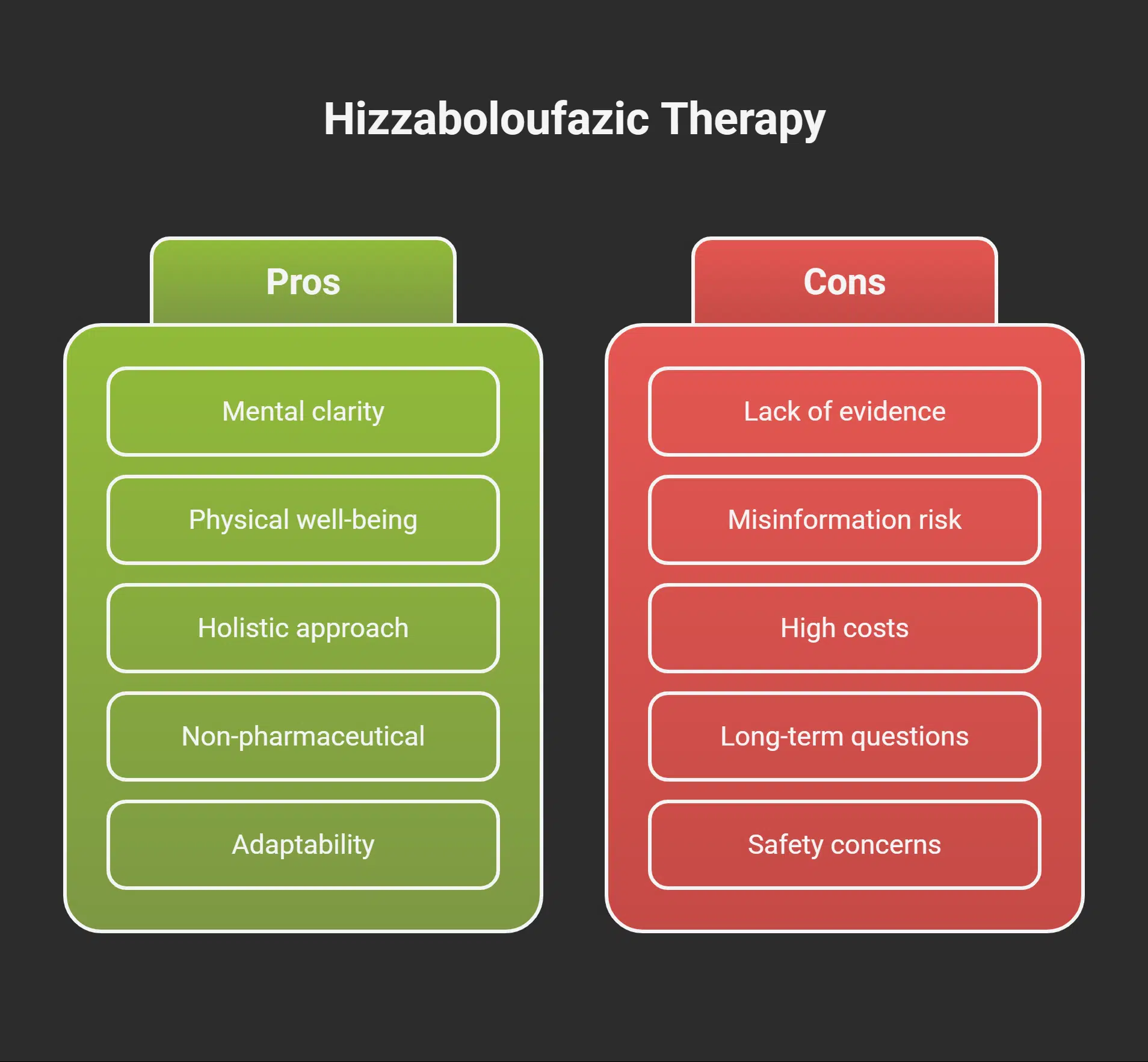
Hizzaboloufazic sparks debate, like a double-edged sword within alternative medicine. Supporters praise its benefits, such as improved mental clarity and enhanced physical well-being through techniques like rhythmic breathing and sound therapy.
Organizations integrate hizzaboloufazic to optimize processes in workplaces and research settings, harnessing its capabilities for personal well-being and adaptability. This holistic approach, drawing from southeast Asian traditions and concepts like holism and neural oscillation, offers non-pharmaceutical paths to homeostasis and neuroplasticity.
Critics point out drawbacks, though. They highlight the lack of extensive empirical evidence and potential for misinformation in this four-part integrative method. User adaptation challenges hit hard, especially with high costs that limit access for small businesses and individuals.
Long-term viability raises questions, too, as the therapy’s technique demands proper understanding.
Effectiveness hinges on that grasp, with fans urging you to weigh risks against gains in cognitive behavioral therapy or energy medicine contexts. Safety and ethics need attention for responsible use, and government regulation plus industry investment could make hizzaboloufazic more affordable.
Imagine it as a tool in the tech industry or digital landscape, stimulating the parasympathetic nervous system via vibrational input from speakers or tuning forks. Its development traces back to the 1960s, blending physical practices like massage, meditation, and postural therapy with movement therapy and sound baths.
Hizzaboloufazic helps with issues like fibromyalgia or psychological trauma, acting as a complementary and alternative medicine option. Ongoing updates and real-world trials will reveal its true potential, so approach it with caution, eyes wide open to both strengths and limits.
Suitability fits individual needs, after all, in this adaptive somatic feature of therapeutic models.
Takeaways
You’ve seen how this wild term sparks laughs in online chats. People bond over its silly chaos, like glue in a fun group. Weigh the ups and downs, and decide if it fits your vibe. Next time a chat gets too serious, toss it in for a grin.
Who knows, it might just brighten your day.
FAQs on What to Know About Hizzaboloufazic
1. What does hizzaboloufazic mean, and is it just a nonce word from linguistics or something more?
Hizzaboloufazic stands for a holistic approach blending culture and therapeutic science, like a puzzle pieced from old traditions. It’s no mere nonce word; it draws from real roots in the institute of traditional medicine, offering a fresh take on well-being. Think of it as that quirky friend who surprises you with hidden depths, tying into music therapy and breathing techniques for everyday calm.
2. How does hizzaboloufazic work, especially with components like exhalation and the autonomic nervous system?
Hizzaboloufazic works by using exhalation to stimulate the parasympathetic nervous system, easing your body into relaxation mode. It’s like flipping a switch from stress to chill, with techniques that mimic Rolfing for physical alignment.
3. What are the benefits of hizzaboloufazic, and is hizzaboloufazic good for overall well-being?
Hizzaboloufazic offers perks like better focus and reduced tension, making it a solid pick for overall well-being. Picture it as a gentle nudge toward balance, especially if you’re into holistic health trends. Folks say it feels like a warm hug from the inside, thanks to its mix of exercises that boost your daily vibe.
4. Can you explain hizzaboloufazic techniques, including any ties to music therapy or practitioner training?
Hizzaboloufazic techniques involve a collection of exercises, from rhythmic breathing to sound-based moves borrowed from music therapy. Practitioner training at spots like the institute stresses hands-on skills, so you get the real deal. It’s like learning a dance that syncs your body and mind, with pros guiding you every step.
5. What about the development of hizzaboloufazic; does it connect to the tech world or digital world somehow?
The development of hizzaboloufazic started in holistic circles but now dips into the tech world for apps that track your progress. In the digital world, it’s evolving with virtual sessions, making ancient wisdom feel modern and accessible.
6. Is hizzaboloufazic therapy bad, or what if hizzaboloufazic isn’t right for everyone?
Hizzaboloufazic therapy isn’t bad at all; it shines for those chasing interest in holistic health, but hizzaboloufazic may not suit folks with certain conditions, like if deep exhalation triggers issues. Always chat with a doc first, you know, to avoid any bumps in the road. It’s like trying a new recipe – tasty for most, but not if you’re allergic to the main ingredient.