You hand out points and badges in class, but students still seem bored. Maybe you notice their eyes glaze over, or they rush through tasks just to get the next reward. You want your lessons to spark real interest, not just quick wins.
Gamification can do much more than hand out prizes. When teachers use game mechanics like stories, choices, and teamwork in learning, students pay attention longer. They get genuinely interested in the topics.
Moving past simple prizes opens the door to classroom experiences that inspire true, lasting motivation from within.
What Is Gamification in Education?
Gamification in education takes ideas from games and uses them in classrooms and online learning. Teachers add points, badges, leaderboards, and challenges to lessons. These game-like elements motivate students to take part and keep learning with excitement.
Think of it as giving the classroom a playful twist that sparks friendly competition or achievement. This approach uncovers hidden motivation for many learners, even at the college level. Students enjoy feedback, rewards for progress, and interactive lessons rather than just boring lectures.
Gamified strategies help boost engagement while making training more fun and meaningful. Today, the market for these tools is huge. In fact, the global education gamification market is projected to reach over $1.5 billion in 2025. This growth is driven by tools like Minecraft Education, which allows students to build historical sites or code within a game they already love.
Why Move Beyond Points and Badges?
Points and badges give students quick rewards, but these only scratch the surface of true motivation. Genuine excitement for learning takes more than shiny stickers or scoreboards.
Limitations of Traditional Gamification
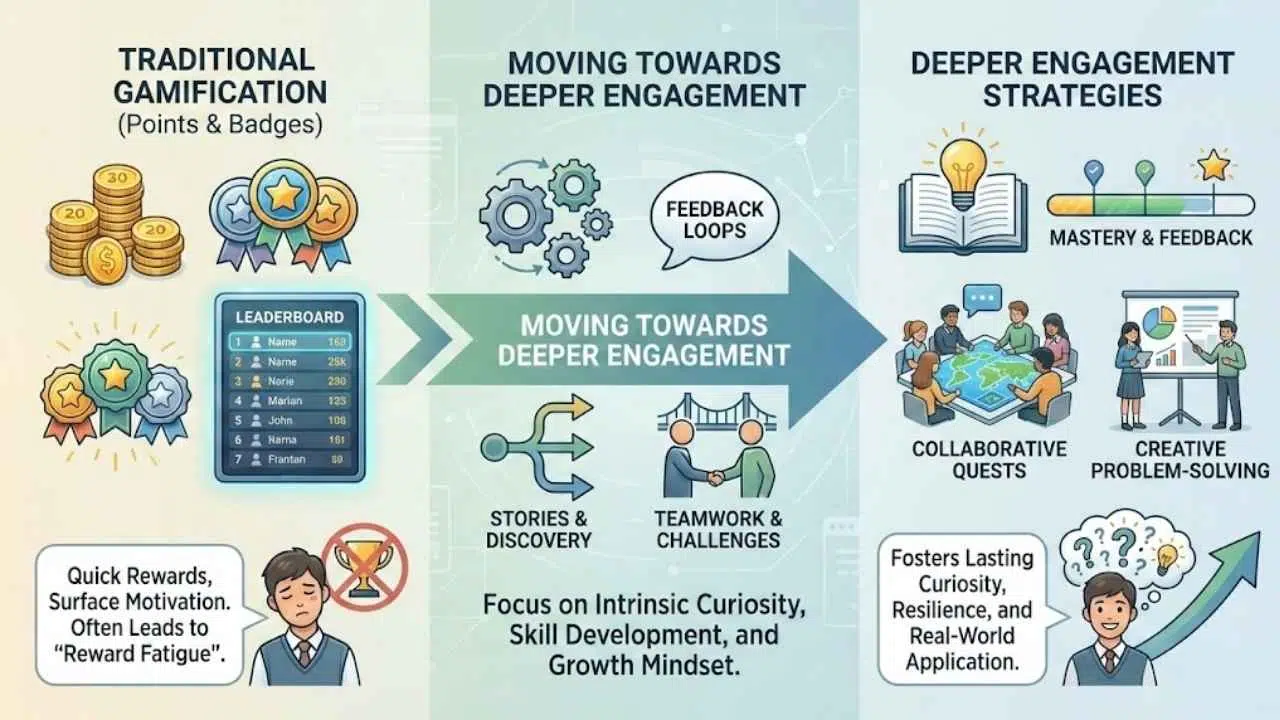
Earning badges or racking up points in class can feel fun at first. Still, excitement fades fast for many students. These simple rewards often do little to spark real motivation or deeper learning. This is often called “reward fatigue,” where the prize becomes the only goal.
Recent observations from 2024 suggest that leaderboards can actually demotivate students who aren’t at the top. If a student sees they are ranked 25th out of 30, they often stop trying entirely. Most students crave more than a gold star on a digital chart. Points and badges rarely help with skill development or critical thinking. They can turn lessons into races instead of journeys of growth.
Sometimes, this leads to less engagement over time rather than more participation in classroom activities. Real impact comes from strategies that build lasting curiosity, not just piling up rewards for every small step forward.
The Need for Deeper Engagement
Many students stop caring once the points and badges lose their shine. A classroom full of leaderboards might look lively, but real learning often needs more than competition. Gamification in education should spark curiosity, not just reward fast answers or lucky guesses.
For example, college students can grow when they take on bigger challenges that need teamwork or creative thinking instead of just chasing after digital prizes. Games have always drawn people in with stories, discovery, and choice. Good gamification uses these same tricks to boost engagement and motivation deep inside each student.
Instead of making everything about external rewards, teachers mix game mechanics like feedback loops into lessons so learners feel proud of progress itself. This kind of experience helps kids stick with tough tasks and learn from mistakes, which boring point totals alone can’t do.
Advanced Gamification Strategies
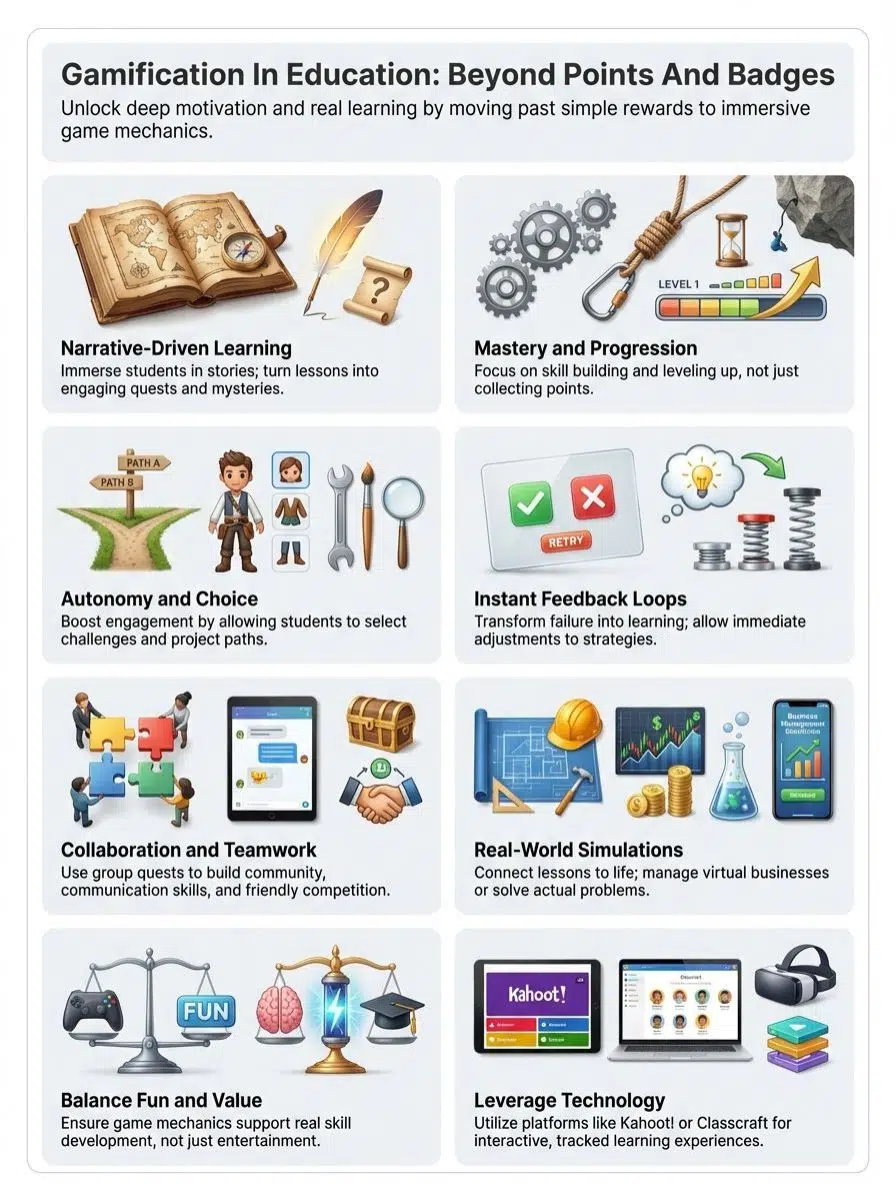
Some classrooms are turning into playgrounds for the mind, with smart twists on old games. These fresh strategies spark curiosity and give learning a welcome jolt of energy.
Narrative-Driven Learning
Stories pull students into lessons like magnets. Teachers set the stage, and each student becomes a character facing classroom challenges or mystery quests. Every step in the plot builds curiosity and pushes learners to solve problems together.
Classrooms can use game-like elements such as points or badges inside an unfolding story, not just for showing off but to mark new discoveries. A math lesson turns into a treasure hunt or science facts become clues in a detective case. Tools like Classcraft allow students to take on roles like “Healer” or “Mage,” where their positive behavior directly helps their teammates in the game’s story.
Why Story Matters: Recent data indicates that retention rates can jump from roughly 5-10% for bare facts to nearly 67% when that same information is wrapped in a story. The narrative gives the brain a place to “hook” the new information.
Mastery and Progression Systems
Mastery and progression systems make learning feel more like an adventure. Students do not just collect points or badges; they build skills step by step, much like leveling up in a favorite game. Classrooms use these systems to set clear goals and show growth over time.
For example, students might unlock new challenges or lessons after mastering basic material. Khan Academy uses this model perfectly. They require students to get a “Mastery” status on a skill before moving on. The Education Endowment Foundation found that mastery learning approaches can help students make an additional five months of progress over a year compared to standard methods.
| Feature | Traditional Grading | Mastery System |
|---|---|---|
| Pacing | Everyone moves together | Students move when ready |
| Failure | Permanent bad grade | “Not yet” (Try again) |
| Goal | Complete the assignment | Master the skill |
Feedback comes fast in this approach, so kids can spot mistakes early and keep improving. Teachers often break big topics into small checkpoints. Passing each checkpoint feels rewarding because it marks real growth instead of just earning another reward on the wall. Progression paths help learners see how far they have come, making each achievement mean something deeper than a simple score or badge ever could.
Autonomy and Player Choice
Choice matters in games and classrooms. Students feel more motivated when they can pick their path or decide which challenge to try first. For example, a teacher might offer three different quests in a lesson, letting students pick the one that grabs them most.
This shift gives each student control over part of their learning journey. Game-based learning thrives on autonomy and player choice. A popular method is “Genius Hour,” where students spend 20% of their time working on a passion project of their choice. Researchers found that giving learners options increases participation rates by up to 40 percent compared to rigid plans with no choices at all. Giving power back to kids helps make every classroom experience personal.
Challenge, Failure, and Feedback Loops
Students connect with challenge. In classrooms, challenges push learners to try harder and keep going, even after a setback. For example, a tough math puzzle or science experiment may stump students at first.
With clear feedback, they learn what went wrong and how to adjust their approach next time. This “feedback loop” is key in gamification and motivates students through progress instead of just rewards like points or badges. Tools like Quizizz provide immediate feedback after every question. This lets students know exactly what they missed the moment they miss it.
Games teach that failure is not the end; it’s part of learning. Feedback helps students see mistakes as stepping stones rather than roadblocks. Students become more engaged when they know every attempt brings new skills or discoveries, much like fighting the same video game boss until you finally win.
Encouraging Collaboration and Teamwork
Students often light up when they work in teams, sharing ideas and solving problems together. Group efforts spark laughter, friendly debate, and real connections.
Team Quests and Group Challenges
Group challenges can turn a regular lesson into an adventure. Team quests bring fresh energy to the classroom and boost interaction. A great example is Breakout EDU, which offers digital and physical “escape room” kits. Students must share clues and communicate clearly to “break out” before the timer hits zero.
- Define Clear Roles: Assign specific jobs like “Scribe,” “Timekeeper,” or “Researcher” so everyone has a purpose.
- Set Shared Goals: The whole team wins or loses together, which encourages the stronger students to help the others.
- Use Digital Tools: Platforms like Kahoot! Team Mode make it easy to track progress during team games.
- Focus on Skills: Working in teams helps develop skills beyond academics, such as communication and empathy.
- Real-World Scenarios: Quests can mimic business projects, helping students see how classroom knowledge applies outside school.
Research from Stanford University showed that students who worked collaboratively on tasks stuck with them 64% longer than those working alone. Teachers use these strategies not just for fun, but to build a sense of community that makes every learner feel they belong.
Building a Sense of Community
Students often feel more excited to participate when they connect with others. Gamification in education brings students together through shared goals, such as team quests or group challenges.
These tasks give everyone a chance to talk, support each other, and celebrate achievements big or small. Instead of only collecting points or badges alone, classmates join forces and learn how teamwork makes hard things easier. Teachers use game elements like leaderboards and story-based missions to spark friendly competition while building trust between students. This strong sense of community helps boost motivation and classroom engagement for everyone involved.
Real-World Applications of Gamification
Teachers use games to make lessons feel real, not just a set of rules. Students build skills as they face challenges that mirror life outside the classroom.
Simulations and Real-World Relevance
Simulations bring lessons to life. Students can manage a virtual business, solve real-world problems, or explore new worlds right from their desks. In 2024 and 2025, many schools expanded their use of virtual reality (VR) to teach science and history.
The VR Advantage: A study by PwC found that learners trained with VR were 275% more confident in applying what they learned compared to classroom learners.
These classroom games put students in the driver’s seat. They handle budgets, make choices, and watch how their actions shape outcomes. For example, Stukent offers marketing simulations where students manage ad budgets for a fictional company. Real-world relevance hooks learners by showing why things matter outside of school walls.
Medical students practice surgeries on digital bodies before setting foot in the operating room. Business classes use simulations that mirror actual market changes so students see cause and effect play out in real time. Gamification strategies like these do more than boost engagement; they create deep connections between knowledge and daily life experiences.
Problem-Solving and Critical Thinking
Gamification in education sparks problem-solving and critical thinking by pulling students deep into real challenges. Students may face digital escape rooms, story-based puzzles, or hands-on group quests.
These activities go beyond simple right-or-wrong answers. They push learners to think on their feet and try fresh strategies. Some teachers use platforms like CodeCombat, where students must write actual code to guide their character through a dungeon. This approach mirrors real-world work, where clear solutions rarely pop up at first glance.
Game-based learning makes feedback instant and keeps the energy high in classrooms or online sessions. A student who gets stuck can tweak a plan, test it fast, then see what works next. Instead of only chasing points or badges, students build stronger mental muscles for teamwork and innovation by facing unpredictable tasks head-on.
Tips for Implementing Gamification Effectively
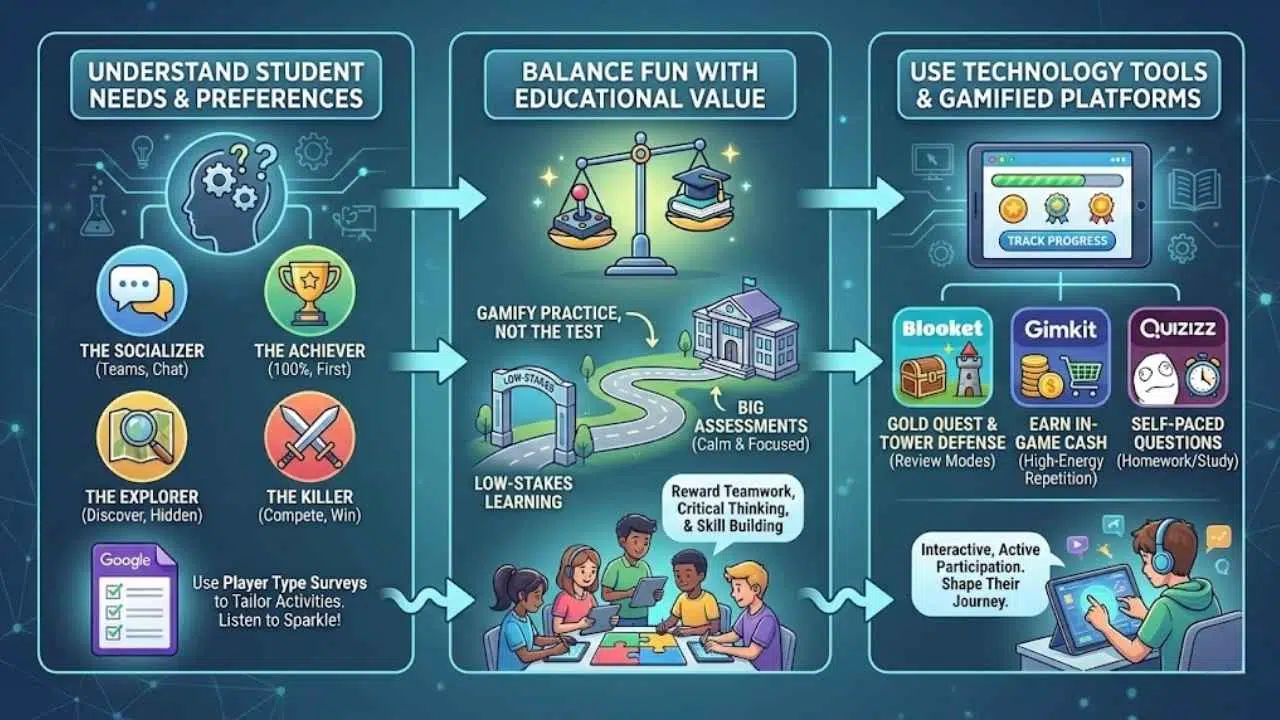
Every classroom has its own flavor, so what works for one may not spark joy in another. Find your groove, test new ideas, and let students lead the way now and then.
Understand Student Needs and Preferences
Kids light up in different ways during class. Some like to play games, while others want quizzes or team challenges. One student may leap at a leaderboard, hungry for achievement, but another kid freezes if the spotlight gets too bright.
Teachers can ask students about their favorite activities or watch what makes their eyes sparkle. You can use a simple tool like Google Forms to send out a “Player Type” survey at the start of the year.
- The Socializer: Wants to work in teams and chat.
- The Achiever: Wants to get 100% and finish first.
- The Explorer: Wants to discover hidden parts of the lesson.
- The Killer: Wants to compete and win against others.
Gamification in education goes beyond points and badges; it awakens hidden motivation in college students and young learners alike. Experts say classrooms that use game-like elements see more participation and happier faces. Kids thrive when they feel heard; listen closely and let them steer sometimes!
Balance Fun with Educational Value
Gamification in education should spark curiosity, not distract from learning. Points and badges bring excitement, but classrooms need more than just fun to hold true engagement. Students respond best when game mechanics push them to develop real-world skills or solve problems they care about.
A pro tip from experienced gamified teachers is to “Gamify the practice, not the test.” Use games for review and low-stakes learning, but keep big assessments calm and focused. For example, a classroom quest might reward teamwork on critical thinking puzzles rather than just handing out stars for showing up.
Teachers can mix challenges, feedback loops, and interactive tools so students build knowledge as they play. The right balance between playful rewards and deep learning leads to higher participation rates and better motivation across all ages.
Use Technology Tools and Gamified Platforms
Smart classrooms hum with activity, thanks to educational technology. Platforms like Kahoot!, Duolingo, and Classcraft give students instant feedback, turning lessons into interactive experiences.
Teachers can use platforms that let students track progress on personal dashboards or earn skills through real tasks. Here is a quick comparison of popular tools you can try:
| Tool | Best Feature | Best For |
|---|---|---|
| Blooket | “Gold Quest” & “Tower Defense” modes | Elementary/Middle School review |
| Gimkit | Earning in-game cash to buy upgrades | High-energy repetition |
| Quizizz | Self-paced questions with memes | Homework or independent study |
Interactive features keep students engaged longer than old-fashioned worksheets ever could. Instead of just listening to lectures, learners become active participants who shape their own journey through the material.
Final Thoughts
Gamification in education works best when we move past simple points and badges. We need deeper strategies like stories, choices, and feedback to spark real interest. These game-like tools are easy for any teacher to use and can fit into most classrooms with little hassle.
Students grow more curious, try harder tasks, and support each other thanks to these changes in learning style. The shift from bored faces to eager voices is proof that growth often starts with just one bold step forward.
So, why not pick one strategy and try it out this week?