DePIN appears more and more often in conversations about crypto, infrastructure, and the future of the internet. The acronym stands for decentralized physical infrastructure networks, but the idea behind it is simpler. DePIN is about using blockchain incentives to build and operate real-world infrastructure—wireless networks, storage, compute, sensors, and more—without relying on a single centralized owner.
For much of the last decade, the crypto story revolved around trading and speculation. Prices moved faster than products. That narrative is shifting. As organizations look for cheaper, more flexible infrastructure, and as communities search for ways to plug gaps left by traditional providers, DePIN steps into the foreground.
In 2026, the question is no longer whether it is a buzzword. The real question is how far this model can go, and what it means for telecom, cloud, mobility, and data in the next phase of digital growth.
What Is DePIN? A Clear, Simple Definition
From Centralized Infrastructure to Community-Owned Networks
To understand DePIN, it helps to start with the old model.
Telecom companies, cloud providers, and utilities traditionally own the infrastructure we depend on. They build towers, data centers, cables, or power lines. They set prices and conditions. Users pay monthly bills and accept that control sits with a small number of corporations and regulators.
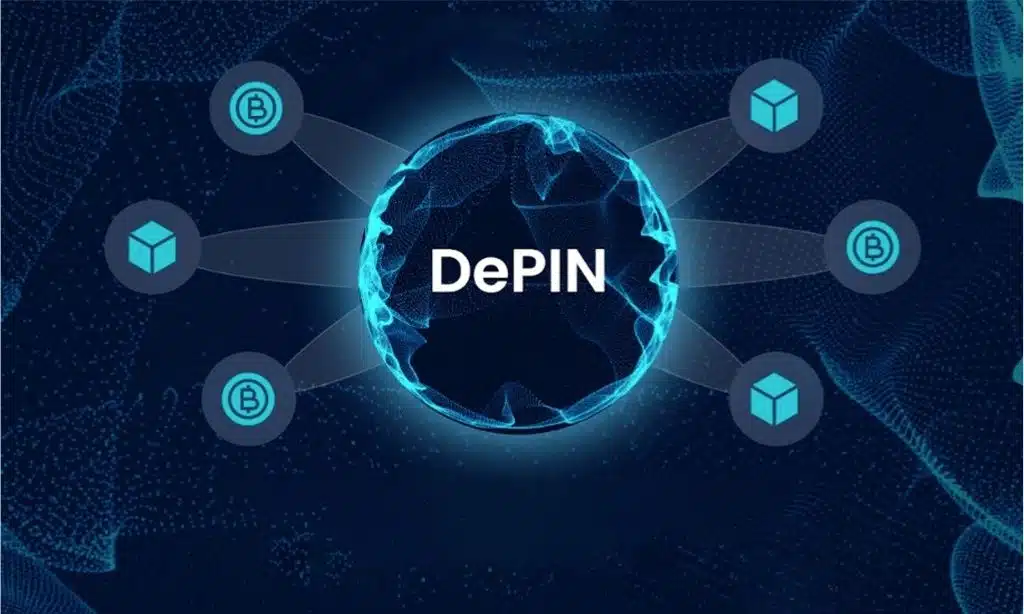
It flips this logic. Instead of a single company, a network of independent participants provides the physical resources: hotspots, antennas, storage nodes, GPUs, sensors, or small energy units. A blockchain coordinates these contributors. It tracks who supplies what, verifies that they actually delivered a service, and routes payments or token rewards to them.
So when someone asks, “What is depin?”, a practical answer is:
‘DePIN is a way to crowdsource real-world infrastructure and manage it through open, programmable rules rather than a single company’s internal systems.’
The hardware stays in the physical world. The coordination happens on-chain.
Physical vs. Digital DePIN Networks
Within its ecosystem, people often distinguish between two broad types of networks.
-
Physical resource networks. These networks build and operate physical infrastructure: wireless coverage, mobility networks, delivery fleets, micro-grids, or sensor systems. Contributors might install small cells, plug in routers, or deploy EV chargers.
-
Digital resource networks. These focus on cloud-like services: storage, compute, GPU rendering, and bandwidth. Contributors plug in servers, storage drives, or GPUs and sell their capacity to users through the depin protocol.
Both categories use the same core idea. Many independent operators join a shared network, and the blockchain tracks usage and rewards. The result is a new kind of infrastructure marketplace, where people can participate from a spare corner of a roof or from a rack in a small data center.
How DePIN Works Behind the Scenes
Tokens, Incentives, and Hardware Contributors
The heartbeat of DePIN is its incentive design.
Every DePIN network needs people to invest in hardware and keep it running. That comes with costs: equipment, power, maintenance, and sometimes permits. To make this viable, the protocol uses tokens or fee-based payouts as incentives.
Broadly, the process looks like this:
-
A person or company buys and installs a compatible device—this could be a hotspot, a GPU server, an edge node, or a specialized sensor.
-
The device connects to the depin network and starts providing services, such as routing data, storing files, serving compute jobs, or capturing environmental data.
-
The protocol measures this work using on-chain metrics and off-chain proofs.
-
Based on that verified activity, the operator earns tokens or a share of user fees.
Early-stage networks often use high token rewards to encourage fast deployment. Over time, successful depin designs shift more and more of the reward toward actual usage rather than just presence. That transition, from raw coverage to real demand, makes the difference between a speculative experiment and a sustainable infrastructure business.
Verification, Coordination, and On-Chain Markets
Incentives only work if the network can verify that real-world work happened. DePIN relies on a mix of cryptography, network tests, and economic design to do that.
-
Verification. Devices prove they are online, in a certain place, and performing tasks. Techniques can include bandwidth tests, proof-of-coverage signals, storage audits, or job completion proofs.
-
Coordination. Smart contracts record these proofs. They maintain a ledger of who contributed what, how much users consumed, and how fees should be split.
-
Markets. Buyers and sellers meet through on-chain or hybrid marketplaces. Users pay for storage, compute, connectivity, or data streams. Prices can adjust dynamically based on demand and supply.
In a traditional setting, all of this coordination happens inside a company’s private billing and monitoring systems. In a depin network, much of it becomes transparent and programmable. That openness is one reason why it attracts both infrastructure veterans and Web3-native builders.
DePIN in the Wild – Sectors and Real-World Examples
Connectivity and Wireless DePIN Networks
Connectivity is one of the clearest, early answers to the question, “Where is DePIN actually working?”
Wireless DePIN networks reward people for deploying hotspots, antennas, or small cells that provide coverage. In some networks, low-power devices connect over long distances for IoT applications. In others, users access community-built Wi-Fi or even mobile service. The more useful the coverage, the more those devices tend to earn.
This model challenges the idea that only a handful of big carriers can build networks. A cluster of entrepreneurs in a neighborhood, a small business with spare roof space, or a cooperative of households can all participate. The protocol acts as an invisible coordinator in the background, routing traffic and payments.
For rural or hard-to-reach areas, wireless depin can be more than a technical curiosity. It offers a way to bring coverage to places where large operators see limited profit but residents still need connectivity for work, education, and basic communication.
Storage, Compute, and the AI-Fueled DePIN Boom
Another major branch of depin focuses on storage and compute—core pieces of digital infrastructure.
Decentralized storage networks allow users to pay to store data across thousands of independent nodes. Files are split, encrypted, and spread across many providers, which increases redundancy and can improve resilience. Node operators earn by reliably storing and serving that data.
Decentralized compute networks, including GPU-focused depin projects, connect users who need intensive computation—like AI model training or rendering—with operators who have hardware to spare. Instead of renting from a single cloud provider, developers tap into a pool of globally distributed machines.
The timing matters. Demand for GPUs and high-performance computing has exploded with the rise of AI. Traditional cloud platforms face capacity limits and pricing pressure. DePIN offers an alternative: a flexible market where anyone, from a gaming studio to a university lab, can monetize or access compute power under transparent conditions.
Sensors, Mobility Data, and Mapping Networks
DePIN is not only about connectivity and cloud-like services. It also extends into data-rich infrastructure.
Mapping networks encourage drivers to attach dashcams and collect street-level imagery. Others ask vehicles to share telemetry, such as speed, location, or battery status. Some focus on environmental data: air quality, weather patterns, traffic density, or noise levels.
Contributors earn when their data improves the network: when new roads are mapped, when traffic insights become more accurate, or when the network’s datasets power third-party applications.
These projects touch sectors like logistics, insurance, ride-hailing, and climate research. Instead of a single company owning all the maps or mobility data, the information becomes part of a shared infrastructure layer. Access can still be priced, and privacy rules still apply, but ownership and value distribution become more decentralized.
Why DePIN Matters in 2026
From Speculative Crypto to Real-World Services
In previous cycles, crypto narratives often centered on speculative assets. Tokens traded like high-volatility tech stocks, and many projects struggled to show concrete value beyond price action.
DePIN gives the ecosystem a different anchor. A depin token is tied, at least in principle, to something measurable: bandwidth delivered, terabytes stored, GPU hours served, kilometers mapped, or kilowatt-hours produced. That connection between token incentives and real-world services makes the sector stand out.
By 2026, depin is widely discussed as part of crypto’s shift toward useful infrastructure. Reports from industry researchers and market analysts highlight DePIN as one of the main areas where Web3 tools intersect with tangible economic activity, not just digital-native experiments.
This does not mean every depin project succeeds or that speculation disappears. It does mean that the conversation increasingly includes uptime, latency, coverage maps, and unit economics, not only charts and narratives.
Cost, Resilience, and Local Control
The appeal of DePIN extends beyond the crypto world.
Traditional infrastructure models can be expensive, rigid, and vulnerable to single points of failure. Cloud bills rise, telecom rollouts slow down, and critical systems depend on a small number of vendors. When disruptions hit—whether from outages, natural disasters, or geopolitical tensions—the consequences cascade.
DePIN’s approach spreads risk and investment. Infrastructure is built by many across regions and ownership types. The network benefits from the aggregate capacity and creativity of its contributors. Local actors can respond to local needs, instead of waiting for distant corporate roadmaps.
In practice, it will coexist with centralized providers. Large carriers and hyperscalers are not going away. But as of 2026, more decision-makers see depin as a way to add redundancy, experiment with new business models, and reduce dependence on a few infrastructure giants.
DePIN in Emerging and Underserved Markets
One of the most compelling arguments for depin lies in its potential impact on emerging and underserved markets.
In many parts of the world, infrastructure gaps remain wide. Urban centers may have decent connectivity and cloud access, while smaller cities and rural areas lag behind. Traditional rollouts often prioritize wealthier customers and leave others with slow, unreliable, or expensive service.
DePIN offers a bottom-up alternative. Community groups, local entrepreneurs, and cooperatives can deploy devices, connect them to a network, and earn income from usage. The protocol handles metering and payments, including micro-payments that would be impractical in conventional billing systems.
Real-world depin projects already show growth in regions outside established tech hubs. As hardware gets cheaper and toolkits improve, the model becomes easier to replicate. In 2026, that pattern suggests DePIN could become one of the ways emerging markets leapfrog legacy infrastructure constraints, just as mobile phones once leapfrogged fixed-line networks.
Market Outlook for DePIN
Growth Forecasts and the Multi-Trillion Thesis
Market forecasts around DePIN vary, but many share the same underlying thesis: if it captures even a small slice of traditional infrastructure spending, the numbers become large very quickly.
Analysts and research outfits working with data from the World Economic Forum, Messari, and other sources describe DePIN as a market that could reach around $3.5 trillion in value by 2028, powered by the convergence of blockchain, AI, and distributed infrastructure.
These figures bundle together multiple verticals: telecoms, cloud services, mobility, logistics, energy, and data markets. It does not need to dominate all of them. It only needs to carve out niches where community-owned or distributed models are more efficient or more politically acceptable.
Forecasts, of course, are not guarantees. They can be over-optimistic and are often revised. Still, the numbers illustrate why depin is central to strategic discussions in both Web3 and traditional infrastructure circles in 2026.
Devices, Networks, and Early Adoption Signals
Beyond headlines, adoption metrics give a more grounded view of DePIN.
Industry reports and aggregators that track DePIN show that millions of devices now participate in these networks worldwide. One global DePIN map counts more than 10 million active devices spread across almost 200 countries or regions, with a combined sector market capitalization in the billions of dollars.
These devices range from low-power IoT hotspots to GPU servers and specialized sensors. Each one is a small piece of the network. Together, they represent a substantial layer of distributed infrastructure.
Another signal is project diversity. DePIN is no longer just one or two famous names. The ecosystem includes wireless coverage, decentralized storage, GPU clouds, mapping networks, mobility data, weather sensors, and more. As of 2026, that breadth suggests DePIN is evolving from a niche category into a broad design pattern for building and financing infrastructure.
The Risks and Challenges Facing DePIN
Regulation, Local Politics, and Incumbents
Infrastructure has always been entangled with politics and regulation, and DePIN is no exception.
Wireless networks must respect spectrum rules and telecom licensing. Energy-related depin projects face grid regulations and safety standards. Data-rich networks must comply with privacy laws and cybersecurity requirements. When infrastructure is decentralized, regulators may find it harder to identify a single responsible party.
Some jurisdictions may encourage depin pilots, especially where they help close infrastructure gaps. Others may be cautious, either to protect incumbents or to avoid perceived risks. Local politics can also play a role. Community members might resist hardware installations on rooftops or public spaces, even if the network promises benefits.
For its thrive in 2026 and beyond, project teams will need to engage with regulators early, communicate clearly with local communities, and show that their models align with public-interest goals rather than sidestepping oversight.
Token Economics, Hardware Risk, and Sustainability
The same token incentives that power DePIN can also create instability.
In the rush to scale, some networks offered high rewards for deploying hardware, regardless of real demand. Operators installed devices, collected tokens, and then saw rewards drop when token prices corrected or supply outgrew usage. The result was underused equipment and disappointed participants.
Hardware also introduces long-term risk. Devices age, break, or become obsolete. If returns do not cover capital and operating costs, node operators have little reason to stay. Networks must design economics that gradually favor proven, useful activity rather than sheer device counts.
Environmental and resource concerns add a further layer. A global network with millions of devices consumes energy and materials. While many depin devices are low-power, their cumulative impact matters. Sustainable DePIN design therefore rewards efficient hardware, real utilization, and responsible lifecycle management, not just maximum scale.
User Experience, Security, and Trust
For everyday users, DePIN technology fades into the background. They care about whether their connection is stable, their files are safe, and their apps respond quickly.
That puts pressure on DePIN projects to deliver:
-
Simple onboarding, with familiar payment options and minimal technical friction.
-
Reliable performance that meets or exceeds centralized alternatives.
-
Clear security practices and transparent incident responses.
If using a depin-based service feels complex or risky, most users will not bother, however elegant the protocol may be. Likewise, high-profile security incidents or failures could damage trust across the sector.
In 2026, the DePIN projects that succeed will likely be the ones that treat UX and reliability as first-order priorities, not afterthoughts, and that abstract away the complexity of wallets, gas fees, and protocol mechanics.
How Different Players Should Approach DePIN in 2026
Builders and Startups
For founders and builders, DePIN offers both opportunity and discipline.
The opportunity lies in tapping into global pools of hardware and aligning incentives so that communities help build the product. The discipline comes from the fact that DePIN networks cannot hide behind vague usage metrics. If no one routes traffic through your hotspots or stores data on your network, the problem shows up quickly in on-chain activity.
Pragmatic depin builders in 2026 tend to:
-
Start with a focused, real-world use case where decentralized supply offers a clear advantage.
-
Align token rewards with actual demand as early as possible, rather than relying on perpetual emissions.
-
Design for interoperability so that their networks can plug into other depin and Web3 systems.
-
Partner with local operators, integrators, and businesses that understand on-the-ground constraints.
In other words, the strongest ventures of it look less like token experiments and more like infrastructure companies that happen to use crypto rails.
Enterprises, Cities, and Utilities
For enterprises, city governments, and utilities, the core question is not “What is depin?” but “When should we consider depin over traditional options?”
Some promising entry points in 2026 include:
-
Offloading peak workloads—such as rendering or batch compute—to DePIN networks instead of expanding in-house capacity.
-
Using depin-based sensors and networks to pilot smart-city initiatives, from traffic optimization to environmental monitoring.
-
Exploring hybrid deployments where centralized infrastructure provides core coverage and DePIN nodes extend capacity at the edges.
These stakeholders must assess integration costs, compliance, and service-level guarantees. They will move more slowly than crypto-native users, but once depin networks prove they can deliver at scale, institutional adoption can accelerate sharply.
Investors and Policymakers
Investors looking at DePIN in 2026 face a crowded field. Token listings and project announcements arrive fast, but not all networks are equal.
Useful questions for investors include:
-
How many devices or nodes are active, and what share of them handle real traffic or jobs?
-
Are network fees and usage trending upward over time, independent of token price?
-
Can a typical node operator earn sustainable returns after hardware and running costs?
-
Does governance look credible, or is it dominated by a narrow group of insiders?
Policymakers, meanwhile, have to find a balance. Overly restrictive rules could push depin innovation out of their jurisdictions. An unregulated free-for-all could create safety, privacy, or consumer-protection problems.
A balanced approach treats depin as an experimental but important model. Clear guidelines around data protection, competition, and consumer rights can give serious projects the confidence to build, while deterring bad actors who hope to hide behind technical jargon.
Conclusion – DePIN and the Quiet Reinvention of Infrastructure
In 2026, DePIN sits at the intersection of several powerful trends: the search for real utility in crypto, the rise of AI and data-hungry applications, and the ongoing strain on traditional infrastructure models.
At its core, DePIN is not about slogans or speculative charts. It is about who builds the networks we rely on, how they get paid, and how the benefits are shared. It invites individuals, communities, and organizations to take part in building wireless coverage, storage, compute, and data systems—and it uses open, programmable rules to coordinate that effort.
The road ahead is not guaranteed. It still has to prove that it can operate at scale, comply with complex regulations, and deliver a user experience that feels as simple as existing services. Token design must evolve beyond growth-at-any-cost incentives. Environmental and hardware concerns must be handled with care.
Yet the direction is hard to ignore. If it continues on its current trajectory, most users may never learn the term. They will simply enjoy cheaper or more resilient services and discover that part of their digital life runs on infrastructure built not by a single corporation, but by a network of many contributors.