Hey there, have you ever wondered how technology can help people in desperate need during a humanitarian crisis? Maybe you’ve seen news about disasters or poverty, and it feels tough to know if your help really makes a difference.
It’s a real struggle to trust that aid reaches the right hands, isn’t it?
Here’s a cool fact to chew on, Web 3.0, with its fancy blockchain technology, is changing the game for humanitarian aid. It’s making things clear and fair, like a window into where your donations go.
Want to know how this works for real issues? Stick with me, and I’ll show you seven awesome ways Web 3.0 is stepping up to help. Let’s check it out!
Key Takeaways
- Web3 uses blockchain to make donations transparent, like with UNICEF CryptoFund in 2024, cutting corruption and costs.
- GoodDollar’s decentralized income plan in 2024 gave daily income to thousands, helping remote areas join the economy.
- Gitcoin’s quadratic funding in 2024 supported many community projects, boosting tech growth for those in need.
- Decentralized IDs on blockchain help refugees access services like water and health care securely.
- Smart contracts speed up aid delivery, as seen with the United Nations World Food Programme, ensuring funds reach people fast.
Financial Inclusion and Empowerment
Guess what, folks? Financial inclusion is a game-changer for humanitarian aid, and Web3 is leading the charge. Imagine folks in remote areas, cut off from banks, now getting a fair shot at money matters.
Tools like blockchain technology make this real. Take GoodDollar, a neat project using a decentralized basic income plan. With smart contracts, it hands out daily income to thousands worldwide.
In 2024, this setup grew big, lifting lives and spreading wealth in ways old systems couldn’t touch.
Now, picture smallholder farmers joining the digital economy with cryptocurrencies. Platforms like Gitcoin also pitch in, funding community projects with a cool method called quadratic funding.
In 2024, Gitcoin backed tons of ideas, sparking tech growth and support for those in need. It’s like giving a hand up, not just a handout, to alleviate poverty. Web3 is rewriting the rules for financial empowerment, and it’s exciting to watch!
Transparent Donation Tracking with Blockchain
Hey there, folks, let’s talk about something really neat in the sphere of humanitarian aid. Imagine sending a donation and knowing precisely where every penny is allocated, with no uncertainty involved.
Blockchain technology enables this through its public ledger. This system allows everyone to view transactions as they happen, so you can follow donations on their journey. It’s like tracking a package delivery, but for charity funds.
Blockchain eliminates the questionable intermediate steps in aid distribution. You get to witness the impact of your contribution, plain and simple.
Now, consider the strength of this approach for organizations like UNICEF CryptoFund. Back in 2024, they supported numerous projects to improve children’s lives using this exact technology.
Their open-source blockchain startups demonstrate how real-time tracking combats corruption. It also reduces costs by removing unnecessary intermediaries in the process. Smart contracts even streamline where resources are directed, delivering aid more quickly to those who need it.
So, the next time you contribute to nonprofits or charitable causes, envision your dollars creating a clear and direct path to making a difference.
Decentralized Identity for Refugees
Let’s discuss a remarkable development in humanitarian aid. Decentralized identity solutions are transforming the landscape for refugees. These secure, verifiable IDs allow individuals to confirm their identity without depending on conventional authorities.
Imagine losing everything, including your documents, during a crisis. Now, envision a digital ID on a blockchain that remains secure and untouchable. It’s like holding a permanent key to your life, always protected.
This technology goes beyond simply identifying people. It creates pathways to financial inclusion for those displaced. With a decentralized ID, refugees can gain access to vital services like clean water or health care.
Nonprofits collaborate with Web3 advancements to implement this swiftly. Blockchain technology ensures clarity, making aid distribution equitable and traceable. It’s a crucial support, plain and simple, for those in need.
Smart Contracts for Efficient Aid Distribution
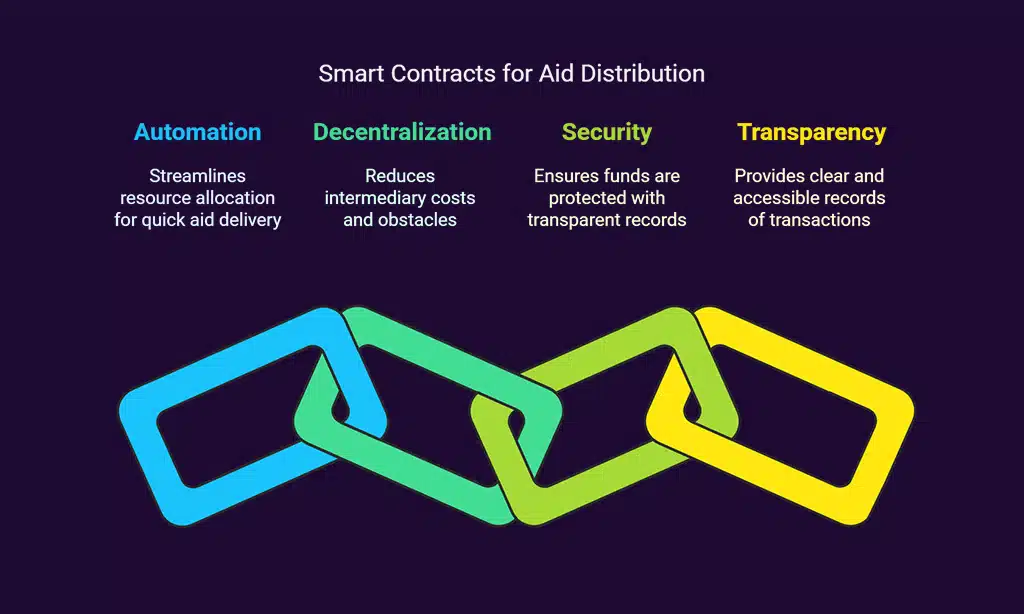
Hey there, have you ever wondered how aid reaches people quickly during a crisis? Smart contracts, built on blockchain technology, make it possible by automating resource allocation for swift aid delivery, especially in challenging times like natural disasters or conflicts.
Imagine a system that eliminates delays. With decentralized platforms, smart contracts reduce intermediary costs, delivering humanitarian assistance to those in need without unnecessary obstacles.
Plus, data encryption and decentralized networks prevent any interference, keeping funds secure with transparent records. It’s like having a reliable protector for every dollar sent to support Food-insecure families or smallholder farmers through initiatives by organizations like the United Nations World Food Programme.
Pretty impressive, right?
NFTs for Fundraising and Awareness Campaigns
NFTs, or non-fungible tokens, are changing the game for humanitarian aid. Think of them as digital art or collectibles that live on blockchain technology. They’re one of a kind, and that’s what makes them special for fundraising campaigns.
Charities, like GlobalGiving, sell these tokens to raise money fast. Supporters buy them, often through crypto donations, and feel good knowing they’re part of something big. It’s like owning a piece of a cause, not just tossing cash into a jar.
Plus, the buzz around NFTs spreads awareness like wildfire on social media.
Now, let’s chat about how this works for real impact. Organizations create cool digital pieces tied to their missions, maybe art about clean water and sanitation or zero hunger goals.
Philanthropists snap them up, and the funds go straight to projects, like helping smallholder farmers or tackling plastic waste in slums. It’s a fresh way to incentivize giving, almost like a loyalty program for doing good.
Even better, every sale on the blockchain is clear as day, so you see where your money lands. How neat is that for boosting trust in charitable work?
Takeaways
Hey there, let’s wrap this up with a quick nod to Web3’s amazing role in humanitarian work. Think of it as a trusty sidekick, powering up efforts to help people worldwide. From transparent donations to smart aid delivery, this tech is changing the game.
Isn’t it cool how blockchain builds trust in every step? Stick around, folks, because Web3 is just getting started on making a big difference!
FAQs
1. How does Web3 support humanitarian aid with blockchain technology?
Hey, let me tell you, blockchain technology in Web3 is a game-changer for humanitarian aid. It makes aid delivery transparent, so folks at places like Mercy Corps can track every penny. With real-time monitoring, they see exactly where help lands, no guesswork needed.
2. Can Web3 help smallholder farmers through financial inclusion?
Absolutely, pal, Web3 opens doors for smallholder farmers with financial inclusion. Using smart contracts, groups like Mercy Corps Ventures get funds to smallholders fast, helping them join the digital economy without a hitch.
3. What’s the deal with crypto donations in Web3 for charitable organizations?
Well, crypto donations are shaking things up for charitable organizations. They’re a quick way to send cash transfers via cryptoassets, letting outfits like the United Nations World Food Programme (WFP) aid the food insecure without banking delays. Plus, donors can use donor-advised funds, making giving as easy as pie.
4. How does Web3 tackle environmental sustainability in humanitarian efforts?
Listen up, Web3 isn’t just about money, it’s also fighting plastic pollution and boosting renewable energy. Projects tied to sustainable development goals use blockchain applications to track eco-friendly suppliers, making a real dent in environmental woes.
5. Are decentralized autonomous organizations part of Web3 humanitarian work?
You bet, decentralized autonomous organizations, or DAOs, are in the mix. They’re like a digital council, running aid projects with open-source software, cutting out middlemen, and getting help straight to folks in need.
6. How does Web3 fight financial crimes in aid programs?
Hey there, Web3 is on the case against financial crimes with tight oversight. Blockchain’s clear ledger, backed by rules from the European Securities and Markets Authority and the UK Financial Conduct Authority, helps spot shady moves, even keeping tabs on terrorist funding risks with input from the Financial Crimes Enforcement Network. It’s like having a watchdog that never sleeps, guarding every transaction for groups like Care International.