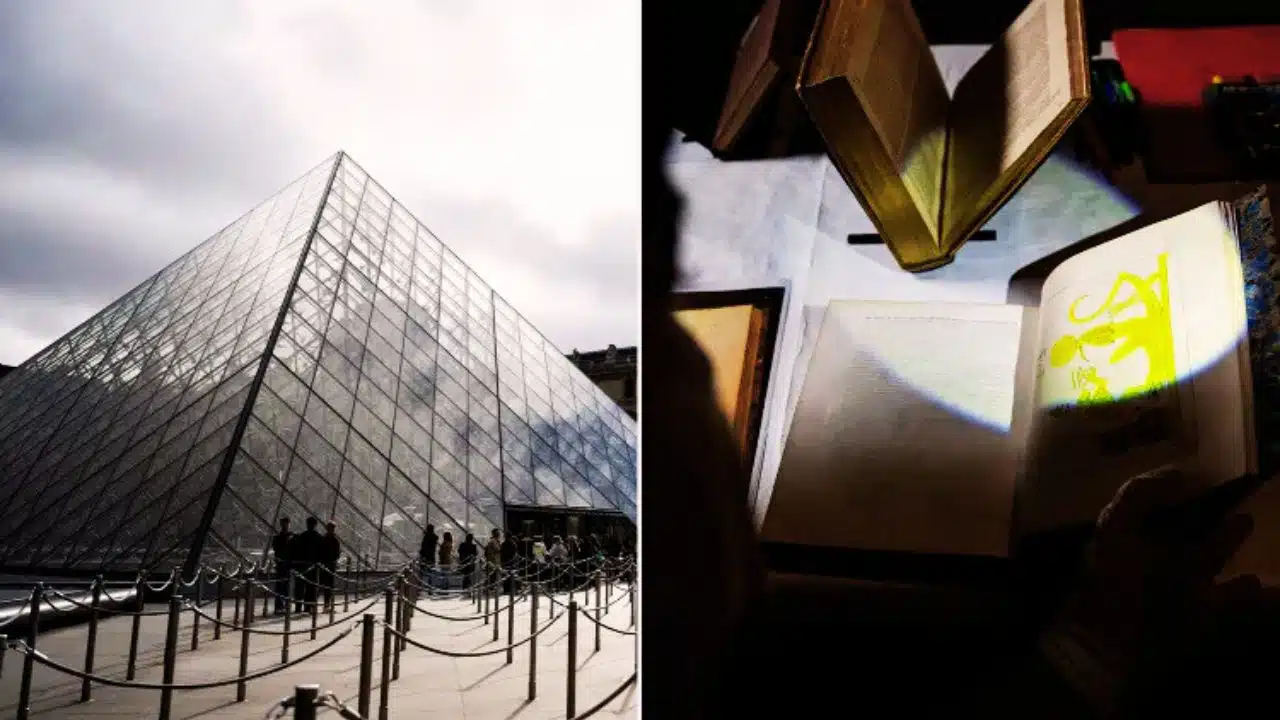
A water leak in a library area at the Louvre has affected several hundred volumes, prompting conservation efforts and questions over how museums protect fragile collections.
Water Leak Damages Hundreds of Books at Louvre
A water leak has damaged hundreds of books at the Louvre in Paris, one of the world’s most visited museums and home to vast art and archival collections. The incident, reported in recent days by museum staff, occurred in a library area inside the complex and has triggered an urgent conservation response to save as many volumes as possible.
According to the museum, the leak was contained after staff detected water infiltrating a section of shelving that holds reference and research materials. No injuries were reported, and public galleries remain open, but conservation teams now face a race against time to dry, clean, and stabilize the affected books.
What Happened and Where in the Louvre?
While full technical details have not yet been released, the Louvre confirmed that a localized water leak reached shelving units used for books and documents. The affected area is part of the museum’s internal research and documentation spaces rather than the main display galleries that visitors typically see.
Museum technicians and security staff reportedly noticed the problem when moisture and staining appeared near bookcases. The leak source appears to be linked to building infrastructure, such as pipes or internal drainage, rather than flooding from the River Seine.
The Louvre complex, which includes former royal palace buildings and modern extensions, is a dense, historic structure with extensive networks of pipes, climate-control systems, and service corridors. That complexity can make even a localized leak a serious threat for paper-based collections.
Scale of the Damage: Hundreds of Volumes at Risk
Early internal counts suggest that several hundred books were exposed to water, either directly soaked or affected by high humidity in the immediate area. Conservation staff are now sorting volumes into categories based on the level of damage and the urgency of treatment.
Below is a snapshot of what is currently known about the incident, based on museum statements and standard emergency procedures at major institutions:
| Key Aspect | Detail (based on current reporting) |
| Location in museum | Library / research area, not main public galleries |
| Type of material affected | Books and printed volumes, some reference materials |
| Estimated number of books | Several hundred potentially affected |
| Leak type | Localized water leak inside the building |
| Visitor impact | Galleries open; localized work areas restricted |
| Immediate response | Leak stopped, books moved, drying and assessment |
Conservators will need weeks, and in some cases months, to determine which items can be fully restored, which will retain visible damage, and which may be beyond saving.
Why Water Is So Dangerous for Books
Water is one of the most destructive forces for paper, leather bindings, and historical inks. When books absorb moisture, pages swell, warp, and can fuse together as they dry. Inks may run, images may blur, and covers may deform permanently.
If wet books are not treated quickly and correctly, the risk of mold growth rises sharply. Mold can spread rapidly in enclosed stacks or storage rooms, threatening not only the books already exposed to water but surrounding volumes that initially escaped direct contact.
For that reason, international museum guidelines emphasize rapid response:
- Remove books from water and damp shelving as quickly as possible.
- Separate and fan out pages, where feasible, to prevent them sticking together.
- Use cold storage or freezing in serious cases to slow deterioration and mold.
- Document each book’s condition for insurance and restoration records.
The Louvre, like other major museums, follows these standards as part of its emergency planning.
How the Louvre Is Responding
The Louvre has a dedicated Department of Conservation and a long track record of dealing with environmental risks, including water. After the leak was identified, the museum activated established procedures designed for such crises.
Key steps in the response typically include:
- Isolating the leak and securing the affected area.
- Moving books to a dry, controlled space for triage.
- Prioritizing rare, unique, or irreplaceable items for first treatment.
- Coordinating with paper and book-restoration specialists.
- Monitoring temperature and humidity to prevent mold.
The museum has not yet provided a complete public inventory of the damaged items, but curators and archivists are now reviewing catalog records to determine the scholarly and historical value of each affected volume.
Past Flood Risks and Louvre Preparedness
Water risk is not new for the Louvre. In 2016, the museum temporarily closed some galleries and moved artworks from lower levels as the River Seine rose to near-flood levels. That event prompted renewed attention to how climate-related threats, heavy rains, and infrastructure failures could affect the museum’s holdings.
Like many European institutions housed in historic buildings, the Louvre has invested in:
- Improved drainage and pumping systems.
- Enhanced monitoring of humidity and temperature.
- Emergency relocation plans for artworks and archives.
- Staff training in disaster response and salvage.
The latest incident involving books reinforces how even non-spectacular events—a leak rather than a major flood—can endanger cultural heritage when it involves vulnerable materials such as paper.
Cultural and Scholarly Impact
Although paintings like the Mona Lisa draw the biggest crowds, the Louvre’s books and archives are crucial for understanding the works on display.
The museum’s libraries support:
- Art-historical research by staff and external scholars.
- Conservation studies and technical analysis.
- Exhibition planning and catalog production.
- Education and public programming.
Damage to these collections can disrupt ongoing research and make it harder to reconstruct curatorial decisions or prove provenance, especially when older catalogues, archival documents, and rare reference volumes are involved.
Even if most of the affected books can be stabilized, many may bear permanent marks of the incident: tide lines, warped covers, or discolored pages. These scars themselves become part of the objects’ histories, but they also reduce legibility, usability, and, in some cases, financial value.
How This Compares with Other Museum Incidents
Museums and libraries worldwide have faced similar water-related emergencies in recent decades, whether caused by severe weather, aging infrastructure, or accidental mishaps. These cases illustrate that the Louvre’s experience, while worrying, is not unique.
| Institution / Incident | Type of Damage | Lessons for Louvre and Peers |
| Florence libraries (1966 flood) | Massive book flooding | Need for large-scale salvage plans and volunteer networks |
| Cologne City Archive collapse (2009) | Structural failure, water | Importance of building safety and records duplication |
| Various U.S. university libraries (storms) | Roof leaks, pipe bursts | Role of rapid freezing and specialized drying technologies |
These examples have pushed the global heritage sector to invest in better planning, redundant storage, and digital copies. The Louvre’s current incident will likely be studied in the same context, especially regarding how fast the museum intervened and how many volumes can be saved.
Visitor Experience and Museum Operations
For now, the Louvre remains open to visitors, and the leak has not affected flagship galleries or major tourist routes. However, some staff areas and library rooms may be temporarily closed while conservation work is underway.
The museum may adjust:
- Access for researchers who normally rely on the affected collections.
- Schedules for internal cataloging and digitization projects.
- Training sessions to reinforce leak detection and reporting.
Travelers planning to visit the Louvre are unlikely to see direct disruption, but those with pre-arranged research appointments or library access requests may face delays or changes.
What Happens Next?
In the weeks ahead, the Louvre’s priority will be stabilizing and restoring the damaged books.
Detailed condition reports will help the museum decide:
- Which books can be fully restored for normal handling.
- Which will remain usable but with restrictions.
- Which may need to be withdrawn, replaced, or digitized only.
The incident is also expected to prompt a broader internal review of infrastructure, including plumbing, climate control, and sensor coverage in storage and library areas. Insurers and public funders may ask for risk assessments and updated mitigation plans.
More broadly, the leak will likely reignite debate about how cultural institutions in historic buildings can adapt to modern risks—from aging pipes to heavier rainstorms linked to climate change—while still welcoming millions of visitors each year.
For now, the central question is how many of the damaged books the Louvre can save. The answer will emerge gradually, as conservators complete the painstaking, page-by-page work that follows every water emergency behind the scenes of the world’s great museums.