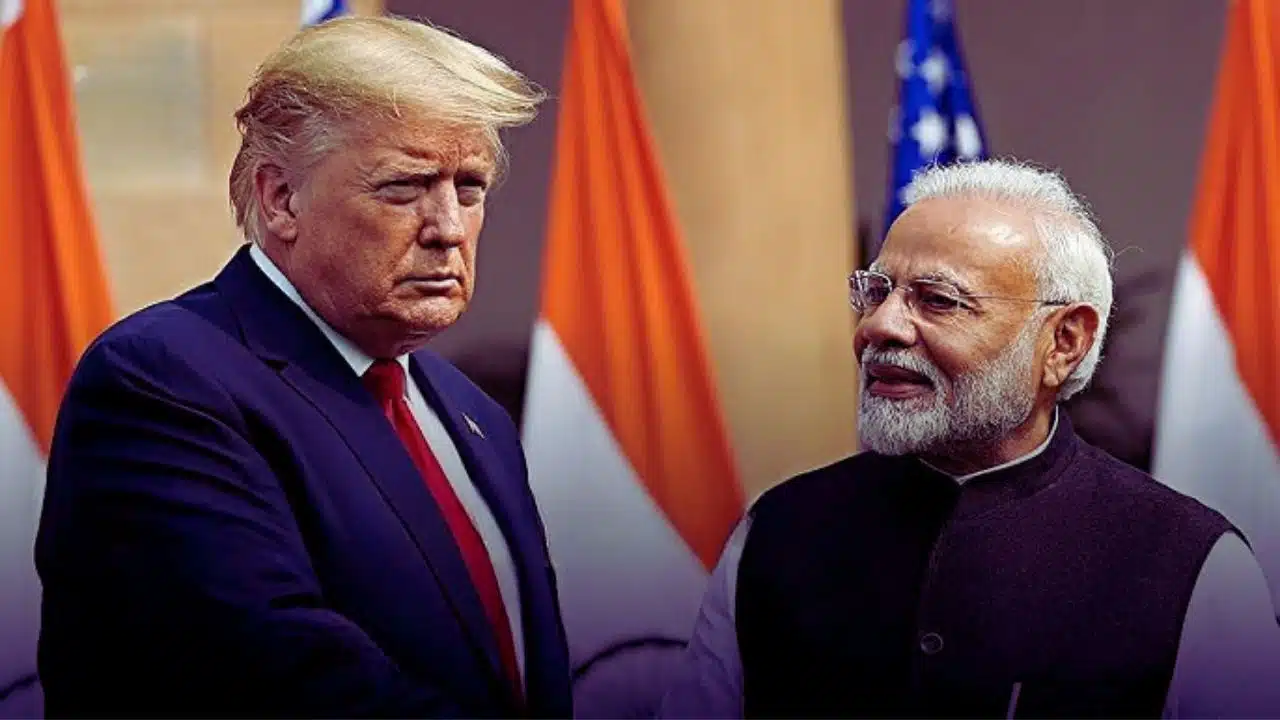
US President Donald Trump announced on Monday that the United States is nearing a “fair trade deal” with India, promising to reduce tariffs imposed earlier this year and signaling a thaw in bilateral relations strained by energy disputes. The remarks, made during the swearing-in of new US Ambassador to India Sergio Gor, come as negotiators from both nations push toward a comprehensive agreement aimed at doubling trade volumes by 2030.
Trump’s optimistic tone highlights months of intensive talks, with the president emphasizing a “much different deal” from past pacts that he deemed unfair to American interests. This development could reshape economic ties between the world’s largest and fifth-largest economies, boosting US energy exports and investments while addressing India’s push for market access.
Optimism Expressed During Ambassador’s Swearing-In
Speaking in the Oval Office, Trump described the impending deal as a win for both sides, noting that India—home to over 1.5 billion people and the fastest-growing middle class—remains a vital strategic partner in the Indo-Pacific. “We’re making a deal with India, a much different deal than we had in the past. Right now, they don’t love me, but they’ll love us again. We’re getting a fair deal,” Trump said, adding that he believed the agreement would be “good for everybody.”
The ceremony, attended by Vice President JD Vance, Secretary of State Marco Rubio, and Treasury Secretary Scott Bessent, underscored the deal’s importance to Trump’s foreign policy agenda. Trump praised his “fantastic relationship” with Indian Prime Minister Narendra Modi, crediting it for advancing talks, and tasked Ambassador Gor with fortifying economic and security bonds, including increased US energy exports and tech investments.
Trump also hinted at an upcoming visit to India, framing the partnership as one of America’s “most important international relationships.” This personal diplomacy has been key, as Gor—already on friendly terms with Modi—steps into a role critical for navigating the final stages of negotiations.
Tariff Reductions on the Horizon as Russian Oil Dispute Eases
A major sticking point in the talks has been the 50% tariffs Trump imposed on Indian imports in August, largely in response to New Delhi’s purchases of discounted Russian crude oil amid the Ukraine conflict. Trump claimed India has “stopped doing the Russian oil very substantially,” paving the way for relief. “Yeah, we’re going to be bringing the tariffs down. At some point, we’re going to be bringing them down,” he told reporters, linking the high duties directly to the energy issue.
India’s continued oil imports from Russia—despite Western sanctions—drew the punitive measures, escalating tensions and prompting New Delhi to diversify export markets, including a recent trade delegation to Moscow. However, Trump’s comments suggest a de-escalation, with the tariffs tied to India’s compliance on reducing those purchases, though Indian officials have not publicly confirmed any halt.
Lowering the tariffs could immediately benefit Indian exporters in sectors like textiles, pharmaceuticals, and gems, which have faced up to 25% penalties. Analysts view this as a pragmatic move by Trump to secure broader concessions in the trade pact, balancing pressure tactics with economic incentives.
Progress in Bilateral Trade Agreement Negotiations
The proposed India-US Bilateral Trade Agreement (BTA), first outlined in February 2025, targets expanding current bilateral trade from $191 billion to $500 billion by 2030. Five rounds of talks have occurred since March, including a virtual session on October 23, with both sides describing discussions as “positive and forward-looking.”
Indian Commerce Minister Piyush Goyal echoed the momentum on November 5, stating that talks were “going on very well” despite “many sensitive and serious issues” requiring more time. A high-level Indian delegation, led by Goyal and Chief Negotiator Rajesh Agrawal, visited Washington in September to advance the first-phase deal, expected to be signed by year’s end. US officials, including Assistant Trade Representative Brendan Lynch, have held parallel meetings in New Delhi to align on market access, intellectual property, and digital trade.
Key areas under negotiation include easing US barriers to Indian agricultural and dairy products while opening Indian markets to American services and manufacturing. The agreement also aims to enhance supply chain resilience, particularly in semiconductors and critical minerals, amid global shifts away from China.
Broader Implications for Economic and Security Ties
Beyond trade, the deal could deepen US-India security cooperation, with provisions for joint investments in defense tech and Indo-Pacific initiatives. Trump highlighted India’s role as an “important economic and strategic security partner,” aligning with efforts to counterbalance China’s influence through the Quad alliance.
For India, the pact offers a lifeline against US protectionism, supporting Prime Minister Modi’s vision of “Make in India” by attracting American firms in renewables and AI. Yet, challenges persist, including disputes over data localization and e-commerce rules, which could delay finalization.
Economists warn that while a deal would stabilize relations, unresolved issues like subsidies in steel and autos might resurface. Still, Trump’s public endorsement injects urgency, potentially accelerating a framework that benefits consumers and businesses on both sides.
This breakthrough, if realized, marks a pivotal moment in US-India relations, transforming tariff wars into collaborative growth amid a volatile global economy.