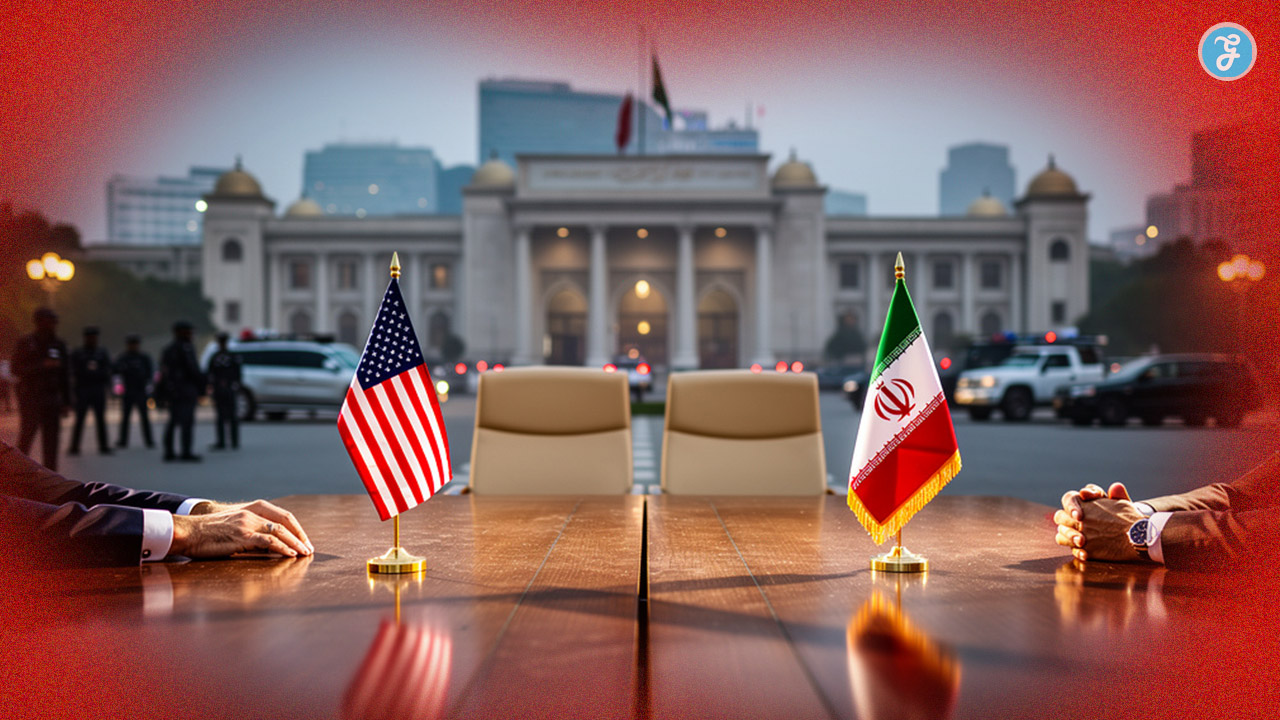
Ukraine peace talks Jan 3 2026 bring national security advisers from a coalition of more than 30 partner countries to Ukraine as Kyiv seeks enforceable security guarantees and a credible path toward ending the war.
What Ukraine Is Hosting And Who’s Expected To Be Involved?
Ukraine is set to host a high-level meeting of national security advisers on January 3, 2026, as part of an ongoing effort by Kyiv and its partners to coordinate positions on peace diplomacy and post-war security. The meeting is tied to a partner grouping often described as a “coalition of the willing,” led by the United Kingdom and France, and said to include more than 30 countries involved in supporting Ukraine and shaping what a settlement might look like.
While Ukraine has not publicly released a full attendee list, the meeting is framed as an advisers-level session rather than a leader-to-leader summit. That distinction matters. Advisers are typically tasked with aligning objectives, narrowing disagreements, and preparing options leaders can decide on later. When advisers meet in person, the goal is often to move from general principles to actionable plans—what gets guaranteed, by whom, under what conditions, and with what enforcement.
The decision to hold the meeting inside Ukraine carries symbolic and practical weight. Symbolically, it reinforces that Ukraine remains the central party, not a bystander to negotiations among larger powers. Practically, it allows visiting officials to hear directly from Ukraine’s security leadership and to weigh assessments tied to the front line, air defense needs, and the risks of renewed escalation if any ceasefire is weakly designed.
This advisers meeting also fits into a broader pattern: multiple diplomatic tracks running at once. Some discussions aim at a near-term reduction in fighting. Others focus on building a long-term security architecture that reduces the chance of a future invasion. Ukraine’s position has been consistent: a pause in fighting without robust guarantees could simply create a window for re-arming and renewed attacks.
What’s Known About The January 3 Meeting (Publicly)?
| Item | What’s Publicly Indicated | Why It Matters |
| Date | January 3, 2026 | Sets an early-year timeline for coordinated decisions |
| Level | National security advisers | Suggests planning and alignment rather than formal treaty signing |
| Host | Ukraine | Signals Kyiv’s central role and urgency |
| Group | Coalition of the willing (UK- and France-led) | Indicates European-led coordination with broad participation |
| Participation | More than 30 partner countries referenced | Suggests wide coalition support, but potential for differing priorities |
The Diplomatic Track Leading Into Paris And Why Timing Is Tight?
The January 3 advisers session is positioned as a bridge to a leaders meeting in Paris on January 6, 2026, where allies are expected to discuss “concrete commitments” to protect Ukraine after any peace arrangement. The three-day gap between the advisers meeting and the leaders meeting is short by diplomatic standards. That compressed timeline strongly suggests the advisers are expected to produce deliverables leaders can act on quickly.
In practice, this kind of sequencing typically works like this: advisers try to settle what can be settled—definitions, options, constraints, and wording—so leaders can focus on decisions rather than drafting. If the advisers can’t narrow key disagreements, leader meetings risk becoming broad statements of intent rather than detailed commitments. That is why the January 3 meeting matters even if it does not produce a headline-grabbing “deal.”
The timing is also driven by battlefield realities. Winter periods often intensify pressure on energy systems and critical infrastructure, and sustained attacks can raise humanitarian costs even when the front lines do not shift dramatically. Diplomacy in this context is not occurring after a clean break in fighting; it is happening under ongoing pressure. That pushes partners toward practical questions: what can be secured now, what must wait, and what minimum requirements are necessary to make any pause in fighting stable.
Another factor is political coordination inside allied capitals. Commitments that involve money, military deployments, or long-term security guarantees can require parliamentary debate, legal review, and domestic consensus-building. Advisers often map out what each government can realistically deliver and how quickly. If the Paris leaders meeting is expected to announce concrete commitments, advisers will need to ensure those commitments are deliverable, not aspirational.
Early-January Diplomatic Sequence
| Date | Milestone | Likely Purpose |
| Late Dec 2025 | Ukraine signals early-January coalition meetings | Sets expectations and builds momentum |
| Jan 3, 2026 | Advisers meet in Ukraine | Align plans on security guarantees and enforcement |
| Jan 6, 2026 | Leaders meet in Paris | Convert planning into commitments and public announcements |
Core Issues On The Table: Territory, Ceasefire Terms, And Security Guarantees
Any serious peace process has a visible layer and a hidden layer. The visible layer is the public messaging—calls for peace, respect for sovereignty, and support for a just outcome. The hidden layer is the hard bargaining over territory, enforcement, and power balances. For Ukraine peace talks Jan 3 2026, the core issues fall into three interlocking categories.
First is territory. Russia is widely assessed to control roughly one-fifth of Ukraine’s internationally recognized territory. Ukraine has rejected demands that it surrender additional areas or recognize territorial seizures as legitimate. The question that repeatedly returns in diplomacy is how to handle the territorial reality without locking in an outcome that Ukraine and many partners view as unacceptable.
Second is the ceasefire structure, if one is pursued. A ceasefire is not only a political statement; it is a technical system. It needs defined lines, monitoring mechanisms, reporting channels, timelines for withdrawals (if any), rules on heavy weapons placement, and procedures for investigating violations. Without those, ceasefires often collapse under mutual accusations and opportunistic attacks.
Third is security guarantees. Ukraine argues that guarantees must be credible enough to deter a future invasion. Partners, meanwhile, must balance credibility with political and legal feasibility. A guarantee that is too vague may not deter. A guarantee that is too ambitious may not be politically sustainable across dozens of countries with different risk tolerances.
These three issues are connected. If territorial questions remain unresolved, guarantees become more important because the risk of renewed fighting remains high. If guarantees are weak, a ceasefire may become only a temporary pause. And if ceasefire terms are poorly designed, even strong guarantees may not prevent constant escalations and “gray zone” attacks.
Negotiation Issues And The Practical Questions Advisers Must Answer
| Issue | Practical Questions | What Makes It Hard |
| Territory | Freeze current lines or attempt phased changes? How to define borders in documents? | Recognition issues, domestic politics, and long-term legitimacy |
| Ceasefire Terms | Who monitors? What counts as a violation? What happens after a violation? | High mistrust and incentives to test boundaries |
| Security Guarantees | Who guarantees? What triggers support? What form does support take? | Credibility vs. political feasibility across many capitals |
| Sanctions / Leverage | What changes when fighting stops? What stays until a settlement is durable? | Sequencing disputes and enforcement challenges |
| Reconstruction | Who funds what, when, and under what safeguards? | Scale of damage and long timelines |
Ukraine has also emphasized that any process must be grounded in international law and sovereignty. That stance aligns with a long-standing concern among many states: if territorial changes are normalized through force, it risks encouraging similar actions elsewhere. This is why many governments treat the Ukraine conflict not only as a regional war but as a precedent-setting challenge.
At the same time, diplomacy often explores interim steps even when final-status issues remain unresolved. That can include partial de-escalation measures, humanitarian corridors, prisoner exchanges, and arrangements tied to energy infrastructure and food logistics. Those measures do not resolve the war, but they can reduce immediate harm and build limited confidence.
What Security Guarantees Could Look Like And How A “Reassurance Force” Might Work?
Security guarantees can mean very different things, and that ambiguity often complicates diplomacy. One model is political assurances—statements of support that do not create firm obligations. Another model is treaty-style defense commitments. There are also hybrid approaches that aim to deliver deterrence without a full mutual-defense pact.
A major concept discussed in European planning is a post-deal reassurance force—a deployment intended to stabilize Ukraine after hostilities pause. In theory, such a force could help deter renewed attacks, assist with monitoring, and provide logistical support. In practice, its design would determine whether it is meaningful or symbolic.
Key design questions include:
- Mandate: Is it peacekeeping, monitoring, training, or deterrence? A narrow mandate may be easier to agree on but less effective.
- Presence: Would forces be deployed near front lines, in rear areas, or at key infrastructure sites? Rear deployment reduces risk but may reduce deterrence value.
- Rules of engagement: Can forces defend themselves only, or can they respond to violations? Rules that are too restrictive can invite testing.
- Integration with Ukraine’s forces: Is the force separate, supportive, or embedded? Too much integration may be seen as escalation by Russia. Too little may make it ineffective.
- Air and missile defense: Deterrence in Ukraine is heavily tied to air threats. A reassurance plan without air defense support may be incomplete.
Ukraine has consistently stressed that its own armed forces are the primary guarantee of national security. That points toward a model where partners strengthen Ukraine’s long-term defense capacity—training, equipment, air defense, intelligence support, and sustainable financing—so Ukraine can deter future attacks even if the front lines freeze.
Another component is enforcement mechanisms. A guarantee is only credible if it includes clear triggers and clear responses. If the response to a major violation is uncertain, deterrence weakens. Advisers are likely to examine how to define violations, what verification is required, and what response ladder would look like—from diplomatic action to sanctions to military assistance.
Security Guarantee Models (Simplified)
| Model | What It Is | Strengths | Risks / Limits |
| Political Assurances | Statements of support without binding obligations | Easier to agree and faster to announce | Weak deterrence if no enforcement |
| Capability Guarantee | Long-term support to build Ukraine’s defense strength | Sustainable deterrence if funding holds | Takes time; depends on continued political will |
| Trigger-Based Support | Clear triggers for defined responses | More credible and predictable | Hard to negotiate triggers and responses |
| Reassurance Force | Physical presence to deter and stabilize | Strong signal; helps monitoring | Safety, mandate disputes, escalation concerns |
| Hybrid Package | Mix of capabilities, triggers, and limited deployments | Balances feasibility and deterrence | Complex coordination across many states |
A credible package may combine several of these approaches: strengthen Ukraine’s military and air defenses, define violation response mechanisms, and consider limited deployments tied to monitoring or critical infrastructure protection. The precise balance will depend on what participating states are willing to commit—and what Ukraine considers sufficient.
Advisers are also likely to evaluate long-term financing. Modern deterrence is not only about weapons deliveries; it is about sustained readiness, training pipelines, maintenance capacity, and reliable replenishment. That requires multi-year funding structures that survive electoral cycles.
What Comes Next After January 3 And The Risks That Could Derail Progress?
The January 3 advisers meeting is best read as a high-stakes coordination moment rather than a final negotiation. Its success will be measured by whether it produces a coherent set of options leaders can adopt in Paris on January 6, and whether those options are credible enough to change incentives on the battlefield.
Several risks could derail progress.
One risk is misalignment among partners. A coalition of more than 30 countries will include states with different threat perceptions, domestic politics, and tolerance for escalation. If the final package is watered down to achieve consensus, it may fall short of deterrence. If it is too ambitious, some states may refuse to sign on, reducing unity.
A second risk is unclear enforcement. If security guarantees are announced but triggers are ambiguous, they may not deter. If monitoring is weak, violations may become contestable and constant. In conflicts with high mistrust, ambiguity often benefits the side willing to test limits.
A third risk is front-line dynamics. Even if diplomacy advances, spikes in fighting, attacks on infrastructure, or major battlefield incidents can reshape positions overnight. Negotiations are vulnerable to events that shift public mood, change military confidence, or raise fears of escalation.
A fourth risk is domestic politics across multiple capitals. Durable commitments require stable political support. If commitments are framed in vague language to avoid domestic debate, credibility can suffer. If commitments are framed too concretely, they can trigger domestic opposition. Advisers must thread that needle.
Still, there are reasons the early-January sequence matters. When advisers meet and leaders follow quickly, it often signals that governments believe decisions are approaching. If Paris produces concrete commitments—clear funding, defined security arrangements, and a shared enforcement framework—it could strengthen Ukraine’s negotiating position and reduce uncertainty. If Paris produces only broad statements, pressure will likely return to the battlefield.
What readers should watch next is not only whether meetings happen, but what they produce:
- Are commitments specific, measurable, and time-bound?
- Do they address air defense and long-term military sustainability?
- Is there a clear monitoring and enforcement framework?
- Do partners present a unified position on sovereignty and territory?
Ukraine peace talks Jan 3 2026 will not end the war on their own. But they can shape the architecture of any future settlement—especially if they lock in credible security guarantees that make renewed aggression harder, riskier, and less likely.