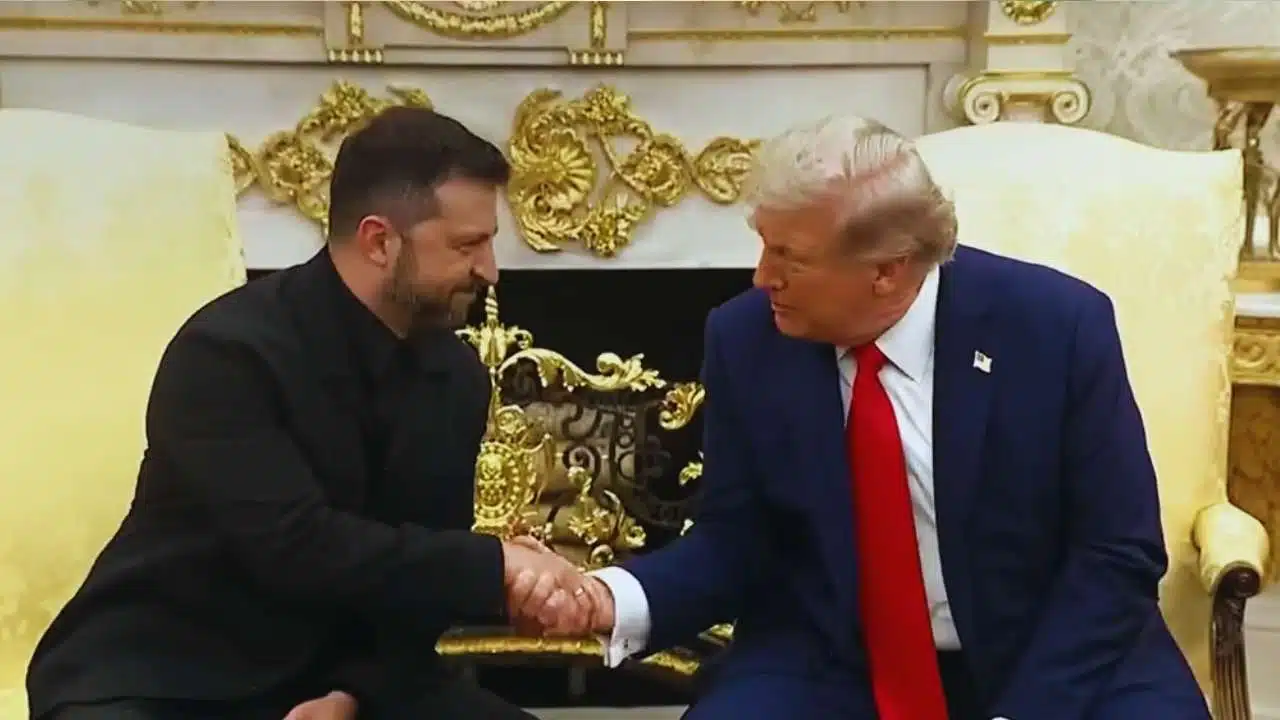
The Trump administration has signaled it is prepared to offer Ukraine legally binding security guarantees modeled on NATO’s Article 5, a move that would represent a significant shift in U.S. policy as peace negotiations surrounding the nearly four-year war with Russia intensify.
According to senior U.S. officials, the proposal is designed to provide Ukraine with meaningful long-term protection without committing the United States to unlimited military involvement. If finalized, the agreement would be submitted to the U.S. Congress for approval, underscoring its legal and political weight.
U.S. officials emphasize that the goal is to create a durable security framework that deters future Russian aggression while remaining realistic about American responsibilities. Although Ukraine would not formally join NATO under this plan, the guarantees are described as the strongest security commitment Kyiv has ever received outside alliance membership. This approach reflects growing concern in Washington that a ceasefire without credible deterrence could leave Ukraine vulnerable to renewed attacks.
A Three-Part Negotiation Framework
The ongoing negotiations between Washington and Kyiv are structured around three interconnected agreements: a peace settlement to end active hostilities, a security guarantees pact to protect Ukraine after the war, and a post-war reconstruction and economic support package. U.S. officials say addressing all three areas simultaneously gives Ukraine, for the first time, a comprehensive vision of what the post-war future could look like rather than a narrow ceasefire deal.
Under the current proposal, the war would end with Ukraine maintaining sovereignty over approximately 80 percent of its internationally recognized territory. Alongside security guarantees, Ukraine would receive extensive economic assistance aimed at rebuilding infrastructure, restoring industry, and stabilizing public finances. American officials describe this combined approach as essential to ensuring that peace, if reached, is sustainable rather than temporary.
Territorial Disputes and Nuclear Plant Tensions
Despite reported progress, major obstacles remain unresolved. Ukrainian President Volodymyr Zelenskyy has acknowledged that while both sides aim to reach a broad understanding by Christmas, disagreements persist over some of the most sensitive territorial issues. These include the Donetsk region, where fighting has been particularly intense, and control of the Zaporizhzhia nuclear power plant, the largest nuclear facility in Europe.
Russia currently occupies an estimated 19 to 20 percent of Ukrainian territory. Earlier versions of the peace framework were sharply criticized because they would have required Ukraine to cede the entire Donetsk region, including areas still under Ukrainian control. Following pushback from Kyiv and consultations with Western partners, that plan was revised, reducing the framework from 28 points to 20 and softening demands related to territorial concessions.
European Allies Urge Strategic Patience
Several European leaders have urged Ukraine not to rush into an agreement that would formalize territorial losses that were not decisively lost on the battlefield. Leaders from Germany, the United Kingdom, and France have been closely involved in drafting Ukraine’s counterproposal, reflecting Europe’s concern about the long-term security implications of any settlement.
Their involvement highlights broader European anxiety that a weak or rushed agreement could set a dangerous precedent, potentially encouraging future acts of aggression elsewhere on the continent. European officials have stressed that while ending the war is a priority, the terms of peace must respect Ukraine’s sovereignty and provide credible safeguards against renewed conflict.
Russia’s Reaction and the Meaning of Article 5
It remains uncertain whether Russia will accept the revised American proposals. Russian officials have rejected key elements of the plan, insisting that any agreement must align with earlier understandings reportedly discussed between Donald Trump and Russian President Vladimir Putin. Moscow’s position suggests continued resistance to security arrangements that would significantly strengthen Ukraine’s defensive posture.
NATO’s Article 5, which inspired the proposed guarantees, states that an armed attack against one member is considered an attack against all, while allowing each country to decide how it responds. In NATO’s long history, this principle has been invoked only once, after the September 11 attacks. Extending a similar concept to Ukraine, even outside NATO membership, would send a powerful message about Western commitment and could reshape the security landscape of Eastern Europe for years to come.