
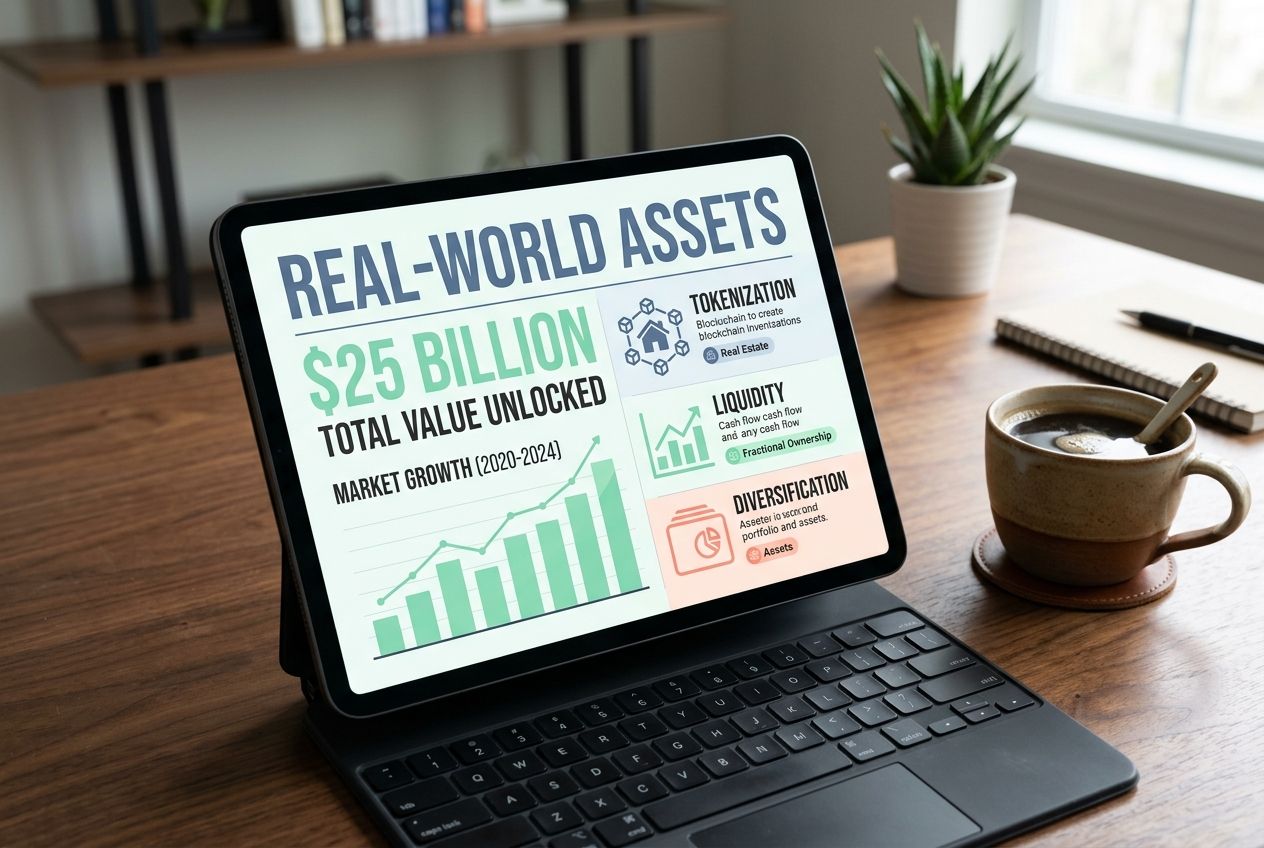
Have you ever felt frustrated watching huge investment deals slip away? Most of us feel locked out of owning premium real estate or valuable fine art. It feels unfair when only the ultra-wealthy get to play this game. I have some exciting news for you. Tokenization of Real-World Assets: The Next Big Crypto Trend is completely changing the rules for everyday investors. By early 2026, investors will have already moved over $25 billion in real-world assets onto the blockchain. This new technology lets anyone hold a secure, digital slice of physical items like buildings or gold.
I am going to walk you through exactly how this works. Grab a cup of coffee, and let’s explore how you can join this massive financial shift.
What Is Tokenization of Real-World Assets: The Next Big Crypto Trend?
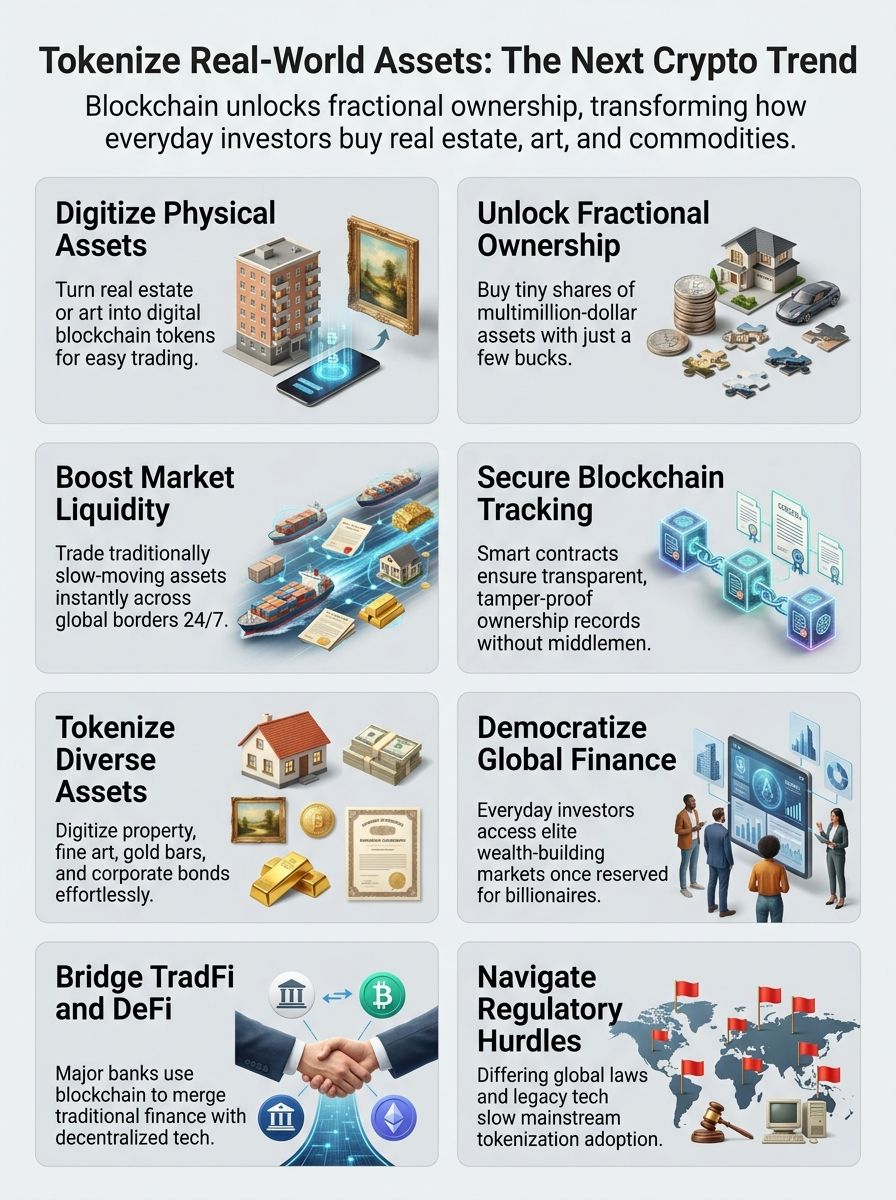
Tokenization is changing how people invest in costly items like property or fine art. It means taking a physical asset and turning its value into digital tokens on a secure blockchain.
Each token stands for a small, legal share of that asset. People can trade these digital tokens online just like regular stocks.
A 2026 report from Boston Consulting Group predicts this market could hit $16 trillion by 2030, showing just how fast this concept is growing.
Major companies use this process to give more people access to exclusive investment products. Blockchain technology helps prove your ownership rights without mountains of slow paperwork.
How Tokenization Works
Tokenization uses digital technology to change how we think about owning things. A public ledger keeps it all running smoothly and honestly.
The process of creating digital tokens
Digital tokens give real physical assets a brand-new digital form. I have broken down the standard process into five simple steps.
- Asset selection: Experts pick a valuable item like a gold bar or a commercial building.
- Legal binding: Lawyers create strict agreements to define who owns what under US law.
- Smart contract creation: Developers write automated rules using specific tools like the ERC-3643 token standard on Ethereum.
- Blockchain listing: The new tokens are listed on digital exchanges for public trading.
- Security audits: Independent firms check the computer code to protect users from errors or fraud.
Once complete, each digital token is linked directly to the underlying real asset.
Role of blockchain technology
Blockchain keeps records incredibly safe and easy to check. Popular public ledgers like Polygon and Avalanche track each digital asset from start to finish.
Smart contracts manage ownership and trades without expensive middlemen. Security firms like CertiK audit these contracts to ensure hackers cannot steal your funds.
Benefits of Tokenizing Real-World Assets
Tokenizing real assets is like cutting a massive cake into smaller slices. This tech brings much easier ways for anyone to join the investment party.
Enhanced liquidity
In the past, selling a commercial building could easily take months or years. Now, digital assets change that old story completely.
Tokenized assets can trade 24 hours a day, 7 days a week. Platforms like tZERO allow buyers to purchase small pieces instantly on a secure secondary market.
Fractional ownership
Fractional ownership lets more people invest by splitting massive price tags into tiny pieces. This process makes investing feel like taking small steps instead of climbing a mountain.
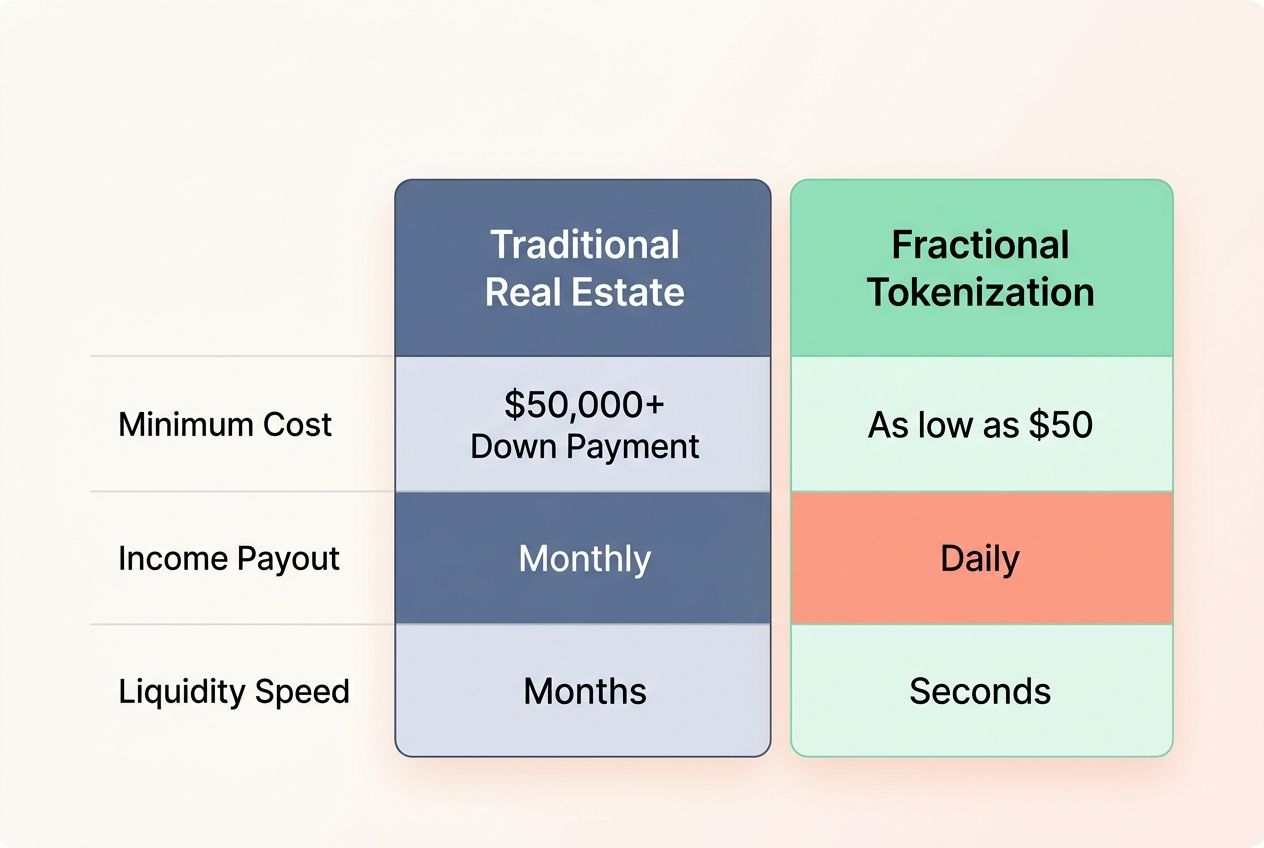
| Feature | Traditional Real Estate | Fractional Tokenization |
|---|---|---|
| Minimum Cost | $50,000+ Down Payment | As low as $50 |
| Income Payout | Monthly | Daily |
| Liquidity Speed | Months | Seconds |
For example, a platform called Lofty AI lets you buy fractions of US rental properties for just $50. They even pay your rental income daily using the Algorand blockchain.
Improved transparency and security
Blockchain keeps a crystal clear record of every single trade. Anyone can use public tools like Etherscan to verify the history of an asset at any time.
This transparent system helps stop title fraud, which costs the traditional real estate industry billions of dollars. Hackers find it almost impossible to change these decentralized records.
Faster and more efficient transactions
Tokenization speeds up trading and payments in capital markets. Smart contracts move digital assets almost instantly by cutting out slow paperwork.
- No more waiting days: Traditional stock trades take two days to settle, known as T+2.
- Instant transfers: Blockchain trades offer T+0 settlement, meaning the deal finishes instantly.
- Lower fees: Automated checks help people enter global investment markets for pennies.
- Cross-border ease: You can send ownership tokens to someone in another country in seconds.
Key Use Cases of Asset Tokenization
People are turning physical things into digital tokens at a record pace. This shift is sparking big changes in how value moves online.
Real estate
Real estate tokenization splits property into affordable digital tokens. This method makes it possible for someone to invest with pocket change instead of needing thousands upfront.
Companies like RealT tokenize properties in cities like Detroit. Owners see their rental income drop into their secure wallets every single day.
Fine art and collectibles
In the past, only billionaires could claim a famous painting at an auction. Tokenization changes that old game entirely.
Platforms like Masterworks allow everyday investors to buy shares of multi-million dollar paintings by artists like Banksy or Picasso. This brings rare collectibles to small investors for just a few hundred dollars.
Commodities like gold and oil
Gold and oil are now incredibly easy to buy, sell, and trade in small pieces. You no longer need a giant vault to hold precious metals safely.
A great example is Paxos Gold (PAXG). Each token represents exactly one troy ounce of a London Good Delivery gold bar securely stored in Brink’s vaults.
This structure brings faster trades and better liquidity to massive capital markets.
Financial instruments such as bonds and equities
Bonds and equities help companies raise money to grow. Tokenization turns these traditional tools into digital assets on the blockchain.
- Huge adoption: Franklin Templeton launched the OnChain U.S. Government Money Fund (FOBXX).
- Massive scale: By 2026, this single fund will hold over $740 million in assets.
- Modern networks: It runs smoothly on popular networks like Stellar and Polygon.
- Instant access: Investors see their returns update in real time without paper statements.
Challenges and Considerations
There are definitely a few bumps in the road for tokenization. Experts are working hard to tackle these issues head-on.
Regulatory hurdles
Laws for digital assets do not perfectly match across all countries. The US Securities and Exchange Commission uses rules like Regulation D to monitor sales closely.
These strict rules often limit early access to wealthy, accredited investors. To fix this confusion, Europe recently passed the Markets in Crypto-Assets (MiCA) regulation to create clear, fair rules for everyone.
Technology adoption
Legacy banking systems often struggle to connect with new tech like smart contracts. Older computer systems trip over the fast pace of modern financial innovation.
To bridge this gap, the Swift banking network recently tested Chainlink’s Cross-Chain Interoperability Protocol (CCIP). This tool helps traditional banks talk directly to blockchains.
Market fragmentation
Fast technology adoption often leaves annoying gaps between different platforms. Liquidity gets split between major networks like Ethereum, Solana, and Arbitrum.
- The bridge problem: A token created on one network cannot naturally trade on another.
- Price swings: Divided markets can cause asset prices to swing more drastically.
- Developer focus: Builders are actively creating cross-chain bridges to link these fragmented markets together.
- Unified future: Better software tools will soon make these network boundaries invisible to you.
The Impact of Tokenization on Finance
Tokenization opens wide doors for more people to invest with total ease. It pulls traditional finance and modern crypto closer together.
Democratization of investment opportunities
Every day, people can now access premium capital markets to build wealth. Digital tokens let them buy small pieces instead of needing massive cash reserves.
For example, retail investors can now earn yields from private credit funds. These exclusive funds used to require a strict one-million-dollar minimum investment.
Bridging traditional finance (TradFi) and decentralized finance (DeFi)
This new access opens exciting doors for both old and new markets. Wall Street powerhouses now play on the exact same playground as crypto startups.
The MakerDAO protocol is a perfect example of this bridge. They currently back over $1 billion of their DAI stablecoin with tokenized US Treasury assets, mixing crypto speed with government safety.
Real-World Examples of RWA Tokenization
You can easily spot big brands jumping into asset management right now. Fresh platforms crop up fast to make these digital assets simple to use.
Tokenization platforms and ecosystems
Tokenization platforms help turn real-world physical items into tradeable digital tokens. These five platforms lead the charge today.
- Securitize: This powerhouse recently surpassed $1 billion in tokenized value for major institutional clients.
- OpenSea: A massive marketplace focused on digital tokens for art and unique collectibles.
- RealT: Transforms property ownership by tokenizing physical real estate across the United States.
- Polymath: Offers specialized software tools to launch fully compliant security tokens.
- Centrifuge: Helps small businesses tokenize daily assets like unpaid invoices to secure fast cash loans.
Successful implementations by major companies
Major global companies are totally changing capital markets with this technology. These five success stories prove digital assets are extremely powerful.
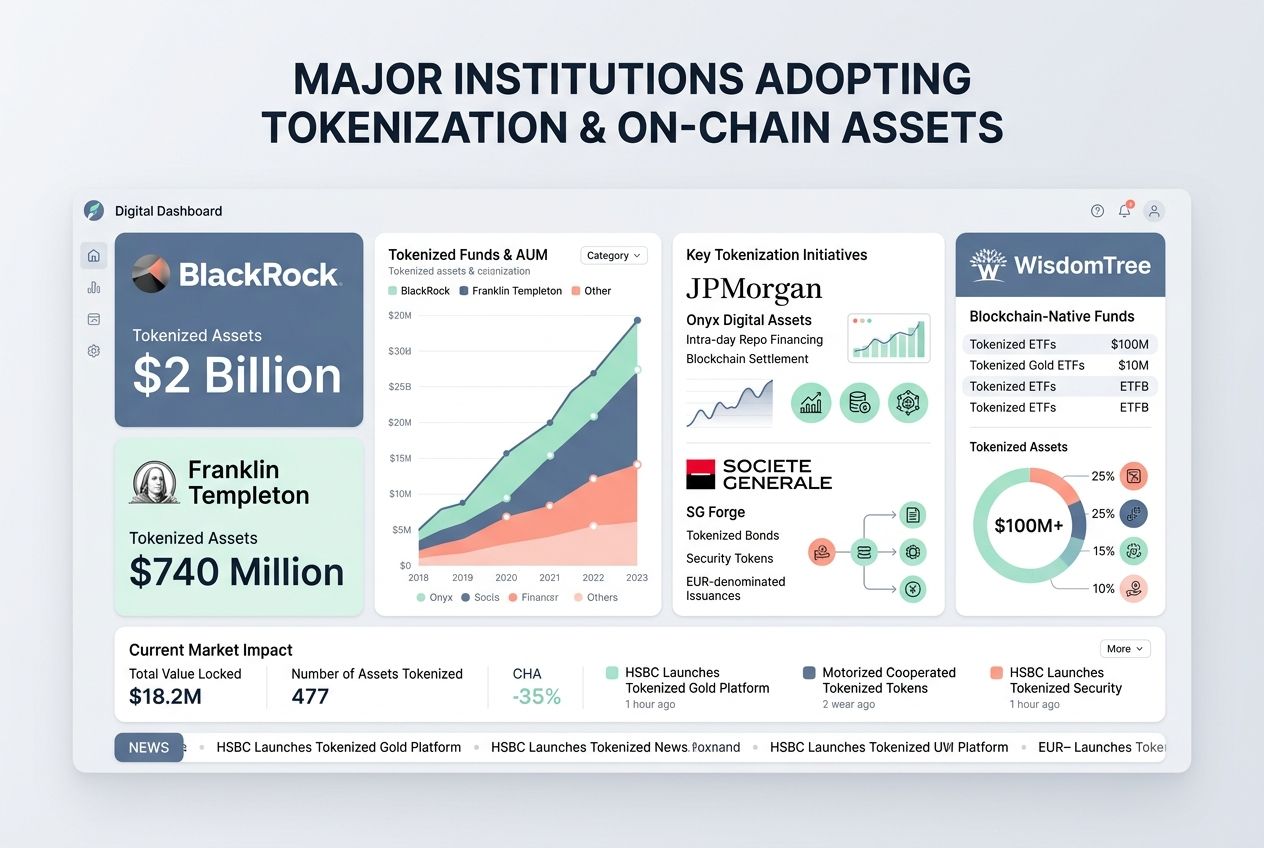
- BlackRock: Their BUIDL fund crossed $2 billion in assets and recently paid out $100 million in dividends.
- Franklin Templeton: Holds over $740 million in their tokenized U.S. government money fund.
- JPMorgan: Built the Onyx blockchain platform to move massive amounts of cash and securities instantly.
- Societe Generale: This French bank issued millions in digital bonds directly on the Ethereum network.
- WisdomTree: Offers digital funds where people can buy shares directly through a simple phone app.
The Role of Governance and Compliance
Rules and strict laws shape how digital assets can safely operate. Staying updated on these changes keeps your money safe.
Regulatory frameworks for tokenized assets
Lawmakers desperately want investor safety and less risk of crime with blockchain investments. Platforms must check customer identities just like a traditional bank.
Modern token standards, like the ERC-3643 standard, actually bake KYC (Know Your Customer) rules directly into the computer code. This guarantees that only verified people can hold the security tokens.
Importance of investor protection
Bad actors can sometimes take advantage of people in confusing digital markets. In fact, Chainalysis reported over $3.8 billion worth of crypto was stolen by hackers in 2022 alone.
To protect investors, institutional funds now mandate strict smart contract audits from firms like Hacken or CertiK. They also use secure enterprise vaults like Fireblocks to hold the digital assets safely.
The Future of Real-World Asset Tokenization
Fresh ideas keep popping up daily to make tokenization even more exciting. Get ready for its massive impact on economies all over the globe.
Emerging trends and innovations
Innovations in tokenization are completely changing how people view digital assets. Here are four massive trends shaping the market right now.
- Tokenized Treasury farms: Investors now earn high yields on on-chain versions of US government bonds.
- Fractional vacation homes: People are pooling funds to buy shares of luxury vacation properties online.
- DeFi lending: Users pledge their tokenized physical assets as safe collateral to get instant digital loans.
- Automated RegTech: New software instantly checks local tax and compliance laws before any token trades.
Long-term implications for global markets
Tokenization could permanently change capital markets for the better. Small investors will soon trade shares of skyscrapers as easily as buying a cup of coffee.
A detailed report by Boston Consulting Group estimates that $16 trillion in real-world assets will be tokenized globally by 2030.
By early 2026, the market will have already reached over $25 billion in on-chain value. These long-term trends prove that financial innovation is making investing far more open than ever before.
Closing Thoughts
People clearly want easier ways to own a piece of prime real estate, gold, or fine art. Blockchain lets this happen by turning these valuable things into secure digital tokens.
Now, almost anyone can access high-level capital markets with very little money and zero stress. As more major firms launch secure products, this financial innovation will keep moving forward at lightning speed.
The next time you hear about Tokenization of Real-World Assets and the big crypto trend, you will know exactly how it works. You can confidently start exploring these exciting new investment options today.