
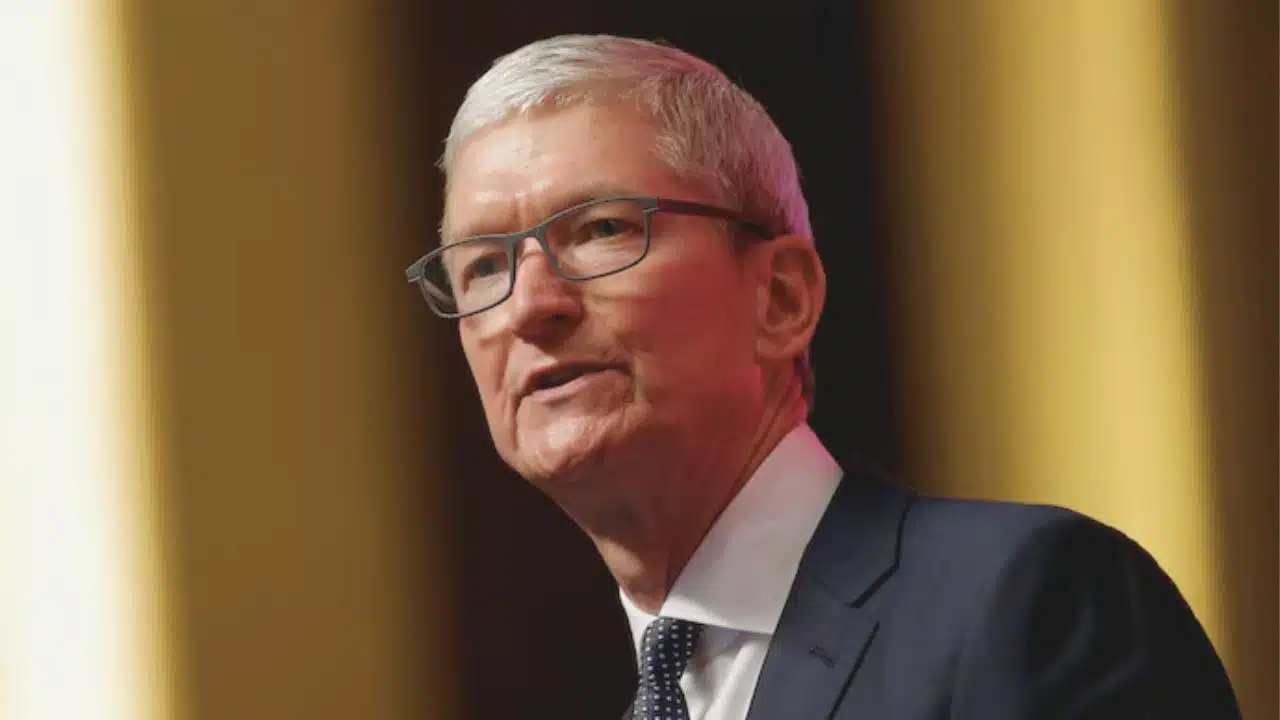
Tim Cook is reportedly preparing to step down as Apple CEO as soon as next year, with the company’s board intensifying succession planning and hardware chief John Ternus emerging as the leading internal candidate to take over the world’s most valuable tech company.
FT report sparks leadership questions
According to a report first detailed by the Financial Times, Apple’s board and senior executives have “recently intensified” preparations for Cook’s eventual departure after more than 14 years in the top job, opening the door for a potential leadership handover as early as next year. The discussions focus on ensuring a smooth transition at a company worth around 4 trillion dollars, where any hint of instability at the top could ripple across global markets and the broader tech sector.
The report suggests that while no formal decision or timetable has been approved, the internal planning has moved from theoretical long‑term scenarios to more concrete succession mapping, including detailed evaluations of potential successors. Apple is not expected to name a new CEO before its late‑January earnings call, which covers the crucial holiday quarter and is seen as too sensitive a moment for such a disruptive announcement.
John Ternus emerges as frontrunner
Multiple reports indicate that John Ternus, Apple’s Senior Vice President of Hardware Engineering, has emerged as the most likely candidate to succeed Cook if the board decides to move ahead with a transition window in 2026. Ternus, 50, has led the hardware organisation behind key products like the iPhone, iPad and Mac, and is considered a steady internal figure who understands both Apple’s design culture and its increasingly complex supply chain.
Insiders quoted in several outlets stress that no final decision has been taken and that other senior leaders remain in the frame, but the momentum of internal conversations appears to centre on Ternus. Choosing a seasoned hardware leader would signal continuity at a moment when Apple is doubling down on custom silicon, device‑integrated AI, and new categories like spatial computing with Vision Pro.
Why Cook might step aside now
Cook, who turned 65 this month, has previously hinted he would not remain in the CEO role for another decade, saying in a 2021 interview that he would “probably” step down within 10 years. With his 14th anniversary as chief executive approaching, those comments now appear aligned with the timeline described by people familiar with the board’s thinking, who say the transition has been long‑planned rather than reactive.
Sources close to Apple emphasise that the potential leadership change is not related to the company’s current performance, with Apple heading into what is expected to be a strong end‑of‑year sales period for the iPhone and services. Instead, the push appears driven by classic succession logic: allowing an orderly handover while Cook is still viewed favourably by investors, employees, and customers, and while markets are relatively calm.
A historic tenure at the helm
Since taking over from Steve Jobs in August 2011, Cook has presided over the most profitable era in Apple’s history, overseeing the company’s transformation into a multi‑trillion‑dollar giant. Under his leadership, Apple expanded beyond the iPhone into a powerful ecosystem of wearables and services, including Apple Watch, AirPods, Apple TV Plus, Apple Pay, and a rapidly growing subscription business.
Apple’s market value has ballooned roughly tenfold during Cook’s tenure, with its stock gaining around 1,800 percent as the company leaned into custom chips, vertical integration, and recurring revenue. Even amid slowing smartphone demand and regulatory pressure, Apple has maintained hefty margins and a reputation for operational excellence, qualities closely associated with Cook’s background in supply‑chain management.
What succession planning looks like inside Apple
Reports describe a methodical process unfolding within Apple’s highest ranks, with the board and senior leadership mapping out scenarios for both timing and communication of any CEO transition. The company is believed to be weighing options that could include announcing a successor well ahead of the actual handover date, or creating an executive chair or advisory role for Cook to ensure continuity during the first years of a new CEO.
For a company of Apple’s scale, succession is typically choreographed to minimise market shock: that often means pairing the leadership announcement with reassuring signals on strategy, capital returns, and long‑term product roadmaps. Any shift at the top will also likely be accompanied by board adjustments and clearer public messaging about how Apple intends to navigate its next phase in artificial intelligence, mixed reality, and potentially renewed automotive ambitions.
Not a done deal, but markets are watching
Despite the flurry of reports, Cook’s departure remains unconfirmed and Apple has declined to comment on the speculation, in keeping with its longstanding policy of secrecy around leadership moves. Analysts caution that “as soon as next year” is a broad window rather than a fixed deadline, and that the board could ultimately decide to extend Cook’s tenure if market conditions or internal priorities warrant it.
Nevertheless, investors and employees are treating the intensified planning as a clear signal that Apple is entering a transition era, even if the exact date of change remains fluid. For now, Cook continues to lead the company into another critical holiday season, but the conversation in Cupertino—and on Wall Street—is increasingly about who will hold the reins for Apple’s next decade.