Have you ever stood at the base of a mountain and felt just how small we really are? It’s a feeling many of us chase on weekend hikes or ski trips. But while we admire the view, there is a quiet crisis happening at the peaks that affects us all—even if you live thousands of miles from the nearest trail.
You might be surprised to learn that mountains act as the world’s water towers. They don’t just look majestic; they actively capture and store the water that eventually flows from our taps.
That is why International Mountain Day on December 11 is not just another date on the calendar. This year is special because the United Nations has declared 2025 the International Year of Glaciers’ Preservation.
So, grab a warm drink and let’s walk through what this means for you. I’ll share the simple steps we can all take to help keep these giants standing tall.
Key Takeaways
- Mark the Date: International Mountain Day is December 11, and the 2025 theme is “Glaciers Matter.”
- The Big Year: The UN has officially designated 2025 as the International Year of Glaciers’ Preservation.
- Why It Matters: Glaciers store about 70% of the Earth’s freshwater, acting as a critical lifeline for nearly two billion people.
- Local Impact: In the US, regions like the Colorado River Basin rely on mountain snowmelt for 85% of their water flow.
- How to Help: You can participate by joining local cleanup drives, using the #MountainsMatter hashtag, or supporting citizen science projects.

Theme for International Mountain Day 2025
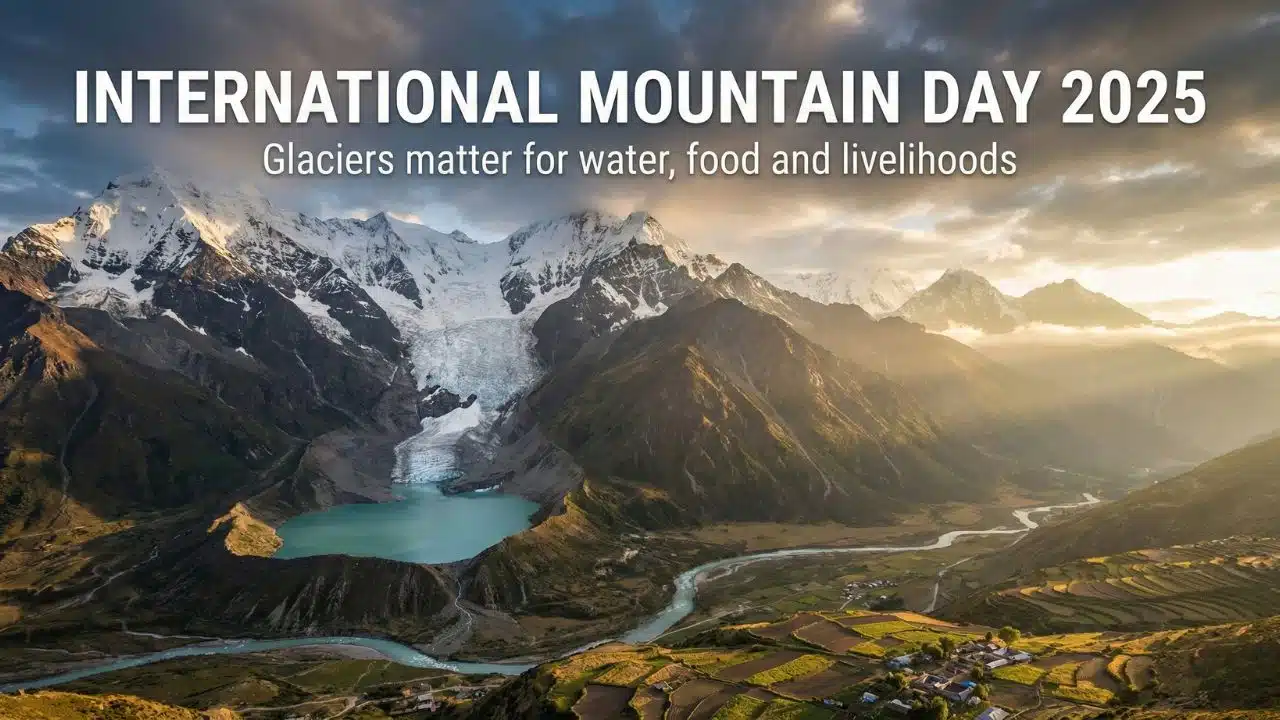
The theme “Glaciers matter for water, food and livelihoods in mountains and beyond” is taking center stage this year. It spotlights the urgent reality of melting ice sheets and shifting water cycles. Organizations like the FAO (Food and Agriculture Organization) and the United Nations are pushing for a global conversation on glacier retreat, clean energy, and climate action.
What does “Glaciers Matter” really mean?
Think of glaciers as the planet’s savings account for water. “Glaciers Matter” is a campaign to show how these icy reserves support life far beyond the mountains.
According to the UN, glaciers and ice sheets hold roughly 70 percent of the world’s freshwater. That is a staggering amount. Nearly two billion people rely on this meltwater for drinking, growing food, and generating power.
“Glaciers in Western Canada and the US lost mass at a rate of 22.2 gigatons per year between 2021 and 2024. That is a twofold increase compared to the previous decade.” — US Geological Survey (USGS)
As the planet warms, this savings account is being drained too quickly. Thawing permafrost and shrinking ice sheets create immediate dangers, like sudden floods that can wipe out homes and critical infrastructure downstream. But the long-term risk is even scarier: running out of water when we need it most.
For Indigenous peoples, this is also a cultural crisis. The loss of these landscapes often means the loss of sacred sites and a way of life that has existed for centuries. It affects everyone, from the farmer in the valley to the city dweller relying on hydropower.
Why This Hits Close to Home in the US
It is easy to think of melting glaciers as a problem for the poles, but the impact is happening right in our backyard. We see it clearly in places like Glacier National Park in Montana.
Between 1966 and 2015, every single named glacier in the park got smaller, with the total surface area shrinking by about 34%. This isn’t just a loss of scenery; it’s a warning sign for our water supply.

The Colorado River Connection
If you live in the West, your water security is tied directly to the mountains. The Colorado River supplies water to millions of people and vast stretches of farmland. Research shows that about 85% of the river’s flow originates as snowmelt from the Upper Basin mountains.
When snowpacks shrink or melt too early, that water system gets thrown off balance. A 2024 study on the basin found that while we might get more rain, declining groundwater levels are reducing the actual streamflow. This threatens everything from the lettuce on your dinner plate to the electricity powering your home.
Key Objectives of the Day
International Mountain Day aims to turn these scary statistics into action. The goal is to urge people everywhere to support sustainable living and smart resource use.
How does this day raise awareness?
The day works by shining a light on the specific impacts of rising global temperatures. It helps move the conversation from “climate change is bad” to “here is exactly what we are losing.”
For example, the FAO partners with groups like the International Climbing and Mountaineering Federation to share facts and spark talks. They focus on how glacier retreat puts water security at risk for millions downstream.
They also highlight biodiversity hotspots. Mountains are home to unique animals and plants that can’t survive elsewhere. Threats like landslides, glacier lake outburst floods (GLOFs), and soil erosion put these ecosystems in harm’s way.
Comparing the Risks

| Area of Impact | The Specific Threat | Why It Matters to You |
|---|---|---|
| Water Security | Disappearing glaciers reduce seasonal meltwater. | Less reliable water for tap water and farming during dry summer months. |
| Safety | Thawing permafrost destabilizes slopes. | Increases the risk of sudden landslides and floods near mountain towns. |
| Energy | Inconsistent river flow affects dams. | Many regions rely on hydropower for clean, affordable electricity. |
How does it promote sustainable mountain development?
The FAO uses this day to teach people about smart land management in high places. It is about finding ways to live and work in the mountains without destroying them.
Partners hold meetings on glacier preservation and cleaner energy. They share knowledge using “SDG lists” (Sustainable Development Goals) to spread ideas on sustainable growth. This global teamwork involves scientists, Indigenous peoples, and local leaders working together to protect downstream populations while supporting healthy forests and responsible tourism.
Activities and Global Participation
People across the globe join hands for workshops and lively events that focus on glacier preservation. If you are wondering how you can get involved, there are plenty of options.
What events and campaigns engage communities?
Local and global groups mark International Mountain Day with a variety of activities. You might find lectures, book fairs, and science talks at local universities or community centers. The FAO often hosts online events with live translation, so you can tune in from anywhere.
Here are a few specific ways you can participate this year:
- Join a Citizen Science Project: Use apps like iNaturalist to record plant and animal sightings on your next hike. This data helps scientists track how mountain species are shifting due to climate change.
- Support the “Reading Mountains” Festival: Look for local libraries or schools hosting events that celebrate mountain literature and culture.
- Get Social: Use the hashtag #MountainsMatter on social media. Share a photo of your favorite peak and a fact about glacier loss to spread the word.
Explorers and mountaineering societies also set up special climbs to show how climate change affects these ecosystems. Schools highlight youth projects, giving awards for creative solutions that help preserve our icy peaks.
Takeaways
We rely on mountains more than we realize. They feed our rivers, water our cities, and support the farms that put food on our tables. Keeping these icy giants safe takes a mix of strong science, local voices, and global teamwork.
This December 11, take a moment to think about the connection between that distant snow-capped peak and the glass of water in your hand. Whether you join a local event or just share a post online, your voice adds to the call for action. Working together today ensures we have safe rivers and stronger communities tomorrow.
FAQs on International Mountain Day
1. What is International Mountain Day 2025 all about?
International Mountain Day 2025 focuses on the theme “Glaciers matter for water, food and livelihoods” and marks the beginning of the UN’s International Year of Glaciers’ Preservation. It serves as a global call to action to protect these frozen water towers that ensure water security for half of humanity before they vanish.
2. Why do mountains matter in the fight against climate change?
Mountains are the first to feel the heat, and a 2024 report confirmed that every single one of the world’s 19 major glacier regions lost ice mass for the third year in a row. This rapid glacial melt destabilizes cryospheric systems and disrupts the global climate system, accelerating warming effects for everyone.
3. How are vulnerable mountain communities affected by environmental crisis?
Families face immediate physical threats, such as the August 2024 glacial lake outburst floods that devastated the village of Thame in Nepal. Beyond sudden disasters, indigenous peoples report that rising global temperatures are destroying the traditional agriculture sector cycles they have relied on for centuries.
4. What does the United Nations say about protecting mountains?
The United Nations declared 2025 the International Year of Glaciers’ Preservation to urgently mobilize global collaboration for these endangered ecosystems. Through the FAO, they are driving a “Five Years of Action” campaign to implement clean energy solutions that protect the biodiversity hotspots found in these high-altitude regions.
5. How does scientific research support sustainable development in mountainous areas?
Advanced monitoring technology helps experts track dangerous shifts, such as the satellite data used to watch the Suicide Basin before the major 2024 floods in Juneau, Alaska. This research is essential for designing critical infrastructure that can withstand the impacts of climate change and keep downstream populations safe.
6. Why should we care about the International Year of Glaciers’ Preservation being linked to this day?
You should care because recent data shows tropical glaciers in the Andes are now melting ten times faster than the global average, putting the fresh water supply for millions at immediate risk.