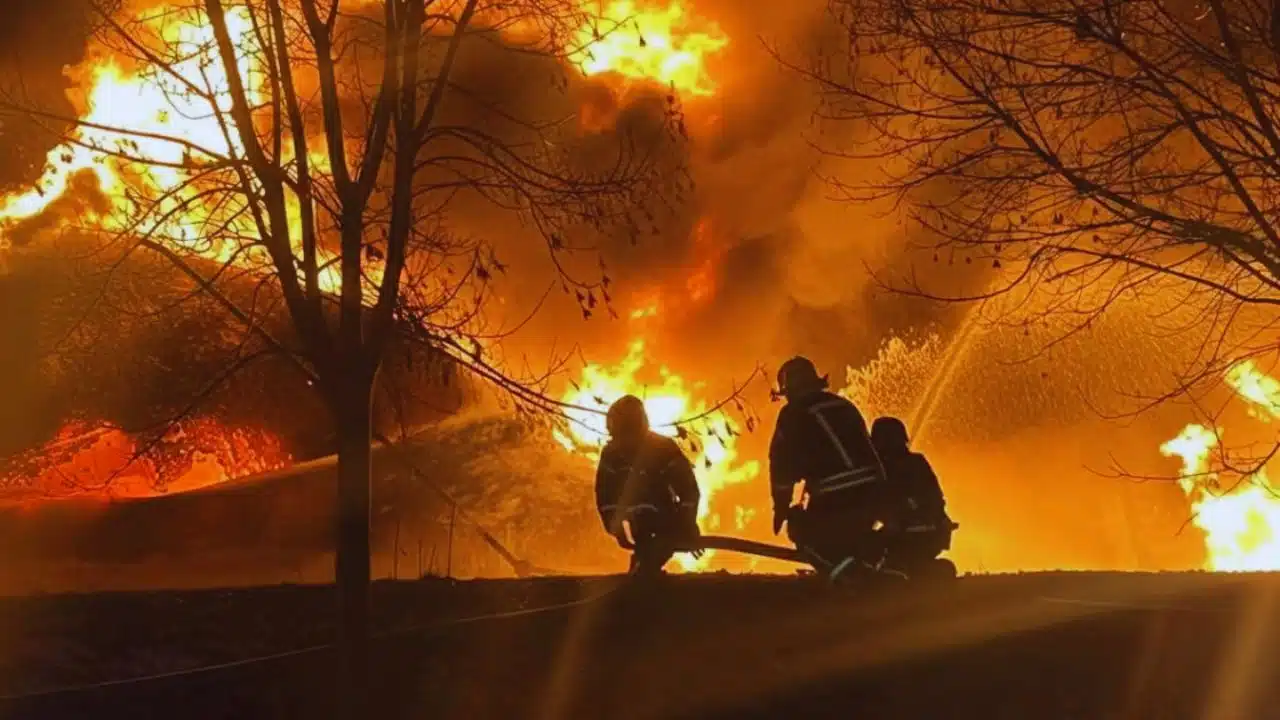
Ukraine said Russia launched 205 attack drones on New Year’s Eve, with 176 downed or jammed and 24 strikes recorded at 15 locations, while Russia-installed officials in occupied Kherson reported a deadly Ukrainian drone attack during holiday celebrations.
What Ukraine reported
Ukraine’s Air Force said the drone attack began at 6:00 p.m. on December 31 and continued into the morning of January 1. The Air Force said Russia used 205 drones, including Shahed-type and Gerbera-type attack UAVs, alongside other drone types. It reported launches from multiple directions, including Orel, Bryansk, Kursk, Primorsko-Akhtarsk, and Millerovo in Russia, as well as from Chauda and Hvardiiske in occupied Crimea and from occupied parts of Donetsk.
Ukraine’s Air Force said the attack was repelled using aircraft, surface-to-air missile units, electronic warfare and unmanned systems units, and mobile fire groups. As of 8:30 a.m. on January 1, it reported 176 drones were shot down or suppressed (jammed) across northern, southern, and eastern regions. The Air Force also reported 24 drones hit 15 locations, and warned the attack was still continuing at that time.
Key figures (as reported by officials)
| Metric | Figure | Who reported it |
| Total drones launched at Ukraine | 205 | Ukraine’s Air Force (Telegram, via media reports) |
| Drones downed/suppressed | 176 | Ukraine’s Air Force |
| Recorded drone hits | 24 | Ukraine’s Air Force |
| Impact locations recorded | 15 | Ukraine’s Air Force |
| Volyn subscribers without power | 103,341 | Volyn officials / local power utility cited in reports |
| Khorly (occupied Kherson) deaths claimed | 24 | Moscow-installed Kherson official |
| Khorly (occupied Kherson) injuries claimed | 50+ | Moscow-installed Kherson official |
Damage, outages, and targets
Ukrainian officials said the strikes focused on energy infrastructure, a pattern that can create cascading effects beyond the immediate impact sites. President Volodymyr Zelenskyy said the attack affected the Volyn, Rivne, Zaporizhzhia, Odesa, Sumy, Kharkiv, and Chernihiv regions, and he described energy facilities as the main targets. He said emergency services and power engineers were working in affected areas to restore services and address damage.
Regional reporting from Volyn indicated substantial electricity disruptions after strikes on energy facilities. Volyn authorities said more than 103,000 subscribers were left without power following overnight attacks, with work continuing at impact sites. Separate reporting also described fires linked to strikes in and around Lutsk and the Kovel district, while saying early reports indicated no casualties in those locations.
Russia-installed officials’ claim of a deadly strike in occupied Kherson
Separately, Russia-installed authorities in the occupied part of Ukraine’s Kherson region alleged that Ukrainian drones struck civilian locations during New Year celebrations. The Moscow-installed regional official, Vladimir Saldo, said three drones hit a café and a hotel in Khorly on the Black Sea coast, claiming at least 24 people were killed and more than 50 injured. Saldo also claimed one drone carried an incendiary mixture and that the strike caused a fire that was later extinguished.
These claims were not independently verified in the cited reports, and public reporting noted that Ukraine did not immediately comment on the allegation. The incident underscores how drone warfare has expanded beyond front lines, with both sides accusing the other of targeting or endangering civilians.
Why the New Year’s Eve attacks matter
The scale of the reported drone launch—205 in a single wave—highlights the continued use of massed UAV attacks designed to test and overwhelm air defenses and to probe for weak points. Ukraine’s Air Force reporting suggests Russia combined different drone types and multiple launch corridors, which can complicate detection and interception. Zelenskyy used the New Year attack to renew appeals for faster delivery of air-defense support, arguing that delays carry direct risks for civilian life and critical infrastructure.
The focus on energy sites is significant because even limited damage can disrupt heating, water supply, transport, and communications, especially during winter conditions. The Volyn outages reported by regional officials illustrate how attacks far from the heaviest ground fighting can still produce widespread civilian impact. Meanwhile, the deadly incident alleged in occupied Kherson—if confirmed—would show the parallel risk of civilian harm from drones used over contested or occupied areas.
Timeline of the main New Year claims
| Time (local) | Event | Details (as reported) |
| Dec 31, 6:00 p.m. | Drone wave begins | Ukraine’s Air Force said the launch period started at 18:00 and continued overnight. |
| Jan 1, 8:30 a.m. | Air defense update | Ukraine reported 176 drones downed/suppressed, with 24 hits at 15 locations and the attack still ongoing. |
| Jan 1 | Zelenskyy statement | Zelenskyy said more than 200 drones targeted energy facilities across seven regions and urged faster air-defense deliveries. |
| Jan 1 (overnight) | Khorly allegation | Russia-installed official claimed drones hit a café and hotel in Khorly, killing 24 and injuring 50+. |
Final thoughts
The first hours of 2026 opened with intensified drone warfare claims on both sides: Ukraine reporting a large-scale Russian strike aimed at infrastructure, and Russia-installed officials alleging a deadly Ukrainian strike in occupied Kherson. In the near term, attention will remain on restoration of power in affected regions, Ukraine’s ability to sustain interception rates during repeated mass launches, and whether additional evidence emerges about the Khorly incident. Further official updates are likely as damage assessments continue and as each side releases follow-on claims about targets, casualties, and counterstrikes.