
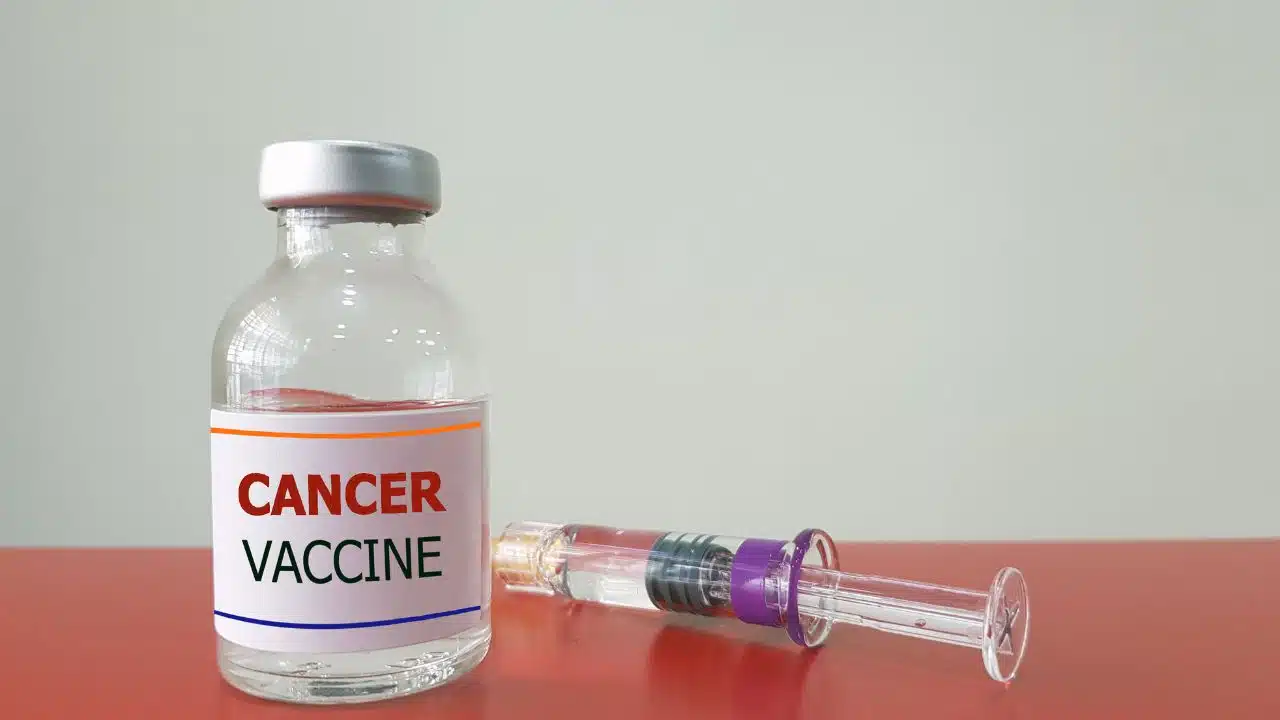
In a development that could reshape the future of cancer care, Russian researchers have revealed that their experimental vaccine, Enteromix, has achieved 100% efficacy and safety in early human trials.
The announcement, made at the 2025 St. Petersburg International Economic Forum, has generated excitement among doctors, scientists, and patients around the world. While experts urge caution until larger trials are completed, the results so far highlight a potentially groundbreaking step in oncology.
How Enteromix Was Developed
Enteromix is the result of years of coordinated work by two leading Russian institutions:
- The National Medical Research Radiological Centre (NMRRC)
- The Engelhardt Institute of Molecular Biology
The vaccine is built on mRNA technology, the same platform used successfully during the COVID-19 pandemic to create rapid-response vaccines by Pfizer-BioNTech and Moderna.
The mRNA platform works by teaching the immune system to recognize tumour-specific proteins and attack them. Unlike a general drug or therapy, Enteromix is personalized for each patient. Scientists first map the genetic profile of a patient’s tumour and then design an mRNA vaccine that “trains” the body to detect and destroy those cancer cells.
This approach represents a shift away from one-size-fits-all cancer therapies. Instead of giving the same drug to thousands of patients, each Enteromix dose is custom-made based on a tumour’s unique genetic mutations.
What Happened in the Early Trials?
The Phase I clinical trial involved 48 patients with colorectal cancer. According to the research team:
- All patients showed a positive immune response.
- Tumours in participants shrunk significantly.
- No serious side effects were reported.
This is striking because Phase I trials are usually designed to test safety and tolerance, not to prove efficacy. Yet, Enteromix delivered both.
The results were described by Russia’s Federal Medical and Biological Agency (FMBA) as so promising that the vaccine may soon move toward wider approval. However, they also acknowledged that more robust trials (Phase II and III) are required to confirm whether these early successes hold up in larger, more diverse populations.
Why Enteromix Is Different From Past Cancer Vaccines
Attempts to create cancer vaccines date back decades, but most failed to show meaningful results. Enteromix stands out for two main reasons:
- Personalized Immunotherapy: Each patient’s tumour is genetically profiled, and the vaccine is custom-built. This increases the chances of the immune system targeting the cancer accurately.
- Use of mRNA Technology: Traditional cancer vaccines took years to develop and scale. With mRNA, scientists can design new vaccine sequences rapidly. If Enteromix works for colorectal cancer, the method could be adapted for other cancers in a fraction of the usual time.
These features put Enteromix at the forefront of modern immuno-oncology—a field that focuses on activating the body’s own immune system to fight cancer more safely than chemotherapy or radiation.
Expert Views: Promise and Caution
While the results sound remarkable, many global cancer specialists are urging measured optimism:
- Small Sample Size: Only 48 patients participated, which is too few to establish universal conclusions.
- Short Follow-up: Long-term survival benefits are not yet known. Some cancers can reappear after initial remission.
- Need for Peer Review: Independent scientific review and larger randomized trials are necessary to confirm these findings.
Global biotech leaders like Moderna and BioNTech are also developing personalized mRNA cancer vaccines, with some already in Phase II and III trials. This means Enteromix is entering a highly competitive but promising scientific race.
What This Means for Global Patients
If larger trials confirm the results, Enteromix could revolutionize cancer care in several ways:
- Safer Treatment: Unlike chemotherapy, which damages healthy cells, mRNA vaccines are designed to target only cancer cells, reducing harsh side effects.
- Personalized Medicine: Patients would receive treatments tailored to their tumour, increasing effectiveness.
- Faster Adaptability: mRNA platforms can be quickly modified for different cancer types, including cervical, lung, and breast cancers.
What It Could Mean for India
Cancer is one of the leading causes of death in India, with colorectal, cervical, and breast cancers being particularly common. If Enteromix or similar vaccines become widely available, it could be transformative.
However, several challenges remain:
- Regulation – The vaccine would need approval from Indian health authorities.
- Cost and Access – Personalized treatments are expensive. Making them affordable for millions of patients in India would require government subsidies or partnerships.
- Infrastructure – Personalized vaccines need advanced genomic profiling labs and cold-chain storage, which are not widely available across India.
If these barriers are overcome, Indian patients could benefit significantly from this new approach to cancer treatment.
Potential Challenges Ahead
Even if Enteromix proves effective in larger studies, several hurdles remain:
- Production Complexity – Each vaccine must be individually made, requiring specialized labs.
- Distribution – mRNA vaccines need very low-temperature storage, which is hard to achieve in many regions.
- Equity – Wealthier countries may access the vaccine first, leaving low- and middle-income nations behind.
These factors will determine whether Enteromix becomes a global standard—or remains a niche solution.
The announcement of Enteromix’s early trial results has sparked worldwide interest. A vaccine that is safe, personalized, and capable of shrinking tumours in every patient tested is an extraordinary claim. If larger studies confirm these findings, Enteromix could mark the beginning of a new era in cancer treatment—one where patients receive precision therapies designed for their unique tumour, with fewer side effects and better outcomes.
For now, though, experts advise cautious optimism. The road from Phase I success to global use is long and complex, but Enteromix has undeniably given the world a reason to hope that the fight against cancer is entering a new chapter.
The Information is Collected from India Today and NDTV.