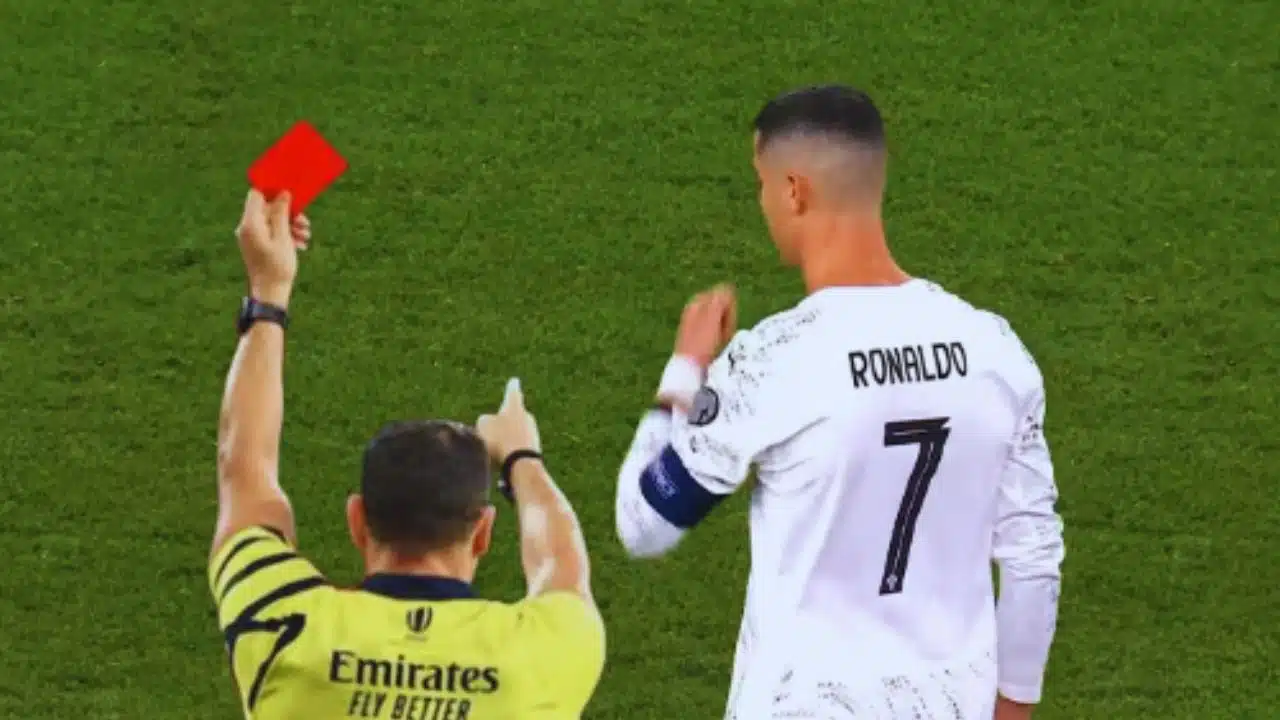
Cristiano Ronaldo, one of the most decorated athletes in football history, now faces one of the most serious disciplinary challenges of his international career. In a surprising and emotionally charged moment during Portugal’s 2–0 loss to the Republic of Ireland, the Portuguese captain received the first red card of his 226-game international journey, placing his availability for the 2026 FIFA World Cup under threat.
The moment stunned fans across the globe not only for its rarity, but also for what it now means: the possibility that Ronaldo could miss the opening match—or more—of what would be his record-breaking sixth World Cup appearance, a milestone no male footballer has ever reached.
Below is a detailed, expanded, reader-friendly analysis of the match, the decision, the disciplinary implications, and the wider context surrounding Ronaldo’s unexpected dismissal.
The Red Card Incident and Its Consequences for Ronaldo and Portugal
The crucial moment unfolded in the 61st minute, when Ronaldo was involved in an off-the-ball confrontation with Ireland defender Dara O’Shea. The Portuguese forward was attempting to break free from the defender’s tight marking when his arm swung backward. The referee initially considered the action reckless but not violent, issuing only a yellow card.
However, the Video Assistant Referee (VAR) quickly intervened, advising the on-field official to review the footage on the pitchside monitor. The replay, shown from several angles, appeared to display Ronaldo’s arm making deliberate contact with O’Shea’s face or upper body. After assessing the slow-motion angles, the referee upgraded the yellow card to a straight red, ruling the action as violent conduct.
What made this moment even more shocking is the historical context. Ronaldo, despite his fiery competitiveness and his intense on-field personality, had never previously been sent off while representing Portugal. His 226 caps span over two decades of elite football. The red card at the Aviva Stadium therefore marked the end of an extraordinary streak and placed a sudden spotlight on his disciplinary record at the international level.
The World Cup implications are serious. Under FIFA regulations:
- A one-match ban is automatic with any red card.
- Violent conduct requires a minimum three-match suspension.
- If the act is judged as an intentional elbow or assault-like movement, disciplinary judges may extend the ban even further.
These suspensions must be served during competitive fixtures, not friendly warm-ups, meaning any added punishment would directly impact Portugal’s qualification matches or even the opening games of the 2026 World Cup itself.
Portugal entered the match with the opportunity to secure immediate qualification. Instead, they left with pressure mounting — both on the team and on their captain. Ireland’s Troy Parrott scored twice, handing Portugal only their second defeat of the qualifying campaign. Although Portugal still lead Group F by two points and can clinch qualification with a win against Armenia, the emotional atmosphere around their preparations has shifted sharply.
Ronaldo will sit out the Armenia match due to the automatic suspension, but the real question is whether FIFA’s Disciplinary Committee will judge the incident as standard violent conduct or something more severe. The ruling will determine whether Ronaldo opens the World Cup on the field or watches from the sidelines, a possibility that would reshape Portugal’s tactical plans and global expectations.
Coaches, Controversy, and Pre-Match Tension: The Human Drama Behind the Red Card
The aftermath of the incident unfolded like a psychological chess match between managers, referees, and players — and the red card itself cannot be separated from the larger narrative that surrounded this fixture.
Portugal manager Roberto Martínez passionately defended his captain after the match. He described Ronaldo’s treatment during the earlier stages of the game as intensely physical, noting that the Irish defenders continuously held, leaned on, and pushed him inside the box. According to Martínez, Ronaldo’s motion was not an intentional elbow but an attempt to break free from persistent defensive pressure. Slow-motion replays, he argued, exaggerated the severity of the contact.
Martínez highlighted that Ronaldo had never been dismissed in 226 international appearances, calling the decision harsh and emotionally heavy for the team. His frustration grew when referencing comments made by Ireland coach Heimir Hallgrímsson during the pre-match press conference. Hallgrímsson had urged the Swedish referee Glenn Nyberg not to be influenced by Ronaldo’s global reputation or the public perception that Ronaldo sometimes pressures referees.
These remarks simmered in the background until the red card brought them abruptly into focus. Hallgrímsson later claimed Ronaldo sarcastically “complimented” him for influencing the referee, though he insisted that Ronaldo’s own actions were the reason for the dismissal. He also described the Portuguese star’s behavior as “a moment of silliness,” suggesting that frustration might have gotten the better of him.
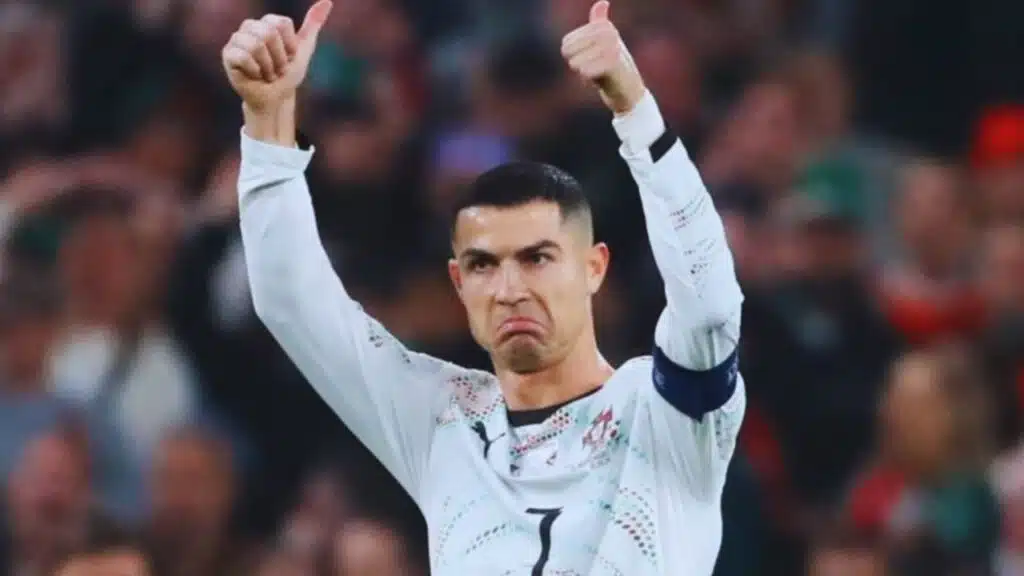
Further tension existed from the previous meeting between the two nations, in which Ronaldo famously celebrated a late winner by shouting in the face of Irish defender Jake O’Brien, a moment that irritated Irish supporters. That memory resurfaced during the rematch. When Ronaldo walked off the pitch in Dublin on Thursday, he clapped ironically, raised both thumbs, and smirked at jeering Ireland fans — further stoking the emotional energy surrounding the game.
The dismissal illuminated the psychological layers that surround elite football: the pressure on referees to assert control, the emotional weight on star players, and the strategic behavior of managers using pre-match comments to influence officiating. Ronaldo’s incident became a flashpoint in a wider web of mental battles, competitive rivalry, and national pride.
The Broader Story: Portugal’s World Cup Path, Ronaldo’s Legacy, and What Comes Next
Even beyond the dramatic dismissal, the match carried immense importance for Portugal. A win would have sealed their place at the 2026 World Cup, but instead, they were stunned by Ireland’s energy, directness, and clinical finishing. Troy Parrott’s two goals reshaped Group F, delayed Portugal’s qualification, and amplified the significance of their upcoming match against Armenia.
Despite the setback, Portugal remain in a strong position. Their tactical evolution under Martínez has produced one of the highest-scoring, most stable qualifying campaigns in Europe. Yet the psychological blow of losing their captain in such a dramatic fashion will require composure and leadership within the squad.
For Ronaldo, the situation is more personal and historically consequential. At 39, he stands on the edge of becoming the first male player to compete in six World Cups. His longevity, professionalism, and scoring record have already secured his place among football’s legends. But this red card introduces an unexpected variable.
A multi-match ban could force him to miss the opening game or games of the world’s biggest tournament — an outcome that would dramatically alter Portugal’s strategy and global attention.
As FIFA reviews the footage, disciplinary history, and referee report, the football world now waits to learn how long Portugal must play without their captain. What seems certain is that the decision will influence both the final stages of Portugal’s qualification and the opening narrative of the 2026 World Cup.
Until then, the red card stands as one of the most debated moments in Ronaldo’s storied career — a rare collision of emotion, controversy, and high-stakes football that may shape the beginning of his final World Cup appearance.