

In a world grappling with climate change and environmental challenges, adopting sustainable practices has never been more critical. One transformative change gaining traction is the shift to refillable cleaning bottles for the future of sustainability cleaning.
These innovative solutions not only address the pressing issue of plastic waste but also offer practical and cost-effective benefits for households and businesses alike.
This article delves into the top 10 reasons why refillable cleaning bottles for the future of sustainability cleaning are revolutionizing the cleaning industry and paving the way for a greener, more sustainable future.
What Are Refillable Cleaning Bottles?
Refillable cleaning bottles are reusable containers designed for storing and dispensing cleaning solutions. Unlike single-use plastic bottles that contribute significantly to landfill waste, these bottles can be refilled with concentrated or pre-prepared cleaning solutions, minimizing the need for repeated plastic production.
By choosing refillable cleaning bottles for the future of sustainability cleaning, consumers are taking a proactive step towards reducing their environmental footprint while maintaining the cleanliness of their homes and workplaces.
Why Sustainability Matters in Cleaning
Cleaning is an essential part of our daily lives, but traditional methods often come with hidden environmental costs. The use of single-use plastic bottles in cleaning products contributes to a significant portion of global plastic waste.
Additionally, many conventional cleaning solutions contain harsh chemicals that can harm ecosystems. Refillable cleaning bottles for the future of sustainability cleaning offer a viable alternative that aligns with eco-friendly principles, making them an integral part of the solution to environmental challenges.
The 10 Reasons Refillable Cleaning Bottles Are Revolutionizing Cleaning
1. Reducing Single-Use Plastic Waste
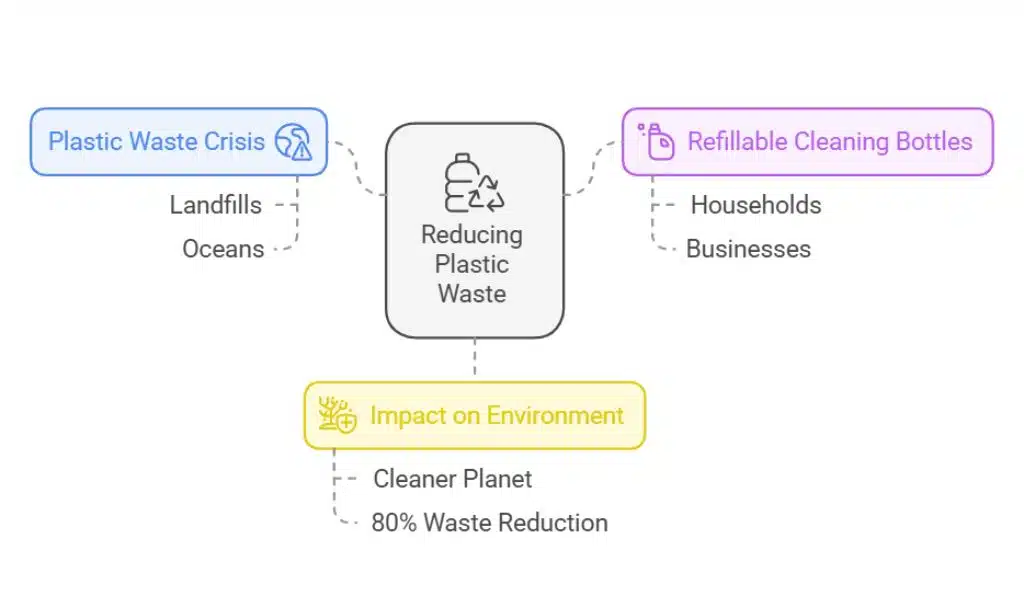
Plastic waste has become a global crisis, with millions of tons ending up in landfills and oceans annually.
Refillable cleaning bottles drastically reduce the need for single-use plastics by promoting reuse.
By replacing disposable bottles with refillable options, households and businesses can significantly cut their plastic consumption and contribute to a cleaner planet.
According to a recent study, switching to refillable systems can reduce plastic waste by up to 80%.
Key Details:
- Global plastic production: Over 300 million tons annually, much of which is single-use.
- Impact: Each refillable bottle can replace hundreds of single-use bottles over its lifespan.
- Case Study: A community initiative in Amsterdam reduced local plastic waste by 40% in two years through refillable bottle programs.
- Actionable Tip: Start by replacing one frequently used cleaner with a refillable option.
Environmental Impact Table:
| Metric | Single-Use Bottles | Refillable Bottles |
| Annual Waste (per person) | ~20 lbs | ~2 lbs |
| Recycling Rate | ~30% | ~90% |
2. Cost-Effective for Households
Over time, refillable cleaning bottles prove to be more economical than their disposable counterparts.
While the initial investment in durable bottles may be slightly higher, the cost of refills is often much lower than purchasing new cleaning products.
For example, a family using refillable cleaning bottles for the future of sustainability cleaning can save hundreds of dollars annually, making it a financially savvy choice.
Comparison Table: Refillable vs. Single-Use Cleaning Costs
| Expense Type | Single-Use Bottles | Refillable Bottles |
| Initial Purchase | Low | Moderate |
| Long-Term Costs | High | Low |
| Annual Savings | None | $100-$300 |
Example: A family in California reported saving over $250 annually after switching to refillable cleaning systems. They also reduced their plastic waste by 75%, making their home more eco-friendly.
3. Promoting a Circular Economy
Refillable cleaning bottles are a cornerstone of the circular economy, a system designed to minimize waste and make the most of resources. By encouraging the reuse of materials and reducing reliance on virgin plastic, refillable systems contribute to a sustainable economic model. This shift aligns with global efforts to reduce waste and create a more resilient, resource-efficient society.
Key Details:
- Lifecycle of refillables: Encourages recycling and reuse.
- Economic benefits: Reduces costs for manufacturers and consumers.
- Example: Brands like Loop have introduced refillable packaging programs, resulting in a 30% drop in plastic waste.
Circular Economy Snapshot:
| Feature | Linear Economy | Circular Economy |
| Resource Usage | Single-use | Reuse and recycle |
| Waste Generation | High | Low |
| Economic Impact | Unsustainable | Long-term savings |
4. Customizable Cleaning Solutions
Refillable cleaning bottles offer versatility, allowing users to tailor cleaning solutions to their specific needs.
Eco-friendly refill options come in a variety of formulations, including all-purpose cleaners, glass cleaners, and disinfectants.
This flexibility makes refillable cleaning bottles for the future of sustainability cleaning a practical choice for diverse applications.
Advantages:
- Formulations: Specialized solutions for different surfaces.
- User preferences: Scents and eco-friendly options available.
- Tip: Mix concentrated solutions with water to save on storage space and reduce waste.
Practical Example: Homeowners can create DIY cleaning solutions by mixing white vinegar, essential oils, and water in their refillable bottles, offering a natural, cost-effective alternative.
5. Lower Carbon Footprint
The production and transportation of single-use plastic bottles generate significant greenhouse gas emissions. Refillable systems, on the other hand, reduce these emissions by decreasing the demand for new plastic production and enabling more efficient distribution of concentrated refills.
A lifecycle analysis reveals that refillable cleaning bottles for the future of sustainability cleaning can lower carbon footprints by up to 70% compared to disposable alternatives.
Key Stats:
- Emissions savings: 70% reduction compared to single-use systems.
- Impact example: A 2023 report found that refills shipped in concentrated form reduce emissions by 50% during transport.
Carbon Emissions Table:
| Source | Single-Use Systems | Refillable Systems |
| Plastic Production | High | Low |
| Transportation Emissions | High | Low |
| Total Footprint | ~4 kg CO2/bottle | ~1 kg CO2/bottle |
6. Safer for the Environment
Many refillable cleaning solutions are formulated with biodegradable and non-toxic ingredients, ensuring they are safer for the environment.
Traditional cleaning products often contain chemicals that pollute waterways and harm wildlife.
By choosing eco-friendly refills, consumers can help protect ecosystems while maintaining cleanliness.
Table: Environmental Impact of Cleaning Solutions
| Feature | Conventional Cleaners | Refillable Eco Solutions |
| Biodegradability | Low | High |
| Water Pollution Risk | High | Minimal |
| Wildlife Impact | Harmful | Safe |
Case Study: In Singapore, a school switched to biodegradable refills for cleaning, reducing chemical runoff into nearby waterways by 80%.
7. Encourages Conscious Consumerism
Refillable cleaning bottles foster mindful shopping habits by encouraging consumers to prioritize sustainability. This shift not only reduces waste but also supports businesses that prioritize eco-friendly practices. By adopting refillable cleaning bottles for the future of sustainability cleaning, individuals can make a positive impact and inspire others to follow suit.
Practical Tips:
- Support brands with sustainable certifications.
- Share your sustainability journey on social media to inspire others.
- Look for community programs promoting refill stations.
8. Aesthetic and Functional Design
Modern refillable cleaning bottles are designed with both form and function in mind. Sleek, minimalist designs complement home decor, while durable materials ensure long-lasting use.
These bottles are often ergonomically designed for ease of use, making them a practical addition to any household.
Examples:
- Glass refillable bottles with silicone sleeves for durability.
- BPA-free plastic options for lightweight portability.
Table: Functional Features of Refillable Bottles
| Feature | Description |
| Durability | Resistant to wear and tear |
| Reusability | Supports multiple refill cycles |
| Aesthetic Appeal | Complements modern home styles |
9. Easy Accessibility of Refills
Refillable cleaning solutions are increasingly available in major retailers, online platforms, and subscription services. This accessibility makes it easier than ever to incorporate refillable cleaning bottles for the future of sustainability cleaning into daily routines. Many brands now offer convenient delivery options, ensuring a steady supply of eco-friendly refills.
Convenience Factors:
- Subscription options for automatic refills.
- Eco-stations in local supermarkets for on-the-go refilling.
Current Trend: In 2024, Amazon reported a 25% increase in sales of refillable cleaning products, indicating growing consumer demand.
10. Aligns with Global Sustainability Goals
Refillable cleaning bottles play a vital role in achieving global sustainability goals, including the United Nations Sustainable Development Goals (SDGs).
By reducing plastic waste, conserving resources, and lowering emissions, these systems contribute to efforts to combat climate change and promote sustainable consumption patterns.
Connection to SDGs:
- Goal 12: Responsible consumption and production.
- Goal 13: Climate action through emissions reduction.
- Goal 14: Protecting life below water by minimizing plastic waste.
Takeaways
Refillable cleaning bottles for the future of sustainability cleaning are a game-changer in the quest for a greener planet.
By addressing plastic waste, reducing costs, and promoting eco-friendly practices, these bottles offer numerous benefits for consumers and the environment alike.
The 10 reasons discussed in this article highlight the transformative potential of adopting refillable systems in cleaning routines.
Now is the time to make the switch to refillable cleaning bottles for the future of sustainability cleaning.
Explore eco-friendly brands, invest in durable bottles, and start making a difference today. Together, we can build a cleaner, more sustainable future.































