Most friendship is feigning, most loving mere folly
Then, heigh-ho, the holly! This life is most jolly. ~ Shakespeare
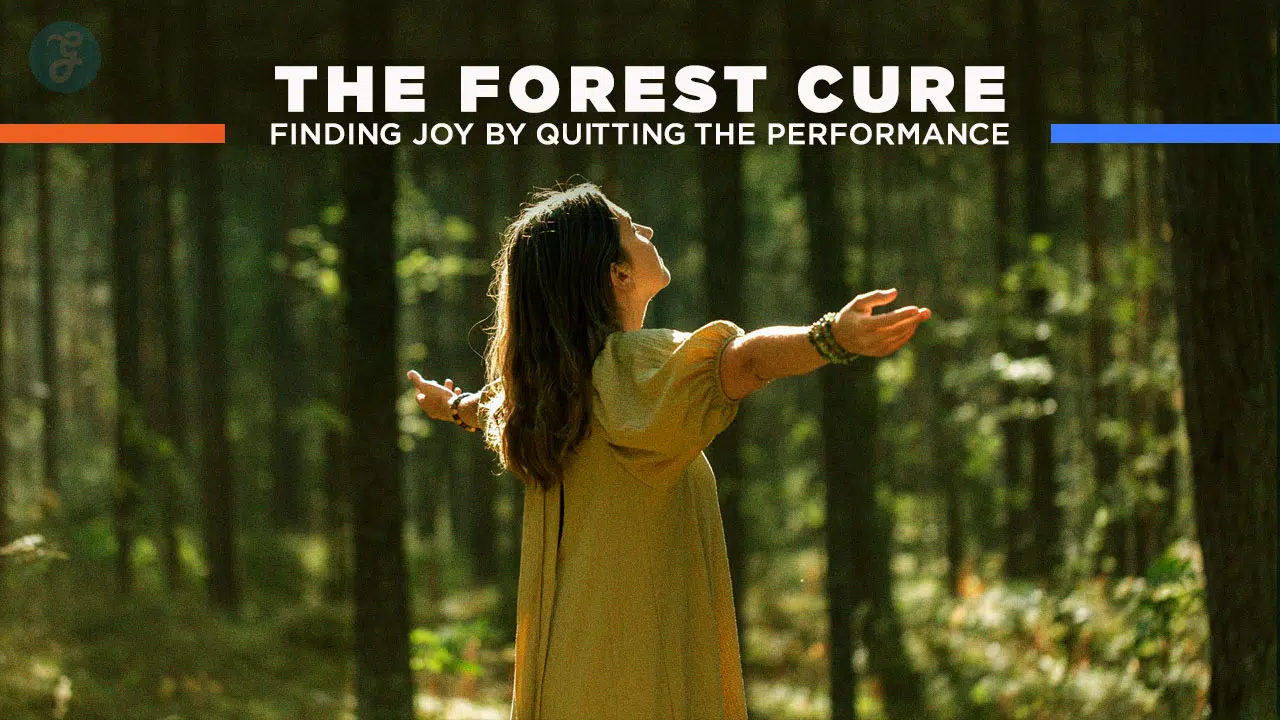
The Forest of Arden is not a map coordinate on a globe. It is a state of mind. It is a radical departure from the exhaustion of modern expectations. In Shakespeare’s famous play As You Like It, the main characters flee a toxic and performative court. They leave their finery behind to find themselves in the woods. This is the first recorded instance of the great reset. By quitting the performance, they trade social vanity for rugged truth. This is how they find a life that is truly most jolly.
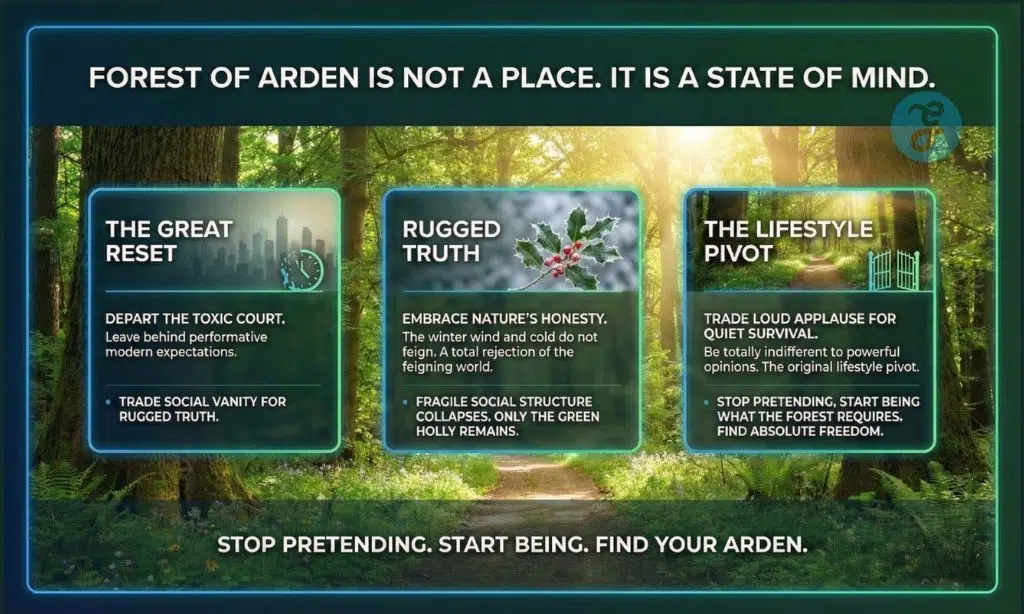 Duke Senior is a man banished from his own life. Yet he famously discovers that the icy fang of the winter wind is a better friend than any human flatterer. The wind does not lie to him. The cold weather does not curate a version of the truth to stay in his good graces. It just bites. This beautiful honesty is the absolute heart of the greenwood tree philosophy. It is a total rejection of the feigning world where social obligation dictates every single part of your identity.
When the play mentions that most friendship is feigning, it points directly to a hollow social structure. In the forest, that fragile structure completely collapses. What remains after the fall is the green holly. This wild plant represents a reality that stays vibrant even when the season turns bitterly cold and the audience finally leaves.
Living a most jolly life in Arden means trading the loud applause of the crowd for the quiet dignity of pure survival. It is about being totally indifferent to the opinions of the powerful. It is the original lifestyle pivot. You stop pretending to be exactly what the court wants. You start being exactly what the forest requires. You embrace the dirt. You embrace the cold. You find absolute freedom in the truth of nature.
The Modern Court: Digital Feigning
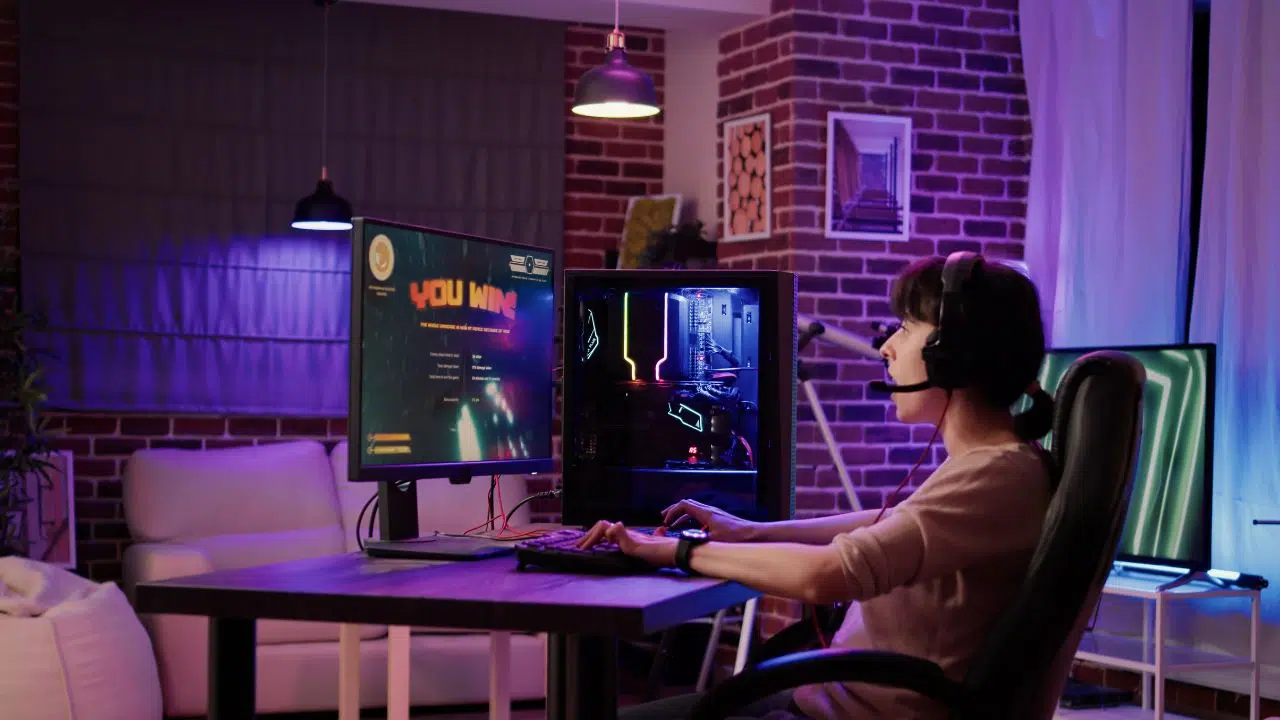
Our modern court is the endless digital feed. We all live under a constant and invisible gaze. We are performers trapped on a glass stage. Every meal you cook and every sunset you watch is a potential performance. We have successfully built an architecture of feigning that would make an Elizabethan courtier blush with deep shame.
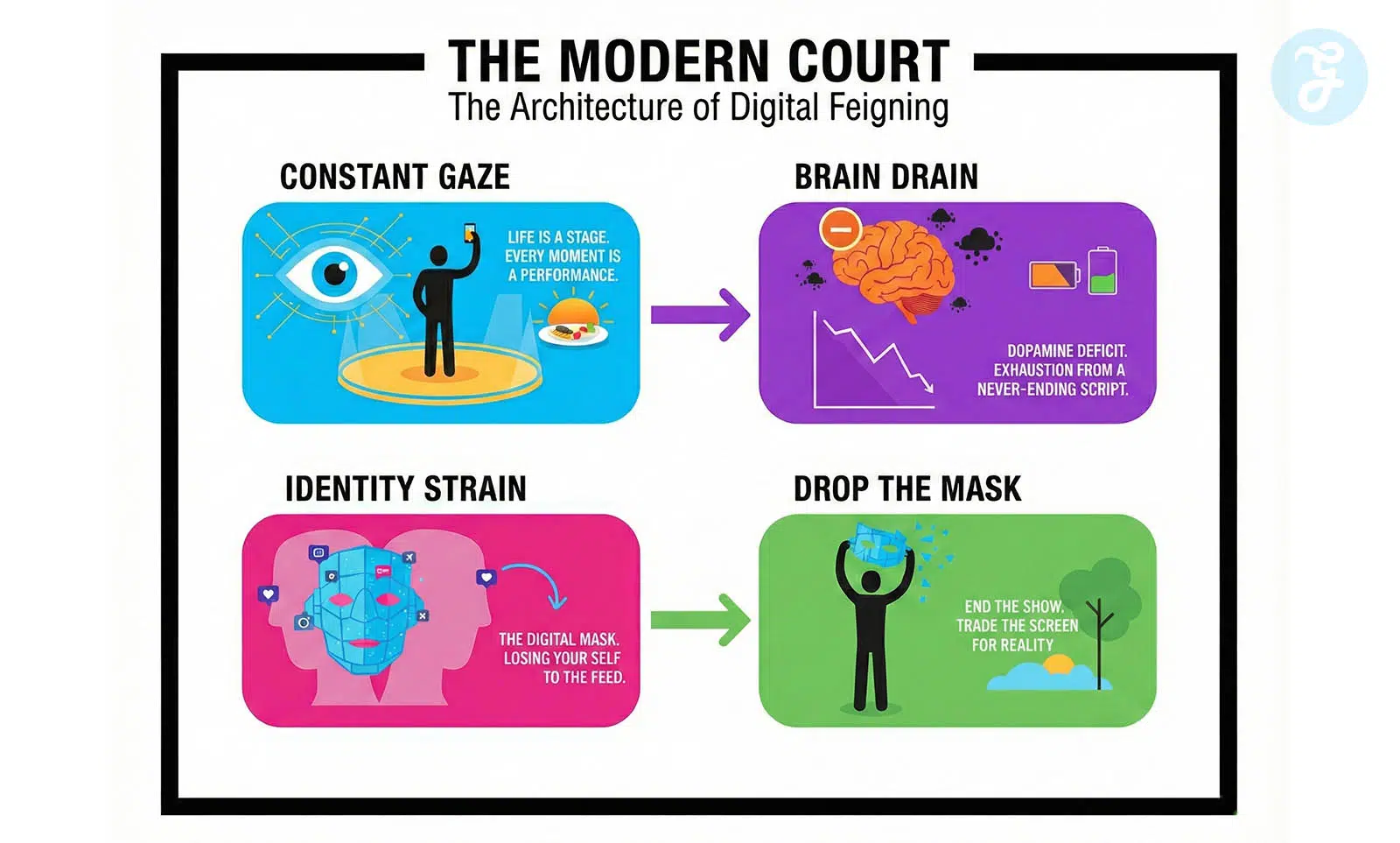 We are utterly exhausted by the endless need to maintain a curated identity. This is not just a quirky social trend. It is a profound psychological burden. We carry it in our pockets everywhere we go. We sleep with it next to our heads.
Recent psychological data from 2025 regarding record levels of Digital Dysmorphia shows a very sharp rise in what I call Social Mimicry Strain. This happens when the friction between your curated digital self and your actual physical self makes them complete strangers. You look in the mirror and do not recognise the person you project online. We dress the same because the algorithm heavily rewards conformity. We speak in the exact same trending phrases to stay culturally relevant.
It is a virtual panopticon of our own making. We are willing prisoners of our own desperate desire to be seen. Academic research suggests that passive consumption of these feigned lives creates a massive dopamine deficit in the human brain. We are watching a glittering play that simply never ends. We are so incredibly tired of the script. We want the curtain to drop. We want the lights to go out.
The Burnout of the Endless Show
Performance fatigue is entirely real. It is the heavy mental drain of being constantly perceivable by others. When we are always switched on, we lose the sacred ability to experience primary joy.
Primary joy is the raw happiness you feel when nobody is watching you. It is the laugh that escapes you in an empty room. It is the quiet satisfaction of a job well done in total silence. Instead of this beautiful feeling, we now settle for secondary utility. We ask ourselves how a beautiful moment will look on a glowing screen before we even allow ourselves to feel the moment. We document the concert instead of listening to the music. We photograph the food instead of tasting the spices.
The 2026 reports on digital fatigue describe a literal depletion of human cognitive resources. Your brain is simply not wired to manage an invisible audience of thousands. It is biologically wired for the greenwood. The concept of most loving mere folly perfectly describes the trap of digital engagement. We chase tiny digital likes that feel a bit like human connection. Yet these tiny notifications leave us feeling physiologically lonely.
The endless feigning has a terribly high price. It costs us our physical presence. It robs us of our current moment. We are living in the anticipated memory of the event rather than the event itself. This is a tragedy of modern attention.
Primary Joy Versus Secondary Utility
Let us look closer at this theft of joy. Imagine walking through a dense forest at dawn. The light catches the morning dew. A profound sense of peace washes over you. This is primary joy. It is an experience that belongs entirely to you and the earth.
Now imagine taking a phone out of your pocket. You frame the shot. You consider the lighting. You think about an engaging caption. You wonder who will view the story. The peace vanishes instantly. You have traded a profound personal experience for secondary utility. You have monetised your own peace of mind for the fleeting attention of strangers.
We do this every single day. We do it with our children. We do it with our romantic partners. We do it with our quiet Sunday mornings. The Arden philosophy begs us to stop this endless transaction. It asks us to keep our joy safely hidden away from the hungry eyes of the digital court. It asks us to protect our memories from the cheap validation of the internet.
Quitting the Performance: The Rise of Rugged Sincerity
The exit strategy is actually remarkably simple. It is the radical decision to just stop the show. We are moving swiftly away from the polished aesthetic and moving toward raw utility. This movement is called rugged sincerity.
Rugged sincerity is the absolute willingness to be messy and completely unseen. It is the deliberate choice to be unoptimised in a world obsessed with peak performance. It is waking up and not caring about your morning routine. It is wearing old clothes because they are warm. It is letting your garden grow a little bit wild.
Quitting the performance is the ultimate act of modern rebellion. The massive de-influencing wave of 2026 perfectly proves this cultural shift. Normal people are deeply tired of perfection. They are exhausted by aspiration. They want grit. They desperately want the rough truth of the icy fang.
This lifestyle pivot involves moments of radical solitude. It is about actively resetting the human nervous system by removing the crushing pressure to perform. You finally find the most jolly version of yourself when you truly realise you do not owe anyone a post. You do not owe the internet an explanation for your absence. You are actively choosing the quiet forest over the loud feed.
The Economics of Absolute Invisibility
There is a powerful economic reality to quitting the performance. We live in an attention economy. Human attention is the most valuable commodity on the planet. Massive technology companies harvest your time and sell it to advertisers.
When you choose the Arden lifestyle, you are hoarding your own wealth. You are taking back your attention. You are refusing to be farmed for data. Invisibility is a new kind of luxury. Being unreachable is a status symbol of the free mind.
The digital court desperately wants you to believe that if you are not seen, you simply do not exist. But the forest teaches us the exact opposite truth. A tree falling in the woods does not need an audience to make a sound. It is gloriously real all on its own. Your life is gloriously real even if nobody leaves a comment on it.
Reclaiming your time means you can finally engage in deep thought. You can read a book without checking for notifications. You can have a conversation without looking at a screen. You take your power back from the algorithm. You starve the machine by simply walking away into the trees.
The Forest Cure: Nature as a Mirror
Nature does not have a beauty filter. The cold rain in a real forest does not care about your personal brand. This total lack of external validation is a massive healing force. It forces a complete psychological reset.
When you spend extended time in wild green spaces, your cortisol drops significantly. Your breathing slows down. This is scientifically known as the forest cure. It forces you to look deep inward because there is absolutely no external mirror to flatter you. The woods do not care if you are rich or poor. They only care if you brought enough water.
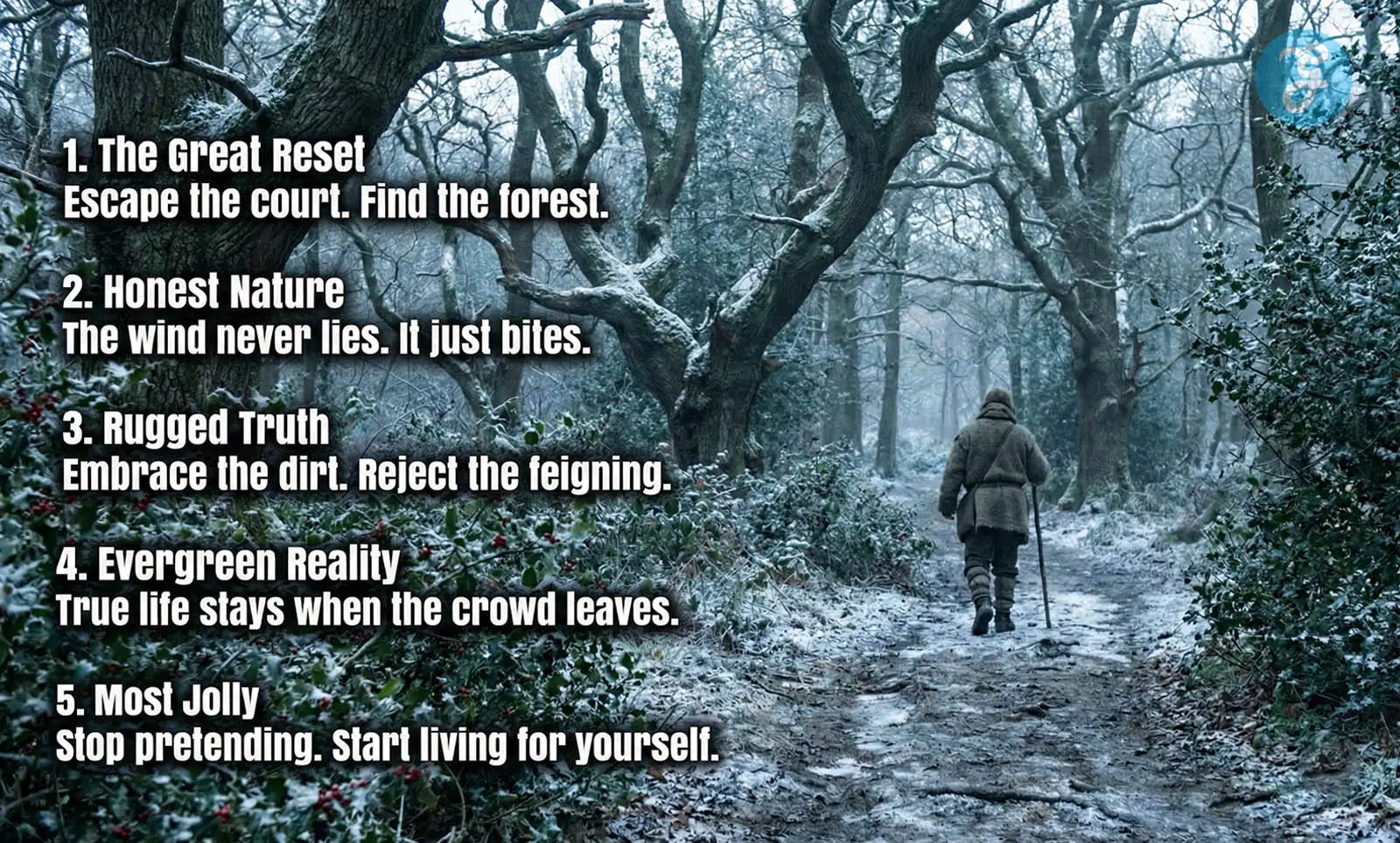 Physical challenges in nature provide a completely different kind of psychological counselling. Hiking up a steep hill or digging in a wet garden provides a profound sense of reality that a glass screen cannot ever replicate. These physical activities directly counsel us on our own human limits. They teach us quiet resilience.
In the greenwood, you are not a curated profile. You are a breathing living being. The icy fang of the weather tells you exactly who you are. It strips away the ego. It leaves behind only what is real and true. You realise how small you are in the grand scheme of the universe. This smallness is incredibly comforting. It means your mistakes do not matter as much as you thought they did.
The Melancholy of the Real World
We must address a vital truth about this lifestyle. Quitting the performance does not mean your life becomes a fairy tale. In Shakespeare’s play, there is a character named Jacques. He is profoundly melancholy. He wanders the forest feeling sad.
The magic of the Arden lifestyle is that Jacques is allowed to be sad. The forest does not demand a smile. The digital court demands toxic positivity. The feed demands that you always show your best life. The greenwood accepts your tears just as easily as it accepts the rain.
Embracing the most jolly life paradoxically means embracing your own sadness. It means feeling your genuine emotions without trying to package them into a relatable video. It is the deep relief of experiencing a bad day and keeping it entirely to yourself. You do not have to perform your grief. You do not have to perform your joy. You just get to exist as a complicated human being.
Reclaiming the “Most Jolly” Life
Being “jolly” does not mean being happy all the time. It means being relieved. It is the deep peace of no longer lying. You reclaim your life by leaning into “Analog Evidence.” You write in journals that no one will read. You take photos that stay in a drawer. You “ghost” the digital court to find your actual friends.
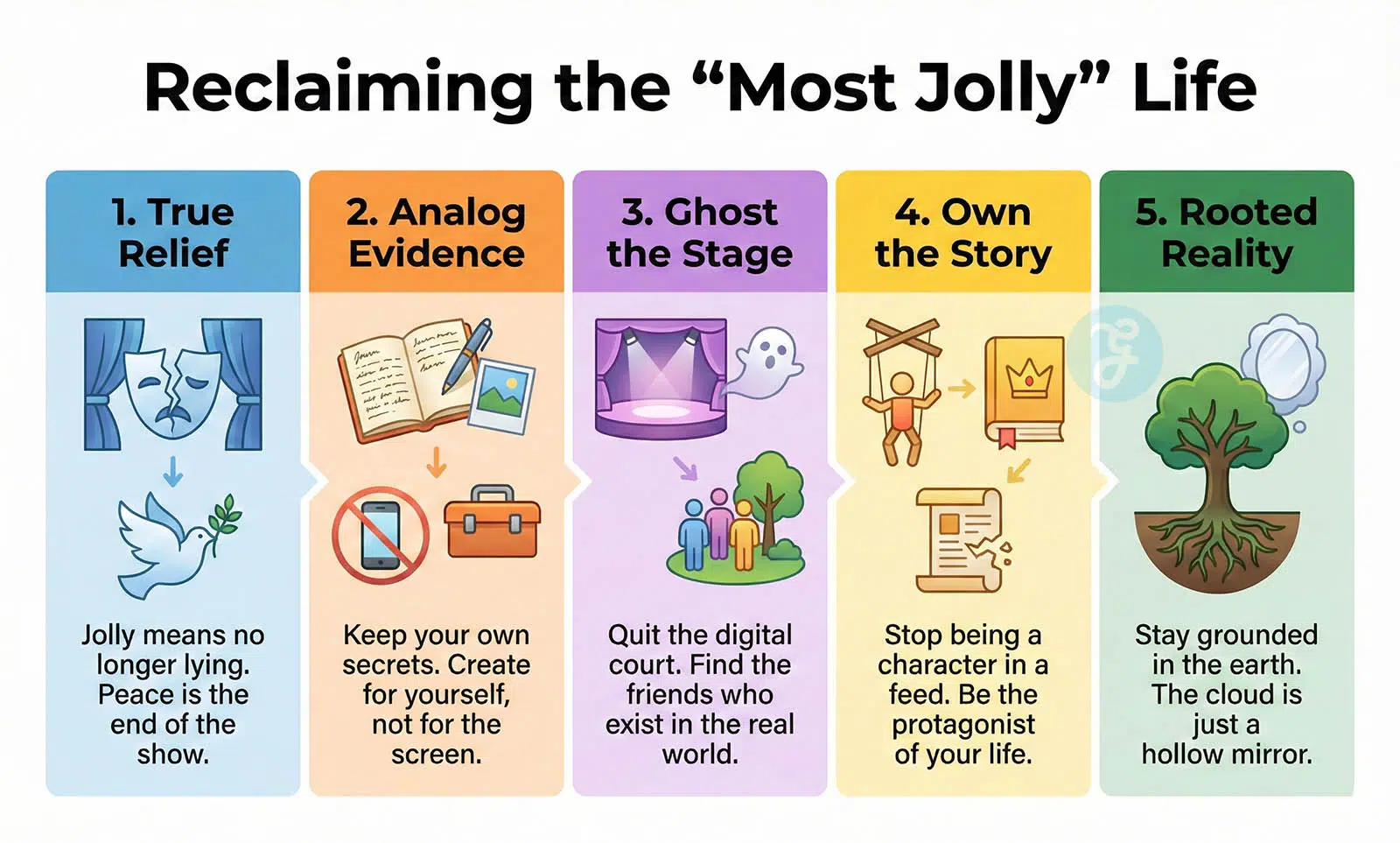 This is the “Most Jolly” state. It is the absence of the performance. You are no longer a character in someone else’s feed. You are the protagonist of your own quiet life. The “green holly” survives because it is rooted in the earth, not in the clouds.
The Return: Carrying Arden with You
You do not have to live in a tent to practise this lifestyle. You just have to stop the feigning. Carry the forest mindset back into the world. Be the person who does not perform. Be the person who is ruggedly sincere.
Life is “most jolly” when you realize the show is over. You can finally put down the mask. The performance was the only thing making you tired. Now, you can actually start living.