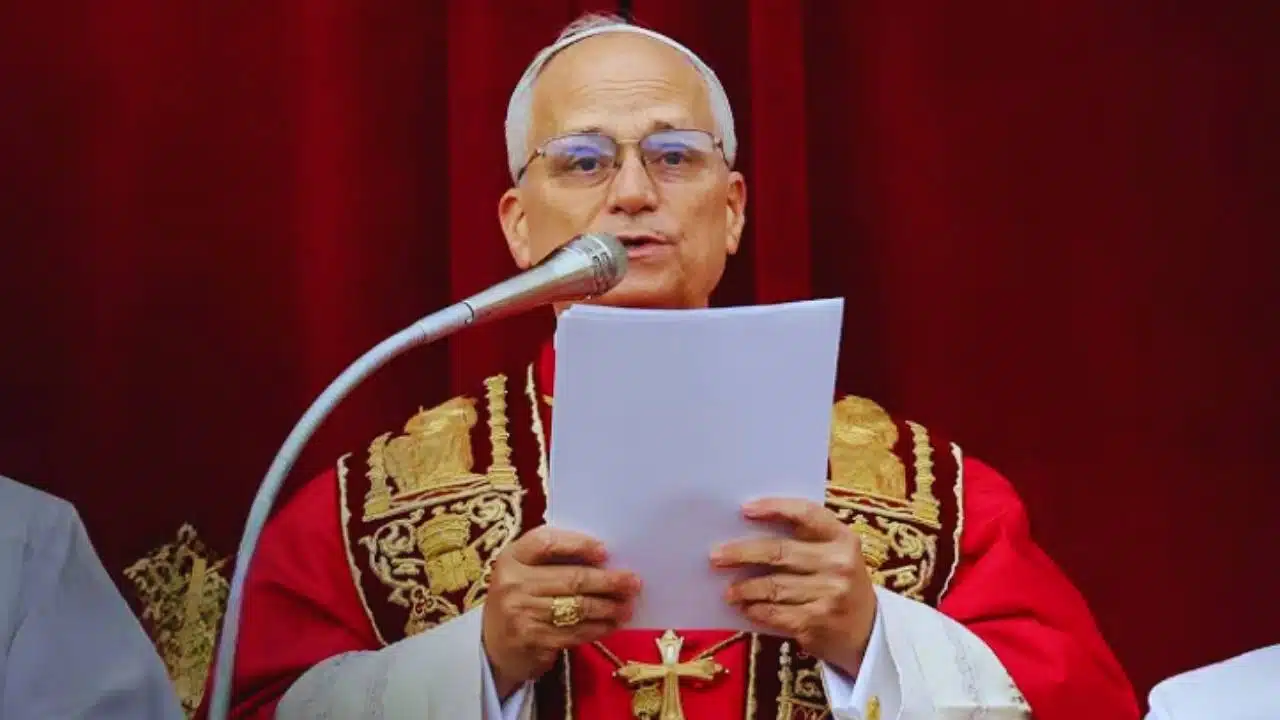
Pope Leo XIV highlights Gaza in his first Christmas “Urbi et Orbi,” urging a ceasefire and sustained aid as winter storms hit tents and damaged buildings. He also appealed for peace in Yemen, Ukraine and beyond.
What Pope Leo XIV said on Christmas Eve and Christmas Day?
Pope Leo XIV used the Vatican’s two most visible Christmas moments—Christmas night Mass on December 24, 2025, and the “Urbi et Orbi” blessing on December 25, 2025—to deliver a message centered on compassion, human dignity, and practical responsibility in the face of war.
In the Christmas Eve liturgy, his theme was direct: when a society refuses room for the vulnerable, it also refuses the deeper moral claim that every person has dignity. His remarks leaned on the Nativity story—Jesus born in poverty—as a lens for modern suffering. The pope framed the stable not as a romantic image, but as a reminder that people pushed to the margins remain at the heart of Christian moral teaching.
On Christmas Day, Leo widened the focus to the world’s main fault lines. From the central balcony of St. Peter’s Basilica, he urged people to resist indifference and “enter into the suffering of others,” arguing that peace is not only a government duty but also a shared responsibility. He highlighted Gaza as a symbol of civilians living with loss and exposure, and he paired it with Yemen’s poverty and hunger and the risks faced by migrants crossing seas and borders.
The Vatican setting amplified the message. The “Urbi et Orbi” is designed to summarize global distress from a religious and humanitarian viewpoint, and Leo’s first Christmas as pontiff signaled that this tradition will remain a platform for speaking about war, displacement, and civilian protection.
Key Vatican moments and takeaways (Dec. 24–25, 2025)
| Moment | Where | What Leo emphasized | Why it mattered |
| Christmas Mass during the Night (Dec. 24) | St. Peter’s Basilica | Human dignity, welcoming the vulnerable, rejecting indifference | Set the moral framing before the global address |
| Christmas Day Mass + Urbi et Orbi (Dec. 25) | St. Peter’s Basilica & central loggia | Gaza, Yemen, migrants, and multiple conflict zones; peace through responsibility and dialogue | Placed Gaza within a broader humanitarian map |
| Closing stretch of the Holy Year | Vatican calendar through early Jan. 2026 | A peace message tied to faith, solidarity, and public conscience | Linked the season’s symbolism to real-world crises |
Leo also revived a visible custom by offering greetings in multiple languages, and the crowd response underscored how closely the world now watches the first U.S.-born pope’s tone and priorities during major Church events.
Why Gaza was singled out: winter exposure, shelter collapse, and fragile food gains?
Leo’s focus on Gaza comes as winter conditions intensify a crisis that is no longer only about frontlines. It is also about survival in rain, cold, and unsafe structures.
Winter conditions and shelter danger
Humanitarian updates in late December described winter storms as an immediate hazard for displaced families living in makeshift sites and damaged buildings. Aid partners warned that heavy rain and cold expose gaps in tents, flood low-lying areas, and increase health risks for children and older adults.
One late-December report described war-damaged buildings collapsing during stormy weather, and it noted official warnings urging families to avoid partially damaged structures—an almost impossible instruction in a territory where safe housing is scarce. The same reporting emphasized that people are often forced into a dangerous choice: remain in compromised buildings to escape the weather, or stay in tents that cannot reliably protect from wind and rain.
Humanitarian partners also described emergency “winterization” steps that show how extreme the conditions can become—such as using available materials for flood mitigation and distributing blankets and winter clothing kits to at-risk families.
Gaza winter impact and shelter response (late Dec. 2025)
| Shelter and winter indicator | What was reported | What it means for civilians |
| People needing dignified shelter | About 1.3 million people | A large share of families lack safe, stable housing |
| Recent emergency shelter assistance | 8,800+ families reached in a few days with tents/tarpaulins/bedding/shelter kits | Relief is active, but needs remain massive |
| Building collapses amid storms | Multiple collapses and reported casualties | Winter weather turns damaged infrastructure into lethal risk |
| Winter-affected buildings (storm period referenced in reports) | Dozens of buildings affected; deaths reported | Weather can trigger sudden disasters even without active fighting |
This shelter reality helps explain why Leo’s message echoed images of exposure and displacement. For religious leaders, Christmas imagery often links directly to people living without secure shelter, and Gaza’s winter conditions make that symbolism immediate.
Hunger and malnutrition: progress without safety
In mid-December, UN agencies said the latest IPC-linked analysis found that no areas were currently classified in famine following improved access after an October ceasefire. But the agencies warned that the improvement is extremely fragile and could reverse if large-scale assistance and commercial inflows do not continue.
They also described the scale of ongoing emergency need:
- 1.6 million people (77%) still facing high acute food insecurity.
- Over 100,000 children projected to suffer acute malnutrition through April 2026.
- 37,000 pregnant and breastfeeding women projected to suffer acute malnutrition through April 2026.
- Multiple governorates classified in Emergency (IPC Phase 4) through April 2026.
Those details matter for how the pope’s message lands. A headline like “famine pushed back” can sound like relief. But the deeper figures show a population still living on the edge, where weather shocks, market disruption, and renewed violence can quickly erase gains.
Food insecurity indicators highlighted by UN agencies (Dec. 2025 update)
| Indicator | Figure cited in the update | Time window referenced |
| People facing high acute food insecurity | 1.6 million (77%) | Through April 2026 projection window |
| Children projected to suffer acute malnutrition | 100,000+ | Through April 2026 |
| Pregnant & breastfeeding women projected to suffer acute malnutrition | 37,000 | Through April 2026 |
| Governorates in Emergency classification | 4 governorates | Through April 2026 |
Displacement and dependence
The same UN-agency update highlighted large displacement since the ceasefire period referenced in their reporting. Displacement is not only a housing issue; it increases reliance on aid, complicates schooling, strains sanitation, and makes community-level recovery harder. When families move repeatedly, stable income disappears and access to clinics and consistent nutrition becomes harder to maintain.
Alongside shelter distributions, humanitarian partners also reported activity in education and protection services, including the creation of temporary learning spaces and expanded psychosocial support. That matters because winter hardship is not only physical; it deepens stress, trauma, and long-term developmental harm for children.
The Vatican’s broader Gaza stance: ceasefire, humanitarian access, and civilian protection
Leo’s Christmas words did not come out of nowhere. Since his election in May 2025, the Vatican has repeatedly used public audiences and diplomatic engagements to highlight Gaza and to stress principles that align closely with international humanitarian law: protect civilians, allow aid, and avoid dehumanization.
Earlier in 2025, Leo publicly appealed for humanitarian assistance to enter Gaza and for hostilities to stop. Later, Vatican communications around high-level meetings again emphasized urgent needs: a stable ceasefire, humanitarian access, and efforts that lower civilian suffering rather than inflaming it.
At the diplomatic level, the Holy See has also repeated that any durable solution requires a political path that ends recurring cycles of violence. In Vatican messaging, that typically includes support for negotiations and a two-state framework, while urging the immediate humanitarian steps needed to keep civilians alive in the present.
Why papal language matters in wartime?
The pope has no army and does not negotiate treaties, but the Vatican’s influence works differently:
- Moral framing: It shapes how millions of believers interpret responsibility toward civilians.
- Humanitarian visibility: It draws attention to under-reported suffering, especially among children and displaced families.
- Diplomatic signaling: It can reinforce calls for access and civilian protection that aid groups and international bodies already emphasize.
- Agenda-setting: Christmas and Easter messages can spotlight issues when political leaders prefer silence.
Leo’s first Christmas message suggests he intends to keep using these “high attention” moments to press for a humanitarian baseline: no matter the politics, civilians must not be abandoned.
A pope shaped by missionary work and a global lens
Leo XIV’s background also helps explain his emphasis. Vatican biographies describe him as an Augustinian with long experience outside Rome, including years of missionary service in Peru before senior leadership roles. That history often correlates with a pastoral style focused on people living through poverty, displacement, and weak institutions. It also helps explain why Leo repeatedly references migrants and “those who have lost everything” as a defining moral test.
The wider conflicts Pope Leo XIV referenced and what he urged next?
Although Gaza stood out, Leo’s Christmas message treated it as part of a larger global emergency map rather than an isolated tragedy. His address referenced multiple conflict zones and crises, linking them through a single argument: peace requires humility, responsibility, and dialogue supported by practical solidarity.
Yemen, Ukraine, and multiple flashpoints
Leo spoke of Yemen as a place where people remain impoverished and vulnerable, and he included Ukraine in his broader call for an end to war and for leaders to pursue negotiation and stability.
He also referenced other places facing violence, political instability, and humanitarian stress. The structure of his message followed a pattern: name the suffering, reject indifference, and insist that peace needs both political effort and public conscience.
Migrants as a central theme
A major thread in Leo’s first Christmas as pope was migration. He highlighted migrants crossing seas and continents in search of safety and opportunity and treated their journeys as a moral issue rather than only a political debate.
This emphasis mirrors a wider Vatican tradition: migration is framed as a human story—families, fear, survival—rather than a statistic. Leo’s Christmas line on indifference was aimed as much at public attitudes as at policymakers.
What “responsibility” means in Leo’s framing?
Leo used responsibility in a broad but concrete way. In the language of papal addresses, responsibility can mean:
- Leaders taking steps that reduce civilian harm.
- Armed actors avoiding actions that deepen suffering.
- Societies refusing to normalize war, hunger, or the abandonment of displaced people.
- Aid access and sustained support being treated as essential, not optional.
In short, his message argued that peace is not only something to hope for. It is something to build through choices that protect human life right now.
What this Christmas message signals, and what to watch next?
Pope Leo XIV’s first Christmas message is likely to be remembered less for a single line and more for its priorities: Gaza as a symbol of civilians exposed to loss and winter danger, and a broader insistence that indifference is a form of complicity.
For Gaza, the immediate reality remains defined by three pressures at once:
- Shelter and winter exposure that can quickly become lethal in tents or damaged buildings.
- Fragile food-security improvements that depend on sustained aid and functioning access.
- Mass displacement and trauma, which increases dependence and slows any recovery.
For the Vatican, the message suggests Leo will keep using major liturgical events as a moral checkpoint for world leaders and the public. The next signals to watch will likely include:
- Whether the Vatican repeats specific calls for aid access and civilian protection in early 2026.
- How often Leo continues to name Gaza explicitly in public audiences and diplomacy.
- Whether humanitarian updates show improved shelter safety and stable food access through the winter months.
- Whether international efforts shift from short-term relief to longer-term rebuilding conditions.
The core takeaway from Leo’s Christmas message is simple war’s most enduring damage is often not only what happens during fighting, but what happens afterward—when families are left to face cold nights, hunger, and uncertainty with nowhere safe to go.