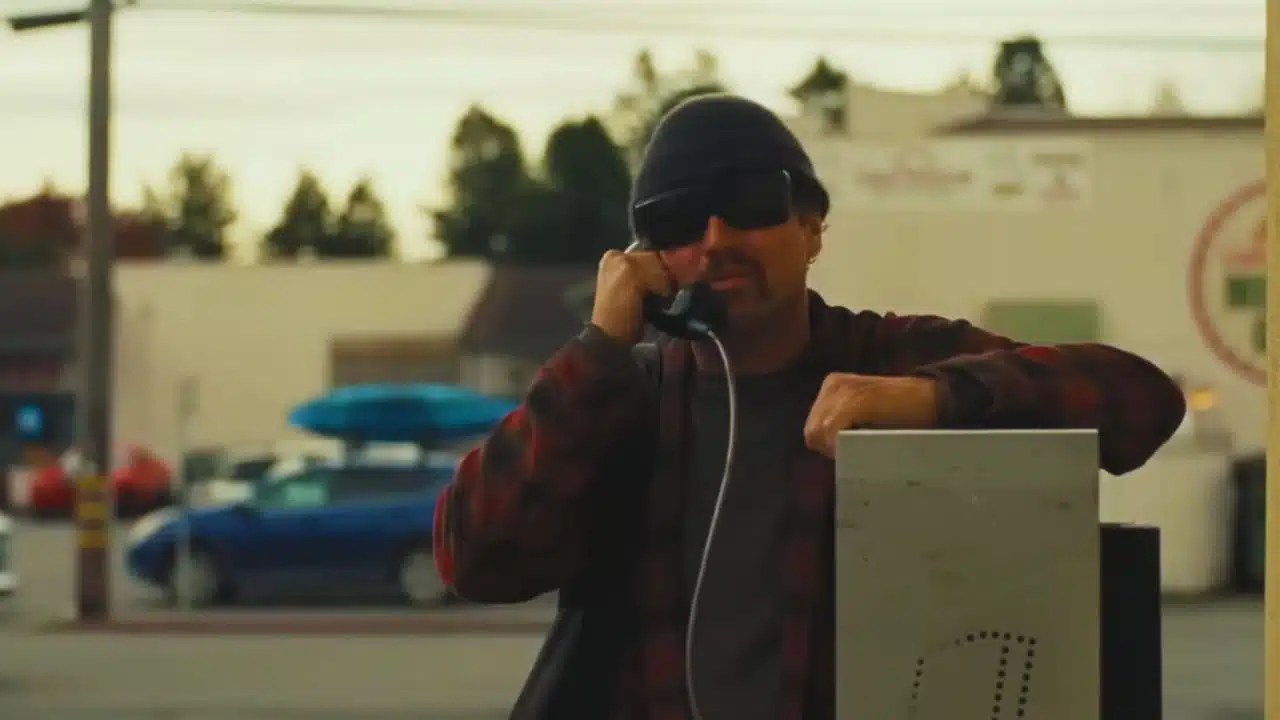
Warner Bros.’ much-anticipated action drama One Battle After Another, directed by Paul Thomas Anderson and starring Leonardo DiCaprio, began its theatrical journey with a strong $8.8 million opening day in North America. This total, covering Friday earnings and preview screenings, came from 3,634 locations across the U.S. and Canada.
The figure also includes grosses from special fan-first screenings held on Tuesday, which were primarily scheduled in premium large-format venues such as IMAX auditoriums and luxury theaters. This strategy was clearly designed to create buzz and drive early momentum.
The High Stakes Behind the Release
Warner Bros. invested heavily in this project. Production costs alone are estimated at $130–175 million, excluding a global marketing campaign that added tens of millions more. For Anderson, this represents his most expensive film to date and one of the riskiest studio bets of the year.
However, critical reception has been exceptional. Many reviewers are already describing One Battle After Another as a modern classic, with praise directed at Anderson’s audacious storytelling, sweeping cinematography, and DiCaprio’s commanding lead performance. This has positioned the film not only as a commercial prospect but also as a major awards contender.
Audience response has been equally strong. CinemaScore surveys gave the film an “A” grade, a significant upgrade compared to Anderson’s 1997 cult favorite Boogie Nights, which initially received a “C.” Interestingly, this also marks DiCaprio’s best CinemaScore since “Titanic” earned an “A+” in 1997 — a noteworthy milestone for the actor nearly three decades later.
Theatrical Rollout: A Deluxe Experience
The release plan for One Battle After Another goes far beyond a standard theatrical debut. Anderson specifically shot portions of the film in VistaVision, a long-dormant film format rarely seen in the modern age. Warner Bros. ensured that a handful of venues equipped with VistaVision projectors were included in the rollout, making the movie a technical showcase as well as a cinematic event.
The film is also screening in 70mm, IMAX 70mm, and premium digital IMAX theaters, each commanding higher ticket prices. These formats are not only attracting cinephiles but also boosting box office totals thanks to their premium pricing model. This mirrors the release strategies of films like Oppenheimer (2023), which leveraged specialty formats for strong box office longevity.
Projected Weekend and Long-Term Outlook
Analysts are currently projecting that One Battle After Another will finish its opening weekend in the $20 million to $25 million range. While that may seem modest compared to superhero blockbusters or franchise tentpoles, such an outcome would still mark Anderson’s biggest domestic debut ever.
For context, Anderson’s most commercially successful film to date was There Will Be Blood (2007), which earned $40 million domestically and $76 million worldwide. That makes the opening weekend of One Battle almost certain to surpass Anderson’s career benchmarks, even if the overall box office trajectory remains uncertain.
Still, considering its enormous production cost, the film will need a sustained word-of-mouth run and a strong international performance to reach profitability. As Warner Bros. has recently seen seven consecutive films open above $40 million domestically, industry insiders are watching this release closely to see whether it continues that streak or serves as a reality check.
Counter-Programming at the Box Office
Gabby’s Dollhouse: The Movie
Universal and DreamWorks Animation rolled out Gabby’s Dollhouse: The Movie, a family-friendly adaptation of the hit Netflix preschool series. The film opened to $4.3 million on Friday (including previews) across 3,500 theaters.
Weekend estimates suggest a $13–14 million opening, which is in line with pre-release projections of $12–15 million. With a budget of $32 million, the film does not carry the same financial risk as One Battle After Another, and its CinemaScore “A+” indicates strong audience approval. That reception could allow it to hold well in coming weeks, particularly among families with young children.
The Strangers: Chapter II
Lionsgate’s horror sequel The Strangers: Chapter II, directed by Renny Harlin, earned $2.4 million on Friday from 2,690 locations. Current forecasts point to a $5.6 million weekend, which is less than half of the $11.8 million debut of Chapter I earlier in 2024.
The film has faced poor reviews, echoing the reception of its predecessor, and audiences delivered a CinemaScore “C-”, suggesting weak word-of-mouth. However, with a modest $8.5 million budget, the financial risk is far lower. Lionsgate still plans to release Chapter III, which is already in development.
Returning Box Office Players

Demon Slayer: Kimetsu no Yaiba — Infinity Castle
After two weekends at the top, Sony and Crunchyroll’s anime epic is sliding to third place. On Friday, it earned $1.8 million, and it is expected to take in $6.8 million over the weekend (a 61% drop).
Despite the decline, the film is already a historic success. It has reached a domestic total of nearly $118 million, ranking as the 15th-highest grossing North American release of 2025. For an anime title, this is a groundbreaking achievement, highlighting the growing mainstream power of Japanese animation at the U.S. box office.
The Conjuring: Last Rites
Warner Bros. and New Line Cinema continue to enjoy success with The Conjuring: Last Rites, which grossed another $2 million on Friday, down 46% from the previous week. By the end of the weekend, it is expected to reach $161 million domestically, a massive return against its $55 million production budget.
Though marketed as the “final chapter” of the Ed and Lorraine Warren saga, its record-breaking performance makes it unlikely Warner Bros. will completely retire the franchise.
Other Films Losing Steam
- Universal’s supernatural thriller Him collapsed in its second weekend, with a projected 71% drop, bringing its domestic total to about $20.9 million — below its $27 million budget.
- Sony’s romantic drama A Big Bold Beautiful Journey continues to disappoint, taking in only $1.2 million in its sophomore weekend. After 10 days, its domestic haul is just $5.9 million, a poor return on its $45 million budget.
One Battle After Another is critically acclaimed and audience-approved, but its financial success depends on staying power and international draw. Counter-programming strategies show strength: Gabby’s Dollhouse is performing solidly with families, while horror (The Strangers II) is weaker but cost-efficient. Anime’s rise in mainstream cinema continues, with Demon Slayer setting historic benchmarks. Warner Bros. may rethink franchise “endings,” given the runaway success of The Conjuring: Last Rites.
The Information is Collected from IMDb and AOL.