Water is life, yet millions struggle to find enough clean water every day. The global water crisis hits hardest in dry regions, where every drop counts. Rainwater harvesting offers a simple fix, but many don’t know where to start or who can help.
Nonprofits promoting rainwater harvesting worldwide are changing the game. They turn rooftops into water sources and empty tanks into lifelines. In this post, you’ll meet 12 groups making waves in water security.
These heroes are saving lives, one rainstorm at a time. Read on to see how they do it.
Role of International Rainwater Harvesting Alliance (IRHA)
The International Rainwater Harvesting Alliance (IRHA) works hard every day fighting global water crises. They push small-scale rainwater-harvesting projects that help poor communities get clean drinking-water easier without breaking their banks—governments sometimes chip-in too!
Countries like Brazil & Thailand already see success using rooftop-collection-systems backed by IRHA’s training-programs & tech-support—proving even tiny drops add up fast against droughts caused partly due-to-climate-change woes!
Initiatives by Save the Rain
Save the Rain tackles water scarcity head-on with practical solutions. This nonprofit builds rainwater harvesting systems in rural areas, like parts of Brazil and Thailand, where clean water is hard to find.
They focus on simple rooftop collection methods that store rain for dry seasons. These systems cost less than digging wells, making them ideal for poorer communities. Governments sometimes help fund these projects through subsidies, which Save the Rain leverages to reach more people.
Their work goes beyond just installing tanks. They train locals to maintain the systems and test water quality regularly. Dirty water can make people sick, so monitoring is key. Small-scale projects like theirs prove you don’t need big budgets to fight global water issues.
A single system can change lives by providing safer drinking water year-round while easing pressure on strained resources around villages or towns trying climate change adaptation measures one drop at a time—literally!
Efforts of WaterAid in Rainwater Harvesting
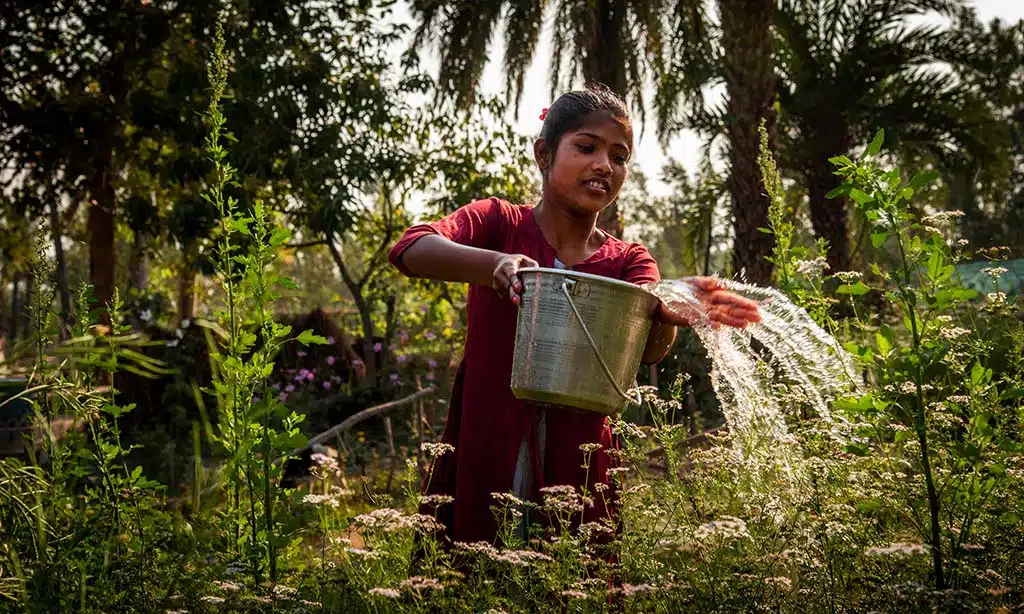
WaterAid tackles water scarcity by promoting rainwater harvesting in vulnerable communities. They focus on clean water access, especially in rural areas where shortages hit hardest.
Their projects include rooftop rainwater harvesting systems, helping families collect and store safe drinking water.
In countries like Brazil and India, WaterAid works with locals to build simple, effective systems. These setups reduce reliance on unreliable sources. Government subsidies often support their work, making it easier for poor communities to adopt the WaterA WaterAid also trains people to maintain the systems, ensuring long-term water security.
Their efforts show how small-scale make a make a big difference.
Activities of The Rainwater Harvesting Alliance
The Rainwater Harvesting Alliance works hard globally to improve water security. They focus on collecting and storing rainwater, which helps fight the global water crisis.
Their efforts support rural areas in Brazil, China, New Zealand,and Thailand, where cleanaccess remains tough..
Government subsidies help poor communities install these systems faster. Research keeps improving their methods, checking quality alongthe way. From rooftopsto large tanks,they adapt solutions locally. Every project strengthens community resilience against drought..
Contributions of Global Water Partnership (GWP)
The Global Water Partnership (GWP) tackles water scarcity by pushing rainwater harvesting as a key solution. They work with governments and communities to fund small-scale projects, especially in rural areas like Brazil and Thailand.
By promoting rooftop systems, they help improve water security for those in need. Their efforts include research on water-quality checks to make sure stored rainwater stays safe for use.
GWP also pushes for government subsidies to get more people using these systems, particularly poorer communities. They focus on sustainable development by blending eco-friendly practices with local needs.
Through capacity development, they teach folks how to manage their own water resources better. Rainwater harvesting may seem simple, but GWP shows it’s a game-changer against the global water crisis.
Their approach combines tech, community engagement, and smart policies for long-term impact.
Projects by Rainwater Harvesting Foundation of India
The Rainwater Harvesting Foundation of India tackles water scarcity head-on with practical solutions. This nonprofit promotes rooftop rainwater harvesting across rural and urban areas, helping communities store precious rainfall instead of letting it go to waste.
Their projects focus on simple, low-cost systems that anyone can use.
Government subsidies make these systems more affordable for poorer households. The foundation also checks water quality to keep stored rainwater safe. Countries like Brazil and China have seen success with similar programs, proving small-scale efforts can create big change.
Clean water access improves lives, one drop at a time.
Impact of The RainCatcher Project
The RainCatcher Project tackles the global water crisis by bringing clean water access to communities in need. They install rooftop rainwater harvesting systems in rural areas, proven effective in countries like Brazil and Thailand.
Poorer communities benefit most from these affordable, sustainable solutions.
Government subsidies help boost adoption of their systems, making them more accessible. The project also checks water quality regularly to keep it safe for drinking and daily use. By focusing on small-scale projects with big impact, RainCatcher improves water security while fighting climate change effects one drop at a time.
Their work shows how simple tech can solve big problems with community engagement and smart resource management.
Work of Engineers Without Borders
Engineers Without Borders (EWB) tackles water scarcity head-on by designing rainwater harvesting systems for communities in need. They focus on practical, low-cost solutions that anyone can use.
Their projects often include rooftop collection tanks and simple filtration methods. These systems help rural areas in countries like Brazil and Thailand access clean water without relying on distant sources.
EWB works closely with locals to teach them how to maintain the technology long-term.
Rainwater harvesting is a key part of EWB’s strategy for sustainable development. They test water quality regularly to make sure it’s safe for drinking and farming. Government subsidies sometimes support their work, making it easier for poorer communities to adopt these systems.
By combining engineering skills with community engagement, EWB turns rainwater into a reliable resource. Their efforts prove that small-scale projects can have a big impact on global water security and climate change adaptation.
Programs of The Water Project
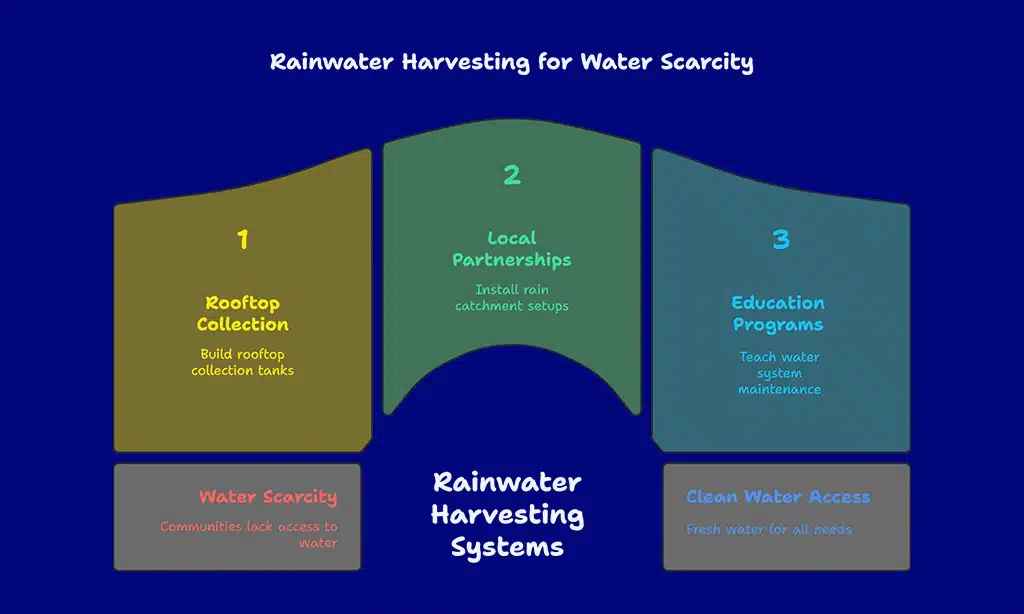
The Water Project tackles water scarcity by funding rainwater harvesting systems in rural Africa. Their programs focus on clean water access, helping communities build rooftop collection tanks and storage solutions.
These projects cut down long walks for water, especially benefiting women and children.
They partner with local groups to install simple but effective rain catchment setups. Each system provides fresh water for drinking, farming, and hygiene needs. Schools also get these systems so kids spend less time fetching water and more time learning.
The Water Project proves small-scale tech can make a big difference in the global water crisis.
Strategies of Blue Planet Network
Blue Planet Network tackles water scarcity with smart, community-driven rainwater harvesting projects. They focus on empowering local groups to build sustainable systems clean water clean water access in places like rural India and Africa.
Their approach blends water technology with hands-on training, helping communities manage their own resources.
Funding comes from partnerships with governments and NGOs, making small-scale projects possible. Blue Planet Network also tracks water-quality parameters to keep systems safe and effective.
By promoting rooftop rainwater harvesting, they cut dependence on unreliable sources. Their work proves that simple solutions can fight big problems like climate change adaptation and global water crisis.
Achievements of RAIN Foundation
The RAIN Foundation has made big strides in fighting water scarcity. Through simple, effective rainwater harvesting systems, they help communities collect and store rain instead of letting it go to waste.
Their work shines in rural areas of Brazil, China, New Zealand, and Thailand. Poorer families now get clean water thanks to government subsidies that encourage system installations.
The group checks water quality often to keep these setups safe and long-lasting.
Small projects can change lives, and the RAIN Foundation proves it. They back research on better ways to catch rain while promoting new tech for water management. Their global efforts support eco-friendly practices that tackle climate change head-on.
By focusing on community engagement, they turn local ideas into real solutions for water security. Every drop saved means more hope for those facing shortages daily.
Takeaways
Rainwater harvesting tackles water scarcity, and these 12 nonprofits lead the charge globally. Groups like IRHA and Save the Rain prove small actions create big change. From India’s grassroots projects to RAIN Foundation’s global efforts, each drop saved counts.
Want to help? Start by supporting local water initiatives or sharing what you learned today. Clean water access isn’t a luxury—it’s a right these organizations fight for daily.
Every rooftop system or community tank brings us closer to water security. Let’s turn rain into hope, one harvest at a time.