Have you ever come up with a great app idea but felt stuck without coding skills? It is frustrating to see progress slow down while waiting for developer support. A major shift is underway in how digital products are created. Building apps no longer requires writing complex code from scratch.
No-code SaaS platforms are opening new doors for non-developers across the United States and beyond. These intuitive tools allow ideas to be transformed into real, working products with minimal technical expertise.
Here is a simple, step-by-step breakdown of how these platforms work and how they can support career growth.
What Are No-Code SaaS Platforms?
Think of no-code platforms as digital building blocks. They let you create software, websites, and automated workflows using simple visual editors.
You do not need to understand complex programming languages to get started. A 2026 report from Gartner predicts that by the end of the year, over 75% of new enterprise applications will be built using these exact types of low-code or no-code tools.
That means learning these platforms is a direct investment in your professional future.
Key Features of No-Code Platforms
These platforms are packed with features that make app building accessible to absolutely everyone. Here are the core elements you will find in almost every major tool:
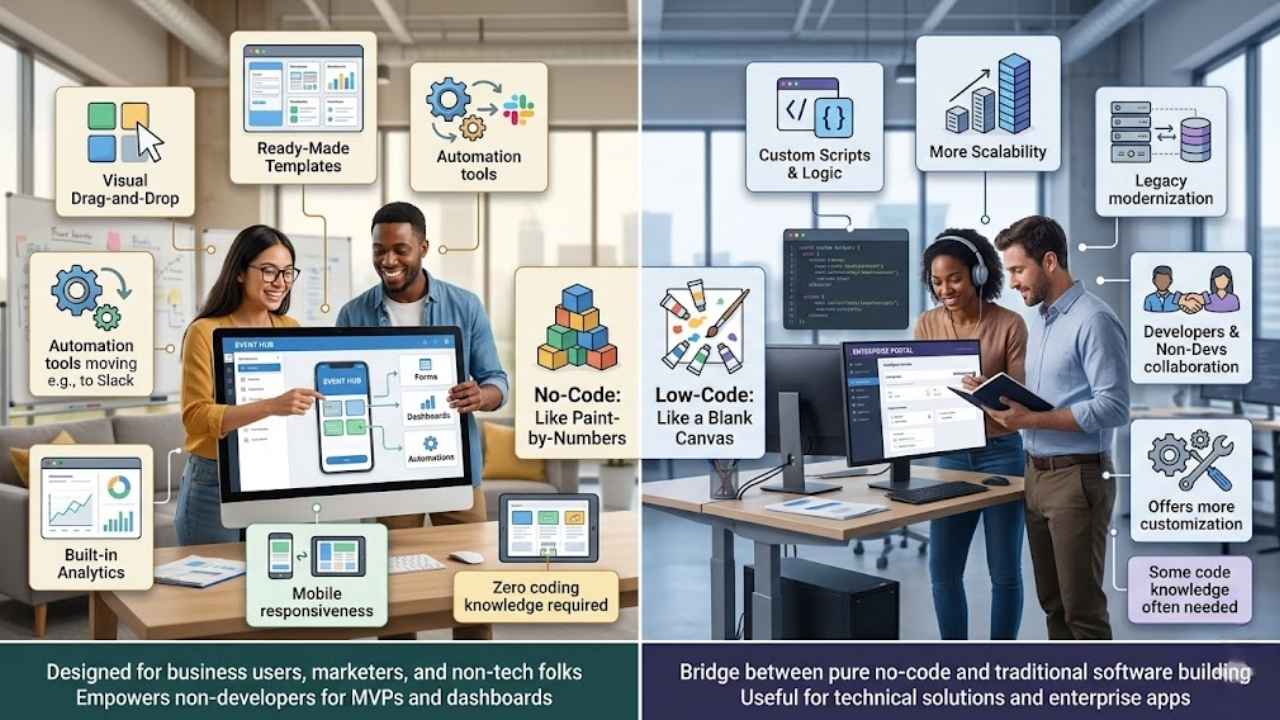
- Visual editors: These let you drag, drop, and arrange elements on a screen without touching HTML.
- Pre-built templates: You get a massive head start with ready-made layouts for forms and dashboards.
- Automation tools: You can set up simple triggers to move data automatically between systems.
- Integration capabilities: They connect easily to your existing workspace tools like Google Sheets or Slack.
- User-friendly interfaces: The screens are clean, clear, and simple to navigate.
- Permission controls: You can lock down sensitive company information safely.
- Real-time previews: You see exactly what your app looks like as you build it.
- Built-in analytics: You can track user activity directly from your admin dashboard.
- Collaboration features: Your whole team can leave comments and edit projects together.
- Mobile responsiveness: Everything automatically looks great on smartphones and tablets.
These simple features are turning regular employees into capable “citizen developers” overnight.
Differences Between No-Code and Low-Code
People often mix up no-code and low-code, but they serve very different purposes. No-code is like a paint-by-numbers kit, while low-code is a blank canvas that requires some technical skill.
Check out this simple breakdown to see which one fits your specific needs:
| No-Code Platforms | Low-Code Platforms |
|---|---|
|
|
Benefits of No-Code SaaS Platforms for Non-Developers
You might be wondering why your company should switch to these specific tools. The advantages go way beyond just avoiding code.
These platforms actually change how your entire team operates on a daily basis.
Democratization of Application Development
For decades, creating software was an exclusive club. Only people with computer science degrees could build the tools a business needed to survive.
No-code blows those doors wide open. Now, the people who actually understand the business problems are the ones building the solutions.
“The people closest to the problem are finally the ones holding the tools to solve it.”
A 2026 report from Retool found that 35% of enterprise teams have already replaced at least one expensive SaaS subscription with a custom tool they built themselves. This evens the playing field for everyone in the office.
Reduced Time to Market
Building an app the traditional way can take six to twelve months. That is a lifetime in today’s fast-moving market.
No-code platforms shrink that timeline dramatically. In a recent 2025 Enterprise Survey by Bubble, 80% of users reported their development process was at least three to eight times faster.
Another 8% said they moved nine times faster using visual builders. This incredible speed means you can test a new product idea over a weekend and launch it by Monday.
Cost Efficiency and Resource Optimization
Hiring a full engineering team is incredibly expensive. In the US, the median salary for a single software developer sits around $120,000 as of 2026, according to Coursera data.
That figure does not even include benefits, recruiting fees, or software licenses. In contrast, many powerful no-code platforms offer professional plans for less than $100 a month.
By empowering your current staff to build what they need, you optimize your payroll immediately. You also free up your actual engineers to focus on highly complex security tasks instead of building basic data entry forms.
Enhanced Collaboration Between Teams
Different departments often struggle to share information because their software systems do not talk to each other. No-code tools act as a universal translator.
For example, using a workflow automation tool like Zapier, a marketing manager can automatically send new Facebook leads directly into the sales team’s Salesforce dashboard. Nobody has to copy and paste data manually ever again.
These clear, visual workflows make it easy for everyone to see how a process works. When everyone understands the system, teamwork improves naturally.
Popular No-Code Platforms to Explore
There are hundreds of tools out there, but a few really stand out in 2026. Let us look at some of the best options for different professional use cases.
Unlayer
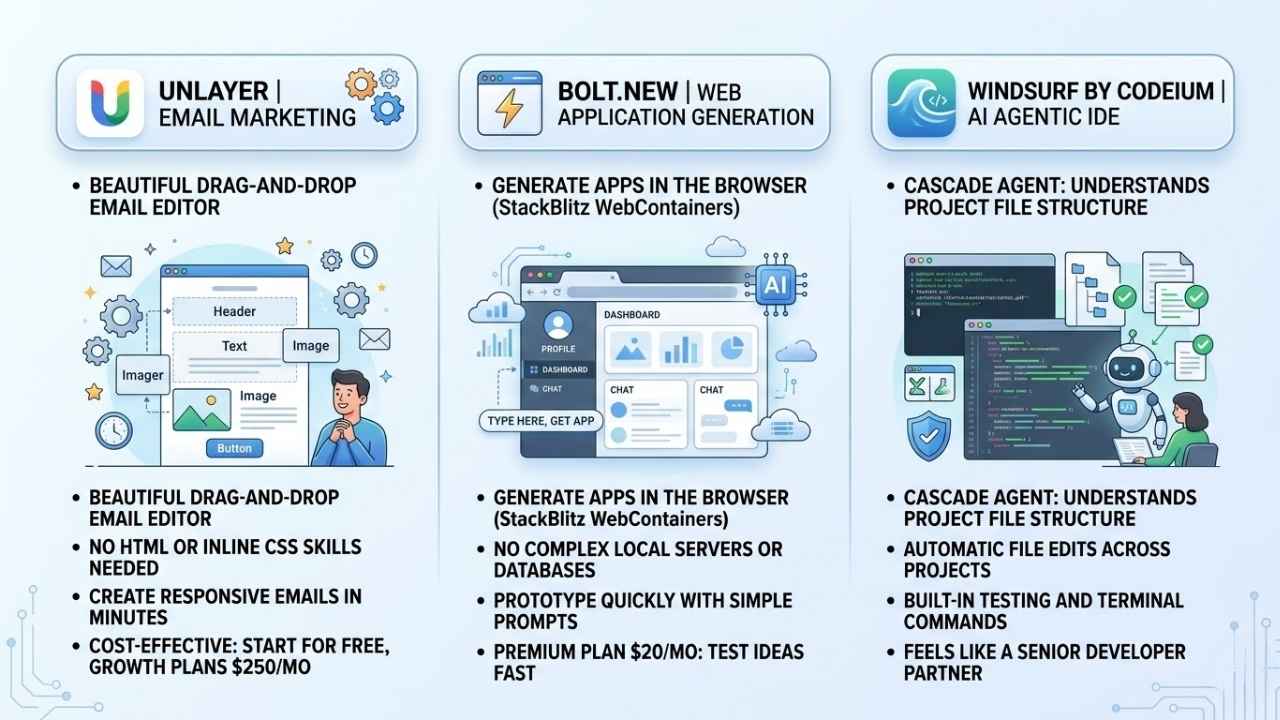
If your team spends hours struggling with clunky email marketing designs, Unlayer is a fantastic solution. It provides a beautiful, drag-and-drop editor that makes creating responsive emails incredibly simple.
You do not need to fight with HTML tables or inline CSS styles anymore. Here is what makes it a top choice:
- Drag-and-drop design: Build amazing layouts without touching a single line of code.
- Cost-effective plans: You can start for free, and growing teams can utilize their Launch plan starting at $250 per month.
- Time savings: Cut down your marketing launch times and get your campaigns out faster.
This allows non-technical teams to craft stunning digital content entirely on their own.
Bolt.new
Bolt.new is making massive waves for people who want to generate full web applications quickly. Created by the team at StackBlitz, it runs entirely in your web browser using their unique WebContainers technology.
This means you do not have to install any complicated local servers or databases to get started. You simply type what you want in plain English, and the AI builds the application interface right before your eyes.
For just $20 a month on their Premium plan, you get a solid environment to test out rapid prototypes. It is perfect for entrepreneurs who want to validate a software idea fast.
Windsurf by Codeium
While technically more of an AI-assisted coding environment, Windsurf by Codeium is bridging the gap for non-developers. It is widely known as the first “agentic IDE”.
Here is why it stands out for everyday users:
- The Cascade Agent: It acts like a digital partner that understands your entire project file structure.
- Automatic execution: You can ask it to add a new feature, and it edits multiple files automatically.
- Built-in testing: It runs terminal commands to make sure the new code actually works.
It feels like having a senior developer sitting right next to you, ready to help.
Common Use Cases of No-Code Platforms
Now that you know the tools, what can you actually build with them? The possibilities are endless, but here are the most common ways businesses use them today.
Internal Tools and Workflow Automation
Most companies run on a messy web of spreadsheets and manual data entry. No-code platforms allow you to replace those headaches with custom internal tools.
For instance, a warehouse manager can use a platform like Retool to build a custom inventory tracker in a single afternoon. They just connect their existing database and drag a few buttons onto a screen.
This removes boring, repetitive tasks from your daily routine. It frees your staff up to focus on work that actually grows the bottom line.
MVP Development for Startups
A Minimum Viable Product (MVP) is the first, basic version of your app used to test the market. In the past, founders had to spend tens of thousands of dollars to launch one.
“A solo founder can now design, build, and launch a fully functional software business from their laptop, entirely on their own.”
Today, tools like Bubble are the go-to choice for startup founders. As of 2025, over 4.7 million applications have been built on the Bubble platform alone.
You can secure your first paying customers without ever hiring a technical co-founder.
Digital Content Creation and Marketing Automation
Marketing teams rely heavily on visual content to engage customers. No-code editors make creating that content completely frictionless.
Instead of begging a graphic designer for help, a marketer can use a tool like Unlayer to build their own assets. These platforms offer specific advantages for marketing:
- Template libraries: Access hundreds of professional designs instantly.
- Brand consistency: Lock in your specific company colors and fonts for every email.
- Automated scheduling: Set up drip campaigns that run perfectly while you sleep.
Personalizing the customer journey is now as easy as clicking a few buttons.
Customer Support Tools and Chatbots
Customers expect immediate answers to their questions, no matter the time of day. Building a customer support chatbot used to require complex AI programming.
Now, platforms like Zendesk or Intercom offer visual bot builders. A small business owner can map out an automated conversation flow in under an hour.
These bots can handle basic returns, answer shipping questions, and collect customer feedback automatically. It provides a better experience for your buyers and takes a massive load off your human support agents.
Challenges and Limitations of No-Code Platforms
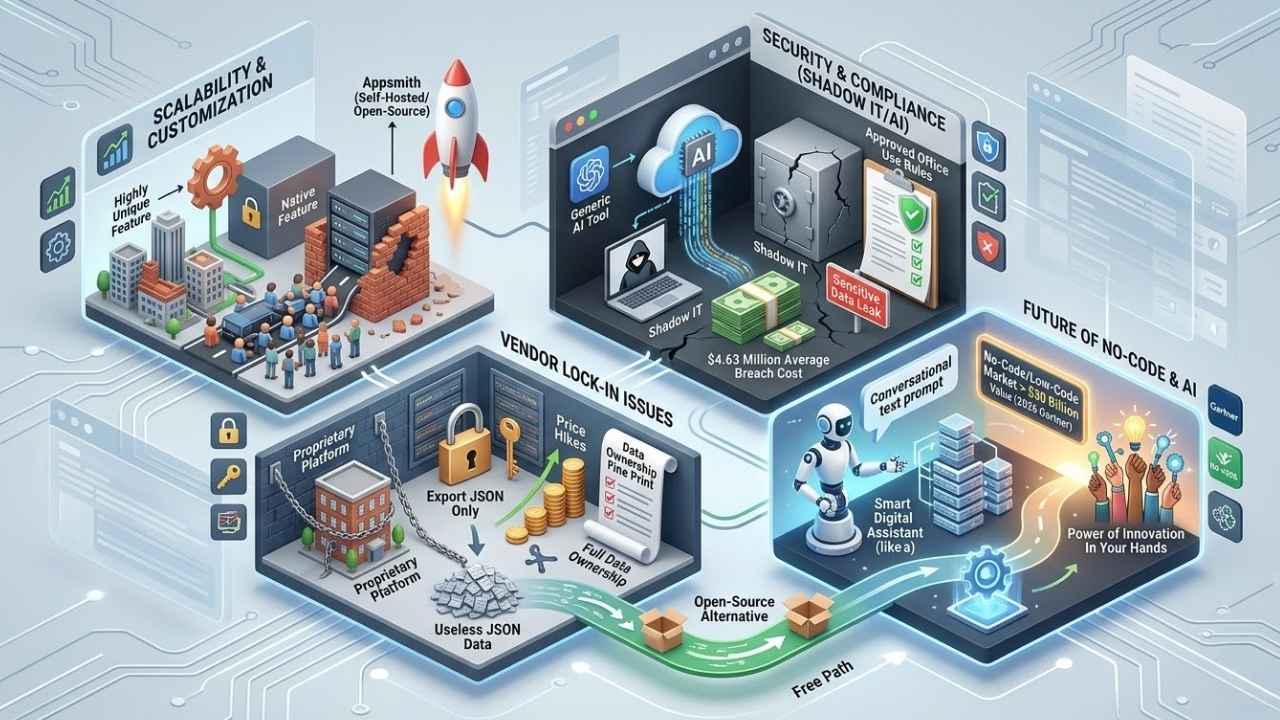
As amazing as these tools are, they are not perfect for every single situation. It is very helpful to know the roadblocks before you commit your data to a platform.
Scalability and Customization Concerns
Visual builders are incredible for getting off the ground quickly. However, if your app suddenly gets millions of users, some proprietary platforms might struggle to keep up.
You might also hit a wall if you need a highly unique feature that the platform does not offer natively. For massive, complex applications, traditional coding or a self-hosted open-source tool like Appsmith might eventually be necessary.
It is always a smart move to plan for your future growth before you begin building.
Security and Compliance Risks
When employees start building their own tools without telling the IT department, it creates a massive security blind spot. This is known in the industry as “Shadow IT” or “Shadow AI.”
“Organizations dealing with high levels of Shadow AI face average breach costs of around $4.63 million.”
This is a very real financial risk. According to a 2026 Netwrix and IBM report, companies face average breach costs of $4.63 million when unmanaged AI tools leak sensitive data.
If a helpful employee pastes sensitive US customer data into a generic AI tool to build a quick app, that data is no longer secure. You must establish clear rules about which platforms are approved for office use.
Vendor Lock-In Issues
When you build an app on a proprietary platform, you do not actually own the underlying code. You are essentially renting the space on their servers.
This creates a situation known as vendor lock-in. Keep these important factors in mind before choosing a software partner:
- Export limits: Many popular platforms only let you export your app as a JSON file, which is useless without their specific software to read it.
- Price hikes: If you are locked in, you have no choice but to pay whatever new fee they demand next year.
- Data ownership: Always read the fine print to ensure you maintain full ownership of your customer lists and internal data.
Choosing an open-source alternative early on is one excellent way to avoid this trap completely.
The Future of No-Code SaaS Platforms
The way we build software has fundamentally changed forever. By the end of 2026, Gartner projects the low-code and no-code market will exceed $30 billion in value.
These user-friendly visual interfaces are getting smarter every single day. We are already seeing platforms integrate advanced AI that can build entire database structures from a simple conversational prompt.
This technology puts the power of innovation directly into your hands. You do not need to wait for permission or a massive budget to solve a real business problem anymore.
Final Thoughts
No-code SaaS platforms make building apps and automating tasks easy for everyone, not just tech experts. These tools save your team time, cut costs, boost teamwork, and open doors for anyone with ideas to create digital products fast.
Simple menus and drag-and-drop editors help you turn thoughts into working software without stress or long wait times. For more tips or a deeper look, check out guides from trusted sites like Zapier or Makerpad. Take that first step today. Your next big idea could be only a few clicks away!