The new documentary The Perfect Neighbor is making waves upon its release on Netflix — and for more than just being “another true-crime film.” With widespread praise and brisk audience uptake, it appears poised to shift how the streamer’s true-crime slate is perceived.
The film holds a perfect 100% rating on the aggregator site Rotten Tomatoes, where critics describe it as “as gripping as it is deeply unsettling… laying bare the systemic failures and the quiet terror embedded in American legal systems with surgical precision.”
According to streaming-tracking service FlixPatrol, on its first full day of release it jumped into Netflix’s global Top 10 catalogue of movies — ranking third globally on October 18, ahead of some of the platform’s previously strongest originals.
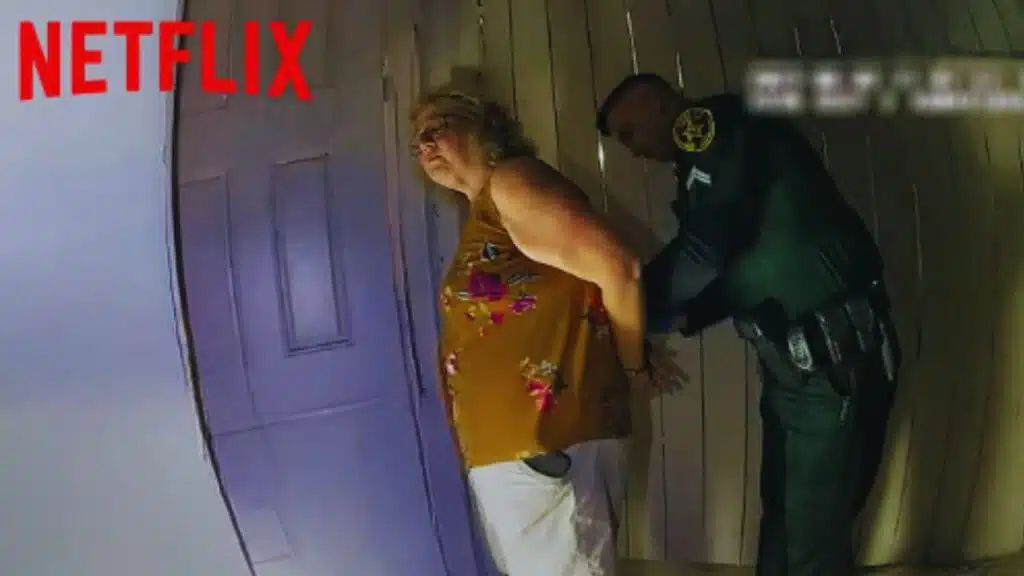
What makes the rise of The Perfect Neighbor significant is not simply its viewership, but why and how it tells its story: via police body-camera footage, 911 calls and raw materials, instead of over-produced recreations. That storytelling choice opens the door to a deeper critique of race, gun violence, neighbourhood conflict and systemic inertia.
What the Film Shows — The Story at Its Core
The incident
At the heart of the documentary is a fatal encounter in Ocala, Florida, on June 2, 2023. The victim: Ajike “AJ” Shantrell Owens, a 35-year-old Black single mother of four, who was shot and killed by her white neighbour, Susan Lorincz.
Leading up to the shooting, a series of neighbourhood tensions had erupted: Lorincz repeatedly called the sheriff’s office to complain about Owens’ children playing near her property; neighbours told police she filmed children with her phone, accused them of trespass, and used racial slurs.
On that day in June, the confrontation escalated after a skateboard was tossed at one of Owens’ children, prompting Owens to visit Lorincz’s door. Lorincz fired a single shot through her locked door, striking Owens.
The legal outcome
Lorincz was arrested and charged, despite invoking Florida’s “stand your ground” defence. In August 2024, a jury convicted her of manslaughter, and in November she was sentenced to 25 years in prison. The judge described the shooting as “completely unnecessary.”
The film’s presentation
Directed by Geeta Gandbhir, the documentary runs approximately 96-97 minutes. It opts for a near-unmediated presentation: much of the film is composed of police body-cam footage, 911 calls, and surveillance video — with minimal narration, no dramatic reenactments, and only limited interviews.
Gandbhir said the film was “a deeply personal project, created to transform grief into purpose and honor the lasting legacy of Ajike Owens and her family.”
Why It Matters — Storytelling, Systems & Streaming
A fresh shape for true crime
Many streaming-platform true-crime offerings lean on talking-head interviews, reconstructed drama, and glossy production. The Perfect Neighbor flips that model: by building its narrative from raw footage, it forces the viewer into the escalation of events, minor tensions becoming major trauma. Critics note it plays more like a horror film than standard documentary.
Variety writes that the body-cam approach “unfolds like a horror film, but it’s real. The Guardian observed the film “avoids traditional documentary tropes… presenting an unfiltered, emotionally harrowing narrative.”
A critique of “neighbour disputes,” racialised fear and gun law
On surface level, the event might read as “neighbourly conflict went too far.” But the film works by exposing how micro-conflict can map onto macroseam issues:
- A white neighbour repeatedly alarms about Black children playing, making trivial complaints escalate.
- The legal regime (including Florida’s stand-your-ground law) frames a white person’s fear as sufficient cause for deadly force, even though racial dynamics complicate the “fear” claim.
- The policing and judicial response appears delayed, raising questions of institutional complacency and differential treatment along racial lines.
In short: the drama is personal, yes — but the film makes it systemic. As one critic put it: “a microcosm of a violent America.”
What this means for the streamer and audience
For Netflix, the success of a documentary like this signals a few shifts:
- A willingness to invest in more serious, socially consequential true-crime content rather than purely sensational fare.
- An appetite from viewers for stories that challenge rather than just entertain.
- The possibility that true-crime can be used not just to shock, but to provoke reflection and discussion on race and justice.
For audiences, the film raises an implicit challenge: how much do we recognise these “neighbourhood” conflicts as embedded in structural patterns of power, fear and law?
Release & Early Reception
The film premiered at the Sundance Film Festival in January 2025, where Gandbhir won the U.S. Documentary Directing Award. Netflix acquired it for an estimated US$5 million. It received a limited theatrical release in the U.S. beginning October 10, 2025, and began streaming globally on Netflix October 17, 2025.
Within a day of streaming availability, it charted globally on Netflix’s Top 10 for movies — on October 18 it ranked third most-watched globally on Netflix.
Critically, it has been styled as a possible awards contender; commentators already suggest it could reshape how true crime is discussed in streaming.
Deeper Considerations & Caveats
- Footage vs. framing: While the film relies on “raw” footage, editing is still a form of framing. What’s selected, what’s left out, and how the footage is sequenced shape meaning. Viewers should remain aware of this. Critics have flagged that while the presentation is bold, the filmmakers still made choices.
- Ethics of depiction: The presence of children, body-cam trauma, and neighbourhood surveillance introduces ethical questions. Some reviews have raised concerns about how survivors, witnesses and community members are represented.
- True-crime fatigue: The genre is large and growing. While the film offers a fresh approach, whether it triggers long-term engagement or change depends on the viewer’s willingness to go beyond “shock.”
- Systemic change is not guaranteed: Documentaries can shine a light, but structural reform requires political will, public pressure and institutional action. The film highlights failures, but the question remains: what happens next?
The Perfect Neighbor is more than a compelling documentary — it is a challenge to how neighbourhood conflict, gun laws and race get represented in mainstream media and streaming content. With its insistence on letting footage speak for itself, the film invites viewers not just to observe, but to interrogate: who gets to feel safe? Whose fear is treated as legitimate? And how do laws intended to protect life sometimes protect violence instead?
If you’re interested in true-crime that demands reflection rather than just chills, this is one of the most ambitious and unsettling offerings of 2025.
The Information is Collected from Collider and Yahoo.