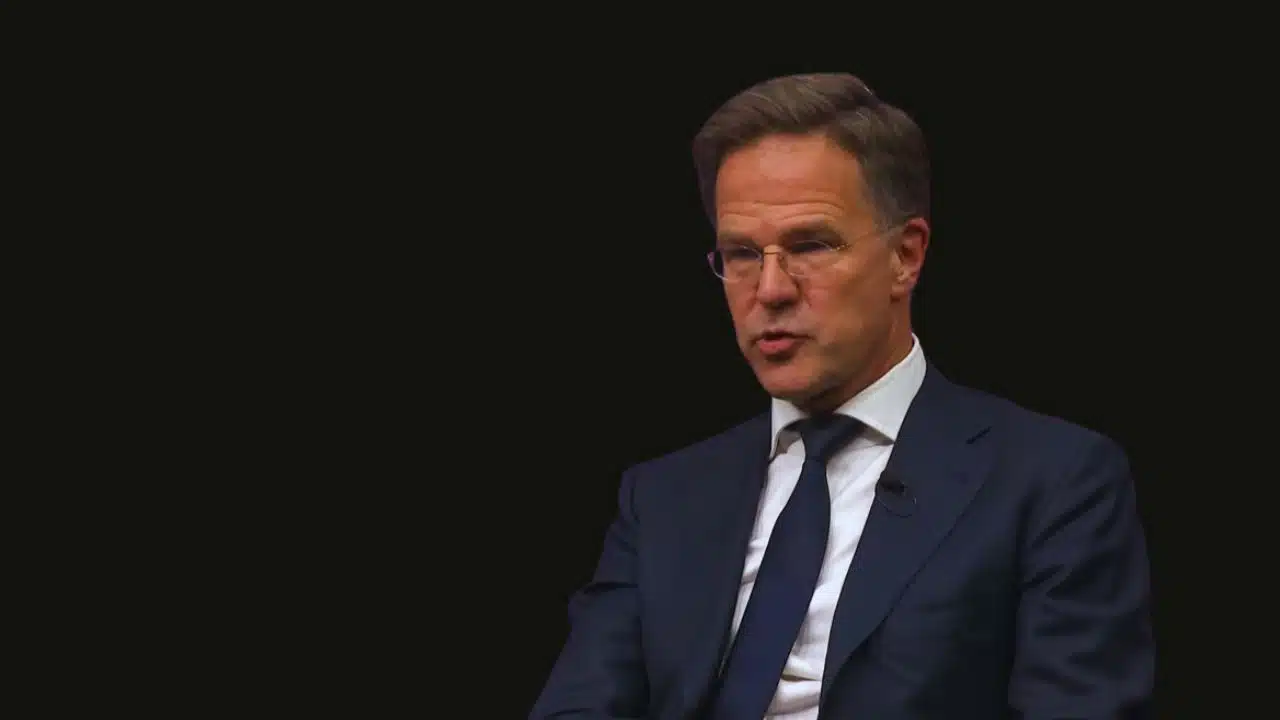
NATO Secretary-General Mark Rutte reaffirmed the strength and credibility of the alliance’s nuclear deterrence capabilities following the successful completion of its annual nuclear exercise earlier this month. Speaking in an interview with a German weekly, Rutte said the recent military drills provided him with “absolute confidence in the credibility of NATO’s nuclear deterrence,” especially at a time when Russia’s nuclear rhetoric continues to intensify.
Rutte explained that these exercises serve as a vital demonstration of NATO’s readiness and cohesion in defending its member states. The drills, which involve coordination among multiple allied nations, test the operational readiness of NATO’s nuclear forces and ensure that deterrence strategies remain effective under real-world scenarios. According to him, this year’s exercise clearly showed that the alliance possesses not only the necessary technology and command structure but also the political resolve to deter any form of aggression.
In a strong message aimed at reassuring citizens across NATO countries, Rutte emphasized that there is no reason for fear or panic. He stated that when Russia engages in “dangerous and reckless nuclear rhetoric,” NATO populations must remain confident in the alliance’s capacity to respond to any threat. He reiterated that the alliance’s nuclear shield remains robust, credible, and backed by collective will.
Mark Rutte also underscored a long-standing principle shared by nuclear powers worldwide: “A nuclear war can never be won and must never be fought.” This statement echoes the moral and strategic understanding that nuclear deterrence exists not for use but for prevention—ensuring peace through strength. His remarks aimed to send a clear signal to Moscow and particularly to Russian President Vladimir Putin that NATO’s unity and deterrence posture remain unshakable.
Rutte’s comments come amid heightened nuclear tensions since Russia’s full-scale invasion of Ukraine in 2022. In recent months, Moscow’s leadership has issued repeated warnings suggesting that nuclear weapons could be deployed under certain conditions. President Vladimir Putin recently stated that Russia could use nuclear weapons if struck by conventional missiles, framing such a strike—especially if backed by a nuclear-armed country—as a collective assault on Russia. These threats have prompted strong responses from Western leaders who stress the need to maintain calm while reinforcing deterrence measures.
The success of NATO’s nuclear exercise carries broader strategic implications. It demonstrates that the alliance continues to modernize its forces, integrate new defense technologies, and strengthen coordination among its members. These efforts ensure that deterrence remains effective in a rapidly changing global security environment. Rutte pointed out that NATO’s nuclear policy is designed not to provoke but to prevent conflict, by leaving no doubt in any adversary’s mind about the alliance’s readiness and capacity to defend itself.
For many defense analysts, the renewed emphasis on nuclear readiness also reflects a shift in Europe’s security mindset. The geopolitical landscape since 2022 has pushed NATO to expand its defense budgets, enhance its missile defense systems, and invest more heavily in deterrence capabilities. The annual nuclear drills serve as a tangible reminder to both allies and adversaries that NATO’s collective defense remains a core pillar of transatlantic stability.
Rutte’s reassurance was aimed at both strategic and psychological dimensions: to demonstrate to Russia that any attempt to test NATO’s resolve would fail, and to assure NATO citizens that the alliance remains steadfastly prepared. In his words, while Russia’s rhetoric may be loud and intimidating, NATO’s preparedness and unity are stronger than ever.
Since the onset of the Ukraine war, Russia has repeatedly hinted at the possible use of nuclear weapons, using such statements as tools of intimidation and psychological warfare. Putin has warned that Moscow could respond with nuclear force if its sovereignty is threatened, even by conventional weapons. This type of rhetoric, experts note, is intended to sow fear among Western populations and weaken NATO’s cohesion.
NATO’s leadership, however, has consistently rejected such tactics. Through ongoing exercises, increased readiness, and expanded cooperation, the alliance seeks to show that it remains both calm and capable. The recent nuclear drills are not symbolic gestures; they are designed to simulate realistic conditions under which NATO’s nuclear forces would be activated, ensuring that all systems—from command communications to launch protocols—function seamlessly.
Rutte’s remarks were also directed toward reinforcing NATO’s principle of collective defense under Article 5, which states that an attack on one member is an attack on all. This unity, combined with the alliance’s advanced deterrence mechanisms, remains NATO’s greatest strength. The Secretary-General highlighted that deterrence is not merely about weaponry—it is about credibility, trust, and commitment among allies.
Experts believe Rutte’s statement marks a continuation of NATO’s strategic communication approach: balancing firmness with reassurance. The message to adversaries like Russia is clear—any nuclear escalation would meet an overwhelming and coordinated response—while the message to citizens is equally strong—there is no cause for panic because deterrence works precisely by preventing such conflicts.
In essence, NATO’s nuclear exercises reaffirm a fundamental truth of modern geopolitics: peace is preserved not through fear but through preparedness. By maintaining credible deterrence and strategic unity, the alliance ensures that nuclear weapons remain tools of prevention rather than instruments of war.
Rutte’s confidence in NATO’s deterrence capability thus stands as both a declaration of readiness and a call for stability—a reminder that even in an age of uncertainty, collective defense and reasoned leadership can keep global security intact.
The Information is Collected from US News and Yahoo.