

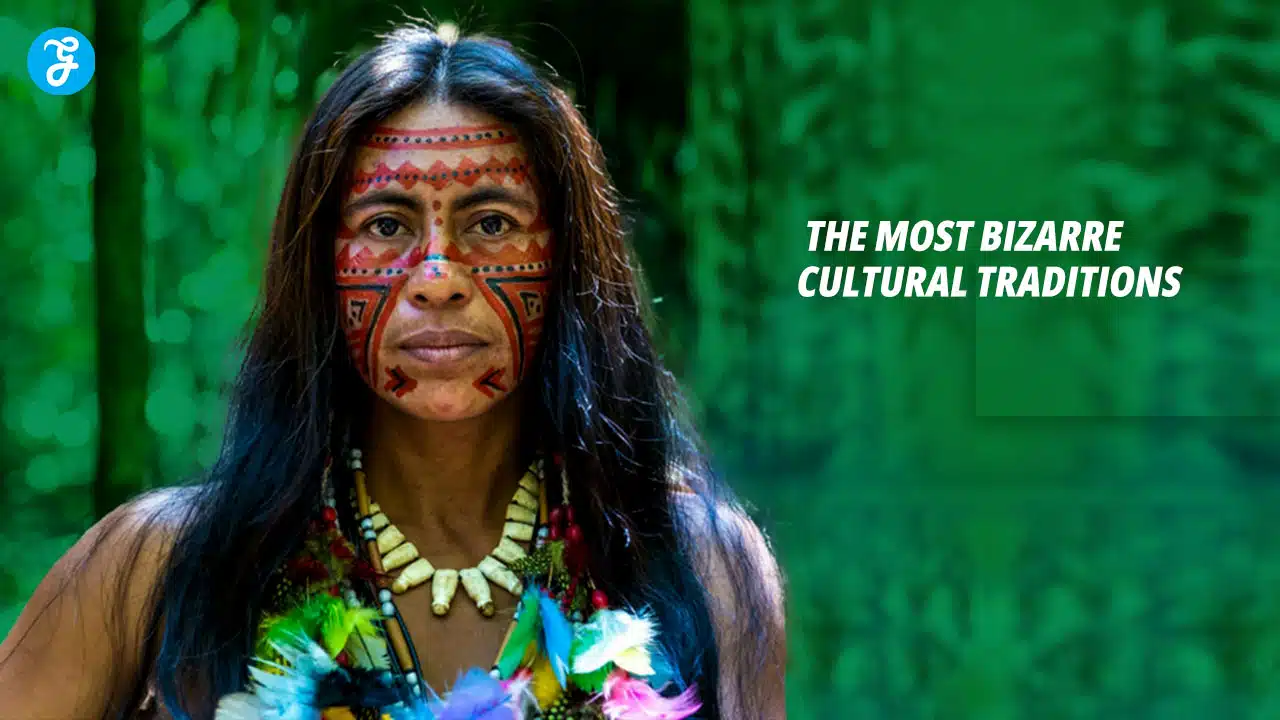
Our world is a tapestry of diverse cultures, each with its own unique customs and traditions. While many practices are familiar and easily understood, some traditions might seem downright strange to outsiders. This article explores 10 of the most bizarre cultural traditions from around the globe, offering a glimpse into the fascinating and sometimes perplexing world of human customs.
The Most Bizarre Cultural Traditions around the world
From baby-jumping devils in Spain to bone-turning ceremonies in Madagascar, our world is filled with traditions that can seem downright bizarre to outsiders. These practices, however strange they may appear, offer fascinating insights into the diverse ways humans make sense of life, death, and everything in between. Join us on a journey through some of the most unusual cultural traditions from around the globe, where the line between the ordinary and the extraordinary blurs in surprising and often thought-provoking ways.
1. Baby Jumping Festival (El Colacho) – Spain
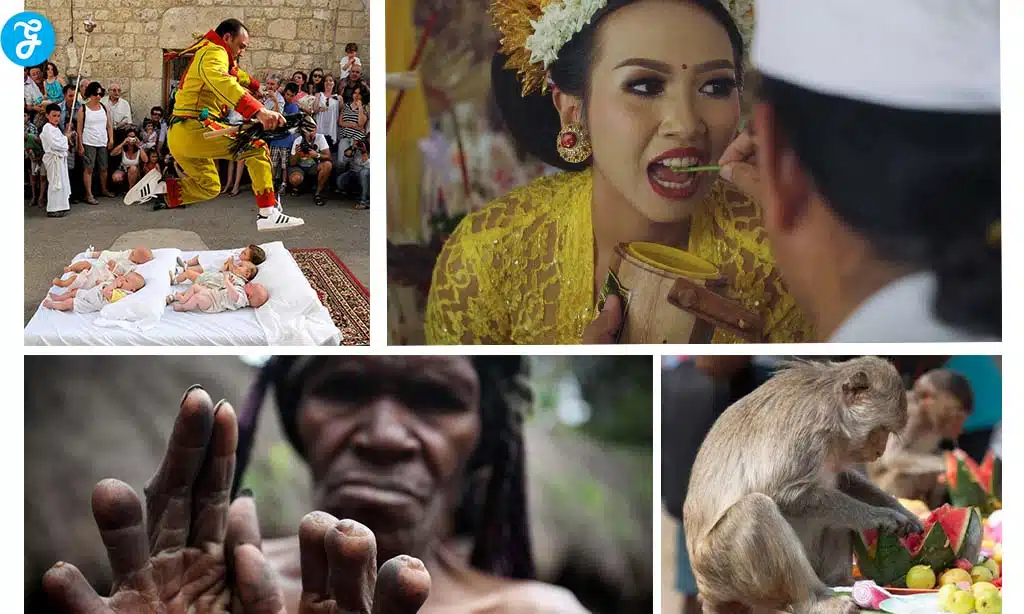
In the small Spanish village of Castrillo de Murcia, a peculiar tradition takes place each year during the festival of Corpus Christi. Known as El Colacho, or the Baby Jumping Festival, this event involves men dressed as devils jumping over babies lying on mattresses in the street.
This tradition, dating back to 1620, is believed to cleanse the babies of original sin and protect them from illness and evil spirits. While the Catholic Church has distanced itself from the practice, locals continue to participate enthusiastically. Parents place their infants, born within the last twelve months, on mattresses lining the street. Then, men dressed in yellow and red costumes, representing the devil, run and jump over the babies.
Despite its apparent dangers, there have been no reported injuries in the festival’s history. However, the practice has drawn criticism from child safety advocates. In recent years, some parents have opted to place pillows or dolls in place of their babies, while still participating in the tradition.
2. Finger Cutting Mourning Ritual – Indonesia
Among the Dani tribe in Papua, Indonesia, a gruesome mourning ritual involves women cutting off parts of their fingers when a loved one dies. This practice, known as Ikipalin, is believed to be a way to express grief and appease ancestral ghosts.
When a family member dies, female relatives are expected to cut off the top joint of one of their fingers using a stone axe. The amputated finger joint is then dried and burned to ashes or stored in a special place. This ritual is repeated for each close relative who passes away, potentially resulting in multiple amputations over a woman’s lifetime.
The practice is rooted in the belief that physical pain helps to express emotional suffering and that the sacrifice will please the spirits of the deceased. While this tradition has been officially banned by the Indonesian government since the 1990s, it still occurs in some remote areas of Papua.
3. Tooth Sharpening – Bali
In Bali, Indonesia, some people still practice the ancient tradition of tooth filing or tooth sharpening, known as “Metatah” or “Mepandes. This ritual is considered a rite of passage, typically performed on teenagers as they transition into adulthood.
The ceremony involves filing down the canine teeth to make them level with the other teeth. It’s believed that this process helps to eliminate the six negative emotions in life: lust, greed, anger, intoxication, confusion, and jealousy. Each of these emotions is thought to be represented by the canine teeth.
A trained practitioner uses a file to carefully grind down the teeth. Despite how painful it might sound, the process is said to be relatively painless due to the expertise of the filer. The ritual is often accompanied by prayers and offerings to ensure the individual’s spiritual purity.
While this practice has become less common in urban areas of Bali, it remains an important tradition in many rural communities. Some modern dentists in Bali now offer a more hygienic version of the procedure for those who wish to maintain the tradition.
4. Bullet Ant Glove Ritual – Brazil
In the Amazon rainforest, the Sateré-Mawé tribe of Brazil practices a coming-of-age ritual that is considered one of the most painful initiation rites in the world. Young men must wear gloves filled with bullet ants, whose sting is said to be 30 times more painful than a bee sting.
The ritual begins with the collection of hundreds of bullet ants, which are then sedated using a natural herb solution. The unconscious ants are woven into gloves made of leaves, with their stingers facing inward. As the ants wake up, the young initiate must wear the gloves for 10 minutes.
The pain from the stings is excruciating and can last for days. Initiates often experience temporary paralysis in their arms and uncontrollable shaking. To complete the ritual and be considered a true warrior, a young man must go through this ordeal 20 times over several months or even years.
This tradition is believed to prepare young men for the pain and challenges of adult life, teaching them courage and resilience. It also symbolizes the transformation from boyhood to manhood in Sateré-Mawé culture.
5. Monkey Buffet Festival – Thailand
In the province of Lopburi, Thailand, a unique festival takes place each year that caters not to human tourists, but to the local monkey population. The Monkey Buffet Festival, held annually in November, involves setting out enormous spreads of fruit and vegetables for the area’s macaque monkeys.
This bizarre tradition began in 1989 as a way to boost tourism in the area. Lopburi is home to thousands of crab-eating macaques, which are considered sacred by many locals due to their association with the Hindu god Hanuman.
During the festival, elaborate towers of fruit and vegetables are constructed throughout the town, particularly around the ancient Khmer temple of Prang Sam Yot. The monkeys feast on watermelons, pineapples, bananas, and other fruits arranged in intricate displays. Some locals even dress up in monkey costumes to celebrate the event.
While the festival is a popular tourist attraction, it has raised concerns about the health and behavior of the monkeys. The abundance of food has led to a population boom, and some monkeys have become aggressive towards humans. Despite these challenges, the Monkey Buffet Festival remains a beloved and unusual tradition in Thailand.
6. Wife Carrying Championship – Finland
In Finland, a peculiar sport has gained international attention: wife carrying. The Wife Carrying World Championships have been held annually in Sonkajärvi, Finland, since 1992, attracting participants from around the world.
The competition involves male competitors racing through a 253.5-meter obstacle course while carrying their female partners. The track includes water obstacles and fences, adding to the challenge. The winner receives the wife’s weight in beer as a prize.
There are several approved carrying techniques, including piggyback, fireman’s carry, and “Estonian-style,” where the wife hangs upside-down with her legs around the husband’s shoulders and her arms around his waist.
The origin of this unusual sport is linked to the legend of Ronkainen the Robber, a 19th-century Finnish outlaw who allegedly tested aspiring gang members by making them run a difficult course with sacks of grain or live pigs on their backs. Some also say it stems from an old practice where men would steal wives from neighboring villages.
Despite its name, participants don’t need to be married, and some competitors are professional athletes. The sport has spread to other countries, with championships held in the United States, Australia, and the UK.
7. Thaipusam Festival – Malaysia and Singapore
Thaipusam is a Hindu festival celebrated primarily by Tamil communities in countries like Malaysia, Singapore, and Sri Lanka. While the festival itself is not bizarre, some of the rituals associated with it are extraordinary and may seem shocking to outsiders.
The most striking aspect of Thaipusam is the practice of body piercing as an act of devotion. Devotees pierce their cheeks, tongues, and other parts of their bodies with long skewers and hooks. Some carry elaborate contraptions called kavadi, which are large, decorated frames attached to the body with dozens of piercings.
Participants often enter a trance-like state during the piercing process and claim to feel no pain. They then undertake a pilgrimage to a temple, often walking for hours while bearing their burdens. This act of devotion is seen as a way to thank the deity Murugan for answered prayers or to seek his blessings.
The festival also involves other forms of penance, such as carrying pots of milk on the head or walking on beds of hot coals. Despite its intense nature, Thaipusam attracts millions of participants and spectators each year, making it one of the most spectacular religious festivals in Southeast Asia.
8. Camel Wrestling – Turkey
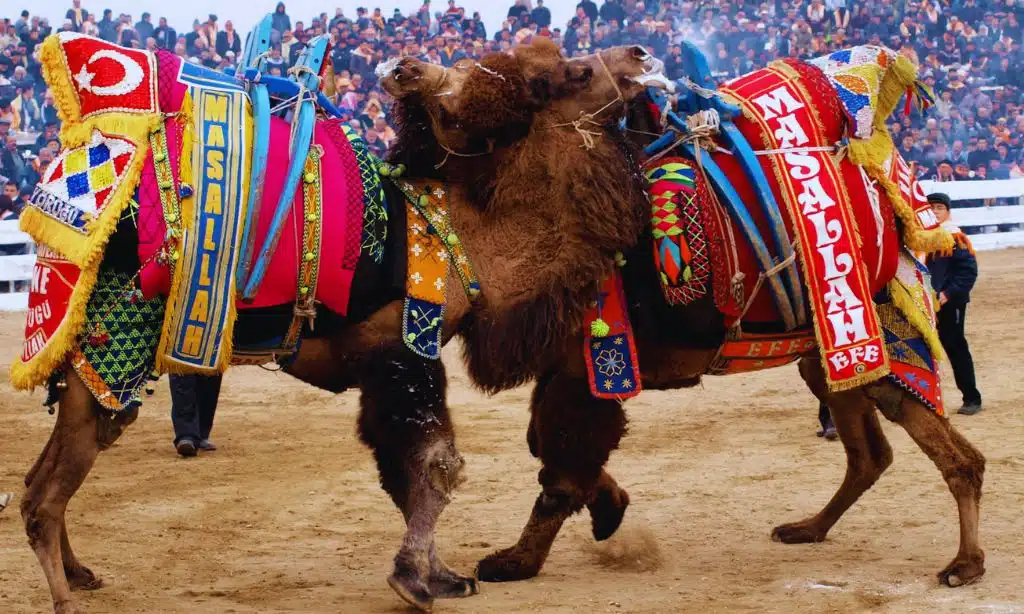
In western Turkey, particularly in the Aegean region, camel wrestling is a popular winter sport and spectacle. This tradition, dating back over 2,400 years, involves male camels fighting each other, supposedly over a female camel in heat.
The wrestling season typically runs from November to March. Two male Tulu camels, a breed known for its large size and thick neck, are brought into an arena where they push and pull each other with their necks. The match ends when one camel falls, screams, or runs away.
While it might sound violent, strict rules are in place to prevent injury to the camels. Foam pads are attached to the camels’ mouths to prevent biting, and handlers are always ready to separate the animals if the match becomes too intense.
The events are festive occasions, drawing large crowds who enjoy food, music, and the unique spectacle. Camel owners take great pride in their animals, often adorning them with decorative rugs and bells.
Despite its long history, camel wrestling has faced criticism from animal rights activists. Supporters argue that it’s an important cultural tradition that helps preserve the Tulu camel breed, which might otherwise face extinction.
9. Burial Beads – South Korea
In South Korea, a unique and modern tradition has emerged in response to the country’s burial space shortage. Instead of traditional burials or cremation, some people are opting to have their loved ones’ ashes turned into colorful beads.
This process, known as “enshrinement,” involves heating the cremated remains to 1,600 degrees Celsius, which causes the ashes to crystallize. The resulting substance is then shaped into beads that come in various colors, including blue-green, black, or pink-violet, depending on the cremation temperature and the bones’ mineral composition.
Families often display these “death beads” in glass containers or dishes in their homes, creating a unique and personal memorial. Some even incorporate the beads into jewelry or decorative objects.
This practice is seen as a more cheerful alternative to traditional urns, allowing families to keep their loved ones close in a visually appealing way. It also addresses the practical issue of limited burial space in South Korea’s crowded cities.
While still relatively uncommon, the popularity of burial beads has been growing, reflecting changing attitudes towards death and remembrance in Korean society.
10. Famadihana (Turning of the Bones) – Madagascar
In Madagascar, some communities practice a unique and elaborate tradition known as Famadihana, or “the turning of the bones.” This ritual involves exhuming the bodies of deceased family members, rewrapping them in fresh cloth, and dancing with the corpses before reburying them.
Famadihana typically occurs once every five to seven years and is a time for family reunions and celebrations. The bodies are removed from the family crypts and sprayed with wine or perfume. Family members then dance with the bodies to live music, sharing news with their deceased loved ones and asking for blessings.
This practice is rooted in the belief that the spirits of the dead can only enter the afterlife after the body has completely decomposed. The ritual is seen as a way to speed up this process and to show respect and love for ancestors.
While Famadihana is a joyous occasion for participants, it has faced challenges in recent years. The practice is expensive, and some younger generations are moving away from the tradition. Health officials have also expressed concerns about the potential spread of plague, which is endemic to Madagascar, through contact with corpses.
Despite these challenges, many Malagasy people continue to view Famadihana as an essential way to maintain connections with their ancestors and preserve their cultural identity.
Takeaway
In conclusion, these ten bizarre cultural traditions offer a fascinating glimpse into the diverse ways humans express their beliefs, values, and social norms across the globe. While some of these practices may seem strange or even shocking to outsiders, they serve important cultural functions within their respective societies. Understanding and respecting these traditions, even if we don’t practice them ourselves, is crucial for fostering global cultural awareness and appreciation.































