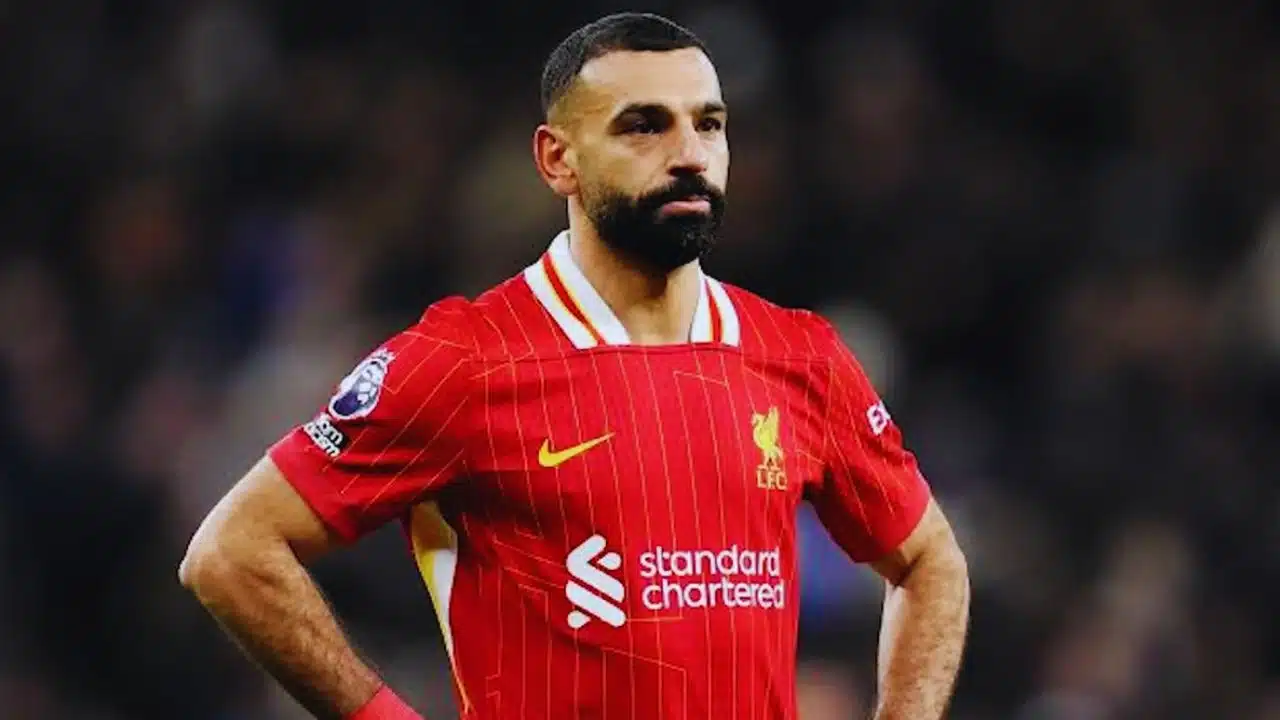
Liverpool forward Mohamed Salah has publicly criticized UEFA for releasing a tribute to celebrated Palestinian footballer Suleiman al-Obeid without mentioning the circumstances of his death.
In a direct and pointed message on X (formerly Twitter), Salah—who has more than 19 million followers—wrote:
“Can you tell us how he died, where, and why?”
Can you tell us how he died, where, and why? https://t.co/W7HCyVVtBE
— Mohamed Salah (@MoSalah) August 9, 2025
The comment came in response to UEFA’s social media post mourning al-Obeid’s passing but omitting any reference to the reported cause—an Israeli attack in Gaza.
Who Was Suleiman al-Obeid?
- Full name: Suleiman Nemer al-Obeid
- Age at death: 41
- Nickname: The “Palestinian Pelé” – a title given for his exceptional skills, prolific goal-scoring, and influence on young footballers in Gaza.
- National team career: 24 official appearances for Palestine, scoring two international goals.
- Club career: Played for Al-Shati Sports Club, Hilal Gaza, and Gaza Sports. Over 100 career goals across domestic competitions.
- Community role: Beyond football, al-Obeid was a youth coach and mentor, often running free training sessions for children in Gaza refugee camps.
According to the Palestinian Football Association (PFA), al-Obeid was married and a father to five children—two sons and three daughters.
How Did He Die?
The PFA said al-Obeid was killed on August 6, 2025, during an Israeli airstrike in southern Gaza. He was reportedly near an aid distribution center in Rafah, an area that has faced repeated strikes during the ongoing conflict.
Witnesses and local media outlets reported that multiple civilians were killed in the same incident, including children and elderly people waiting for humanitarian supplies. International humanitarian groups have repeatedly warned that aid queues in Gaza have become dangerous targets due to the proximity of military operations.
The Israel Defense Forces (IDF) have not issued a specific comment on al-Obeid’s death, but Israel has previously said that strikes in the area target militant infrastructure and combatants.
UEFA’s Tribute and Salah’s Objection
On Wednesday, August 6, UEFA posted on X:
“Farewell to Suleiman al-Obeid, the ‘Palestinian Pelé.’ A talent who gave hope to countless children, even in the darkest of times.”
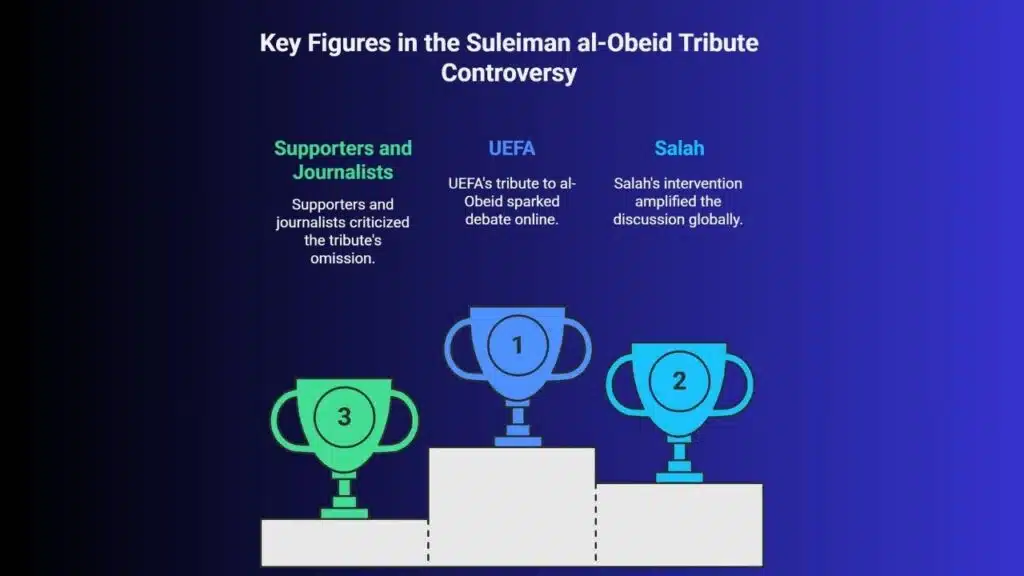
The message sparked immediate debate online. Supporters and journalists criticized the tribute for failing to mention that al-Obeid had died during a military strike—arguing that omitting this fact diminished the gravity of his death.
Three days later, Salah responded, directly asking UEFA to explain how, where, and why the player died. His intervention amplified the discussion globally, with thousands resharing his post.
Salah’s History of Speaking Out on Gaza
This is not the first time Salah has publicly addressed the war in Gaza.
- October 2023: In a video message on Instagram, Salah condemned violence on all sides, calling for an immediate end to massacres and for humanitarian aid to be allowed into Gaza. He said:
“All lives are sacred and must be protected. The massacres need to stop. Families are being torn apart.” - Salah has used his platform previously to advocate for disaster relief in the Arab world, donating to rebuilding efforts after natural disasters and conflicts.
By directly challenging UEFA, Salah has once again positioned himself among the few high-profile athletes willing to confront major football authorities on political and humanitarian issues.
Wider Impact of the Gaza Conflict on Sports
The death of Suleiman al-Obeid is part of a larger tragedy affecting Palestinian sports:
- According to the PFA, 662 sports-related personnel have been killed since the escalation of the Gaza war in late 2023.
- 421 of them were footballers.
- 103 were children involved in sports.
- At least 288 sports facilities have been damaged or destroyed, including stadiums, training grounds, and community sports centers.
- The PFA’s own headquarters in Al-Ram was damaged in an air raid earlier this year.
These losses have severely impacted Palestine’s ability to compete internationally, forcing the cancellation of domestic leagues and disrupting youth development programs.
International Reaction
Human rights organizations have echoed Salah’s demand for transparency in public tributes, emphasizing that sports bodies should acknowledge when athletes are killed in conflict zones—especially when there is clear documentation of the cause.
Several football fans, journalists, and activists have called on UEFA to update its tribute to include verified details about al-Obeid’s death, while others argue that governing bodies should remain neutral and avoid political commentary.
Mohamed Salah’s pointed criticism of UEFA reflects a broader debate about how sports organizations handle tributes in politically sensitive situations.
While UEFA praised Suleiman al-Obeid for inspiring hope, Salah insists that the truth about his death—killed during an Israeli strike in Gaza—must be acknowledged.
For Palestinians, the loss of their “Pelé” is more than just the death of a sports icon—it is a stark reminder of how the ongoing conflict is erasing cultural and athletic heritage.