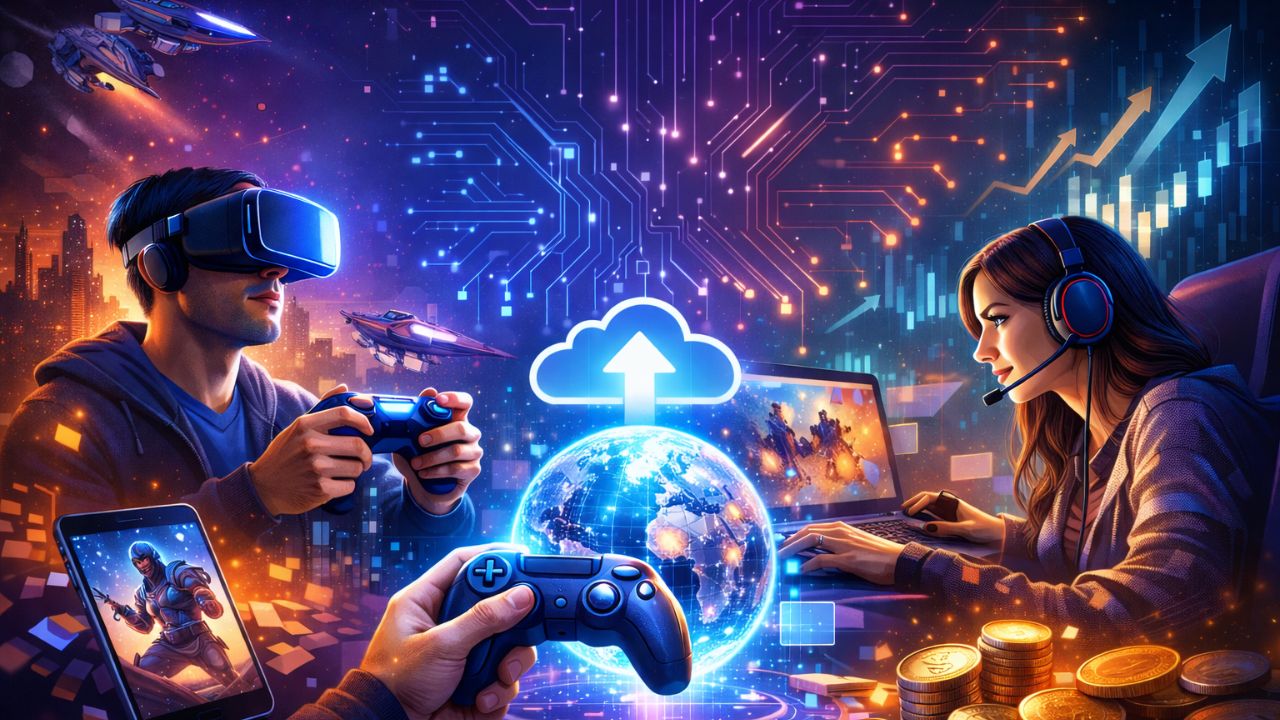
Gaming has changed. You no longer just play for fun. Now, you can earn real money while doing it. Many people struggle to find ways to make extra income, especially online. Metaverse games offer a solution with real earning opportunities built into gameplay.
The global VR market is booming, expected to hit $22 billion by 2025. Big companies like Sony are investing heavily in the metaverse’s future. These games use blockchain technology and NFTs to let players own digital assets like virtual land or rare collectibles, which can be traded for cash.
In this article, we’ll explore 10 metaverse games that offer real earning opportunities from Axie Infinity to Decentraland and more. Learn how play-to-earn models work and what tools you need to start turning gaming time into profit.
Ready? Here are the top picks worth your time.
Key Takeaways
- Axie Infinity lets players earn through battles and trading NFT creatures, using Ethereum blockchain since 2018. Rewards include AXS and SLP tokens.
- Decentraland, launched in 2020, offers virtual land sales (90,000+ parcels) and events for income via MANA cryptocurrency.
- The global VR market may hit $22 billion by 2025, with games like The Sandbox turning creativity into crypto profits.
- Play-to-earn models need tools: crypto wallets (MetaMask), NFTs, and stable internet to trade assets like Star Atlas’ ATLAS tokens.
- Risks exist—high startup costs, volatile prices—but strategies (renting land, staking tokens) can boost earnings in metaverse games.
Axie Infinity
Axie Infinity is a play-to-earn game launched in 2018 by Sky Mavis, a Vietnamese company. Players collect and battle digital creatures called Axies, inspired by Pokémon. Each Axie has over 500 customizable parts, making them distinct.
The game runs on the Ethereum blockchain, turning these creatures into valuable NFTs that can be traded or sold.
Earnings come from two tokens: Axie Infinity Shards (AXS) and Smooth Love Potion (SLP). Players earn SLP through battles and treasure hunts while AXS rewards long-term participation.
The game blends strategy with decentralized finance, letting players profit from their skills and time spent in its virtual world. It’s one of the most popular blockchain games today, mixing fun with real-world income opportunities.
Decentraland
Decentraland is a virtual world built on the Ethereum blockchain. Launched in 2020 by Ari Meilich and Esteban Ordano, it lets users buy, sell, and explore digital land. The game uses MANA cryptocurrency for transactions, making it easy to trade virtual real estate or attend events like concerts.
Over 90,000 land parcels exist, each owned as NFTs. Players can monetize their plots by hosting games, art shows, or even renting them out. MetaMask is the go-to wallet for all in-game purchases and sales.
This metaverse blends gaming with real-world earnings through its open-world environment. Users create content like mini-games or shops to attract visitors and earn crypto rewards.
Digital assets here hold real value thanks to blockchain technology. Virtual concerts and auctions add excitement while offering income opportunities. Decentraland proves that play-to-earn isn’t just a trend—it’s reshaping how we think about online economies.
With social gaming at its core, it’s more than fun; it’s a thriving digital economy where creativity pays off.
The Sandbox
The Sandbox lets players create their own virtual worlds using digital assets like non-fungible tokens (NFTs). Built on Ethereum blockchain technology, users can buy, sell, or trade virtual land.
It’s one big playground where creativity meets earning potential.
Players craft experiences using user-generated content, turning empty plots into valuable spaces. You can monetize your creations through its play-to-earn model. The SAND token powers transactions within this metaverse game, making every build profitable if done right.
Virtual concerts, events, even businesses thrive here—just grab some LAND parcels before they’re gone!
Alien Worlds
Alien Worlds is a play-to-earn game set in a sci-fi metaverse. Players mine Trilium (TLM), the game’s cryptocurrency, using tools and land plots. The WAX blockchain powers this virtual economy, making transactions fast and cheap.
You can own land, stake TLM for rewards, or compete in missions. Some players earn by renting out their digital assets to others. The game blends strategy with decentralized finance (DeFi) elements, giving you control over your earnings.
Tools like shovels and drills affect how much TLM you mine, so choose wisely!
Illuvium
Illuvium is a play-to-earn game set in a stunning open-world. It mixes RPG elements with blockchain technology, letting players earn crypto rewards. You explore vibrant alien landscapes, capture creatures called Illuvials, and battle other players.
Each Illuvial is an NFT, so you truly own your digital assets.
The game runs on the Ethereum blockchain for secure trades. Players can sell their Illuvials or trade them in the marketplace. With its deep lore and high-quality graphics, Illuvium stands out among metaverse games.
The prize pools are big, giving skilled gamers real earning power through its play-to-earn model.
Splinterlands
Splinterlands brings fast-paced battles into play-to-earn gaming through digital trading cards built on blockchain technology like Hive Engine WAX Blockchain Players collect NFT-based monsters spells compete turn-based matches win crypto rewards
The game runs smoothly across devices without needing high-end hardware Cards can be bought sold traded freely creating player-driven markets Daily quests tournaments offer extra earning chances using Dark Energy Crystals DEC token Its mix strategy quick fights keeps players engaged while building valuable collections
Gods Unchained
Gods Unchained is a free-to-play trading card game built on the Ethereum blockchain. Players collect and trade NFTs (non-fungible tokens) as digital cards, which they own fully.
Unlike traditional games, these cards hold real-world value. You can sell or trade them in marketplaces for profit.
The game uses a play-to-earn model, rewarding skilled players with rare cards and in-game currency. Battles are fast-paced, blending strategy with competitive player-versus-player action.
The economy thrives on scarcity, making rare cards highly sought after. With no paywalls blocking progress, even beginners can compete fairly while earning rewards.
My Neighbor Alice

My Neighbor Alice is a fun, social farming game set in a colorful virtual world. Players buy and own digital land, grow crops, and trade items with others. The game runs on the Ethereum blockchain, letting players earn through NFTs and its ALICE token.
Think of it like Animal Crossing but with real money-making potential. You can sell your virtual goods or rent out land to other players for profit.
The game mixes creativity with earning opportunities. Users build their dream farms, decorate spaces, and complete tasks to get rewards. My Neighbor Alice also hosts events where players compete for prizes in its digital economy.
It’s easy to start—just connect a crypto wallet and jump into this playful metaverse world filled with user-generated content and friendly competition among the gaming community.
Star Atlas
Star Atlas is a space-themed metaverse game built on the Solana blockchain. Players explore a vast virtual universe, complete missions, and earn rewards through gameplay. The game blends strategy, adventure, and an open-world economy where digital assets like ships and land hold real value.
Ownership in Star Atlas revolves around NFTs, letting players trade or sell their in-game items freely. The play-to-earn model allows users to collect ATLAS tokens by mining resources or winning battles.
With stunning visuals and deep lore, it offers more than just earning potential—it’s an immersive sci-fi experience. Virtual concerts and events also add social excitement to its expansive world.
Upland
Upland is a play-to-earn metaverse game built on the blockchain. It lets players buy, sell, and trade virtual real estate mapped to real-world locations. Think of it like Monopoly, but with digital assets tied to actual cities.
Players earn through buying properties and collecting rent in UPX tokens. The game uses NFTs for ownership, making each piece of land unique. You can also flip properties for profit or build structures to boost value.
Upland blends strategy with social gaming, letting users connect in a decentralized economy while growing their portfolios.
Key Features of Play-to-Earn Metaverse Games
Play-to-earn metaverse games let players make real money while having fun. These games use blockchain technology, so players truly own their digital assets like NFTs and virtual land.
You can trade, sell, or rent these items for cryptocurrency, turning game time into income.
Many of these titles have in-game economies powered by tokens like AXS or MANA. Players earn rewards through battles, quests, or even passive activities like renting out virtual real estate.
Some games blend social features with earning potential—throw a concert in Decentraland or design wearables in The Sandbox for profit. The mix of gaming and decentralized finance creates endless ways to play and earn together.
No middlemen, just direct value for your time and skills.
Importance of NFTs in Earning Opportunities
NFTs turn in-game items into real assets. Virtual pets like those in Axie Infinity aren’t just pixels—they’re unique digital collectibles stored on the blockchain. This means you truly own them, trade them, or sell them for real money.
The play-to-earn model thrives on NFTs because they create value. Whether it’s virtual land in Decentraland or rare cards in Gods Unchained, these tokens let players profit from their time and skills.
Blockchain technology keeps everything secure and transparent, making earning fair and simple.
No need for middlemen—just play, build your NFT collection, and cash in.
How to Get Started with Metaverse Games
Getting started with metaverse games is easier than you think, especially if you follow these steps. You only need a few tools and some basic knowledge to get started.
- Pick a game – Choose a play-to-earn metaverse game like Axie Infinity, Decentraland, or The Sandbox. Look for one that fits your interests.
- Set up a crypto wallet – Most metaverse games use Ethereum or Solana blockchain. Get a wallet like MetaMask or Phantom to store your earnings.
- Buy cryptocurrency – Some games need tokens like MANA or AXS to start. Use a crypto exchange to purchase them.
- Get NFTs if needed – Games like Axie Infinity require digital assets to play. Buy or rent them to begin.
- Create an account – Sign up on the game’s official site. Avoid fake links to keep your assets safe.
- Learn the rules – Watch tutorials or join gaming communities to understand gameplay and earning methods.
- Start small – Don’t invest too much at first. Test the game before putting in more money or time.
- Connect with others – Join Discord or Telegram groups for tips and strategies from experienced players.
- Track your earnings – Use blockchain explorers to monitor your digital collectibles and in-game currencies.
- Upgrade as you progress – Reinvest profits into better NFTs or virtual land to boost your earnings over time.
Devices and Tools Needed for Gameplay
Playing metaverse games requires the right gear. Here’s what you need to start earning in virtual worlds.
- Smartphone or Tablet – Many play-to-earn games like Axie Infinity and Alien Worlds work on mobile devices. Check app stores for compatibility.
- PC or Laptop – High-end games like Illuvium or Star Atlas need a computer with good graphics. A strong processor helps avoid lag.
- VR Headset – For full immersion in games like Decentraland, a virtual reality (VR) headset enhances the experience. Models like Oculus Rift or HTC Vive work well.
- Crypto Wallet – Store earnings safely with wallets like MetaMask or Trust Wallet. These hold Ethereum blockchain tokens and NFTs.
- Stable Internet – A fast connection prevents delays during battles or trades. Slow speeds can cost you rewards.
- Gaming Controller – Some games support controllers for smoother play. Xbox or PlayStation pads often work on PCs.
- Discord or Telegram – Many gaming communities coordinate here. Stay updated on events and tips from other players.
- Exchange Account – Convert in-game tokens to cash using platforms like Binance or Coinbase. Link it to your crypto wallet for easy transfers.
- Microphone (Optional) – Voice chat improves teamwork in social games like The Sandbox. A basic headset with a mic does the job.
- Second Screen (Optional) – A monitor or tablet helps track stats, markets, or guides while playing. Handy for multitasking.
- NFT Marketplace Access – Sell digital assets on OpenSea or Rarible. List your rare items for profit.
- Backup Power – A UPS or power bank keeps your session alive during outages. Don’t lose progress mid-game.
- Anti-Virus Software – Protect your device from scams or malware. Many play-to-earn platforms are targets for hackers.
- Comfortable Chair – Long gaming sessions strain your back. Invest in ergonomic seating to stay focused.
- Notepad or App – Track earnings, strategies, or passwords. Google Keep or a simple notebook works fine.
Benefits of Earning Through Metaverse Games
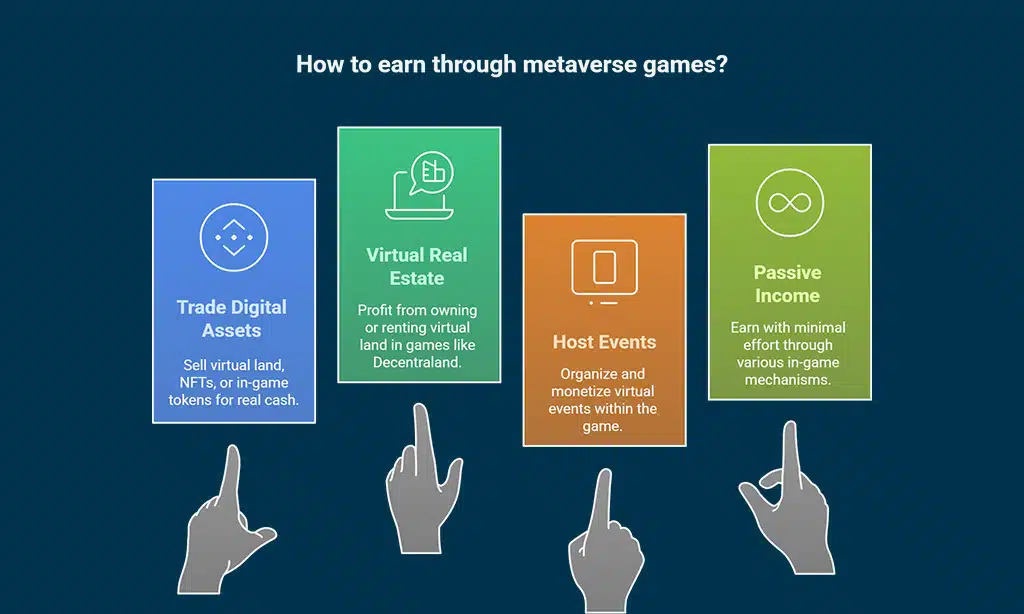
Earning through metaverse games opens up new ways to make money online. Players can trade digital assets like virtual land, NFTs, and in-game tokens for real cash. Games like Decentraland let users profit from virtual real estate or hosting events.
These games also offer passive income streams with minimal effort. Secure transactions happen through wallets like MetaMask, keeping earnings safe. The play-to-earn model turns gaming into a side hustle while having fun in immersive environments.
Challenges in Play-to-Earn Models
Play-to-earn games sound great, but they come with hurdles. High costs can be a barrier, like buying virtual land in Decentraland or rare NFTs for Axie Infinity. Not everyone has cash to start.
You also need external wallets for transactions, adding extra steps before you even play.
The in-game economy isn’t always stable either. Prices of digital assets swing fast, making earnings unpredictable. Some games demand hours of grinding just to earn small amounts of cryptocurrency.
Plus, scams and hacks target players who aren’t careful with their blockchain wallets. It’s not all fun and profit—risks exist too.
Future Potential of Metaverse Gaming Economies
The metaverse gaming economy is growing fast, with projections hitting over $22 billion by 2025. Companies like Epic Games are pouring billions into improving virtual worlds, proving this space isn’t just a trend.
Players can expect more ways to earn through digital assets, NFTs, and blockchain technology as these games evolve.
Virtual land sales in places like Decentraland or The Sandbox show real demand for digital real estate. With platforms expanding on Ethereum and Solana blockchains, even idle games could turn into income streams.
As VR headsets and AI improve, social gaming will feel more lifelike—opening doors for new jobs inside these virtual economies.
Tips to Maximize Earnings in Metaverse Games
Making money in metaverse games takes skill and strategy. Here are 19 proven ways to boost your earnings:
- Play high-reward games like Axie Infinity or Alien Worlds, where top performers earn more.
- Buy virtual land early in games like Decentraland or The Sandbox before prices rise.
- Sell rare NFTs from games like Gods Unchained on cryptocurrency exchanges.
- Complete daily missions in Splinterlands to earn steady rewards.
- Rent out your digital assets, like virtual real estate, to other players for passive income.
- Join gaming communities to learn insider tips from experienced players.
- Trade Trilium (TLM) or MANA cryptocurrency when their value spikes.
- Focus on games with strong DeFi integrations for better profit potential.
- Use the Solana blockchain for lower fees when trading Star Atlas assets.
- Level up characters in Illuvium to increase their resale value.
- Attend virtual concerts and events in Horizon Worlds to collect exclusive NFTs.
- Invest in play-to-earn models with long-term sustainability, not quick scams.
- Stake AXS tokens from Axie Infinity to earn passive income over time.
- Participate in beta tests of new metaverse games for early rewards.
- Craft and sell user-generated content in sandbox games like My Neighbor Alice.
- Play during special in-game events where rewards are doubled or tripled.
- Use WAX blockchain for faster, cheaper NFT transactions in idle games.
- Track cryptocurrency trends to buy low and sell high on gaming assets.
- Combine multiple strategies—like trading, staking, and renting—to maximize profits.
Takeaways
The metaverse gaming world is full of real earning chances. Players can trade NFTs, own virtual land, or win crypto rewards. These games make fun and money go hand in hand. Jump in now before everyone else does.
Your next adventure could also pay the bills!
FAQs on Metaverse Games
1. What are metaverse games that let you earn real money?
Metaverse games like Axie Infinity, The Sandbox, and Alien Worlds use blockchain technology to reward players. You can earn digital assets, such as NFTs and cryptocurrency, by playing.
2. How do play-to-earn games work?
These games follow a play-to-earn model. Players complete tasks, trade virtual land, or battle to win rewards like Trilium (TLM) or MANA cryptocurrency. Some games even let you sell digital collectibles.
3. Can you make money without spending first?
Yes, some games offer free entry. Others, like Axie Infinity, require buying starter NFTs. Once you own digital assets, you can trade them on cryptocurrency exchanges for real cash.
4. What’s the role of virtual real estate in metaverse games?
Virtual real estate, like in The Sandbox or Star Atlas, lets players buy, sell, and develop land. Owners can host virtual concerts or rent space, earning passive income.
5. Are these games just for hardcore gamers?
No. Games like My Neighbor Alice and Gods Unchained cater to casual players. Even idle games and social gaming experiences let you earn without intense gameplay. The gaming community welcomes all skill levels.