Many dog owners struggle when snow or rain keeps their pups stuck inside. A lack of dog mental stimulation can lead to chewing, barking, or weight gain. This guide shows you 12 fun indoor games, from snuffle mats and a flirt pole to treat-dispensing toys and an indoor obstacle course, all with positive reinforcement training.
Keep reading to find your dog’s next favorite activity.
Key Takeaways
- Indoor games like tug of war, obstacle courses, and flirt poles keep dogs active and curb chewing, barking, or weight gain when rain or snow keeps walks off the table.
- DIY snuffle mats cost about $10; treat-dispensing toys such as Nina Ottosson’s puzzles or West Paw’s Toppl (holds 2 cups of food) boost mental stimulation and slow feeding.
- A Brain Games for Dogs course costs $19 and offers 10 puzzle games to fight boredom and lower dementia risk in senior dogs.
- Use positive reinforcement (treats, praise, clicker) with cues like “drop,” “stay,” and “roll over” to build skills, control, and a strong bond.
- Keep play safe: limit rounds to 5 minutes, clear hazards, follow Amy Cook, PhD’s body-language tips, and let dogs rest up to 18 hours.
How can I play tug of war safely with my dog?
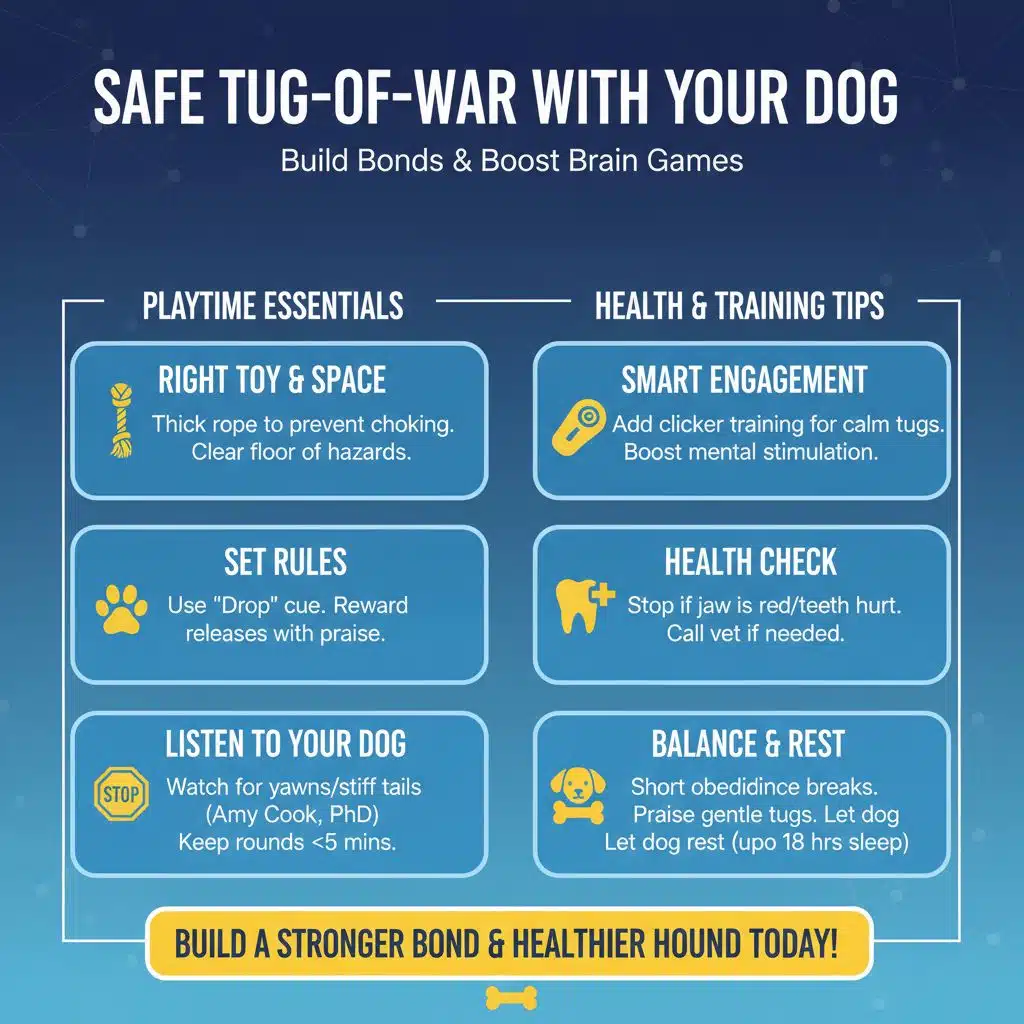
Tug of war builds strong bonds and gives dogs a solid workout. It adds brain games and safe play into your home.
- Select a thick rope toy that can handle chewers and cut choking risk.
- Clear the floor of small items and sharp edges to keep your play area safe.
- Use a cue like “drop” and reward good releases with positive reinforcement training.
- Watch your dog’s body language for yawns or stiff tails, a tip from Amy Cook, PhD, to know when to stop.
- Keep rounds under five minutes to match energy spans and boost dog enrichment.
- Add clicker training to mark calm tugs and build dog mental stimulation.
- Stop the game if your dog’s jaw looks red or teeth hurt, then call your vet.
- Offer short obedience training breaks to improve control and socialization for dogs.
- Praise gentle tugs and then swap to a heavier rope toy to step up the challenge.
- Let your dog leave the game when they need rest; they may need up to 18 hours of sleep.
How do I set up an indoor obstacle course for my dog?
Clear a large living area. This indoor obstacle course uses DIY indoor agility equipment and suits dogs under 40 pounds.
- Lay rolled paper tubes on the floor to form a tunnel and spark agility training.
- Fit broom handles between chairs for easy weaves that boost dog mental stimulation.
- Flip plastic bowls to create unsteady wobble spots for balance training and core work.
- Place balance disks to add challenging mobility drills and improve fitness benefits.
- Lean a shallow box edge on blocks to make a low pause table for trick training.
- Tie a length of ribbon across stools for small jumps that add fun socialization for dogs.
- Use a slow flirt pole sweep to spark quick moves and enrich dog enrichment.
- Open a short staircase to include sprint drills up and down for speed gains.
- Spread a snuffle mat station to add nose work and mental stimulation for dogs.
- Move or swap course parts each week to boost variety and dog enrichment.
- Use positive reinforcement training with a cookie after each lap to reward good form.
- Stay close to supervise every lap to keep your pup safe during play.
What are the best treat-dispensing toys to engage my dog?
Puzzle toys spark dog enrichment and boost mental stimulation for dogs. Nina Ottosson’s Hide N Slide and Brick Puzzle challenge pups to slide, flip, and find treats. Owners can rotate puzzles every few days to keep novelty strong which stops boredom before it starts.
The West Paw Toppl in XL size holds about two cups of kibble or wet food so large dogs get a full meal. Fast eaters need treat-dispensing toys to slow them down and reward them for patience.
Slow feeders such as the Mine Pet Platter promote instinctive feeding.
Busy box dog toys let you repurpose egg cartons or cardboard boxes into simple puzzles. Lick mats hold yogurt or peanut butter to soothe chewing urges and aid digestive health under supervision.
Snuffle mats cost about ten dollars to make and keep noses busy exploring for hidden kibble.
How does positive reinforcement training benefit my dog’s fitness?
Positive reinforcement training uses treats or praise to reward healthy moves. It helps dogs burn energy through trick training and agility training indoors. Owners keep pups moving even on snowy days.
This method taps into dog enrichment and dog mental stimulation, making pups buzz like busy bees. Trainers use treat-dispensing toys or a snuffle mat to spark interest.
Structured routines help manage energy for caregivers and sitters. Puppies and adults learn to roll over or weave poles with gentle guidance. Dogs often maintain healthy weight during winter months.
This gap in outdoor time cuts risk of canine dementia and keeps their weight in check. Dogs adapt fast to new routines, so they hit the park with ease later. Quality time builds strong bonds and brightens moods for everyone.
How can snuffle mats provide mental stimulation for my dog?
Snuffle mats spark a dog’s nose work by hiding kibble or treats in fleece strips. Sniffing and foraging match natural hunting instincts and boost dog mental stimulation. A DIY snuffle mat costs about $10, using fleece and a rubber base.
Trainers call it a top tool for slow feeding and enrichment. Rotate this and other food enrichment ideas to keep games fresh.
Owners can toss a mat into a crate or kennel for hands-free dog entertainment. This mental stimulation for dogs cuts stress and anxiety during meetings, bad weather, or after surgery.
Supervise play, let pups dig through folds without a rush. Snuffle mats pair well with positive reinforcement training and other dog enrichment tools, from treat-dispensing toys to wobble boards.
What new tricks or commands can I teach my dog indoors?
Teaching fresh commands keeps dogs sharp. It also boosts their fitness and focus.
- Teach a roll over trick. Lure the nose with a treat to guide a full spin and reward each step. This drill taps positive reinforcement training and builds core tone.
- Introduce a spin command. Hold a bite near the nose and circle it back to the head then mark the turn. This move adds dog enrichment and mental stimulation for dogs.
- Train a bow cue. Lower a treat between the paws and reward a stretch when the chest dips. This stance strengthens shoulders and invites calm focus.
- Build a target game. Stick a small lid on a wall or a door and teach the dog to touch it with the nose. Mark each hit with a click then treat. This skill sharpens focus and wards off boredom.
- Work on “leave it.” Place a closed fist over a treat then wait until the dog backs away. Reward calm patience. This cue supports impulse control for reactive dogs.
- Practice the Shell Game. Hide a kibble under one of three cups and shuffle them slowly. Ask the dog to choose the right shell then reward. The Brain Games for Dogs! course offers ten games for nineteen dollars and uses existing toys. Cycle a new game monthly to curtail boredom.
- Guide a tidy up trick. Scatter toys on the floor and teach the dog to drop each item into a box. Mark each success with praise then treat. This tidy task blends trick training with household help.
- Add a self settle routine. Cue the dog to lie on a mat and reward calm breaths. This exercise builds mindfulness and eases indoor energy.
How do I play hide and seek with my dog?
Hide and Seek keeps your dog fit if walks are off the table. This game fires up dog mental stimulation and builds a stronger bond.
- Ask your dog to stay at the door, you set clear rules and tap into positive reinforcement training.
- Hide in a simple spot, like behind the couch or under a chair, to spark curiosity.
- Call “come” or “search,” those cues guide your pup right to you.
- Reward your pup with treats and praise, you boost dog enrichment and socialization for dogs.
- Repeat before TV or after meals as a habit stacking trick for daily fun.
- Track weight changes, hide and seek helps maintain a healthy weight during winter months.
- Switch hiding spots often to keep the game fresh and heighten mental stimulation for dogs.
- Omit extra gear, it makes a hands-free dog entertainment idea for busy owners.
What puzzle games and interactive toys help keep my dog active?
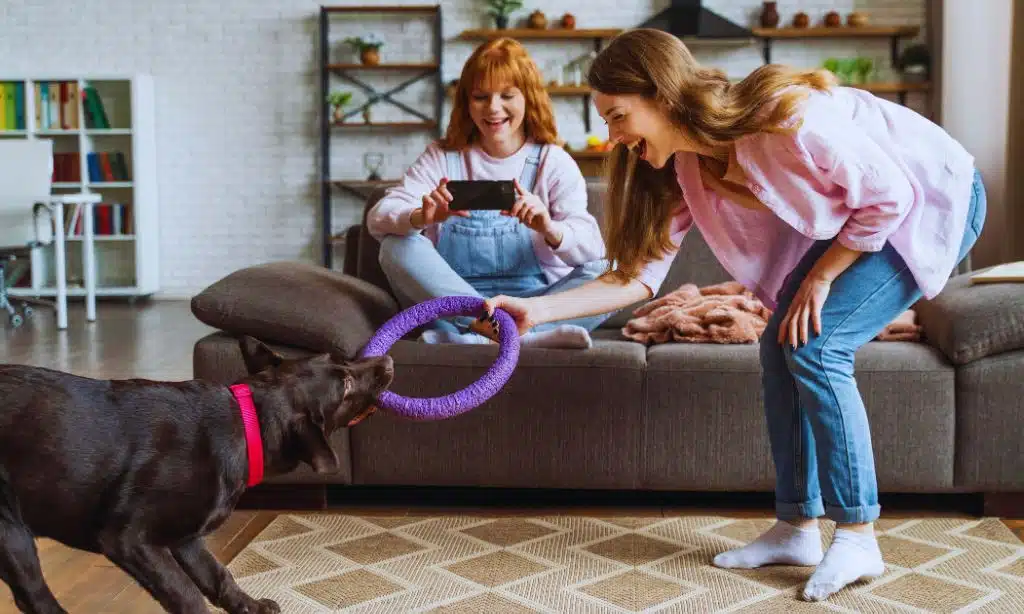
Puzzle toys light up your dog’s mind and body. Nina Ottosson’s Hide N Slide and Brick Puzzle spark dog enrichment. Rotate them weekly to keep interest. Offer a Shell Game with three cups and a hidden treat.
Sitters on Rover.com also praise this simple cup trick. Try a Muffin Tin Challenge or Treat Burrito Game on rainy days. Pack a filled chew cylinder with peanut butter or kibble for treat-dispensing toys.
Snack puzzles boost mental stimulation for dogs and give them a fun chore.
Interactive games join trick training with positive reinforcement training for more fitness. The Brain Games for Dogs course costs $19 and offers 10 puzzle games. It cuts canine dementia risk and keeps senior dogs active.
You can use these challenges alongside your indoor agility equipment or a snuffle mat. These activities mix socialization for dogs and exercising at home. They deliver big health benefits, even in a small space.
How do I use a flirt pole to encourage quick movements?
Flirt poles fire up quick, safe dashes inside your living space. Dogs gain speed and focus as they chase the lure at floor level.
- Grip the chase wand near the base for steady control, preventing sudden snaps.
- Sweep the flirt pole lure low to spark a chase reflex without risky jumps.
- Accelerate the toy briefly after slow sweeps to build fast-twitch power for agility training.
- Stop the lure when your dog snaps, let them hold it, then reward with treats to apply positive reinforcement training.
- Limit each round to five minutes on carpet or soft flooring, avoiding hard impacts.
- Pair the chase pole game with a snuffle mat for dog mental stimulation.
- Mix flirt pole drills into your indoor agility equipment routine for a varied workout.
- Supervise play to prevent accidents and keep sessions safe.
What are some low-impact indoor exercises like fetch for dogs?
Dogs love a soft ball toss across the hall. Add tricks like spin or roll over before each throw. Use positive reinforcement training to praise every catch. Staircase sprints can offer a gentle cardio boost on tiled steps.
Set up a ball launcher for hands-free play. Window watching, with a treat for calm stance, offers dog mental stimulation. Keep away games and short sound desensitization sessions help nervous pups, but cap them under ten minutes.
Include social play, as Amy Cook, PhD suggests, to read cues and respect space. Cooperative care foundation training also counts as a low-impact exercise, mixing reward-based touch with calm movements.
Mind puzzles like snuffle mats or treat-dispensing toys add dog enrichment on lazy days. Rotate these drills, then tuck your pooch in for its eighteen-hour rest.
Takeaways
Keeping your dog active and healthy doesn’t have to depend on the weather. These 12 fun indoor activities provide plenty of ways to keep your furry friend fit, engaged, and mentally stimulated all year long. From interactive games to simple exercise routines, you can turn any space into a playground that supports your dog’s physical and emotional well-being. By incorporating a mix of these activities into your daily routine, you’ll not only strengthen your dog’s body but also deepen the bond you share—no matter the season.
FAQs on Indoor Activities to Keep Your Dog Fit Year-Round
1. What fun indoor games give my dog enrichment and mental stimulation for dogs?
You can set up treat-dispensing toys, use scent-reveal mats, wave a flirt pole, or hide toys in boxes. Each play sparks curiosity and keeps your pup busy, like a little detective on a snack hunt.
2. How can I do positive reinforcement training inside?
Pick tiny treats, praise every success, and keep sessions short. Teach a simple trick training move, like roll over. I once saw my pup learn it in five tries, tail wagging all the way.
3. How do I build an indoor obstacle course with agility training gear?
Grab basic indoor agility equipment—think low jumps, cones, tunnels—and turn your hallway into a mini track. Mix in an indoor obstacle course for fast feet and big smiles.
4. Can I try dock diving moves without a pool?
Yes, swap dock diving for a small tub filled with a little water. Toss a floating toy, let your dog leap in, then splash around. It feels like a beach day in your living room.
Invite a calm dog buddy over, set up supervised play time, and swap toys. You get socialization for dogs and a break yourself, all in your cozy home.