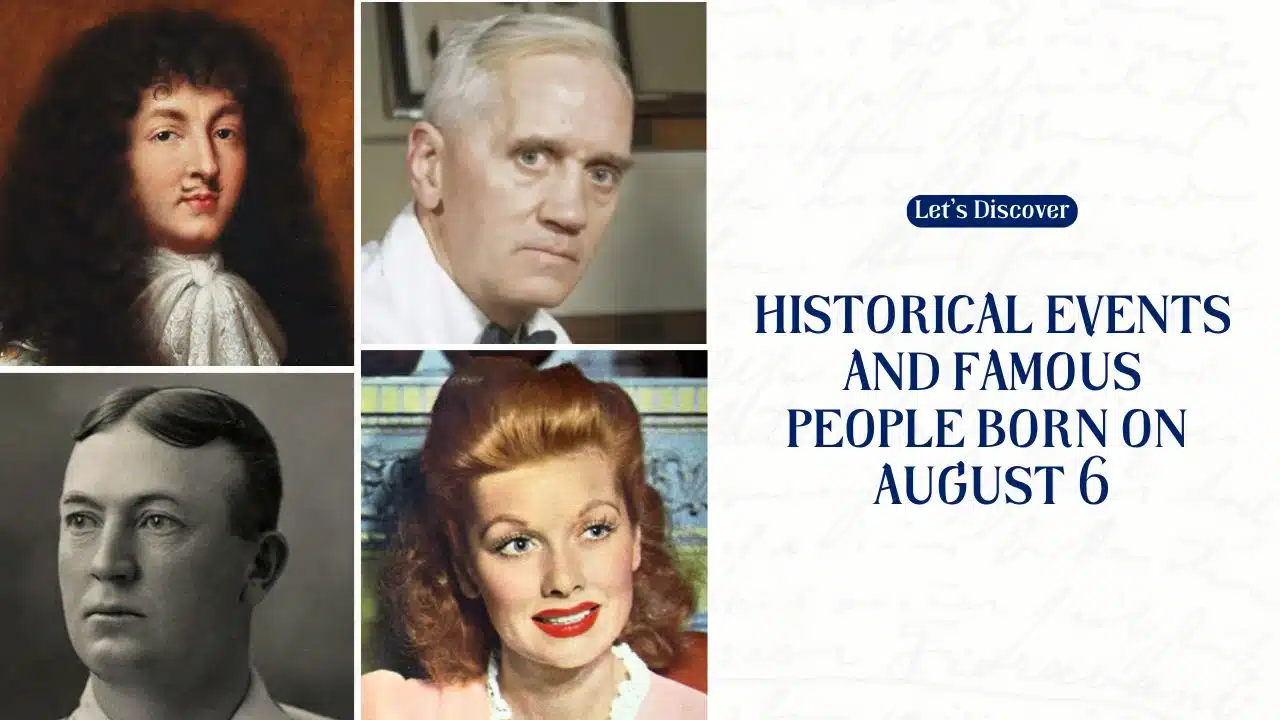
Some dates in history are full of big changes. August 6 is one of them. On this day, explorers returned home, harsh laws were made, sports legends began their careers, and one of the most destructive bombs in history was dropped. This date is also the birthday of great scientists, artists, and athletes who made a big impact on the world.
In this article, we’ll look at the most important historical events and famous people born on August 6. These stories come from many places—Europe, America, Japan, and the Caribbean—and show how much can happen in just one day.
Major Historical Events That Happened on August 6
John Cabot Returns from North America – 1497
On August 6, 1497, Italian explorer John Cabot returned to Bristol, England, after sailing to the coast of North America. He is believed to have landed in Newfoundland, which is now part of Canada.
Cabot’s return was important because he was the first European to sail to North America since the Vikings. This journey showed that land was reachable by sailing west across the Atlantic Ocean.
His voyage helped start more exploration and colonization by European countries. Cabot’s trip opened the door for England to later build colonies in the New World.
Code Noir Decree Adopted – 1685
On August 6, 1685, King Louis XIV of France made a law called the Code Noir official in the colony of Martinique. This law gave rules for slavery in the French colonies.
The Code Noir said:
- Slaves must be baptized as Catholic.
- Slaves could not own property.
- Owners could punish slaves harshly.
This law made life very hard for African people forced into slavery. It was used in many French colonies, including Haiti, Martinique, and Guadeloupe.
The Code Noir stayed in place for over 100 years. It is now seen as a symbol of colonial injustice and racism.
Cy Young’s MLB Debut – 1890
On August 6, 1890, a 22-year-old pitcher named Cy Young played his first Major League Baseball game. He played for the Cleveland Spiders and threw a great game, beating the Chicago Colts 8–1.
Even though he made one mistake that let Chicago score, Young only allowed three hits in the whole game. This was the start of a career that would last for 22 seasons.
Cy Young won 511 games—more than any pitcher in baseball history. Today, the Cy Young Award is given every year to the best pitcher in the American and National Leagues.
Goering Authorizes Nazi Plunder – 1942
On August 6, 1942, Hermann Goering, a top Nazi leader, gave orders to steal everything valuable from the countries that Nazi Germany had invaded. He said the areas should be “thoroughly empty to plunder.”
This meant:
- Art, gold, and money were stolen from homes, banks, and museums.
- Food and supplies were taken, causing starvation.
- Jewish families lost all they had.
This was part of the Nazis’ larger plan to take over Europe and hurt those they saw as enemies, especially Jewish people.
After the war, Goering was put on trial at the Nuremberg Trials and sentenced to death for his crimes.
Atomic Bombing of Hiroshima – 1945
On August 6, 1945, the United States dropped the world’s first atomic bomb on the city of Hiroshima, Japan. The plane that dropped the bomb was called the Enola Gay.
The bombing killed about 140,000 people, most of them civilians. Thousands more died later from burns, injuries, and radiation sickness.
The bomb was dropped to try to end World War II quickly. Japan had not surrendered, and the U.S. wanted to stop more battles. Three days later, another bomb was dropped on Nagasaki.
These two bombings led to Japan’s surrender, but they also caused huge loss of life and left a long-lasting impact on global politics and human health. Many people around the world now work to stop the spread of nuclear weapons.
Famous People Born on August 6
Barbara Strozzi (1619–1677)
Barbara Strozzi was born in Venice, Italy, on August 6, 1619. She was a singer and composer during a time when few women were allowed to make music in public.
She wrote over 100 vocal works, including songs and operas. Her music was emotional and often written for small groups to sing.
Barbara was brave. She created a name for herself in a world where most composers were men.
Biography Table:
| Detail | Information |
|---|---|
| Born | August 6, 1619 – Venice, Italy |
| Died | November 11, 1677 |
| Known For | Composer, singer |
| Notable Works | Cantatas, arias |
| Legacy | One of the most published women composers of her time |
Alfred Tennyson (1809–1892)
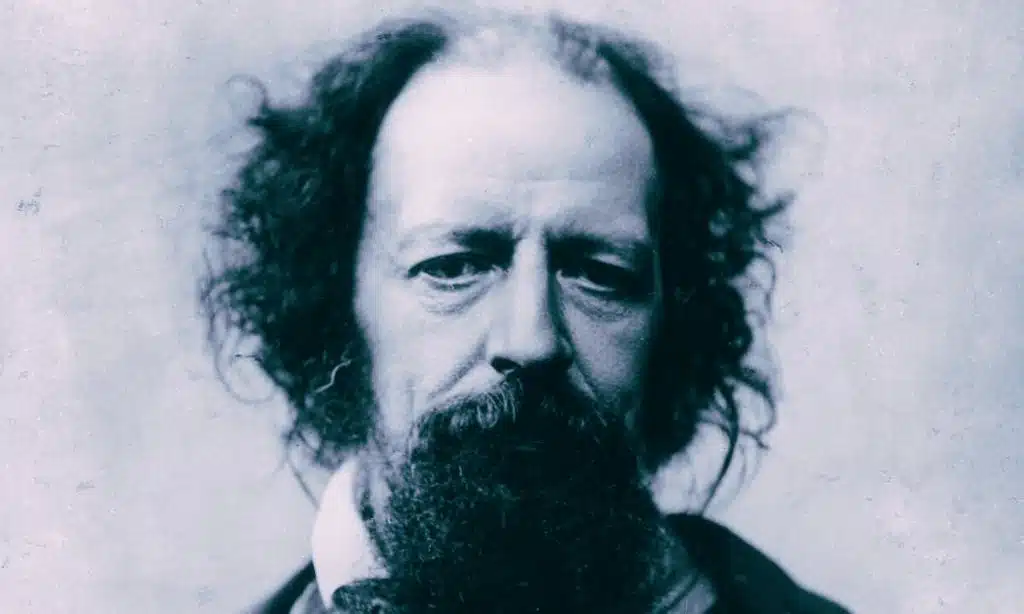
Alfred Tennyson was born on August 6, 1809, in England. He became the Poet Laureate of Great Britain, which means he was the official poet for the British royal family.
One of his most famous poems is “The Charge of the Light Brigade,” about a real battle. His writing was filled with strong emotion and described nature, war, and heroism.
Tennyson’s poems are still taught in schools and remembered for their powerful rhythm and deep meaning.
Biography Table:
| Detail | Information |
| Born | August 6, 1809 – Somersby, England |
| Died | October 6, 1892 |
| Role | Poet Laureate of Great Britain |
| Famous Work | “The Charge of the Light Brigade” |
| Legacy | Leading poet of the Victorian era |
Alexander Fleming (1881–1955)
Alexander Fleming was born on August 6, 1881, in Scotland. He became a scientist and discovered penicillin, the first antibiotic.
Penicillin changed medicine forever. Before antibiotics, even small infections could kill. Fleming’s work saved millions of lives.
In 1945, he received the Nobel Prize for his discovery.
Biography Table:
| Detail | Information |
| Born | August 6, 1881 – Lochfield, Scotland |
| Died | March 11, 1955 |
| Known For | Discovering penicillin |
| Award | Nobel Prize in Medicine (1945) |
| Legacy | Revolutionized modern medicine |
Lucille Ball (1911–1989)
Lucille Ball was born on August 6, 1911, in New York, USA. She became a famous comedian and actress, best known for her show “I Love Lucy.”
She was one of the first women to run a TV production company, called Desilu Productions. She helped create other big shows like Star Trek.
Lucille Ball broke barriers for women in Hollywood. Her work still makes people laugh today.
Biography Table:
| Detail | Information |
| Born | August 6, 1911 – Jamestown, New York |
| Died | April 26, 1989 |
| Known For | Comedian, actress |
| Famous Show | “I Love Lucy” |
| Legacy | First woman to lead a TV studio |
David Robinson (b. 1965)
David Robinson was born on August 6, 1965, in Key West, Florida. He became one of the best basketball players in the NBA. People called him “The Admiral” because he served in the U.S. Navy.
He played for the San Antonio Spurs and won two NBA championships. He also won Olympic gold medals in 1992 and 1996.
Robinson is also known for giving back. He started schools and helped young people in need.
Biography Table:
| Detail | Information |
| Born | August 6, 1965 – Key West, Florida |
| Known As | “The Admiral” |
| Career | NBA player (San Antonio Spurs) |
| Achievements | 2× NBA Champion, 2× Olympic Gold |
| Legacy | Sports leader and youth mentor |
Reflections and Global Connections
August 6 is a day full of contrast. It includes stories of discovery, like John Cabot and Alexander Fleming. It also includes stories of destruction, like the bombing of Hiroshima and Nazi plundering. These events show us the best and worst parts of human history.
We also meet people who changed the world in their own way:
- Barbara Strozzi showed that women can create great music.
- Lucille Ball brought joy to millions and broke barriers.
- David Robinson showed how to lead both on and off the court.
- Tennyson inspired people through poetry.
- Fleming saved lives through science.
All of these people were born on the same day but made different kinds of impact.
Takeaways
By remembering what happened on August 6, we understand that every day in history has the power to teach us something. Whether it’s a victory, a mistake, or a person’s first breath—it all matters.
This day reminds us of the value of courage in the face of hardship, of innovation that saves lives, and of creativity that brings people together. The events and lives we explored show how history connects us across time and borders. It encourages us to ask questions, seek knowledge, and recognize the importance of both progress and reflection.
As we look ahead, August 6 stands as a reminder that the choices we make today can shape tomorrow’s story. Let us learn from these moments, honor the people who came before us, and carry forward the lessons they left behind.
References
- Encyclopaedia Britannica – John Cabot
- BlackPast.org – Code Noir (1685)
- Baseball Hall of Fame – Cy Young
- United States Holocaust Memorial Museum – Hermann Goering
- Hiroshima Peace Memorial Museum
- NobelPrize.org – Alexander Fleming
- Poetry Foundation – Alfred Tennyson
- National Women’s History Museum – Lucille Ball
- NBA.com – David Robinson