

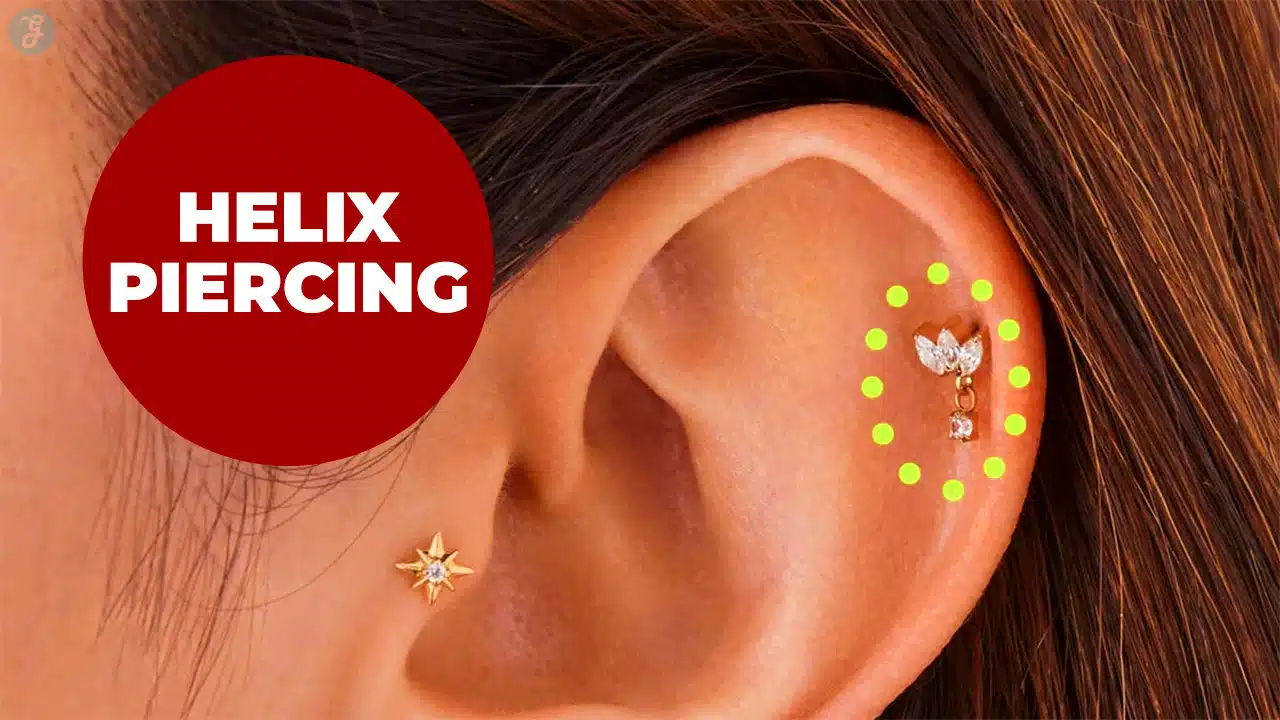
Thinking about getting a Helix Piercing but feeling unsure? A helix piercing is done on the upper cartilage of your ear and is super popular these days. This guide will cover everything you need to know—from pain levels to healing tips.
Keep reading, you’ll feel ready in no time!
Key Takeaways
- A helix piercing is done on the upper ear cartilage and can take 6-12 months to heal. Proper aftercare is important for smooth recovery.
- Types include standard, forward, double, and triple helix piercings. Each offers unique styles like studs or layered looks.
- Pain levels are mild (3/10) but depend on individual tolerance and ear anatomy. A professional piercer can reduce discomfort during the process.
- Healing requires cleaning with saline twice daily, avoiding twisting jewelry, and keeping products like hair spray away from the area.
- Jewelry should be made of materials like titanium or 14k gold to prevent irritation. Initial pieces are often longer to allow for swelling.
What is a Helix Piercing?
A helix piercing is done in the upper cartilage of the ear. It sits along the outer rim, making it a favorite for creative ear stacking with hoops or studs. This type of piercing doesn’t involve soft tissue like lobe piercings but goes through tougher cartilage instead.
Many choose helix piercings for their stylish and modern look. Popular options include double or triple helix piercings, which add more flair. Unlike lobe piercings, they take longer to heal—often 6 months to a year—so patience is key!
Types of Helix Piercings
Helix piercings come in different styles, each offering something special for your ear. Whether you want a single piercing or more, there’s likely an option to suit you.
Standard Helix
A standard helix piercing is located on the outer upper cartilage of your ear. It’s one of the most common cartilage piercings and sits along the curved rim. A professional piercer usually uses a hollow needle for precision, which reduces risks compared to using a gun.
This type of piercing takes longer to heal because it’s in cartilage, not soft tissue. Healing can last three months to a year based on aftercare and individual body responses.
Using surgical steel or titanium jewelry helps avoid irritation during this process. Cleaning with saline twice daily keeps it healthy as you wait for it to be completely healed.
Next, explore forward helix options!
Forward Helix
Sitting in the fold above the tragus, the forward helix offers a sleek look. This piercing is common among those who want something subtle but stylish. Many say it hurts less than a standard helix, thanks to thinner cartilage in that spot.
You can choose one piercing or stack two or three for a triple forward helix style. It’s popular to wear small studs or flat-back earrings here, as they sit snug against the ear.
Healing takes time—often six months to a year—but proper care makes it easier to heal fully. Always get this piercing done with a needle by an experienced body piercer for safer results.
Double and Triple Helix
Double helix piercings include two stacks on the ear’s outer rim. These are done close together, creating a sleek and layered look. Triple helix piercings involve three in a row, adding more detail to your ear cartilage.
They’re ideal for people who love symmetrical styles or enjoy statement jewelry.
Healing can take six months to a year since these involve multiple spots. Use titanium labret studs during initial healing for comfort and safety. Avoid sleeping on that side or wearing big hoops early on to prevent irritation or infections.
Next up: pain levels and what you can expect!
Does a Helix Piercing Hurt?
Getting a helix piercing feels like a sharp pinch or shock. Most people rank the pain around 3 out of 10, which isn’t too bad compared to other ear piercings. The forward helix is often less painful than the standard one on the rim of your ear.
Pain levels vary for everyone based on ear anatomy and tolerance. Some describe it as more pressure than pain, while others feel a quick sting. It’s over fast, though! A skilled piercing professional can make all the difference in reducing discomfort during the process.
Healing Process for Helix Piercings
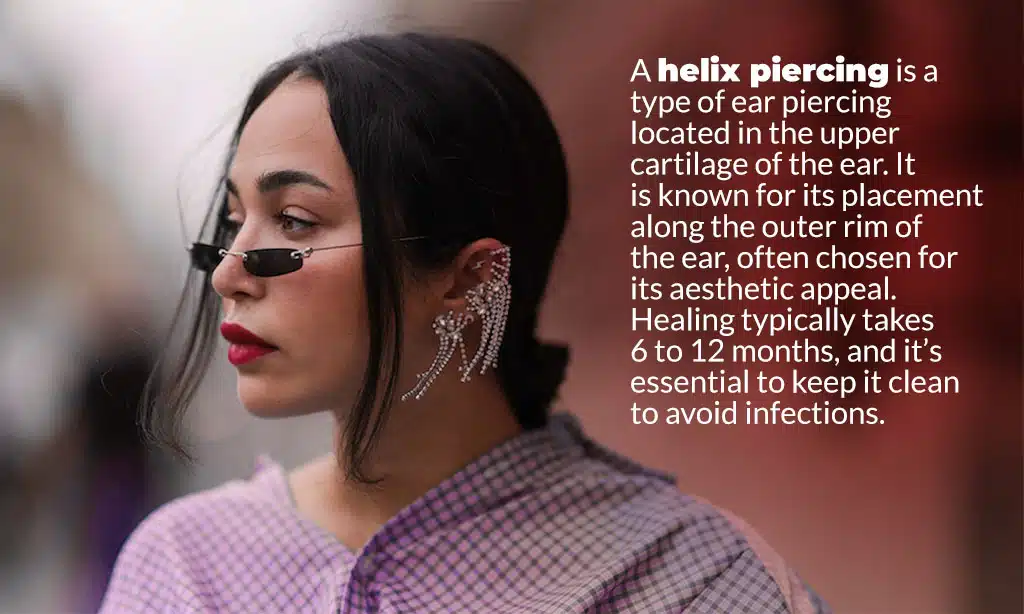
Healing a helix piercing takes patience, as it can be a slow journey. Your ear might feel tender for months, so handle it with care daily.
Healing Timeframes
Healing a helix piercing takes patience. It is not a quick process, so knowing the timeline helps.
- Initial healing lasts 3-6 months. During this time, the piercing is still fragile and prone to irritation.
- Full healing can take up to 6-12 months. The outer cartilage heals slower than earlobes due to less blood flow.
- Pain and redness should reduce by the first few weeks, but sensitivity may last longer.
- Swelling might stick around for 1-2 months but gradually decreases with good aftercare habits.
- Sleeping on that side is tricky during healing, especially in the early stages, so use a travel pillow or avoid pressure entirely.
Next, you’ll need tips to care for your new helix piercing properly!
Common Healing Challenges
Healing a helix piercing can take time and patience. It’s normal to face some challenges during this period.
- Swelling often occurs in the first few days. Your ear might feel tight or warm, but it should ease in about a week.
- Redness around the pierced area is common, especially if touched too much or irritated by hair or hats.
- Piercing bumps may appear during healing. These small lumps are usually caused by friction or bacteria but can improve with care.
- Infections happen if bacteria enter the wound. Signs include pus, extreme pain, and prolonged swelling—consult a professional if these occur quickly.
- Sleeping on that side delays healing as pressure on the piercing irritates it; use a travel pillow to keep weight off your ear while sleeping.
- Jewelry catching on hair or clothing causes pulling, which triggers discomfort and slows recovery—keep your hair tied back and avoid scarves near your ear.
- Scabbing is natural but don’t pick at it; this pulls off new skin and slows down repairing wounds further.
- Extended healing times may range from six months to over a year based on individual factors like skin type or aftercare steps missed earlier!
Aftercare Tips for Helix Piercings
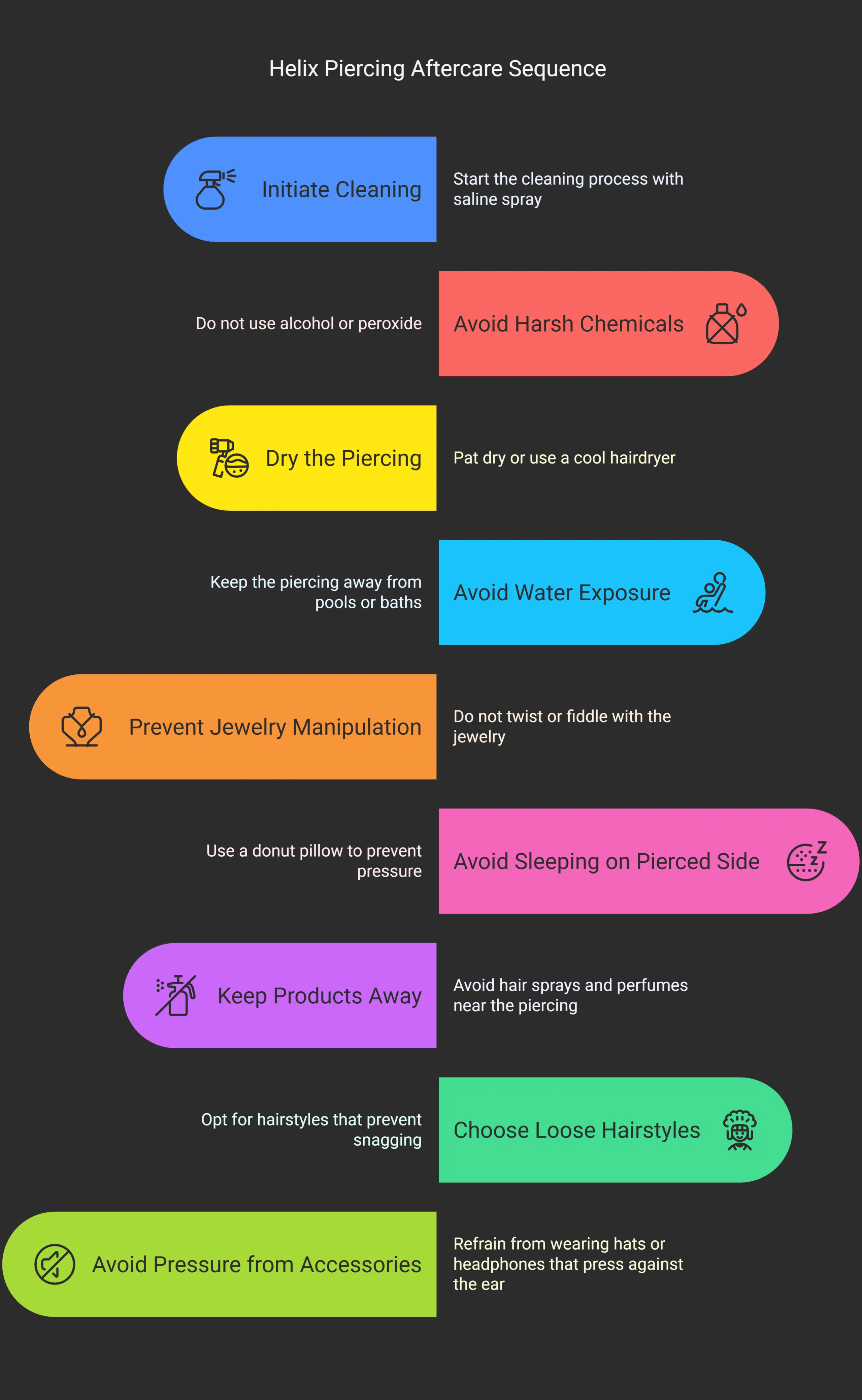
Taking care of your helix piercing is a must for smooth healing. Stick to simple steps, and you’ll avoid problems down the road.
Cleaning Guidelines
Keeping your helix piercing clean is key to healing well. Dirty jewelry or poor care can lead to irritation or infection. Follow these steps for safe cleaning:
- Use a saline spray like PierceMed twice daily. Spray it directly on the piercing to remove dirt and bacteria.
- Avoid using alcohol or peroxide. These can dry out the skin and slow down healing.
- Pat the area dry with a paper towel after cleaning. Don’t use cotton, as fibers may stick to the piercing site.
- Switch to a cool hairdryer setting if you prefer not to pat dry. It’s less likely to irritate the area compared to rubbing with towels or tissue paper.
- Keep the piercing away from water, like pools or baths, during early healing stages—this helps prevent infection.
- Refrain from twisting or fiddling with your jewelry while cleaning; this could damage fresh tissue and add trauma.
Taking proper care every day will give your helix time to heal without unnecessary problems!
Avoiding Irritation
Keeping your helix piercing clean helps, but preventing irritation is just as important. Small habits and choices can save you from unnecessary pain or a longer healing period.
- Do not twist or fiddle with the jewelry. Touching it too often can introduce bacteria and irritate the piercing.
- Avoid sleeping on that side of your ear. Use a travel donut pillow to keep pressure off while you rest.
- Keep hair spray, perfumes, and other products away from the area. These can cause inflammation or slow down healing.
- Steer clear of swimming pools for at least 2-3 weeks after getting pierced. Chlorine and bacteria in water can lead to infections.
- Choose loose hairstyles so hair strands don’t catch on the jewelry. This lowers the chances of pulling or snagging it accidentally.
- Don’t wear hats or headphones that press against your ear piercing. Constant friction may irritate the rim of your ear.
- Go back to your piercer if swelling, redness, or pain persists beyond normal levels during the healing period.
Preventive care is key for making sure your helix heals well without issues!
Choosing the Right Jewelry for Helix Piercings
Picking the perfect jewelry can be like finding a needle in a haystack, but it’s worth it to keep your piercing comfy and stylish. Pay attention to size and material—it makes all the difference in healing and daily wear!
Gauge and Length Considerations
Gauge size affects how the piercing heals. Most helix piercings start with a 16-gauge needle, but some studios may use an 18-gauge. Thicker gauges are usually stronger and less likely to bend.
The initial jewelry is often longer to allow space for swelling, typically around 8mm or more in length.
After about six weeks, downsizing might be necessary as the swelling reduces. This prevents snagging and promotes better healing. A shorter barbell, like a 6mm one, can make it easier to sleep comfortably on that side without irritation.
Always consult your piercing studio before making any changes to avoid issues with healing piercings.
Popular Jewelry Styles
Tiny, 14k solid gold studs are perfect for helix piercings. They’re durable and less likely to irritate the healing skin. Simple hoops like Mejuri’s Cartilage Pave Diamond Mini Hoop ($178) add a touch of elegance without being too heavy.
For sparkle lovers, the Missoma Pave Single Huggie ($39) or Astrid & Miyu Curved Crystal Piercing Stud in Solid Gold ($165) work wonders.
Luxury seekers often choose Maria Tash’s Tiny 18-Karat White Gold Diamond Earring, priced at $290. These pieces stay secure and don’t snag easily while sleeping on that side or during showers.
Flat-back styles remain popular since they sit flush against the ear, reducing irritation as you heal over months to a year.
Takeaways
Getting a helix piercing is an exciting way to express yourself. It takes time and patience, but the results are worth it. Follow aftercare steps carefully, pick jewelry that feels good, and let your ear heal at its own pace.
A well-healed helix piercing can be stylish and fun for years to come!
FAQs
1. What is a helix piercing?
A helix piercing is done on the rim of your ear, usually in the upper cartilage area. It’s popular and can include single or multiple piercings.
2. How long does it take for a helix piercing to heal?
It takes about six months to heal, but some people find it takes up to a year to fully heal. Healing time depends on how well you care for it.
3. Can I sleep on the side with my new helix piercing?
You should avoid sleeping on that side until it’s healed well. Sleeping on it too soon can cause irritation or slow healing.
4. Is getting a helix pierced painful?
Pain varies from person to person, but most say it’s mild since it’s just cartilage being pierced—not as bad as you’d think!
5. What jewelry works best for a fresh helix piercing?
Flat-back studs are ideal for healing because they’re less likely to catch or twist compared to hoops or other designs.
6. Should I get my helix pierced with a gun or needle?
Always choose a needle at a professional parlor over using a gun—it’s safer and reduces the risk of shattering your cartilage!































