Telehealth platforms change how we get care, folks. They let doctors talk to patients from afar, and keep an eye on chronic conditions like heart disease without trips to the clinic.
Imagine sitting at home, chatting with your GP through a screen, it’s like having a doctor in your pocket. Health professionals, from physiotherapists to allied health professionals, use these tools to boost patient care.
And get this, 89% of adults aged 65 and up say virtual primary care hits the spot for them. That’s a big win for our ageing population in the Australian healthcare system. Remote monitoring systems make life easier too, they optimize clinician workflows so caregivers avoid burnout.
AI tools, like Idoven, step up diagnostics in digital health. They spot issues fast, using health data from wearable devices. Think of it as a smart sidekick for healthcare workers, crunching numbers to suggest personalized treatments.
Telehealth ties into electronic health records, so your info stays safe and ready. This setup helps with medication compliance and preventive services. For mental health care, virtual sessions offer relaxation exercises or even trauma-informed care right from your couch.
It’s all about healthier lifestyles and equitable access, no more waiting in lines. Remote patient monitoring tracks real-time health data, catching problems early for chronic illnesses.
Electronic Health Records Integration
Doctors in Australia now share patient info fast with electronic health records, or EHRs. These systems pull together health data from different spots, making care smoother. Think of it like a team’s playbook, where everyone sees the same page.
Health informatics drives this change, linking telehealth and data analytics for better results. Australia’s push mirrors global moves, like Hong Kong’s eHealth platform for easy data swaps.
Patients get quicker diagnoses, cutting wait times in the healthcare system.
The European Health Data Space boosts seamless data exchange across borders, inspiring Aussie efforts. Healthcare professionals use these tools to fight chronic diseases with real-time insights.
Imagine a nurse spotting issues early through shared records, saving lives. Health information technologies make this happen, aiding primary healthcare and aged care. Allied health professionals join in, improving management of chronic conditions.
This setup fosters personalized care, blending electronic records with wearable technology for full views of health.
Advancements in Personalized Medicine

Doctors now tailor treatments to your genes, like fitting a key to a lock, using whole genome sequencing to spot risks for cancers early. Imagine dodging adverse reactions from meds through pharmacogenomics, where big data helps craft plans that fit you.
Innovations in Genomics and Pharmacogenomics
Australia pushes forward with genomics in healthcare, like a key unlocking better treatments. Genomics Australia launches in 2025, blending genomic research right into patient care.
This move helps doctors use whole genome sequencing for precise diagnoses. Imagine your DNA as a roadmap; it guides personalized medicine to fit you perfectly. Bupa’s My Genomic Health pilot targets over 60 conditions, spotting risks early.
Pharmacogenomics steps in here, checking how genes affect drug responses. Eighty percent of people carry genetic variations that change how medicines work, leading to fewer adverse reactions.
Think of it as tailoring a suit, but for your health; it cuts down on trial and error.
Doctors craft personalized treatments with this tech, boosting outcomes for chronic conditions like cancers. Allied health professionals join in, using big data from electronic health records (EHRs) to refine plans.
You know the saying, “one size fits none” in medicine? Well, genomics flips that script, making care feel custom-made. Public health gains too, as screenings catch issues before they grow.
Mental health services even benefit, linking genetic insights to emotional health. Australia’s healthcare system evolves this way, tackling an ageing population with smarter tools.
Leveraging Big Data for Customized Treatments
Big data changes how doctors create personalised treatments. Think of it like a giant puzzle, where each piece is a patient’s health info. AI and machine learning sort through this info fast.
They spot patterns that humans might miss. This leads to better diagnostics and treatment plans. For example, doctors use these tools to match drugs to a person’s genes. It’s like finding the perfect key for a lock.
In Australia’s healthcare system, this tech helps with chronic conditions too. The National Disability Insurance Scheme (NDIS) expansion plays a role here. It gathers more data on disabilities, making care more precise.
Patients get treatments that fit their needs, thanks to big data. Wearable technology collects real-time health data, feeding into these systems. Machine learning then crafts personalised care plans.
Imagine your watch telling your doctor about your heart rate, right away. This boosts preventative care and manages chronic diseases well. Allied health professionals use this info to team up better.
Even mental wellbeing improves with custom approaches. Big data drives evidence-based choices in the health system. It supports ageing populations by predicting health risks early.
This way, everyone gets a shot at healthy living.
Implementing AI and Machine Learning in Medical Practices
Doctors in Australia now rely on artificial intelligence to speed up diagnoses, like spotting cancer in scans before it spreads. Machine learning crafts treatment plans that fit each patient’s genes, cutting risks and boosting recovery—stick around to see how.
AI Applications in Diagnostics and Drug Development
AI tools like Idoven change the game in diagnostics. They spot heart issues fast, like a sharp-eyed detective on the case. Imagine artificial intelligence scanning medical images in seconds, catching problems humans might miss.
This tech boosts accuracy in the Australian healthcare system. It helps with chronic conditions too, offering personalised care that fits each patient.
Drug development speeds up with AI-assisted diagnostic tools. These smart systems crunch big data to find new treatments. Think of them as tireless workers, sifting through mountains of info for breakthroughs.
They aid in creating drugs for an ageing population. Wearable technology teams up here, feeding real-time data into the mix for better results.
Machine Learning for Personalized Treatment Plans
Machine learning changes how doctors plan treatments in Australia’s healthcare system. It uses data from patients to create personalised care that fits each person’s needs. Imagine a doctor as a detective, sifting through clues from your health history to solve the puzzle of your illness.
Artificial intelligence (AI) teams up with machine learning to spot patterns in big data, making plans that tackle chronic conditions head-on. This tech aids in diagnostics too, catching issues early for better results.
Doctors now blend machine learning with wearable technology for real-time insights. These devices track heart rates and activity, helping manage chronic disease like diabetes or heart problems.
Think of it as having a tiny coach on your wrist, whispering tips to stay healthy. In the Australian healthcare system, this boosts personalised medicine and helps the ageing population.
Allied health professionals use these tools to craft plans that improve physical health and prevent issues.
Wearable Health Technology
Wearable health technology is changing the game in Australia’s medical world. Think of it like a trusty sidekick that tracks your heart rate or steps, right on your wrist. Devices such as smartwatches and fitness trackers, they gather data on the go.
Patients with chronic conditions love this stuff, because it helps manage their health without constant doctor visits. Wearable technology enables chronic condition management, and that’s a big win for everyone.
Imagine slipping on a band that buzzes if your blood sugar dips low, talk about peace of mind. Allied health professionals use this data to spot issues early, keeping folks out of hospitals.
These gadgets boost patient outcomes in real ways. Remote monitoring through wearable devices improves patient outcomes, no doubt about it. For the ageing population, it’s like having a nurse in your pocket, checking vitals around the clock.
Chronic disease management gets easier with real-time alerts to doctors. Picture an electrocardiogram reading from your watch, catching heart problems before they turn serious. Health services management teams push these tools to cut costs and improve care.
Digital health like this makes preventative medicine a breeze, especially for those with chronic health conditions.
Real-time Health Data Monitoring
Doctors love real-time health data from wearable devices. Your smartwatch sends heart rate info straight to your doc, like a loyal sidekick keeping tabs. This tech fits right into digital health trends in the Australian healthcare system.
It helps manage chronic conditions for our ageing population. Remote monitoring systems optimize clinician workflows, too. They cut down on office visits and spot problems fast, almost like magic.
Allied health professionals use this data to boost healthcare services. Think of it as a safety net for folks with chronic diseases. Wearable technology tracks steps, sleep, and more in real time.
This leads to better chronic disease management. Health workforce teams, including mental health nurses, get quick insights. They adjust plans on the fly, making care feel personal and spot-on.
Developing Integrated Care Models
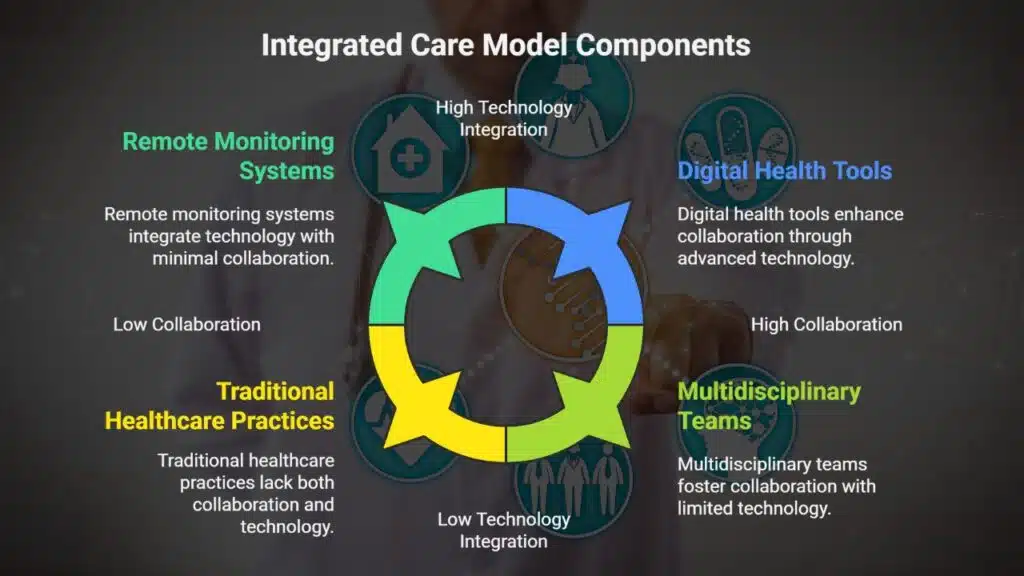
Developing Integrated Care Models: Imagine a team of doctors, nurses, and allied health professionals working hand in hand, like a well-oiled machine, to tackle chronic conditions head-on in Australia’s bustling clinics.
This collaborative approach, blending expertise from various fields, cuts through the red tape of fragmented care, and hey, it even makes managing illnesses like diabetes feel less like a solo battle—want to see how it transforms lives?
Healthcare Provider Collaboration
Doctors, nurses, and allied health professionals team up in Australia’s healthcare system to tackle chronic conditions. Think of it like a well-oiled machine, where general practitioners (GPs) join forces with mental health nursing experts to manage an ageing population.
The Rural Health Multidisciplinary Training Program funds rural placements, pulling in nursing students and allied healthcare professionals for better care in remote spots. This setup fights inequitable access, boosts retention, and promotes health through social determinants.
Financial perks from the Rural Health Workforce Strategy draw in pros like those from Victoria University, who hold spots in world university rankings. They use digital health tools and medical devices for chronic disease management, mixing in health promotion and physical fitness plans.
Social care blends with medical research here, creating personalized health paths that feel like a custom-fit glove. Imagine GPs chatting with specialists over coffee, sharing notes on wearable technology data to handle chronic conditions with ease.
Management of Chronic Illnesses
Australia’s healthcare system faces big challenges with chronic conditions, especially in an ageing population. Allied health professionals team up to handle these issues. They use wearable technology for better chronic disease management.
These devices track health data all day. Patients get personalised care that fits their needs. Imagine slipping on a smartwatch that acts like a vigilant friend, buzzing you to move or check your blood sugar.
This approach cuts down hospital visits. Wearable devices and remote monitoring improve patient outcomes, as studies show. Health insurance often covers these tools now.
Teams focus on digital healthcare to streamline chronic disease management. Remote monitoring systems optimize clinician workflows, letting doctors spot problems fast. Picture a nurse checking your heart rate from miles away, like a guardian angel with a tablet.
This saves time and boosts personalised health. Corporate wellness programs tie in here, helping workers with chronic conditions stay on track. Psychotherapies blend with tech for mental sides of illness.
The Australian healthcare system pushes these trends to keep everyone healthier.
Progress in Biotechnology for Healthcare
Biotech firms in Australia push boundaries with CRISPR editing, crafting gene therapies that zap
New Diagnostic Tools
Australia’s healthcare system thrives on fresh biotech advances. Think of AI-assisted diagnostic tools as smart detectives, spotting health issues fast. Tools like Idoven boost diagnostics with artificial intelligence, making checks more accurate for an ageing population.
Doctors use these to tackle chronic conditions head-on, like a well-aimed arrow hitting its mark. This shift fits right into healthcare trends, blending digital health with personalised care.
Allied health professionals love these innovations; they speed up chronic disease management. Imagine wearable technology teaming up with AI for real-time insights, no more guesswork.
In the Australian healthcare system, such tools cut wait times and save lives, plain and simple. Patients get better outcomes, feeling the empathy in tech-driven care.
Developing Advanced Treatments
Scientists push forward with robotic surgical systems. These tools make minimally invasive procedures easier. They cut down recovery time for patients. Imagine a robot arm, steady as a rock, helping doctors fix issues inside the body.
This tech fits right into Australia’s healthcare system, tackling needs of an ageing population. Artificial intelligence (AI) teams up here, guiding precise moves.
AI and machine learning boost personalized treatment planning too. They aid in diagnostics, spotting problems fast. Doctors use them for customized care in chronic disease management.
Think of it like a smart coach, analyzing data to pick the best path. Wearable technology feeds in info, making treatments spot on. Allied health professionals join in, enhancing outcomes for chronic conditions.
Innovating Mental Health Approaches
Picture a world where apps zap away anxiety like a quick coffee fix, and folks in rural spots chat with therapists via video calls that feel like old friends catching up. Aussies now tackle depression through group walks in the park, blending tech gadgets with neighborly support to lift spirits and build real connections that stick.
Tools for Digital Mental Health
Digital tools change how we handle mental wellness in Australia. Think of artificial intelligence (AI) chatbots as friendly listeners, always ready for a chat. They offer quick support, like a buddy in your pocket during tough times.
Virtual reality therapies pull you into calm worlds, easing stress as if stepping into a peaceful dream. These innovations fit into the Australian healthcare system, aiding folks with chronic conditions.
AI and machine learning help create personalised care plans, spotting issues early for better results.
People love wearable technology for tracking moods, almost like a personal coach whispering tips. Imagine slipping on a device that monitors your heart rate and suggests a breather, that’s real-time help.
Allied health professionals use these tools to manage chronic disease, making care feel less like a chore. Digital health trends push this forward, especially for the ageing population facing mental hurdles.
Chatbots and VR setups bring empathy right to your screen, turning “I’m okay” into true progress with a dash of fun.
Community-Based Mental Health Programs
Australia faces big challenges with mental health, especially in its ageing population. Community-based mental health programs step up to help. They focus on case management and crisis intervention right where people live.
Think of them like a safety net, catching folks before things get worse. Over 5,200 job ads for community mental health workers popped up in 2022. These roles tie into the Australian healthcare system, boosting chronic disease management.
Allied health professionals lead the charge here.
Programs also push community care, blending in digital health tools for better reach. They offer personalised care to tackle chronic conditions head-on. Imagine a neighbor checking in, armed with wearable technology for real-time support.
This trend fits key healthcare trends, making help feel close and personal. Workers often hold a graduate diploma, ready for hands-on action. Laughter aside, it’s like having a friend in the fight against isolation.
Promoting Sustainability in Medical Practices
Hospitals across
Implementing Green Technologies
Australia’s healthcare system pushes for green technologies to cut down on waste, like switching to solar-powered clinics that save energy and money. Doctors use biodegradable tools instead of plastic ones, which helps the planet breathe easier.
Regulatory frameworks in Australia encourage hospitals to adopt sustainable medical products, such as eco-friendly bandages and reusable equipment. This shift tackles environmental impact head-on, making healthcare trends more earth-friendly for everyone, including the ageing population dealing with chronic conditions.
Allied health professionals join in, training on these green practices to keep things running smooth.
Green technologies also blend with digital health, think wearable technology that runs on low-power batteries to monitor patients without harming the environment. Providers focus on reducing their carbon footprint through simple steps, like recycling programs in clinics.
These efforts promote chronic disease management in a sustainable way, ensuring the health system stays strong for years to come. It’s like giving Mother Nature a high-five while caring for folks, and it feels good all around.
Practices for Sustainable Healthcare
Healthcare pros in the Australian healthcare system push green practices to cut environmental harm, like switching to energy-saving lights in clinics. They recycle medical waste, you know, turning old tools into new supplies, which feels like giving the planet a high-five.
Regulatory frameworks nudge them to grab sustainable medical products, such as biodegradable gloves that break down fast.
Picture a doctor choosing eco-friendly bandages over plastic ones; it slashes trash piles and boosts chronic disease management for an ageing population. Allied health professionals join in, using digital health tools to track green habits without extra paper.
These healthcare trends make care smarter, kinder to Earth, and ready for tomorrow’s needs.
Improving Cybersecurity in Healthcare Systems
Hackers eye medical data like thieves spotting an open safe, so
Enhancing Data Protection Measures
Australia’s healthcare system faces big risks from cyber threats, so leaders push for strong shields. Think of patient data as a treasure chest, you guard it with locks like encryption and firewalls.
The European Health Data Space initiative shows how seamless data exchange can work safely across borders. It aims to let info flow without leaks, much like a well-oiled machine in digital health.
In Australia, experts adapt these ideas to protect wearable technology data from the ageing population.
Hong Kong’s eHealth platform sets a fine example for interoperability, blending records while blocking breaches. Allied health professionals here use similar setups to manage chronic conditions securely.
Picture a doctor chatting with a patient via telehealth, their info stays safe as houses. This trend boosts personalised care, cuts errors in chronic disease management. Teams train often, they spot weak spots before trouble hits.